
In a significant development during the Federal Trade Commission’s (FTC) high-profile antitrust case against Meta Platforms Inc., Instagram cofounder Kevin Systrom took the stand this week, revealing internal power dynamics and tensions that followed Meta’s acquisition of the photo-sharing app. Systrom testified that Meta CEO Mark Zuckerberg saw Instagram’s growing popularity as a direct threat to Facebook’s dominance—and, as a result, intentionally starved the app of resources that could have helped it thrive independently.
The trial is part of the FTC’s broader legal effort to break up Meta’s hold on the social media landscape by forcing it to unwind its previous acquisitions of Instagram and WhatsApp. The government argues that these takeovers were not just strategic business decisions but were part of an illegal scheme to eliminate emerging competitors and entrench Meta’s monopoly over digital communication and advertising.
Systrom: Instagram Had the Potential to Thrive Without Meta
During his testimony on Tuesday, Kevin Systrom stated unequivocally that Instagram could have succeeded on its own. According to him, the company had enough momentum, vision, and technical capability to scale independently. He said Instagram didn’t need Meta’s infrastructure to roll out major features such as private messaging, video capabilities, and advertising tools.
“If we had remained independent, I’m confident we could have built everything we needed ourselves,” said Systrom, adding that features like Instagram Direct and IGTV were well within reach even before Meta’s involvement. He acknowledged, however, that Instagram did benefit from Facebook’s scale and tools—but said the trade-off came with limitations.
Under cross-examination, Meta’s attorneys attempted to highlight the challenges Instagram may have faced without Meta’s support. Systrom conceded that “growth could have gone either way,” but firmly maintained that “the probability of us failing was low.”
The FTC’s Argument: Meta Killed Competition by Buying It
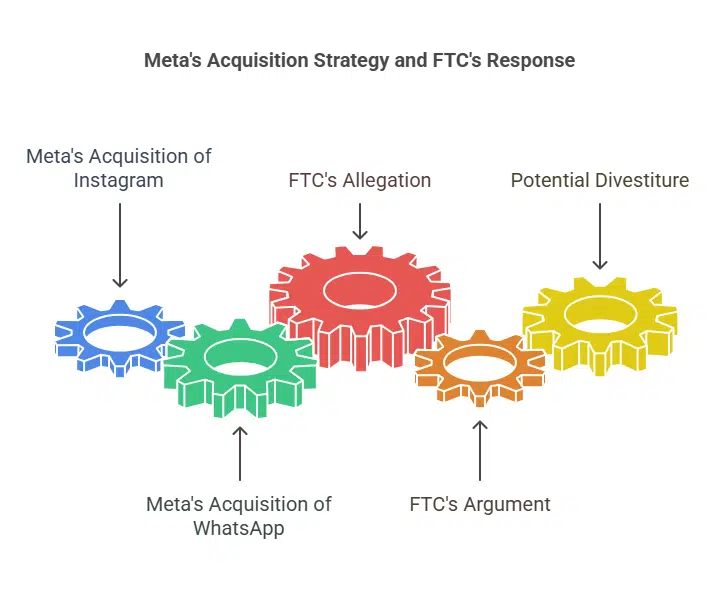
The FTC’s central allegation is that Meta, under Mark Zuckerberg’s direction, purchased Instagram in 2012 and WhatsApp in 2014 to eliminate emerging competitors before they could challenge Facebook’s dominance in the market. The regulator argues that rather than innovating to compete fairly, Meta relied on a “copy, acquire, or kill” strategy to protect its position.
By bringing Instagram under its control, the FTC claims Meta was able to slow the app’s development deliberately—thereby preventing it from becoming a full-fledged rival. The government has pointed to internal communications and testimony, like Systrom’s, to prove that Instagram was well-positioned to become a competitive force had it remained independent.
The case, described as one of the most significant antitrust actions in modern tech history, could force Meta to divest Instagram and WhatsApp, fundamentally reshaping the U.S. social media landscape.
Systrom Says Meta Underinvested in Instagram’s Growth
Systrom offered specific examples of how Instagram was allegedly held back after joining Meta. He testified that despite the app’s explosive user growth and cultural relevance, Meta allocated little to no additional resources to support its expanding operations.
“There were entire areas of our business that were starving for support,” said Systrom. “We had zero resources allocated for data privacy infrastructure, even after the Cambridge Analytica scandal made it a major priority across the company.”
In an email submitted as evidence, Systrom wrote to then-Meta CTO Mike Schroepfer expressing his frustration with the lack of investment. He stated that Instagram was not receiving adequate staff or funding for key projects like video innovation and messaging integration—both of which would later become central to the app’s long-term success.
2018: Zuckerberg Allegedly Reduced Instagram Visibility
One of the most telling moments of the testimony was Systrom’s claim that Zuckerberg began actively reducing Instagram’s visibility within Meta products in 2018. This included limiting links and notifications that sent users from Facebook to Instagram. According to Systrom, Zuckerberg did this because he saw Instagram’s popularity as cannibalizing Facebook’s own growth and engagement metrics.
“He believed we were hurting Facebook’s growth,” Systrom stated during the trial. “He was always very happy to have Instagram in the family because it was growing quickly. But as Facebook’s founder, he had a lot of emotion wrapped up in the idea of which platform was doing better.”
This internal competition, according to Systrom, translated into strategic decisions to deprioritize Instagram’s needs inside the company, despite its growing market influence and user base.
Meta Defends the Acquisition: Instagram Wouldn’t Have Succeeded Without Us
Meta, for its part, has strongly pushed back against the FTC’s claims. In earlier public statements and in court, the company has maintained that Instagram was a small startup with just 13 employees and no revenue at the time of acquisition. Meta argues that Instagram’s meteoric rise into a billion-user platform was made possible precisely because of Meta’s technology, global infrastructure, and advertising support.
Meta’s legal team highlighted the company’s investments in engineering, data storage, and monetization systems that allowed Instagram to scale. They also cited stiff competition in the social media space, noting that Meta is currently up against TikTok, YouTube, Snapchat, iMessage, and others.
What’s at Stake: Potential Breakup of Meta’s Social Media Empire
If the FTC prevails in court, Meta could be forced to unwind its acquisitions of Instagram and WhatsApp—a decision that would dramatically impact its business model. Instagram in particular plays a major role in Meta’s digital advertising revenue, which made up approximately 97% of Meta’s $134 billion revenue in 2023.
Unwinding the acquisition could not only cut off a significant source of profit but also send a strong message to other tech companies about the limits of market consolidation.
This antitrust trial is also being closely watched by lawmakers and regulators around the world. The case could influence how future mergers and acquisitions in the tech space are evaluated, especially those involving early-stage startups that have the potential to disrupt dominant players.
A Historic Test Case for Tech Monopoly Enforcement
This lawsuit marks one of the most aggressive challenges to Big Tech’s consolidation strategies in recent memory. It echoes the spirit of landmark antitrust cases from the past—such as the breakup of AT&T in the 1980s or Microsoft’s legal battles in the 1990s.
FTC Chair Lina Khan, who has long been critical of unchecked market dominance in the tech sector, has framed the case as essential to preserving fair competition and consumer choice. The agency argues that without regulatory intervention, Meta and other tech giants will continue acquiring and neutralizing threats in ways that hurt both consumers and innovation.
The trial is ongoing, and more key figures—including Zuckerberg himself—are expected to testify in the coming weeks. The outcome could redefine how tech mergers are handled for years to come.
Kevin Systrom’s testimony sheds light on the internal struggles that followed Instagram’s acquisition and provides compelling evidence for the FTC’s claim that Meta used its market power to stifle potential competition. As the trial continues, it may not only decide the fate of Instagram and WhatsApp but also establish a precedent for how tech monopolies are dealt with in the future.
Stay tuned as we continue covering updates from this groundbreaking legal battle.