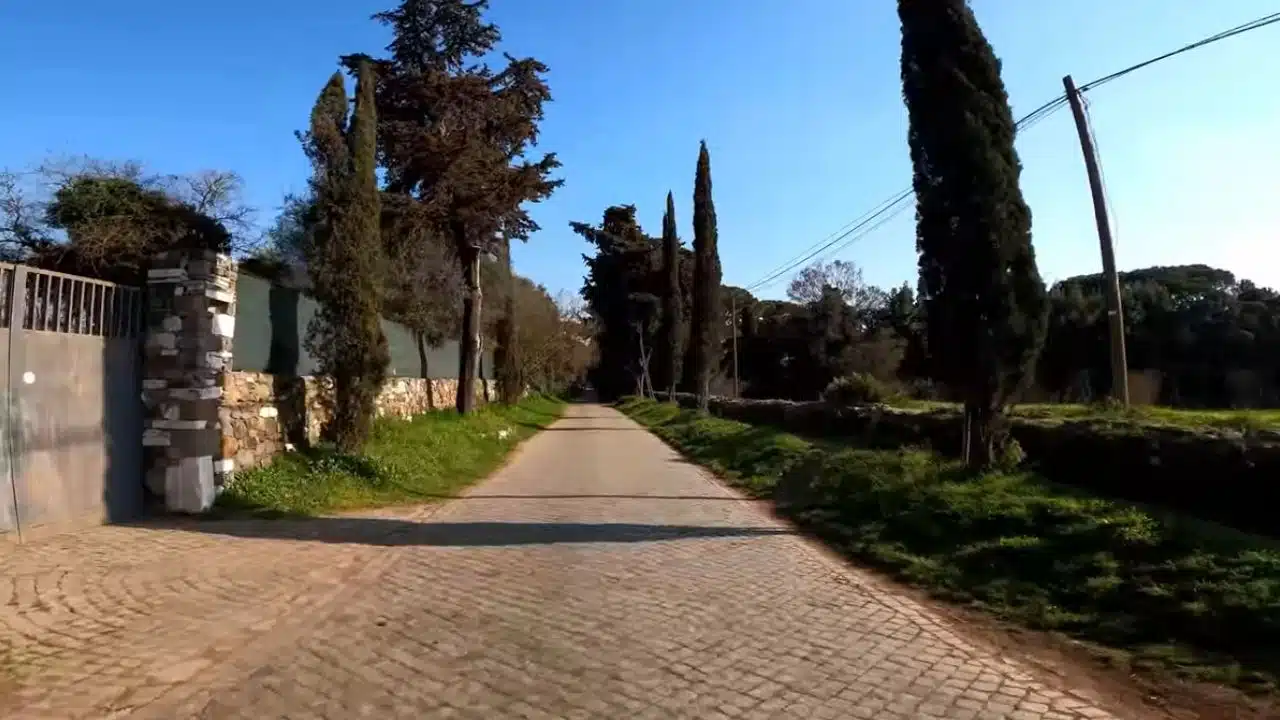
Italy has once again solidified its place at the top of the UNESCO World Heritage list with the inclusion of the ancient Via Appia. Not only is this monumental road, known as the “Via Appia Regina Viarum” or “Queen of Roads,” celebrated for its historical significance, but also for its engineering marvels.
The UNESCO World Heritage Committee made the decision to recognize the Via Appia as the 60th Italian site during its 46th session in New Delhi.
A New Milestone for Italy’s Heritage: UNESCO’s Decision
The inclusion of the Via Appia in the UNESCO World Heritage List was part of a broader set of decisions made by the committee in New Delhi. The committee in New Delhi acknowledged sites from around the world alongside the Via Appia, such as the Ensemble Schwerin residence in Germany, the Niah National Park in Malaysia, the archaeological area of Al-Faw in Saudi Arabia, and the Frontiers of the Roman Empire in Dacia, Romania. This highlights UNESCO’s commitment to recognizing diverse cultural landmarks across different continents.
The Ministry of Culture’s Role in the Candidature
For the first time, Italy’s Ministry of Culture directly managed the Via Appia’s candidature, overseeing each stage of the process and preparing comprehensive documentation to support the application. This careful coordination by the Ministry emphasizes Italy’s dedication to preserving and promoting its cultural heritage on an international scale.
The Historic Via Appia: A Journey Through Time
Stretching over 650 kilometers across central and southern Italy, the Via Appia is one of Rome’s oldest and most famous roads, constructed with innovative techniques that became a benchmark in ancient civil engineering. The Roman censor Appius Claudius Caecus (Appius Claudius the Blind) originally built the Via Appia in 312 B.C. with the intention of connecting Rome to Capua, a major hub in southern Italy.
Subsequent years saw the expansion of the Via Appia’s route to cities such as Benevento, Venosa, Taranto, and eventually the coastal city of Brindisi. This extension enabled Rome to strengthen its reach toward the Mediterranean, fostering both military and commercial expansion.
A Road of Strategic, Cultural, and Commercial Importance
Initially conceived for military use, the Via Appia soon became much more than a strategic route. It transformed into a vital artery for commerce and cultural exchange, linking Rome with the south and facilitating connections with the Mediterranean and Eastern regions. Goods, people, and ideas traversed this road, fostering an early form of globalization within the Roman Empire.
The Via Appia also served as a model for subsequent Roman roads. Its durability and structure, using layered stones and a solid foundation, set a high standard that influenced road construction techniques across the Empire and contributed to the long-term expansion and cohesion of Roman territories.
Recognizing the Universal Value of the Via Appia
Italian Culture Minister Gennaro Sangiuliano highlighted UNESCO’s recognition of the Via Appia as an “extraordinary engineering work” that has had significant influence over the centuries. The road’s contribution to trade, social interactions, and cultural exchange with neighboring Mediterranean civilizations speaks to its universal value.
UNESCO’s recognition of the Via Appia complements Italy’s recent successes in preserving its cultural heritage. Just last year, Italian opera also gained recognition for its global impact, demonstrating Italy’s continuing dedication to promoting its historical and cultural treasures.
A Lasting Legacy for Future Generations
The designation of the Via Appia as a UNESCO World Heritage site reaffirms Italy’s pivotal role in preserving sites of historical and cultural importance. The road stands as a testament to the engineering skills and cultural influence of ancient Rome, preserving a legacy that resonates beyond Italy’s borders. Now, as part of the World Heritage List, the Via Appia will continue to be a symbol of Italy’s enduring contribution to world heritage, celebrated and protected for future generations.