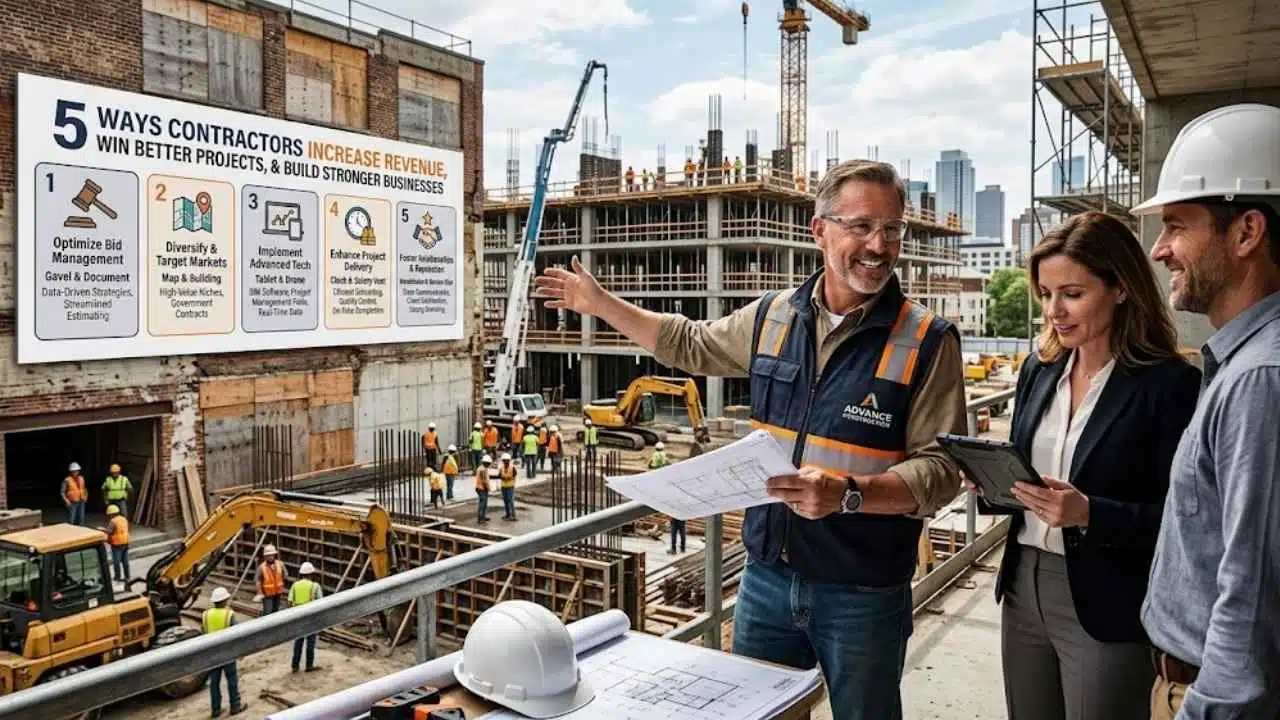
The construction industry rewards companies that think beyond the next project. While craftsmanship remains the foundation of every successful contractor, long-term growth often depends on better estimating, stronger client relationships, efficient operations, and a commitment to continuous improvement.
Businesses that focus on these areas often find themselves bidding on larger jobs, earning repeat customers, and improving profit margins without sacrificing quality. Whether operating as a general contractor, specialty subcontractor, or commercial builder, there are practical ways to increase revenue while creating a stronger reputation in an increasingly competitive market.
Focus on Higher Value Clients Instead of More Clients
Many contractors believe the path to greater income is taking on as many projects as possible. In reality, chasing volume often leads to scheduling conflicts, lower-quality work, and thinner profit margins. A better strategy is identifying customers who value reliability, communication, and quality over the lowest bid. Commercial property owners, developers, municipalities, and established homeowners frequently become repeat clients when expectations are met consistently.
Contractors should also examine their pricing strategy regularly. Underpricing may win bids, but it rarely supports healthy business growth. Accurate job costing, material forecasting, and labor tracking help companies understand where profits are actually being earned. That knowledge makes future bids more competitive while protecting margins.
Strong marketing also matters. A professional website, updated project portfolio, positive online reviews, and consistent communication create trust before the first meeting ever takes place. Companies that present themselves professionally often compete on value instead of price alone.
Invest in Safety Training That Improves Productivity
Safety is frequently viewed as a regulatory requirement, but it also affects profitability. Job site incidents can delay projects, increase insurance costs, damage customer confidence, and reduce employee morale. Companies that make safety part of daily operations often experience smoother workflows and fewer costly interruptions.
Many businesses strengthen their workforce by investing in OSHA 10 safety training services online as well as training in hazardous substances, different types of mobile equipment and other workplace hazards that employees may encounter throughout their careers. While regulations vary by project and location, comprehensive education helps workers recognize risks before they become expensive problems. Well-trained crews also spend less time correcting preventable mistakes and more time completing productive work.
Safety meetings should not become routine paperwork. Supervisors who encourage open discussions about hazards, equipment inspections, weather conditions, and changing site conditions create an environment where workers remain engaged. That culture benefits everyone involved, from company leadership to clients who expect projects to stay on schedule.
Reduce Downtime by Preventing Construction Site Injuries
Every day lost to an accident affects more than the injured worker. Deadlines shift, overtime increases, subcontractors wait for completed tasks, and customers begin asking difficult questions. Reducing construction site injuries is both a moral responsibility and a practical business decision that protects revenue over time.
Preventative maintenance deserves as much attention as project scheduling. Equipment failures create unnecessary delays that increase labor costs while reducing productivity. Regular inspections of tools, vehicles, scaffolding, ladders, and heavy equipment help identify issues before they disrupt a project.
Communication also deserves attention. Daily planning meetings ensure crews understand changing priorities, delivery schedules, weather concerns, and potential hazards. Miscommunication often creates avoidable mistakes that cost far more than a few minutes spent reviewing the day’s work. Contractors who build communication into every project frequently complete jobs more efficiently because everyone understands expectations from the beginning.
Companies that analyze completed projects can uncover additional opportunities for improvement. Reviewing labor hours, material waste, scheduling delays, and customer feedback provides valuable information that strengthens future estimating and operational decisions.
Expand Services Without Losing Your Core Strengths
Many contractors increase revenue by adding complementary services rather than entering entirely new markets. A residential remodeling company may add outdoor living spaces or energy efficiency upgrades. A commercial contractor might expand into maintenance contracts or tenant improvements. These additions often generate repeat business while making the company more valuable to existing customers.
Expansion should always support existing expertise instead of distracting from it. Taking on unfamiliar work without experienced personnel can create quality problems that damage hard-earned reputations. Careful planning, strategic hiring, and ongoing training allow businesses to grow without sacrificing performance.
Technology can also improve efficiency during expansion. Modern estimating software, project management platforms, drone inspections, digital documentation, and scheduling tools reduce administrative work while improving communication between office staff, field supervisors, subcontractors, and clients. Time saved on paperwork allows leadership to focus on business development and customer service.
Build a Reputation That Generates Repeat Business
The most profitable contractors often spend less money chasing new customers because previous clients continue returning with additional work. Reputation becomes one of the strongest competitive advantages in construction, especially in local markets where referrals influence purchasing decisions.
Meeting deadlines, communicating honestly about unexpected challenges, documenting project progress, and responding promptly to customer questions all contribute to long-term trust. Even when unexpected problems occur, transparency often strengthens client relationships more than unrealistic promises ever could.
Contractors should also stay connected after project completion. Following up with customers, requesting reviews, and maintaining relationships with architects, engineers, suppliers, and property managers keeps the company visible when new opportunities arise. Networking within industry associations and local business organizations can produce valuable referrals that lead to higher-quality projects.
Ultimately, increasing revenue in construction rarely depends on a single breakthrough. It results from making consistent improvements across estimating, safety, operations, customer service, and business development. Companies that strengthen each of these areas position themselves for steady growth while creating a reputation that attracts profitable work year after year. Sustainable growth comes from delivering consistent quality, managing projects efficiently, and building trust that keeps customers coming back.