If you were to randomly drop a pin on a calendar and ask which day has most drastically altered the course of human history, November 9 would be a prime candidate. Very few dates carry the profound, almost eerie historical weight that this specific day holds. For some nations, it is a day of unbridled celebration and the triumph of the human spirit. For others, it is a dark anniversary that serves as a grim reminder of humanity’s darkest hours.
Whether you are a history enthusiast, a student of cultural anthropology, or just someone curious about the shared heritage of our world, understanding the events of November 9 offers a remarkable window into how our modern society was forged.
In this comprehensive editorial, we will travel back in time to explore the most significant global events, celebrate the births of brilliant minds, and honor the legacies of the notable figures who passed away on this day.
Major Global Events on November 9
To understand the sheer magnitude of November 9, it is incredibly helpful to look at the timeline. Below is a quick-glance table of the most world-altering events that occurred on this date, followed by an in-depth analysis of their impact.
Perhaps the most universally celebrated event to happen on November 9 occurred in 1989. For nearly three decades, the Berlin Wall stood as a brutal, concrete symbol of the Cold War, dividing families, a city, and the world into two ideological halves. On the evening of November 9, following weeks of civil unrest and a famously bungled press conference by an East German official, the borders were abruptly opened. Millions of East and West Berliners flocked to the wall, weeping, celebrating, and literally chipping away at the concrete with hammers and chisels. This extraordinary moment paved the way for German reunification and signaled the imminent collapse of the Soviet Union.
Kristallnacht: The Night of Broken Glass (1938)
In stark contrast to the joy of 1989, November 9 also marks one of the darkest chapters in modern history. In 1938, Nazi paramilitary forces and civilian sympathizers launched a massive, coordinated pogrom against Jewish citizens across Germany and Austria. Over the course of 48 hours, thousands of Jewish-owned businesses, homes, hospitals, and schools were ransacked and destroyed. Hundreds of synagogues were burned to the ground. This night of terror, which resulted in the deaths of scores of Jews and the incarceration of 30,000 more in concentration camps, is viewed by historians as the definitive escalation that led to the Holocaust.
The Beer Hall Putsch and the Abdication of the Kaiser
Germany’s “Day of Fate” is further cemented by two other pivotal November 9 events. In 1918, facing imminent defeat in World War I and a rising revolution at home, Kaiser Wilhelm II abdicated his throne, ending the German Empire and giving birth to the fragile Weimar Republic. Exactly five years later, in 1923, a young Adolf Hitler attempted to overthrow that very republic in a failed coup known as the Beer Hall Putsch. Though the coup failed and Hitler was imprisoned, the event brought him to national prominence and set the stage for his eventual rise to power.
Theodore Roosevelt Redefines the Presidency (1906)
Before 1906, it was an unspoken tradition that a sitting President of the United States did not leave the country. Theodore Roosevelt shattered that precedent on November 9 when he sailed to inspect the construction of the Panama Canal. This was not just a sightseeing tour; it was a powerful geopolitical statement signaling America’s emergence as a dominant global empire capable of reshaping global trade routes.
The Bangalee Sphere & Indian Subcontinent
While European events heavily dominate the November 9 narrative, the Indian subcontinent has witnessed extraordinary historical milestones on this exact date.
The Ayodhya Verdict (2019)
On November 9, 2019, the Supreme Court of India delivered a unanimous verdict on the Ayodhya land dispute, a deeply emotional and fiercely contested issue that had shaped Indian politics for over a century. The court ruled that the disputed 2.77 acres of land would be handed over to a trust to oversee the construction of a Hindu temple, while a separate 5-acre plot in Ayodhya would be given to the Sunni Waqf Board to build a mosque. This landmark legal decision fundamentally reshaped the socio-political landscape of modern India.
The Kartarpur Corridor Inauguration (2019)
In a rare and beautiful moment of cross-border diplomacy between India and Pakistan, the Kartarpur Corridor was officially opened on November 9, 2019. The corridor acts as a visa-free border crossing, allowing Indian Sikh pilgrims to visit the Gurdwara Darbar Sahib in Pakistan, the final resting place of the founder of Sikhism, Guru Nanak. Its opening was a monumental cultural and religious event for the region.
Uttarakhand State Foundation Day (2000)
On this day in 2000, the political map of India was redrawn when the state of Uttaranchal (later renamed Uttarakhand in 2007) was officially carved out of the mountainous northern districts of Uttar Pradesh. Known as the “Land of the Gods” due to its multitude of Hindu temples and pilgrimage centers, it became the 27th state of the Republic of India.
International Observances & Holidays
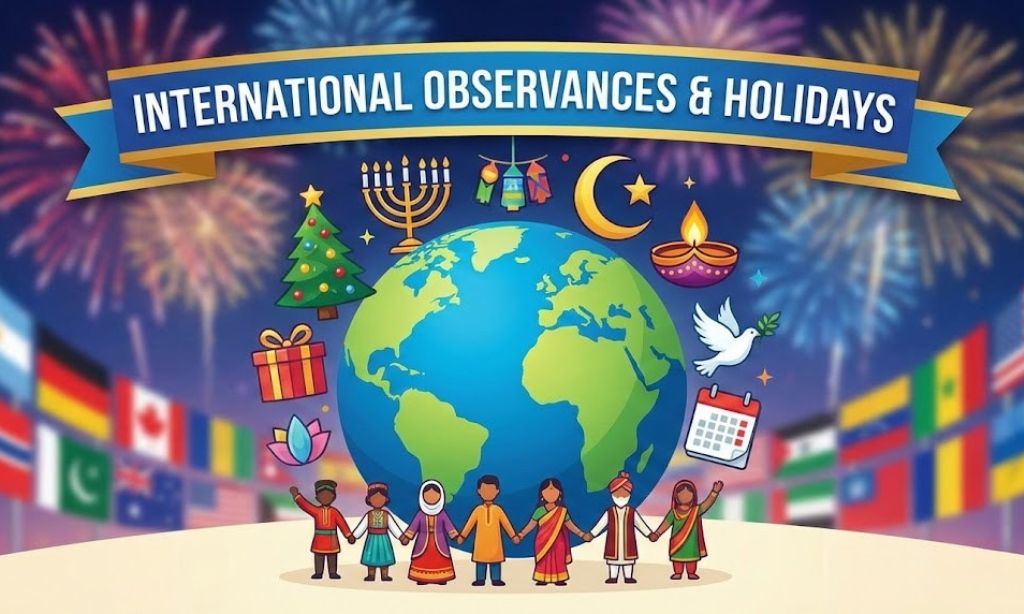
November 9 is not just a day of looking back at history; it is a day of active global observance, celebrated in various unique ways across the planet.
-
World Freedom Day (United States): Declared by US President George W. Bush in 2001, this federal observance commemorates the fall of the Berlin Wall and honors the global struggle against totalitarianism and the advancement of democratic freedom.
-
Iqbal Day (Pakistan): A major day of observance honoring the birthday of the national poet and philosopher, Allama Muhammad Iqbal. Educational institutions and literary societies across the country hold seminars to discuss his profound impact on Islamic philosophy and literature.
-
National Legal Services Day (India): Commemorated annually, this day marks the enactment of the Legal Services Authorities Act of 1987. It serves to raise awareness about free legal aid programs, ensuring that the poorest and most marginalized citizens are not locked out of the justice system due to financial constraints.
-
Independence Day (Cambodia): On November 9, 1953, Cambodia finally achieved full independence from French colonial rule. Today, the nation celebrates with vibrant parades, fireworks, and ceremonies centered around the Independence Monument in the capital city of Phnom Penh.
Famous Birthdays on November 9
History is shaped by the people who live it. November 9 has seen the birth of monarchs, visionary scientists, brilliant artists, and cultural icons.
Carl Sagan: The Man Who Brought the Cosmos to the Living Room
Born in Brooklyn, New York, in 1934, Carl Sagan became one of the most vital scientific communicators of the 20th century. As an astronomer and astrophysicist, he worked on major NASA missions, but his true legacy lies in his ability to make the staggering vastness of the universe accessible to the public. Through his immensely popular 1980 television series Cosmos: A Personal Voyage and his science fiction novel Contact, Sagan inspired millions to look up at the stars with a sense of wonder rather than fear.
Hedy Lamarr: Glamour and Genius
When you connect your phone to Wi-Fi or pair a Bluetooth device, you owe a debt of gratitude to Hedy Lamarr, born on this day in 1914. Best known during her lifetime as a stunningly beautiful Hollywood actress starring in films like Samson and Delilah, Lamarr was secretly a brilliant inventor. During World War II, she co-invented an early technique for spread spectrum communications—originally designed to prevent Allied torpedoes from being jammed by the Axis powers. Her patented frequency-hopping technology became the foundational framework for the wireless communication systems we rely on today.
Sir Muhammad Iqbal: The Poet of the East
Born in Sialkot in 1877, Allama Muhammad Iqbal was a philosopher, scholar, and poet whose works in Urdu and Persian are considered literary masterpieces. He wrote the famous patriotic song “Sare Jahan se Accha,” which remains beloved across the Indian subcontinent today. However, it was his philosophical vision that left the most indelible mark; he is widely regarded as the spiritual father of Pakistan for his early articulation of a separate state for the Muslims of British India.
Dorothy Dandridge: Breaking Hollywood’s Color Barrier
Born in 1922, Dorothy Dandridge fought against the deep-seated racial prejudices of mid-20th century America to become a superstar of stage and screen. In 1954, her fiery, mesmerizing performance in the title role of Carmen Jones earned her a nomination for the Academy Award for Best Actress. She was the very first African-American woman to achieve this milestone, forever altering the trajectory of Black representation in cinema.
Notable Deaths on November 9
As we celebrate the lives that began on this day, we must also reflect on the prominent figures who took their final breath on November 9.
On November 9, 1970, France lost its most towering 20th-century figure. Charles de Gaulle was an army officer who adamantly refused to accept his government’s surrender to Nazi Germany in 1940. From exile in London, he rallied the Free French Forces, inspiring a nation to resist occupation. After the war, he reshaped his country’s political destiny, founding the Fifth Republic and serving as its President, ensuring that France remained a fiercely independent global power.
K.R. Narayanan: A Defender of the Constitution
Kocheril Raman Narayanan, who passed away on this day in 2005, was the 10th President of India, serving from 1997 to 2002. His ascent to the nation’s highest office was historic, as he was the first person from the marginalized Dalit community to become President. He was widely respected as a “working president” rather than a mere rubber stamp, frequently demanding explanations from the government and fiercely protecting the integrity of the Indian Constitution.
Miriam Makeba: The Voice of Africa
Affectionately known as “Mama Africa,” Miriam Makeba died of a heart attack on November 9, 2008, shortly after performing at a concert in Italy. A South African singer, songwriter, and actress, Makeba used her immense global platform and Grammy-winning voice to campaign fiercely against the brutal system of apartheid in her home country. Though she was exiled for decades, her music kept the struggle for South African freedom alive on the world stage.
Stieg Larsson: Posthumous Literary Fame
Swedish journalist and author Stieg Larsson died suddenly of a heart attack on November 9, 2004, at the age of 50. Tragically, his death occurred just before the publication of his Millennium series, beginning with The Girl with the Dragon Tattoo. Larsson never lived to see his intricate thrillers become a massive global phenomenon, selling millions of copies worldwide and spawning multiple film adaptations.
Did You Know? Fascinating November 9 Trivia
Looking for some interesting conversation starters? Here are three fascinating, lesser-known historical nuggets connected to November 9:
-
Albert Einstein’s Delayed Nobel Prize: It is a well-known fact that Albert Einstein won the Nobel Prize in Physics for his discovery of the law of the photoelectric effect. What is less known is that due to fierce debates and bureaucratic delays within the Nobel committee in 1921, they chose not to award a physics prize that year. Einstein was finally named the retroactive winner of the 1921 prize a year later, exactly on November 9, 1922.
-
The Birth of Rock Journalism: On November 9, 1967, a biweekly publication hit the newsstands in San Francisco, sporting a cover featuring John Lennon. Founded by Jann Wenner, this was the very first issue of Rolling Stone magazine. The publication would go on to define music journalism and launch the careers of legendary writers like Hunter S. Thompson.
-
A Chess Prodigy Conquers the World: On November 9, 1985, the chess world was rocked when a 22-year-old Russian named Garry Kasparov defeated the reigning champion, Anatoly Karpov. With this victory, Kasparov became the youngest undisputed World Chess Champion in history, a record that cemented his status as one of the greatest minds to ever play the game.
Final Thoughts
The history of November 9 is a masterclass in the unpredictability and resilience of the human story. It is a date characterized by violent collapses and miraculous births, the tearing down of walls and the building of new nations. From the echoing poetry of Sir Muhammad Iqbal in South Asia to the concrete dust settling over a newly unified Berlin, November 9 proves that a single spin of the Earth can alter the trajectory of our global society forever.
By looking back at the tragedies, the triumphs, and the remarkable people whose lives intersected on this date, we gain a much deeper appreciation for the complex tapestry of our shared history. Understanding the past is the greatest tool we have for navigating the future—and few days teach us more than November 9.