Have you ever wished you could be in two places at once while caring for an older parent, spouse, or resident? Robotic transformation in elder care can make that pressure feel more manageable. The useful tools are not science fiction replacements for people. They are practical supports for connection, fall response, mobility, daily routines, and therapy.
The best approach is to match the technology to one real need at a time. We will walk through what is available now, what is still being tested, and the questions that help you choose wisely.
5 Robotic Transformation in Elder Care
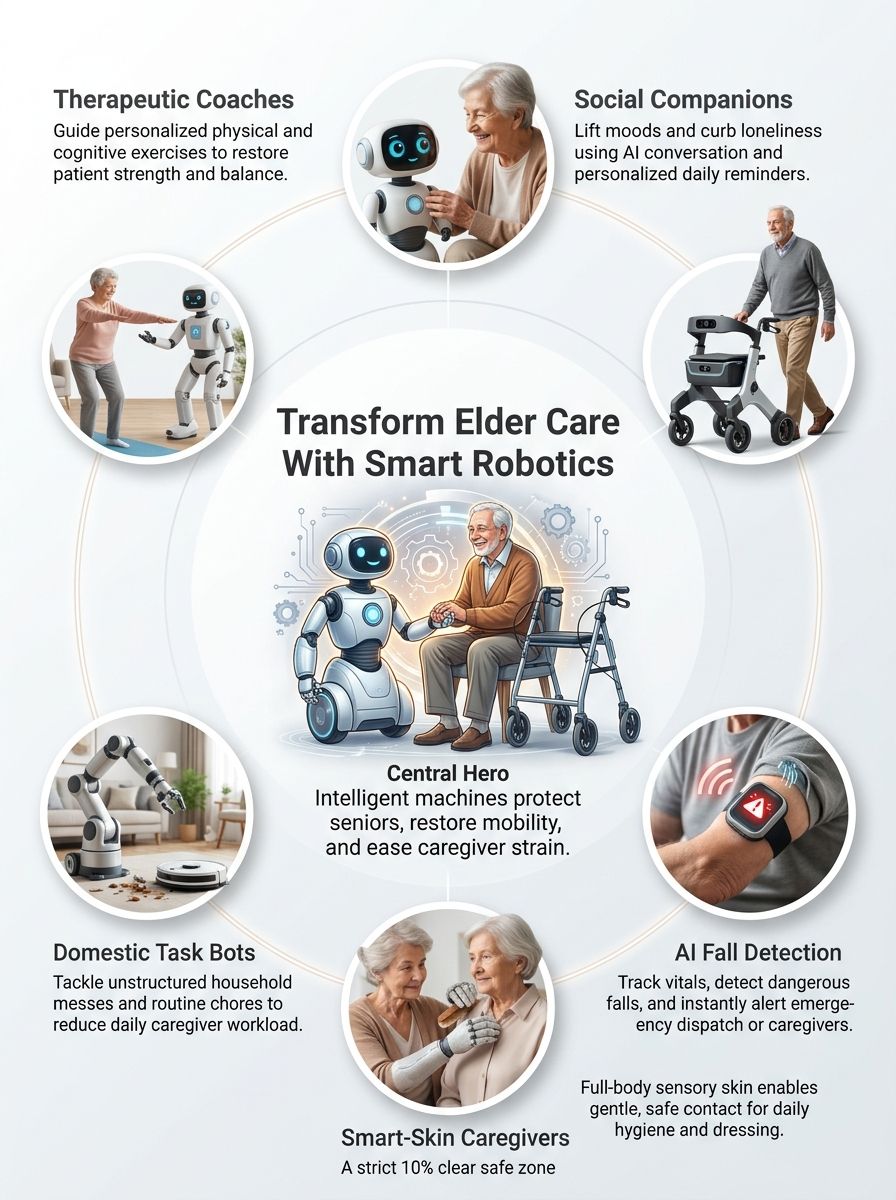
Robotics in elderly care now falls into six useful groups: companion robots, autonomous mobility aids, AI monitoring robots, task-support robots, therapeutic robots, and safer-touch humanoid platforms. Each solves a different problem, so a family should start with the daily challenge that causes the most stress.
- Companion robots can prompt conversation, activities, and check-ins.
- Mobility aids can support transfers and reduce the physical strain of caregiving.
- Remote monitoring can alert a caregiver after a possible fall or a change in routine.
- Task-support robots may help with simple household work in controlled settings.
- Therapeutic robots can guide structured exercise and cognitive activities.
- Tactile humanoid platforms are developing the safer physical contact needed for future hands-on assistance.
For most homes, the first purchases will be companion devices, smart devices, and remote monitoring tools. Full humanoid care robots are still early-stage technology, so they belong in supervised pilots rather than unsupervised personal care.
1. Socially Assistive Robots
Socially assistive robots focus on conversation, routines, and social interaction. They cannot replace family, friends, or care staff, but they can fill quiet hours with prompts that make it easier for an older adult to stay engaged.
Companion robots for emotional support
ElliQ from Intuition Robotics is a real example of a companion robot built for older adults living independently. It can prompt activities, help users message or video call family, and let them log items such as blood pressure, weight, heart rate, mood, and pain.
That makes it more useful than a generic smart speaker for someone who needs a regular nudge to follow a routine. Place a companion device where the person already spends time, such as the kitchen table or favorite chair, instead of putting it in a room they rarely use.
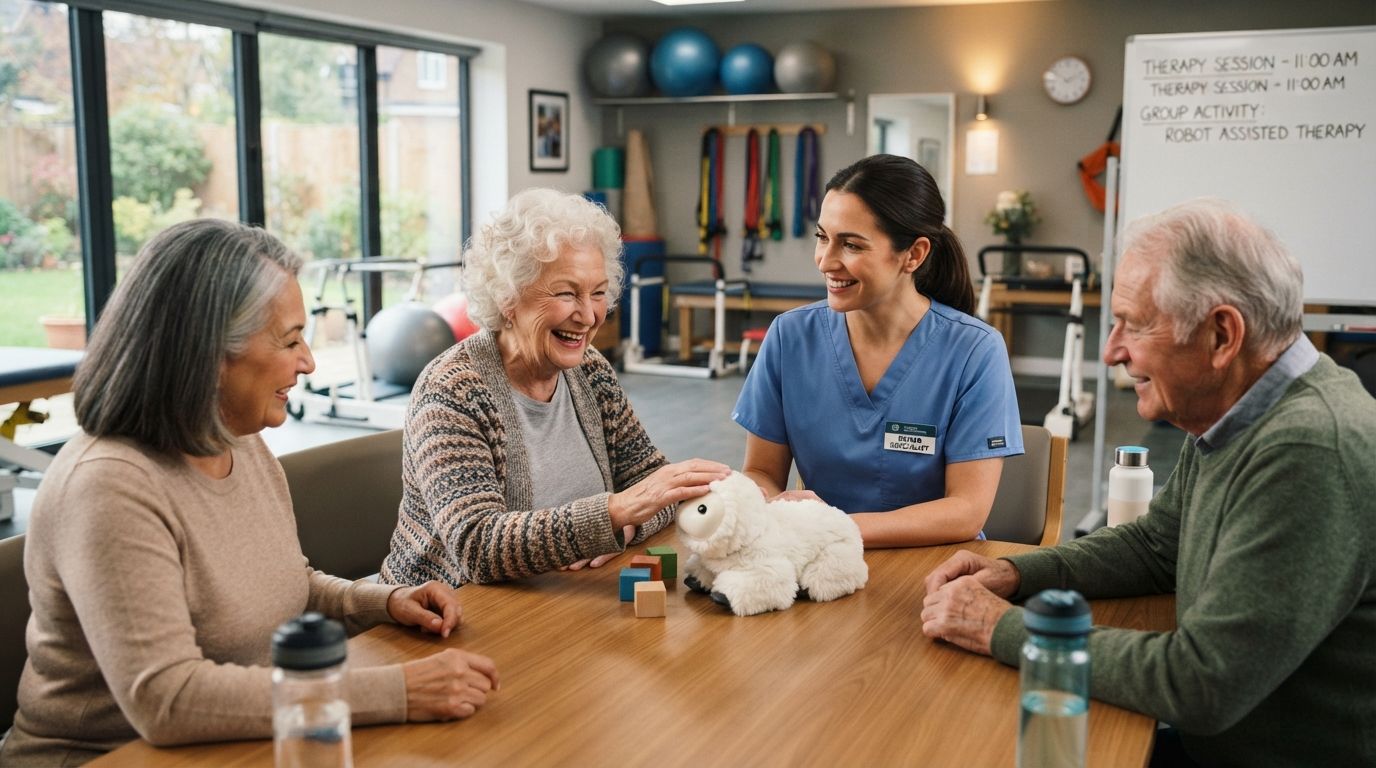
PARO, the robotic baby harp seal, offers a different kind of support. Care teams often use it in guided group sessions with people who have dementia because it invites touch, attention, and calm interaction without the demands of caring for a live animal.
A good trial starts small. Ask whether the person enjoys the device after several sessions, whether it starts useful conversations, and whether staff or family can keep it charged and available without adding another chore.
2. Autonomous Mobility Aids
Mobility aids can help people move through daily life with less strain, but they should never be chosen on looks alone. The safest option depends on balance, upper-body strength, transfer ability, home layout, and whether a trained person will be nearby.
Robotic walkers, wheelchairs, and transfer systems
Robotic mobility is moving beyond the idea of a smarter wheelchair. In February 2026, Department of Veterans Affairs researchers described the Powered Personal Transfer System, which docks a powered wheelchair to a hospital bed so a user can transfer without a caregiver lifting them.
This kind of system targets one of the hardest moments in elderly care: moving between a chair, bed, toilet, or other surface. If transfers are the main concern, ask an occupational therapist or physical therapist to watch the current transfer routine before buying any device.
| Mobility Option | Best Fit | What to Check Before Use |
|---|---|---|
| Smart walker | Someone who can already walk but needs steadier guidance | Brake use, turning space, thresholds, rugs, and ability to follow prompts |
| Powered wheelchair | Someone with limited walking endurance or strength | Door widths, charging location, seating support, and safe driving practice |
| Robotic transfer system | Someone with repeated bed-to-chair transfer needs | Professional assessment, room layout, caregiver training, and emergency backup |
The Department of Veterans Affairs also received up to $41.5 million in 2025 to develop the Robotic Assisted Mobility and Manipulation Platform. That work points to a future where a wheelchair may help with both movement and reaching tasks, but it is not a typical home purchase today.
Start with the basics that make mobility technology safer: good lighting, clear pathways, stable footwear, and a professional fit assessment. A smart device cannot compensate for a cluttered hallway or a poorly fitted chair.
3. AI-Powered Monitoring Systems
AI-powered monitoring systems watch for possible falls, changes in movement, missed routines, and health patterns. Their biggest value is speed, because they can alert the right person when an older adult cannot reach a phone.
Fall detection and health tracking
Falls deserve serious attention. The Centers for Disease Control and Prevention reports that 1 in 4 Americans age 65 and older falls each year, so a monitoring plan makes sense for anyone who has fallen before, lives alone, or struggles to get up after a fall.
Fall detection can come from a watch, pendant, camera, wall sensor, bed sensor, or floor sensor. Each type has a tradeoff: wearables only work when worn, while room sensors cover a space but may miss events outside their viewing area.
| Monitoring Type | Useful Feature | Practical Limitation |
|---|---|---|
| Watch or pendant | Can travel with the user and may include an emergency call button | Must be charged and worn consistently |
| Camera-based system | Can monitor movement without asking the person to wear a device | Requires thoughtful placement and a clear privacy agreement |
| Bed or floor sensor | Can flag nighttime movement or an unsafe transfer attempt | Only covers the immediate area around the sensor |
| Health dashboard | Can show trends in activity, sleep, and reported health measures | Does not diagnose illness or replace clinical care |
The Administration for Community Living highlights Kami Vision’s Fall Detect Camera as one example of AI monitoring. The company reports a 360-degree rotating camera, an 87-degree view, and a claimed 99.5% accuracy rate, but a family should still test alerts in the actual home and plan for false alarms.
Do not treat an alert as proof that a fall happened. Build a response routine: call the person first, contact a nearby support person if needed, and call emergency services when there is pain, confusion, a head injury, trouble breathing, or no response.
Monitoring works best alongside fall prevention. The CDC’s STEADI approach includes reviewing medicines that may cause dizziness, checking vision, improving strength and balance, and removing home hazards such as loose rugs and poor lighting.
4. Robotic Care Assistants
Robotic care assistants aim to help with daily tasks, but this category needs a careful reality check. Today’s home robots can handle limited, structured jobs much better than they can safely perform hands-on care for a person with fragile skin, poor balance, or complex medical needs.
Assistance with daily tasks and hygiene
Generative Bionics’ GENE.01 shows why touch sensing matters. Its full-body smart skin can detect touch, proximity, force, and temperature, which are capabilities future personal care robots will need before they can safely work near people.
GENE.01 is currently presented as an industrial platform, not a ready-to-buy elder care robot. That distinction matters: sensing contact is a promising technical step, but bathing, dressing, toileting, and transfers still require human judgment, consent, and close supervision.
- Good near-term uses: carrying light items, fetching objects, simple reminders, and controlled household tasks.
- Use caution with: lifting, medication decisions, bathing, toileting, and any task involving skin, tubes, wounds, or unstable balance.
- Ask before a pilot: Who supervises the robot, what happens if it stops, and can the person easily pause it?
- Protect dignity: get clear consent before using cameras, microphones, or sensors in private spaces.
Figure 02 and Atlas show rapid progress in whole-body robotics, though neither is an elder care solution. Figure 02 worked at BMW Group Plant Spartanburg in 2025, while Boston Dynamics introduced Atlas for industrial deployments in January 2026.
These machines can move, lift, and handle materials in tightly managed settings. A private home has pets, rugs, narrow passages, unpredictable movement, and people who may be injured by a small mistake, so care settings need a much higher safety bar.
5. Therapeutic Robots
Therapeutic robots support rehabilitation technology by guiding repeated movements, tracking practice, and making exercises feel more engaging. They work best as part of a plan created by a physical therapist, occupational therapist, speech-language pathologist, or other qualified clinician.
Robots designed for physical and cognitive therapy
For physical therapy, robotic systems can guide a movement, measure repetitions, and give immediate feedback. That structure can help someone practice balance, walking, arm movement, or sit-to-stand work without having to count each repetition alone.
A 2025 usability study found that robot-assisted exercise improved gait and physical function in older adults. The useful takeaway is simple: choose a program that measures a goal you care about, such as safer transfers, longer walking tolerance, or better balance, then review progress with a clinician.
Cognitive support can include games, conversation prompts, reminiscence activities, and guided group sessions. PARO sessions of about 20 to 30 minutes, two or three times each week, have shown the most consistent signs of benefit for engagement and calming in long-term care settings.
Before signing up for a therapy robot or app, ask three questions: What goal will we measure? Who reviews the result? What happens if pain, dizziness, fatigue, or frustration gets worse?
Final Thoughts
Robotic Breakthroughs offer real help, from companion robots and mobility aids to fall prevention tools, remote monitoring, therapeutic robots, and safer-touch platforms.
The practical choice is rarely the flashiest machine. Start with one problem, such as loneliness, nighttime falls, difficult transfers, or missed routines, then test a tool that fits the person’s home and comfort level.
Keep people at the center. The right technology can give caregivers faster information and give older adults more support, while human connection, clinical judgment, and personal dignity stay in charge.