We often worry about smog, car exhaust, and factory smoke when we think of air pollution. However, according to the EPA, the air inside our homes can be two to five times more polluted than the air outside. Since we spend nearly 90% of our time indoors, the quality of the air in our living rooms and bedrooms has a massive impact on our health, sleep, and productivity.
Poor indoor air quality (IAQ) creates a breeding ground for allergies, asthma triggers, and long-term respiratory issues. The good news is that you do not need a complete home renovation to fix it. With the right habits and tools, you can drastically reduce pollutants like dust, volatile organic compounds (VOCs), and mold spores. So get ready to improve indoor air quality with our expert advice.
What Indoor Air Quality Really Means?
Indoor air quality (IAQ) describes how clean or polluted the air is inside your home. It’s influenced by what you bring in (outdoor pollution, pollen), what you generate indoors (cooking fumes, cleaning sprays, smoke), and how well your home removes or dilutes those pollutants (ventilation + filtration).
IAQ can be more challenging than outdoor air because indoor spaces are smaller, often sealed for energy savings, and filled with materials that release gases over time (paint, furniture finishes, and flooring adhesives). Add everyday activities like frying food, vacuuming, lighting candles, or using scented products, and pollutants can build up faster than most people realize.
The goal isn’t “perfectly pure” air—it’s keeping pollutant levels low enough that your lungs, sinuses, skin, and sleep aren’t constantly under stress.
Importance of Maintaining Indoor Air Quality
Indoor air quality directly affects how people feel, function, and stay healthy inside their homes or workplaces. Since most individuals spend a large portion of their time indoors, poor air quality can quietly cause long-term issues without immediate warning signs. Pollutants such as dust, mold spores, pet dander, volatile organic compounds, and inadequate ventilation can accumulate over time and reduce the overall safety of indoor environments.
Maintaining good indoor air quality helps prevent the buildup of harmful contaminants that can irritate the respiratory system and worsen existing health conditions. It also supports better airflow, moisture control, and temperature balance, which are essential for creating comfortable living spaces. Without regular attention to air quality, indoor environments can become stale, unhealthy, and harder to manage efficiently.
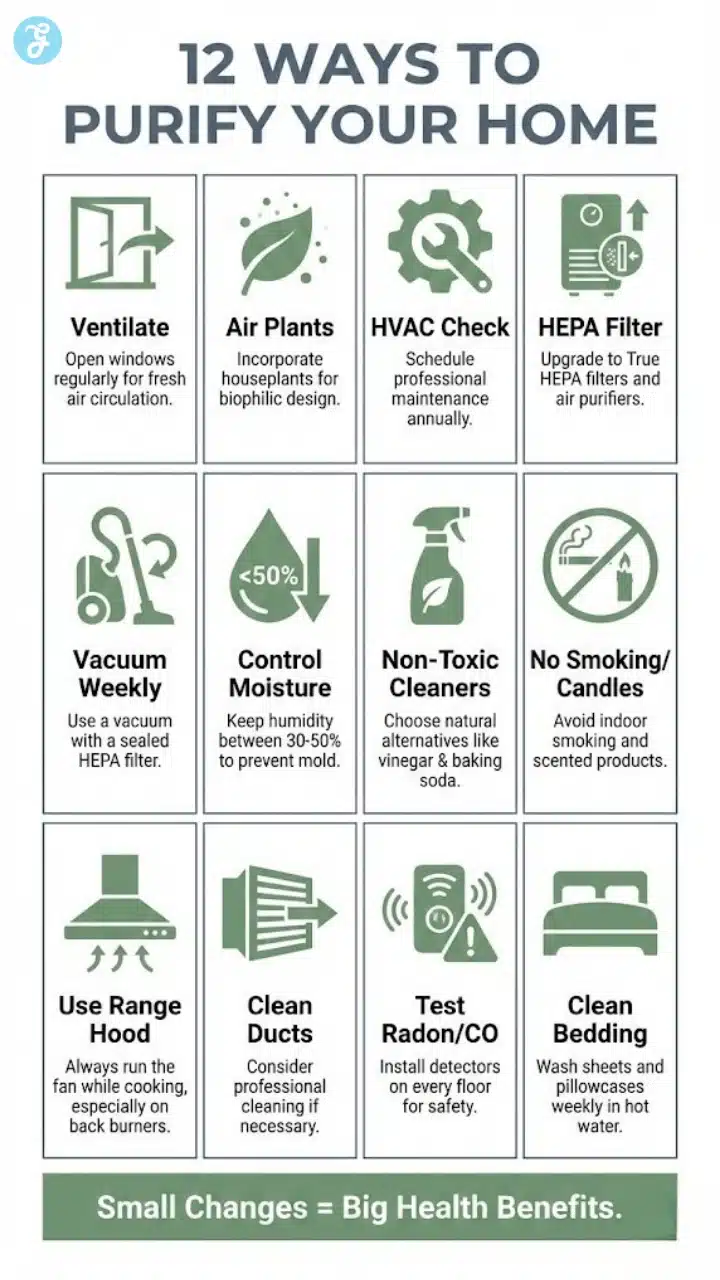
How to Improve Indoor Air Quality: 12 Effective Tips
Here are 12 practical tips to achieve cleaner air in your home:
1. Ventilate Your Home Regularly
The simplest way to clean your air is to dilute the pollutants. Modern homes are built to be airtight for energy efficiency, which unfortunately traps stale air inside.
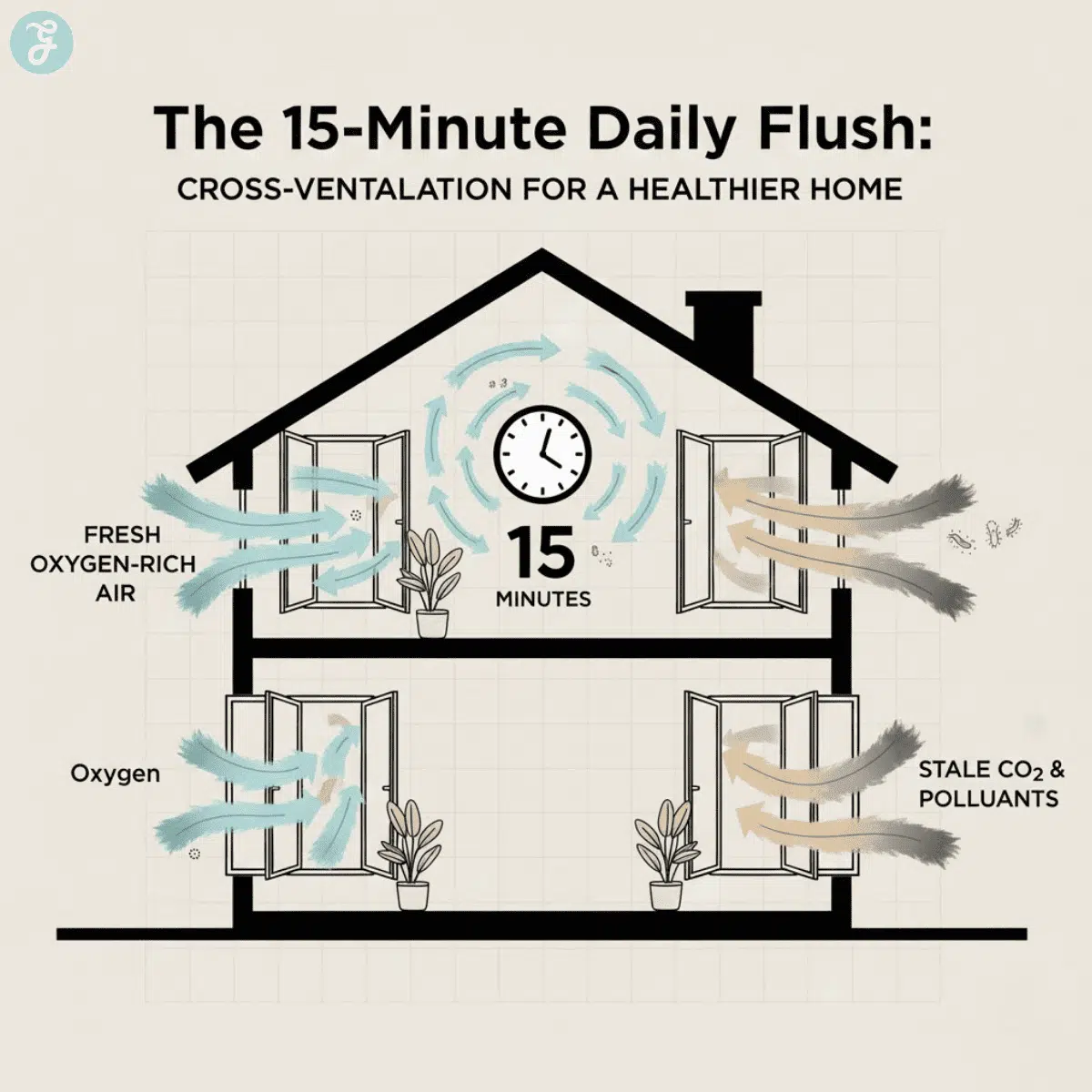
- The 15-Minute Flush: Open windows on opposite sides of your home for just 15 minutes a day to create a cross-breeze. This flushes out CO₂ and brings in oxygen without cooling down your walls too much in winter.
- Trickle Vents: If you have them, keep trickle vents on windows open year-round.
- Caution: Check your local outdoor air quality index (AQI) before opening windows. If the outdoor air is categorized as “Unhealthy,” you should keep them shut and rely on mechanical filtration.
2. Introduce Air-Purifying Plants
You have probably heard that plants purify the air. While true in a NASA lab setting, in a real-world home, you would need hundreds of plants to match the air-cleaning power of a single open window.
- The Reality: Do not rely on plants as your primary air purifier.
- The Benefit: However, do keep them for mental health, biophilic design, and minor humidity regulation. Just avoid overwatering them as this can cause mold in the soil.
3. Maintain Your HVAC System
Your home’s heating, ventilation, and air conditioning (HVAC) system plays a crucial role in air circulation and filtration.
Change Filters Regularly: Replace HVAC filters every 1-3 months, or more frequently if you have pets or allergies. High-efficiency MERV 11 or 13 filters are recommended for better particle capture.
Schedule Professional Maintenance: Have your HVAC system professionally inspected and cleaned annually to ensure it operates efficiently and doesn’t circulate pollutants.
4. Upgrade to True HEPA Filtration
Standard air filters capture large dust bunnies, but they miss the microscopic particles that enter your lungs.
- Vacuum Cleaners: Ensure your vacuum has a sealed HEPA (High-Efficiency Particulate Air) filter. Without it, your vacuum often just sucks up dust and blows the finest, most dangerous particles right back out the exhaust.
- Air Purifiers: Invest in a standalone air purifier for high-traffic rooms. Look for a “True HEPA” rating, which captures 99.97% of particles as small as 0.3 microns.
5. Control Dust and Vacuum Frequently
Dust is a major source of allergens and pollutants.
Dust Regularly: Use a damp cloth to wipe down surfaces, as this traps dust rather than spreading it.
Vacuum with HEPA Filter: Vacuum carpets, rugs, and upholstery at least once or twice a week using a vacuum cleaner with a HEPA filter to effectively trap fine particles.
Establish a No-Shoes Policy: Your shoes are magnets for outdoor toxins. They track in pesticides from lawns, lead dust from soil, and bacteria from city streets. Place a sturdy doormat outside and a shoe rack immediately inside the door. Switching to house slippers prevents these heavy metals and allergens from embedding into your carpets.
Brush Pets Frequently: Brush your pets outdoors if possible, or in a well-ventilated area, to remove loose fur and dander.
Wash Pet Bedding: Wash pet beds and blankets regularly to remove accumulated dander and dust mites.
6. Keep Your Home Dry to Prevent Mold
Excess moisture is the primary cause of mold growth, which releases spores into the air and can trigger allergies and respiratory issues. Fix Leaks Promptly: Repair any leaky pipes or roofs immediately.
Use Dehumidifiers: In humid climates or damp areas like basements, use dehumidifiers to keep indoor humidity levels below 50%. Ventilate High-Moisture Areas: Always use exhaust fans in bathrooms during showers and in the kitchen when cooking.
7. Choose Non-Toxic Cleaning Products
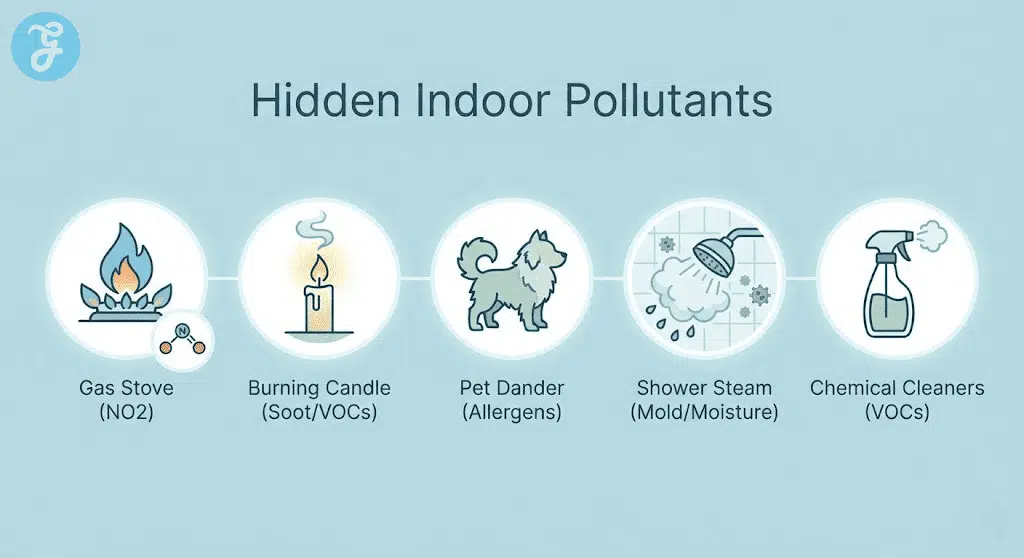
Many conventional cleaners contain harsh chemicals like ammonia, chlorine bleach, and synthetic fragrances that degrade air quality. Natural Alternatives: Vinegar, baking soda, and lemon juice are powerful cleaners that leave no toxic residue.
Fragrance-Free: Avoid air fresheners and scented candles. These often mask odors by releasing phthalates and other VOCs. Instead, use an odor absorber like a bowl of baking soda or activated charcoal.
8. Limit Indoor Pollutants from Specific Sources
Be mindful of other items that can degrade IAQ. Avoid Smoking Indoors. Tobacco smoke is a significant source of indoor air pollution.
Use natural alternatives or limit synthetic candles and air fresheners, which can release VOCs. Opt for essential oil diffusers with pure essential oils instead. Allow new furniture, carpets, and building materials to off-gas in a well-ventilated area before bringing them indoors, or choose low-VOC alternatives.
9. Source Control in the Kitchen
Gas stoves are a major source of indoor nitrogen dioxide (NO₂) and carbon monoxide.
- Always Use the Hood: Turn on your range hood every time you cook, especially if you are frying or sautéing. Ensure it vents to the outside and is not just recirculating the air.
- Back Burners: Use the back burners when possible. Range hoods capture fumes from the back burners more effectively than the front ones.
10. Consider Air Duct Cleaning (If Necessary)
While not a routine task, if you’ve recently moved into an older home, completed major renovations, or notice visible mold growth within your ducts, professional air duct cleaning might be beneficial. This can remove accumulated dust, debris, and potential mold, improving overall airflow and air quality.
11. Test for Radon and Carbon Monoxide
These are the invisible, odorless killers.
- Radon: This radioactive gas seeps up from the ground. It is the second leading cause of lung cancer. Every home should be tested for radon using a simple kit from a hardware store.
- CO Detectors: Ensure you have a working carbon monoxide detector on every floor. This is especially important near sleeping areas.
12. Create a Bedroom Sanctuary
Since you sleep for 8 hours a day, your bedroom air quality matters most.
- Dust Mite Proofing: Use allergen-impermeable covers for mattresses and pillows.
- Wash Weekly: Wash sheets and pillowcases weekly in hot water (at least 130°F or 54°C) to kill dust mites.
- Pet-Free Zone: Ideally, keep pets out of the bedroom to reduce dander accumulation where you sleep.
Common Indoor Air Pollutants and their Sources
Understanding the “enemy” makes your fixes much more effective. Here are the most common indoor pollutants and their usual sources:
Particles (PM2.5 and PM10)
These are tiny specks that float in the air and can be inhaled deep into the lungs.
-
Sources: Cooking (especially frying/charbroiling), candles/incense, smoking, fireplaces, dust, outdoor pollution leaking in
Allergens
These trigger sneezing, itching, watery eyes, and asthma symptoms.
-
Sources: Dust mites, pet dander, pollen, mold spores, cockroach debris
Volatile Organic Compounds (VOCs)
VOCs are gases released from many household items and can irritate the eyes, nose, and throat.
-
Sources: Paints, varnishes, air fresheners, fragranced cleaners, new furniture, new carpets, adhesives, certain cosmetics
Combustion Gases
These come from anything that burns fuel and can be dangerous at higher levels.
-
Sources: Gas stoves, kerosene heaters, fireplaces, attached garages (car exhaust), poorly vented appliances
Excess Moisture (Humidity Imbalance)
Too much humidity encourages mold and dust mites; too little can dry your nose and throat.
-
Sources: Showers, cooking, leaks, damp basements, poor ventilation, and overuse of humidifiers
Benefits of Maintaining Indoor Air Quality
Here are 7 benefits of maintaining indoor air quality:
-
Reduces exposure to allergens such as dust, pollen, and pet dander, helping lower the risk of respiratory irritation and allergic reactions
-
Supports healthier breathing by minimizing airborne pollutants that can trigger asthma or other lung-related conditions
-
Improves sleep quality by creating a cleaner, more comfortable indoor environment with balanced airflow
-
Helps prevent mold growth by controlling indoor moisture levels and reducing humidity buildup
-
Protects building materials and furnishings from damage caused by pollutants and excess moisture
-
Eliminates lingering odors and keeps indoor spaces feeling fresher over time
-
Enhances focus, comfort, and productivity by maintaining a healthier atmosphere for daily activities
Quick Self-Check: Signs Your Indoor Air Needs Attention
Sometimes your body notices IAQ problems before you do. Common clues include:
-
Symptoms that improve when you leave home: headaches, congestion, dry eyes, cough, fatigue
-
Dust that returns quickly (especially on dark surfaces)
-
Musty odors (often a mold/moisture sign)
-
Condensation on windows (often high humidity + poor airflow)
-
Frequent allergy flare-ups indoors, even when outdoor pollen is low
-
Stale air in bedrooms in the morning (often a ventilation issue)
If several of these match your home, don’t guess—start with ventilation + filtration + moisture control, then target specific sources (kitchen, bathroom, new products, pets).
How to Choose an Air Purifier That Actually Works
Not all “air purifiers” are equal—some are underpowered for the room, and some focus on features instead of performance.
Focus on CADR and Room Size
Look for a purifier with a CADR (Clean Air Delivery Rate) appropriate for the room. As a simple rule, choose a model rated for at least the room’s square footage, and ideally higher if you cook a lot, have pets, or live near traffic.
Get the Right Filter Combo
-
True HEPA: best for dust, pollen, smoke particles, and pet dander
-
Activated carbon: helps with odors and some gases/VOCs (the more carbon, the better)
-
Avoid “ionizers” or “ozone” claims: ozone is not something you want indoors
Placement Matters More Than People Think
-
Put the purifier where you breathe most (bedroom, living room, or home office).
-
Keep it a few feet from walls and away from curtains so airflow isn’t blocked.
-
Run it on medium/high during cooking, cleaning, wildfire smoke days, or allergy season.
Don’t Forget Filter Costs
Check replacement filter prices before buying. A great purifier becomes useless if filters are too expensive to replace on schedule.
The 3-Step Strategy That Makes Every IAQ Fix Work Better
Most indoor air improvements fall into three categories. If you think this way, you’ll choose the right fix faster:
1) Source Control (Stop the pollution at the source)
Examples: switching to fragrance-free cleaners, banning indoor smoking, using lids while cooking, and fixing leaks.
2) Ventilation (Dilute and remove polluted air)
Examples: cross-ventilation, bathroom/kitchen exhaust fans, range hoods that vent outdoors, HRV/ERV systems.
3) Filtration (Capture what’s already in the air)
Examples: MERV-rated HVAC filters, True HEPA air purifiers, sealed HEPA vacuums.
You’ll get the best results when you combine all three—especially in kitchens, bedrooms, and homes with pets or allergies.
Final Thoughts
Improving indoor air quality is a continuous process that, in the long run, has significant health benefits. By consistently implementing these 10 simple strategies—from regular ventilation and diligent cleaning to using air purifiers and choosing non-toxic products, you can create a noticeably cleaner, fresher, and healthier living environment for yourself and your family. Always remember, small changes can make a big difference in the air you breathe every day.