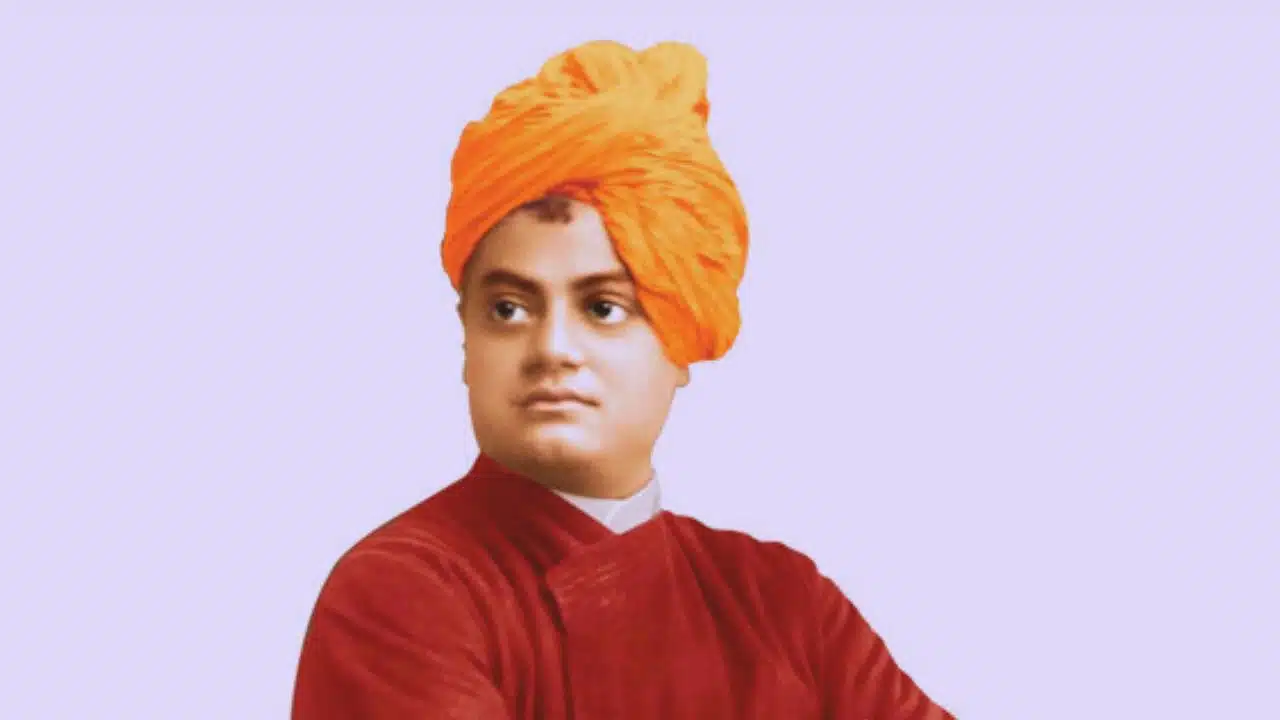
On September 11, 1893, Swami Vivekananda stepped onto the stage of the World’s Parliament of Religions in Chicago. The event was organized as part of the World’s Columbian Exposition, which celebrated 400 years since Christopher Columbus’s voyage. The Parliament was planned as a platform to showcase global faith traditions and was unprecedented in its scale, bringing together hundreds of delegates from dozens of countries.
America in the late 19th century was undergoing massive change. Rapid industrialization had transformed its economy and created new wealth but also social dislocation. Scientific advances such as Darwin’s theory of evolution and critical approaches to Christian scripture were challenging traditional beliefs. Many Americans were searching for alternative forms of spirituality. Transcendentalist thinkers like Ralph Waldo Emerson and Henry David Thoreau had already familiarized educated audiences with concepts drawn from Hindu and Buddhist texts. Against this backdrop, Vivekananda’s arrival offered something new: an authentic voice from India bringing the philosophy of Vedanta directly to Western audiences.
Background of the World’s Parliament of Religions
The Parliament took place from September 11 to 27, 1893, and drew approximately 400 representatives from a wide variety of religions. It was the first event of its kind to give non-Christian traditions an equal platform in a major Western venue. Representatives of Buddhism, Judaism, Islam, Jainism, Hinduism, and other traditions joined Christian leaders in presenting their beliefs. Newspapers of the time reported thousands of attendees listening to sessions each day, with many considering the event to be the first true experiment in organized interfaith dialogue.
For India, which was still under British colonial rule, the Parliament was a rare global stage. Vivekananda had traveled to the United States without formal institutional backing, relying instead on the support of individuals who recognized his intellect and charisma. His acceptance as a delegate signaled not only his personal credibility but also the growing interest in Asian philosophies among Western audiences.
Vivekananda’s Speech and Its Core Message
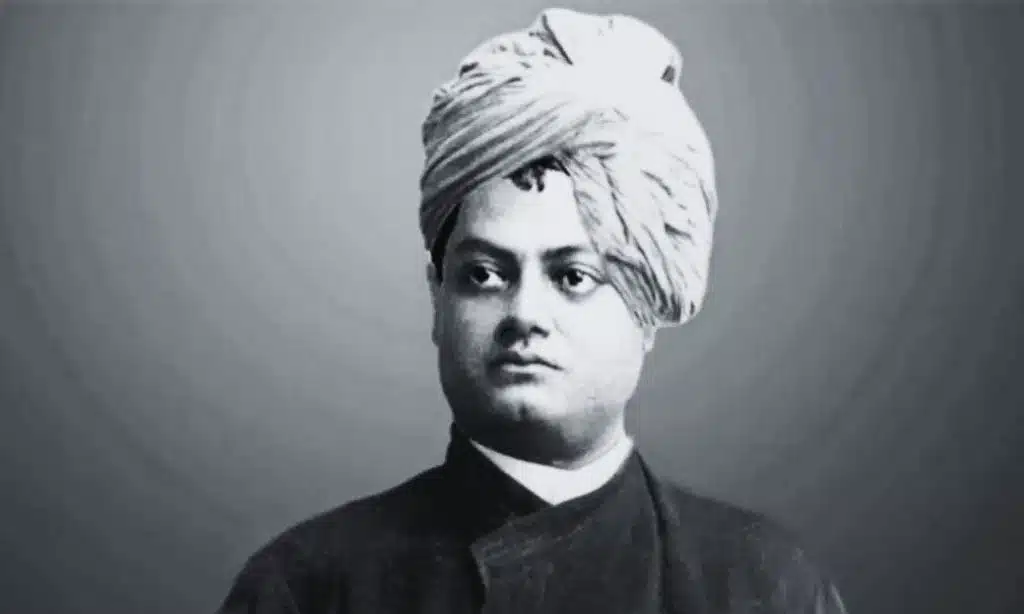
When Vivekananda addressed the assembly on September 11, he introduced Hindu philosophy in a way that emphasized universality and tolerance. His presentation of Vedanta centered on the belief that all religions are valid paths leading toward the same ultimate truth. He argued that sectarianism and religious dogma had long caused conflict, bloodshed, and decline in human civilization, but he asserted that the future could be one of harmony if humanity embraced the idea of spiritual unity.
The speech stood out because it combined philosophical depth with moral urgency. Rather than presenting Hinduism as an exotic faith, Vivekananda explained it as a rational and inclusive philosophy that respected all traditions. His appeal aligned with the growing mood in America, where many were eager to explore alternatives to rigid orthodoxy.
Reception and Immediate Impact
Reports from the time described the audience as deeply moved. His words were received not simply as an intellectual statement but as a moral call for peace and tolerance. For Americans unfamiliar with Hindu traditions, it was a striking introduction that challenged stereotypes of India as a land of superstition and instead positioned it as a source of profound spiritual wisdom.
Vivekananda’s influence did not end with this first speech. Over the following days of the Parliament, he spoke several more times, elaborating on Vedantic ideas such as non-duality, the divinity inherent in every soul, and the importance of service to humanity. His ability to bridge Eastern philosophy with Western intellectual currents helped cement his popularity.
Tour Across the United States
After the Parliament concluded, Vivekananda remained in the United States for nearly two years, traveling across the country and giving lectures in major cities. He visited places such as New York, Boston, Detroit, and San Francisco, where his talks drew large audiences. He also engaged with universities, delivering lectures at Harvard and other institutions.
His presentations often addressed not only religious philosophy but also social and ethical issues. He emphasized the need for service to humanity, the integration of spiritual life with practical action, and the importance of mutual respect between cultures. Many Americans, especially intellectuals and reformers, found his ideas compelling. He attracted disciples, some of whom later traveled to India to continue their study of Vedanta.
Institutional Legacy: Vedanta Societies
The most enduring institutional outcome of Vivekananda’s American journey was the establishment of Vedanta Societies. These organizations were founded in cities such as New York and San Francisco, and they served as centers for the study of Vedantic philosophy, meditation, and yoga. They also provided a community for Americans interested in Indian spirituality.
The societies continued to expand in the 20th century and remain active today, offering classes, lectures, and publications. Through these institutions, Vivekananda’s message was preserved and transmitted to new generations. They also became platforms for interfaith dialogue and social reform, consistent with the principles he espoused.
Influence on Culture, Thought, and Popular Media
Vivekananda’s impact went beyond religion. His introduction of Vedanta philosophy influenced major writers, philosophers, and artists in the West. Figures such as Aldous Huxley, J. D. Salinger, and Christopher Isherwood drew on Vedantic ideas in their work. In popular culture, the philosophy of interconnectedness and non-duality that Vivekananda emphasized even found echoes in films like Star Wars, where themes of universal energy and balance reflect Vedantic concepts.
He also helped popularize practices that would later become central to global wellness culture. Meditation and yoga, once practiced mainly by Indian renunciants, began to spread among Western audiences partly through his efforts. Today, yoga is a multibillion-dollar global industry, and meditation is widely practiced for health and psychological well-being, but their early entry into Western consciousness can be traced to Vivekananda’s work.
Lasting Relevance in the Modern World
Swami Vivekananda’s appearance in Chicago is remembered as a turning point in East-West dialogue. His emphasis on harmony among religions resonates strongly in today’s world, where sectarian conflict and religious intolerance remain major global challenges. His call for the rejection of fanaticism and for mutual respect across traditions continues to inspire interfaith initiatives.
For India, Vivekananda became a symbol of cultural pride and intellectual achievement during the colonial era. He demonstrated that Indian philosophy could not only hold its own on the global stage but also shape global thought. In the United States and beyond, his speeches and writings laid the groundwork for enduring interest in Indian spirituality and for the development of cross-cultural understanding.
The speech delivered by Swami Vivekananda at the 1893 Parliament of Religions was more than a personal triumph. It was a foundational moment in modern interreligious dialogue and a milestone in the global spread of Indian philosophy. Through his oratory, teaching, and institutions, Vivekananda bridged East and West, and his message of tolerance, inclusivity, and spiritual unity remains as urgent today as it was over a century ago.