
In most medical practices today, the weight of documentation, administrative tasks, and time pressure can easily overshadow patient care. While technology has already shaped how we record and share data, a new wave of AI tools is now helping practices move from “getting by” to truly working smarter. One such innovation that is gaining attention is medical ChatGPT, which offers a way to reduce administrative work while improving accuracy and efficiency.
Clinics that once struggled to keep up with paperwork are now finding room to breathe. By introducing AI into routine workflows, physicians can focus more on patients and less on screens. But AI does not replace the human side of care. Instead, it supports it by handling repetitive, time-consuming parts of the job. And with a little planning, even small practices can make it work.
Less Time on Charts, More Time With Patients
Doctors do not enter the field of medicine to spend their days writing notes. Yet in many clinics, charting can take up just as much time as seeing patients. AI can change that. With smart tools that transcribe conversations and build accurate documentation, charting becomes faster and more natural.
Instead of typing during or after appointments, providers can speak freely while the AI listens and captures key points. Some tools even suggest summaries, fill in structured data, or highlight missing elements. The result is less time at the keyboard and more eye contact with patients. That change alone improves the experience for everyone in the room.
Smarter Scheduling and Staff Coordination
AI does more than write notes. Many practices now use it to streamline scheduling, reduce no-shows, and improve staff coordination. By analyzing patterns in patient visits, AI tools can recommend better appointment slots, predict cancelations, and optimize daily calendars.
These systems help front desk teams avoid overbooking or underutilizing providers. They also allow for quick adjustments when things change. Staff can spend less time managing the schedule and more time assisting patients. The flow of the day feels smoother, and stress levels drop for everyone.
Better Communication and Follow-Up
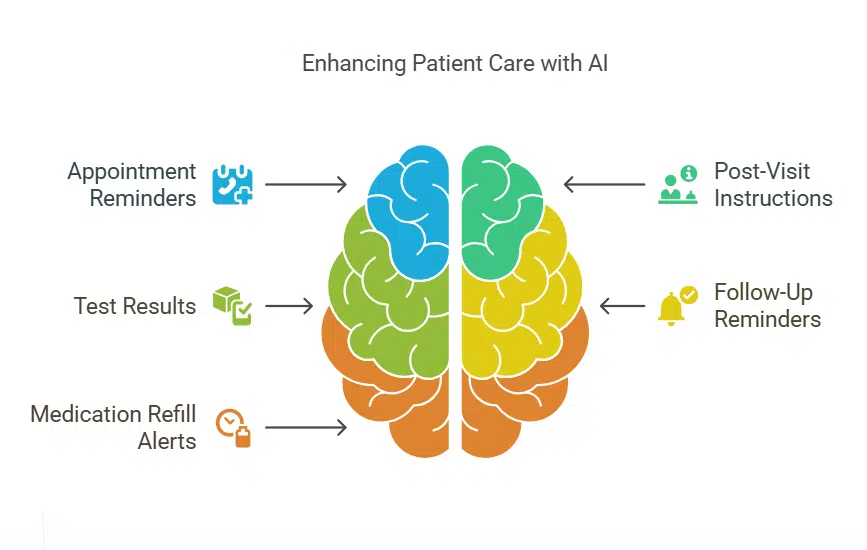
Patients forget things. Doctors are human. But AI tools can fill in those gaps. Many practices use automated systems to send appointment reminders, post-visit instructions, or test results. These tools ensure that patients stay informed without requiring the team to call or email each person individually.
AI-powered messaging systems can even flag patients who are overdue for follow-ups or who might need a medication refill soon. This proactive communication helps with patient retention and keeps care on track. It also shows patients that the practice is organized and attentive.
Improved Billing and Fewer Errors
One of the most frustrating parts of running a practice is dealing with billing errors and claims rejections. AI can help reduce these issues by ensuring that documentation is complete, codes are accurate, and notes support billing requirements.
Some systems can check notes in real time, alerting providers to missing elements before a claim is submitted. Others review claims after submission and suggest corrections. Either way, the result is cleaner billing, fewer denials, and faster payments. Practices can retain more of the revenue they earn, without increasing their administrative load.
Training and Onboarding Made Easier
Bringing new team members up to speed can be a time-consuming process. AI tools can help by providing smart training support. Some systems use past data and interactions to help new staff understand common workflows, frequently asked questions, or preferred communication styles.
Instead of relying on a team member to explain everything, AI can offer real-time suggestions, walkthroughs, or tips based on the situation. This shortens the learning curve and builds confidence faster. It also ensures that patient care remains consistent even when the team is growing or changing.
Room for Growth Without Burnout
Perhaps the most powerful benefit of AI in medical practices is its ability to support growth without adding pressure. Many clinics want to expand services, increase patient volume, or explore new care models. But growth often leads to burnout if the systems behind it are not efficient.
AI gives practices room to grow by absorbing the extra work. Whether it is documentation, scheduling, or patient engagement, the right tools make it easier to scale up without overwhelming the team. That means providers can care for more people without compromising the balance and quality that drew them to medicine in the first place.