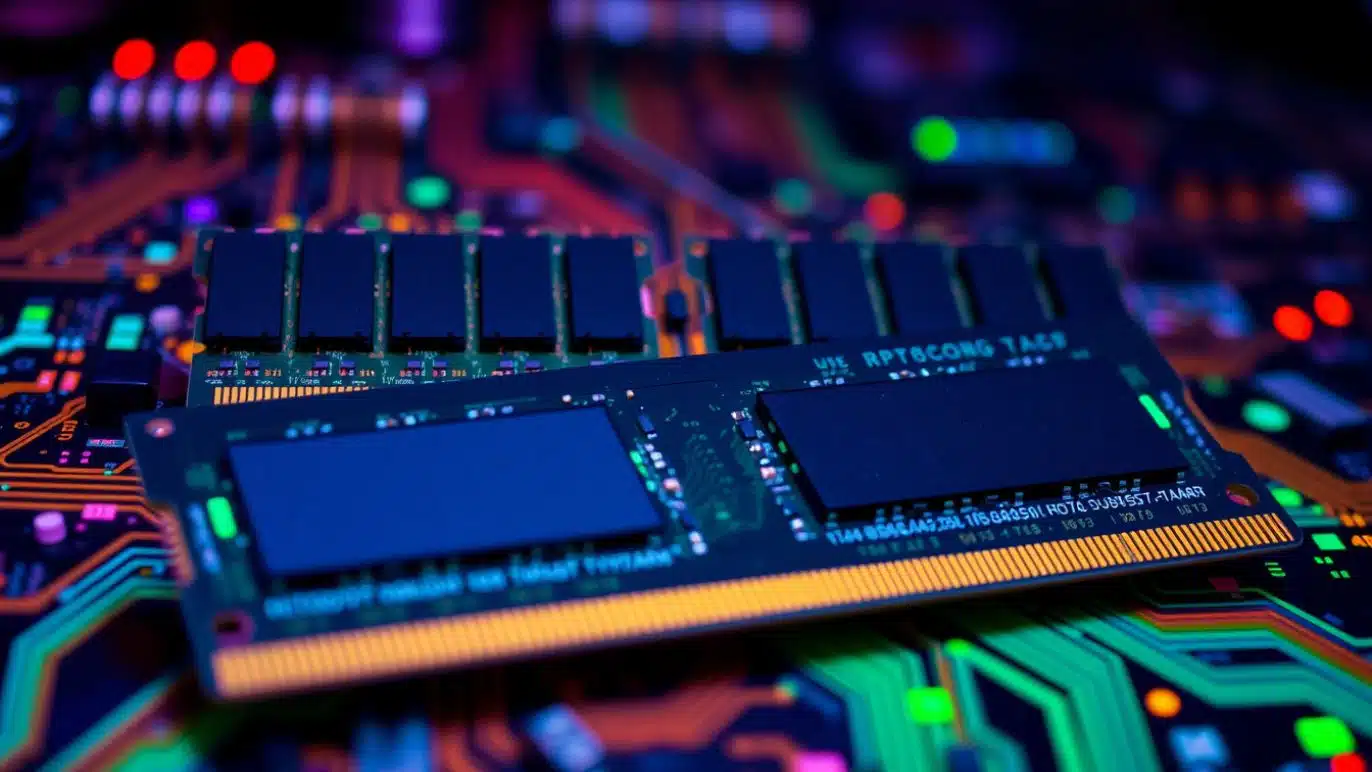
In a stark warning to the tech industry, South Korean memory giant SK Hynix has forecasted that the ongoing global shortage of DRAM and other memory chips will extend through late 2027, driven primarily by insatiable demand from AI data centers. This prolonged crunch threatens to inflate prices for everything from smartphones to laptops and servers, marking a seismic shift in the semiconductor landscape. As manufacturers scramble for limited supplies, consumers and businesses alike face a new era of “chipflation” that could reshape markets well into the next decade.
Roots of the Crisis
The current memory shortage traces back to a perfect storm of surging AI infrastructure needs and constrained production capacity. Explosive growth in high-bandwidth memory (HBM) for AI accelerators like Nvidia’s GPUs has forced major producers—SK Hynix, Samsung, and Micron—to redirect wafer fabrication from commodity DRAM used in PCs and phones to premium HBM products. SK Hynix’s internal analysis reveals that AI server demand will propel DRAM needs by 24% annually, with market share jumping from 38% in 2025 to 53% by 2030, outpacing supply expansions that take years to materialize.
Inventory levels have plummeted dramatically, dropping from 31 weeks post-pandemic glut to just 6-8 weeks by late 2025, signaling acute scarcity. Lead times for DDR5 have stretched to 20-28 weeks, up from the historical 8-12 weeks, while distributors report even tighter buffers for DDR4 and LPDDR4X. This isn’t a fleeting dip; SK Hynix has sold out its entire DRAM, NAND, and HBM capacity through 2026, with new facilities like its M15X factory prioritizing HBM until at least 2026.
Compounding the issue, legacy memory lines like DDR4 are being phased out as firms chase higher margins from AI-centric products. Samsung and SK Hynix’s cautious capex strategies—focusing on profitability over rapid volume ramps—further tighten general-purpose RAM availability, with some reports extending the shortage horizon to 2028.
SK Hynix’s Dire Forecast
SK Hynix, holding a commanding 70% share in the future HBM4 market, delivered the sobering prediction during analyst briefings and internal reports leaked in late 2025. Chairman Chey Tae-won of parent SK Group highlighted the firm’s struggle: “We’re receiving a plethora of requests for memory supplies… If we cannot meet their needs, they could find themselves unable to operate.” Citi analysts echoed this in November, noting deficits persisting until late 2027 due to AI’s voracious appetite.
Internal documents paint an even grimmer picture, projecting consumer DRAM shortages until 2028 as EUV lithography prioritizes advanced HBM over everyday chips. SK Hynix plans to convert half its commodity DRAM lines to 1c-class (10nm sixth-gen) tech, but admits even 30% revenue reinvested in 2026 capex won’t fully alleviate the gap. OpenAI’s Stargate project alone could demand up to 900,000 HBM wafers monthly by 2029—double current global output—locking in supplies via preliminary deals with SK Hynix and Samsung.
This outlook surpasses milder estimates like UBS’s Q1 2027 relief, underscoring a structural pivot to AI dominance. As SK Hynix ramps HBM4 by late 2025 for Nvidia’s next-gen AI chips, traditional RAM remains sidelined.
Surging Prices Across the Board
Memory prices have skyrocketed, with DRAM contract prices leaping 15-20% in Q4 2025 alone, defying seasonal norms. Spot DDR5 kits doubled from under $95 for 32GB in mid-2025 to $184 by October, while DDR4 hit parity amid wind-downs. Overall DRAM surges reached 170% in some segments, NAND up 10%, as cloud giants aggressively procure.
Retail ripples are evident: A TeamGroup 64GB DDR5 kit jumped from $210 to $650. Samsung reportedly can’t even buy its own RAM for devices, and Micron axed its consumer Crucial brand to focus on enterprise. In Japan, stores ration HDDs; Chinese smartphone firms warn of hikes.
| Memory Type | Q4 2025 Price Surge | Key Driver |
|---|---|---|
| DDR5 (Consumer Kits) | Up 100%+ | AI/server reallocation |
| DDR4 (Legacy) | Up 100-170% | Production phase-out |
| HBM3E/4 | Sold out through 2026 | Nvidia/OpenAI demand |
| NAND Flash | Up 10-20% | Enterprise SSD priority |
| LPDDR5X (Mobile) | Up 15-30% | Smartphone OEM squeeze |
Ripple Effects on Consumers and Devices
Consumers feel the pinch hardest in everyday tech. PCPartPicker trends show relentless RAM inflation, delaying builds and hiking costs. Lenovo stockpiles RAM to shield laptop prices, but Dell, HP, and Asus confirm increases amid Windows 10’s end-of-life and AI PC mandates.
Smartphones face a “perfect storm”: IDC predicts 3-5% average price hikes in moderate scenarios, up to 10% pessimistic, as budget brands like Xiaomi and Honor pass on costs. Unable to downgrade specs further, they’ll trim storage or raise tags—Xiaomi already upped tablets. Samsung and Apple, with 12-24 month supply locks, might hold firmer but could skip 16GB+ RAM bumps seen in iPhone 17 Pro/Galaxy S25 Ultra.
Gaming and SBCs suffer too: Raspberry Pi 5’s 1GB model hit $45 on memory woes; Mono boards face production halts. Counterpoint slashed 2026 smartphone shipments 2.1% due to bill-of-materials inflation.
| Sector | Projected Impact | Examples |
|---|---|---|
| Smartphones | 3-10% ASP rise; spec cuts | Xiaomi/Honor hikes; shipments down 2% |
| PCs/Laptops | Price surges; AI PC delays | Dell/HP confirm increases; Lenovo stockpiles |
| Gaming/Embedded | Lead times 20+ weeks; shortages | Raspberry Pi +$15; DDR5 kits 3x price |
| Servers/Industrial | Rationing for legacy DDR4 | Long lifecycle disruptions |
Industry scramble: Capacity Wars and AI Prioritization
Hyperscalers like Microsoft, Google, ByteDance, and Amazon dispatch execs to Korea, racing for allocations. SK Hynix, Samsung, and Micron book 2026 HBM fully; Samsung probes internal DRAM scandals amid expansions. Samsung eyes HBM line growth for HBM4 edge, while Micron negotiates specs.
New fabs loom—M15X online 2026, Yongin cluster 2027—but prioritize AI, not consumer RAM. SK Hynix’s 1c DRAM shift and Samsung’s short-term contracts hedge bets on prolonged tightness.
Echoes from History
DRAM cycles boom-bust historically: 1995-97 saw 75% price crashes from overbuilds, utilization plunging 95% to 86%. Unlike demand-driven gluts, 2025’s is supply-constrained by AI diversion, resembling a “supercycle.” Past shortages spurred fabs; today’s AI twist may sustain upcycles longer.
Manufacturer Strategies and Future Outlook
Firms adapt ruthlessly: Laptop OEMs cut SSD capacities, phase lines early. SK Hynix bets on HBM dominance; Samsung cautious on output. Relief hinges on 2027-28 fabs, but AI’s “seemingly inexhaustible” pull suggests persistence.
Pessimistic views eye 2028; optimistic capex surges could ease by Q1 2027. Either way, 2026 production sells out, per SK Hynix.
What Lies Ahead for Global Markets
Businesses should stockpile now, diversify suppliers, or pivot to efficient designs. Consumers: Delay non-essential upgrades; eye used/refurb markets. Policymakers in emerging hubs like Singapore, UAE, or South Africa may push local fabs.
This crisis underscores AI’s double-edged sword: innovation accelerator, supply disruptor. As SK Hynix warns, the RAM drought endures until 2027—and possibly beyond—rewiring tech economics profoundly.