You might be standing at a massive crossroads right now. School feels like a treadmill that never stops. Jumping straight into a 9-to-5 job sounds terrifying. Maybe you just feel tired. You are likely wondering if taking a break is a brilliant move or a huge mistake. Here is the reality. Gap Year Trends in 2026 show that more students are pressing pause before college or careers than ever before. They want rest. They want real-life skills. They want time to figure out who they actually are.
This post clears up the big question regarding your future. I am going to share fresh facts, useful tips, and honest stories to help you plan wisely. We will look at the numbers and the real-world results.
What Is a Gap Year?
A gap year is a constructive break from school or work. It typically lasts 12 months, but it can be a semester or even a few years. Most people use this time for personal growth, mental health recovery, or to fix burnout. It is not just sitting on a couch.
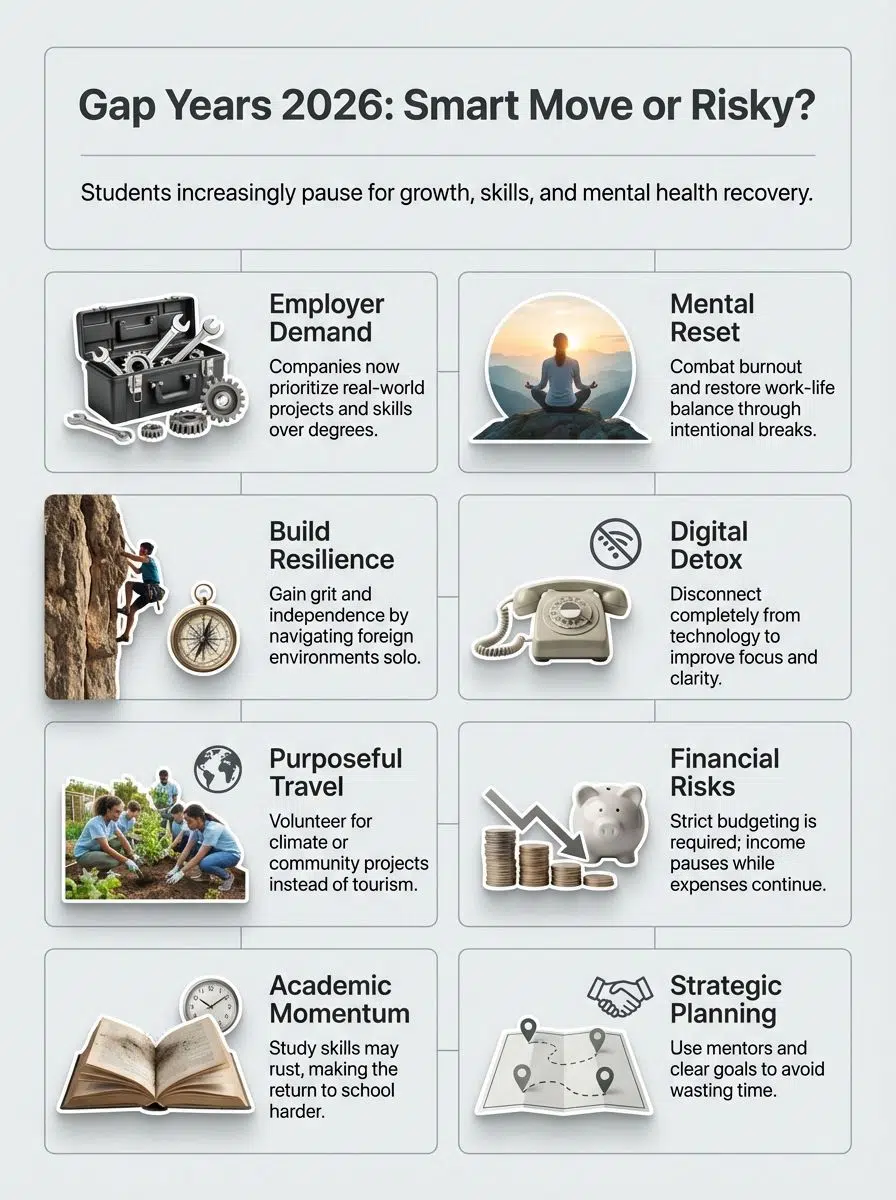
Some travel to new places. Others volunteer with established groups like AmeriCorps to earn money for education. Some simply try out different jobs to see what fits.
Many students take this gap before college. Others choose it after graduation or even in the middle of their careers as a sabbatical. The goal is almost always the same. People want work-life balance and real-world experience before they make expensive decisions about their future.
According to the Gap Year Association, 90% of students who take a structured gap year return to college within a year. They often come back more focused than their peers.
“Sometimes you find your path while wandering off course,” said one recent graduate who spent her break teaching English in Japan.
Why Are Gap Years Gaining Popularity in 2026?
Many young adults are hitting the pause button. They crave a breather to recharge. More people see this break as a strategic career move rather than just a long vacation.
Shift in educational trends
Students now want more than just grades. Schools are shifting focus to teach real skills like teamwork and problem-solving. Colleges have started to care deeply about what you do outside the classroom.
Admissions officers at top US universities like Harvard actually encourage admitted students to defer enrollment for a year. They know these students arrive on campus with more maturity.
They might ask about projects you managed or work you finished during a gap year. They value this over a perfect report card.
Technology shapes how we learn today. You can use:
- Coursera or edX to earn professional certificates from companies like Google.
- Duolingo to master a language before a trip.
- MasterClass to learn creative skills from industry icons.
These tools let you learn outside regular school walls without falling behind.
Rising focus on mental health and burnout recovery
More young people in 2026 put their well-being first. Long school days and tight schedules wear you down. Taking a career break gives your mind time to heal.
The American Psychological Association reports that Gen Z reports higher stress levels than any other generation. A break is often the best medicine.
Many use this intentional time off for rest and reflection. Some even join burnout recovery programs or talk to experts about mental health.
A simple walk or unplugged travel can feel amazing after years behind a desk. A gap year helps some avoid depression before it starts. Others find new energy for their professional goals.
As one college counselor says:
Sometimes you need to pause so your brain can catch up with your heart.
Employers valuing skills over traditional credentials
Big companies want sharp skills. They care less about fancy diplomas than they used to. Tech giants often hire people based on what they can actually build or solve.
LinkedIn even added a dedicated “Career Break” entry option to profiles. This legitimizes the gap year as a valid part of your professional history.
Hands-on learning during a career break means a lot. People who build apps, lead teams, or solve local problems show grit. Bosses love that. If you can prove you grew as a person, you will open doors faster than a gold-embossed paper ever could.
Productive Aspects of a Gap Year
A gap year can open doors to fresh skills and hidden talents. Let’s look at the specific ways this time off pays dividends for your future.
Opportunities for skill-building and career readiness
You can learn many new skills during a career break. Many young adults use this time for professional development. Some join coding bootcamps like General Assembly. Others try jobs in retail or offices.
These roles teach you how to manage time and people. A survey by Cengage Group found that roughly 60% of employers are dropping degree requirements for entry-level jobs. They want experience.
Learning happens everywhere. A person who volunteers often picks up leadership talents quickly. Paid internships give you real-world tasks to handle under pressure. This type of skill acquisition fits right into what bosses need today.
Gap years help build confidence for job interviews. By testing your abilities in many settings, you prepare yourself for any twists on your path ahead.
Gaining real-world experience
Gap years in 2026 often mean rolling up your sleeves. Some students work part-time jobs to earn their first paychecks. Others volunteer at local non-profits.
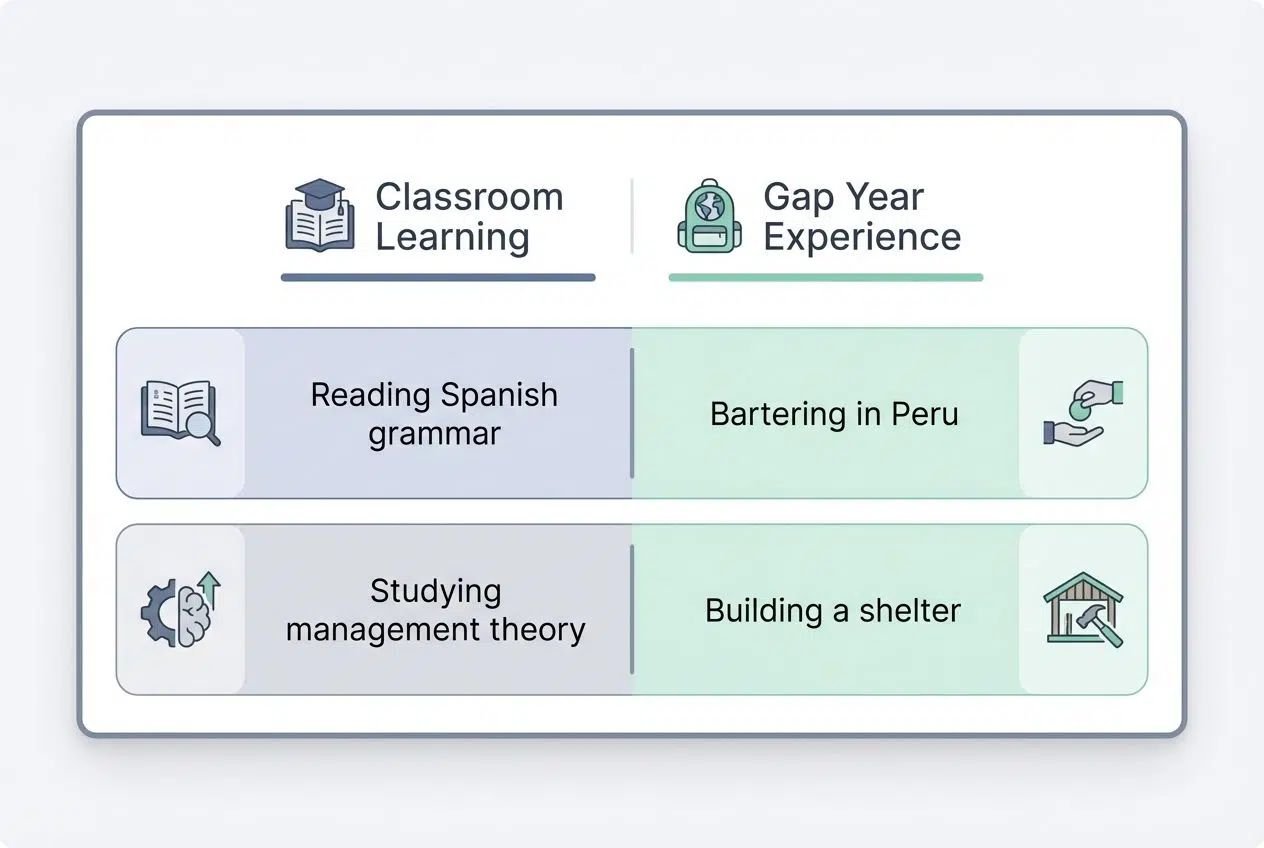
Consider the difference between classroom theory and real application:
| Classroom Learning | Gap Year Experience |
|---|---|
| Reading about Spanish grammar | Bartering for vegetables in a market in Peru |
| Studying management theory | Leading a team of volunteers to build a shelter |
| Analyzing economic models | Managing a strict daily travel budget of $40 |
A year spent helping out at a hospital can spark an interest in medicine. It shows you how real teamwork feels under stress.
Travel adds more tools to your toolbox. Working harvests on organic farms through WWOOF looks great on professional development lists. These experiences help build confidence fast. You might find what lights your fire is just one new challenge away.
Cultivating resilience and independence
Taking a break teaches you to handle surprises. You learn to solve problems on your own. Many find it hard at first. You will get better at handling stress.
A year spent working or traveling builds mental strength. This is often called your “Adaptability Quotient” or AQ. Employers in 2026 prize AQ highly because the business world changes so fast.
Cooking for yourself pushes you out of your comfort zone. Life outside the classroom forces quick decisions. Missing a bus in Italy is not a disaster. It is a lesson in patience. This kind of practice helps adults face career transitions with grit later on.
Exploring personal passions and interests
Many young people use a career break to try new hobbies. One teen may paint murals. Another might volunteer at an animal shelter. People say this kind of time off fuels personal growth. It sparks fresh ideas about future goals.

Projects like learning guitar or starting a blog build confidence. Others join cooking courses. Some travel to help with farm projects overseas. These activities fill the gap year with meaning. They teach real-world skills that attract employers later on.
Potential Downsides of a Gap Year
Sometimes, taking a gap year can bring unexpected bumps in the road. These obstacles might leave you questioning if your break is a springboard or just a delay.
Financial challenges
A year away from school or work means your wallet feels the pinch. You have no steady paycheck. Bills still cost money.
Structured programs can be expensive. A semester with a program like Semester at Sea can cost over $25,000. Even a basic extended vacation racks up costs fast.
Some students dip into savings. Others take odd jobs. Scholarships for gap years exist in 2026, but they are competitive. Organizations like USA Gap Year Fairs offer some financial aid listings, but you need to dig for them. Credit card debt can sneak up on you. You must be careful with spending habits during this time off.
Risk of losing academic momentum
Stepping away from classes can make studying harder once you return. Stopping your studies often means losing study habits. You might forget complex ideas.
This is often called “academic atrophy.” It affects math and science skills the most. Many students report struggling to get back into the groove. Going months without regular reading or tests leaves skills feeling rusty.
Friends may have moved ahead. Some find it tough to catch up. The longer the gap lasts, the harder it becomes to snap back into an academic mindset.
Mismanagement of time
Some students use a sabbatical as a permanent vacation. They waste precious months. Procrastination sets in fast without clear goals. Projects get abandoned. Days blur together.
Warning: A gap year on your resume that looks like a 12-month video game marathon is a red flag to employers. You need a story to tell about how you spent your time.
Distractions like social media can eat into productive hours. With no structure, it is easy to lose motivation. Even with the best intentions, many young people struggle to manage their time. This risks career realignment setbacks instead of progress.
Top Gap Year Trends in 2026
Gap years in 2026 are breaking the mold. They offer fresh ways to learn and live. Here is what is happening right now.
Digital detox and unplugged experiences
Turning off screens is taking center stage. Many young people step away from phones for long periods. Some take part in programs that ban all tech use.
These unplugged times help students recharge their mental health. It helps them recover from burnout. Unplugged adventures range from nature hikes to meditation retreats. Camp Grounded is one example of a place where adults go to disconnect.
Participants often report better sleep. They find new ideas about life. Going offline builds self-control. It teaches the value of being present.
Focus on cultural immersion over destination-hopping
Living with local families helps you learn traditions. Cooking meals and chatting at markets teach real lessons. These moments give better personal growth than snapping a quick selfie.
Young adults are taking longer stays in fewer places. This is “slow travel.” People want to return home with relationships. They want stories, not just pictures. By slowing down, travelers gain mental health benefits. This approach builds empathy and awareness. These are traits employers love.
Purposeful and sustainable travel programs
Purposeful travel programs ask young adults to make a real difference. Many gap year travelers now volunteer in climate projects. They help with wildlife care. In 2026, more companies offer programs that support small farms. They teach green energy skills.
Organizations like Global Vision International (GVI) run projects where you can contribute to marine conservation or community development. These trips spark personal growth.
Such experiences show future employers you care about the planet. You know how to work with others from different backgrounds. This is a strong point for any professional development plan.
Structured gap year programs with mentorship
Some choose structured gap year programs. These plans offer more than adventure. In 2026, many students use programs that pair them with a mentor.
A mentor gives advice. They offer honest feedback during the career break. For example, Global Citizen Year matches young adults with skilled leaders. Mentors help set clear professional goals. Studies show mentored students adapt faster to change.
Employers like seeing this kind of experience on resumes. It shows readiness for tough jobs. Gaining help from someone who has walked the path before makes a massive difference.
How to Maximize the Benefits of a Gap Year
Set your sights on what you want. If you don’t, you might end up wandering aimlessly. A smart plan can turn a simple break into something truly life-changing.
Align your gap year with clear goals
Pick one or two strong reasons for taking time off. Some people want to focus on mental health. Others chase professional development.
Try using the SMART goal framework. Make your goals Specific, Measurable, Achievable, Relevant, and Time-bound. Instead of saying “I want to learn Spanish,” say “I want to hold a 5-minute conversation in Spanish by December.”
Keep your mind on career growth. Aim for work experience or travel that teaches you something new. Build a plan so each step leads somewhere useful. This way, your gap year becomes intentional time off. It has direction and meaning.
Research and plan ahead
Start with some solid research. Browse online reviews. Read blogs from people who took a sabbatical. Set clear dates for your gap year. Write down your professional goals. Make a list of the skills you want to gain.
Check the visa requirements for US citizens if you plan to go abroad. The US Department of State website is your best source for this. Many countries allow tourists to stay for 90 days, but working requires different paperwork.
Talk to mentors or school advisors. Check program costs. See if scholarships are out there. Research safe travel options for 2026.
Compare structured programs that focus on mental health. A little prep now turns intentional time off into real personal growth later.
Effective Budget Management and Financial Planning
Money slips away faster than you think. Planning helps you stretch your cash. It helps you stay focused on goals. Set a clear spending limit for each month. Use budgeting apps like TravelSpend or Trail Wallet to track every dollar in real-time.
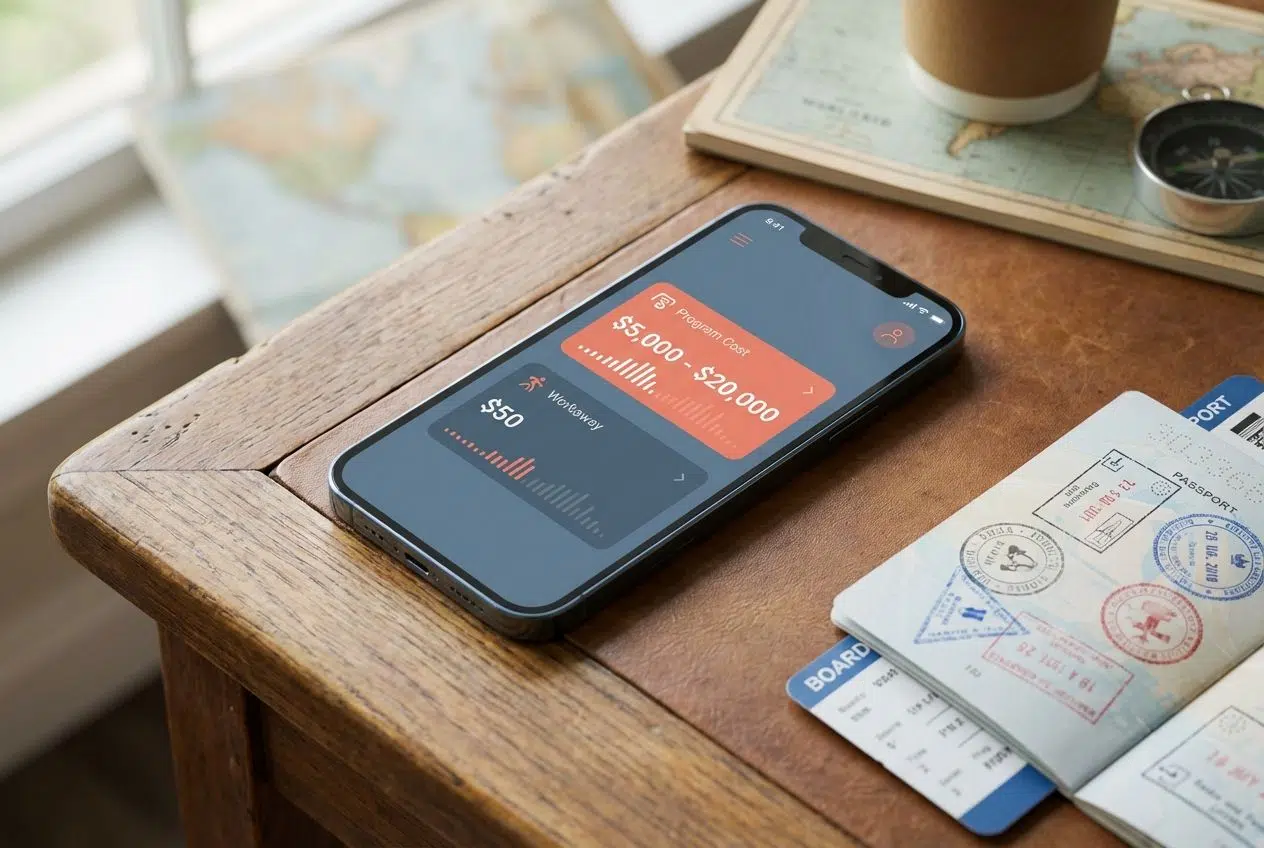
Gap year programs in 2026 can cost anywhere from $5,000 up to $20,000 per year. However, platforms like Workaway only cost about $50 a year for membership. They connect you with hosts who provide food and board in exchange for a few hours of help a day.
Ask mentors how they handled expenses. Always save extra for emergencies. Life often throws curveballs just when things seem smooth.
Final Thoughts
Taking a gap year in 2026 can boost your skills and refresh your mind. It gives you clarity about what comes next. You have seen how setting goals and planning well help make this break count.
Sure, it comes with challenges. You might face money worries or motivation slumps. But smart choices keep these from snowballing.
Are you ready to step off the beaten path for a bit? Top companies now look at real experiences as much as diplomas. Your biggest opportunity might be waiting just beyond that first bold step.