

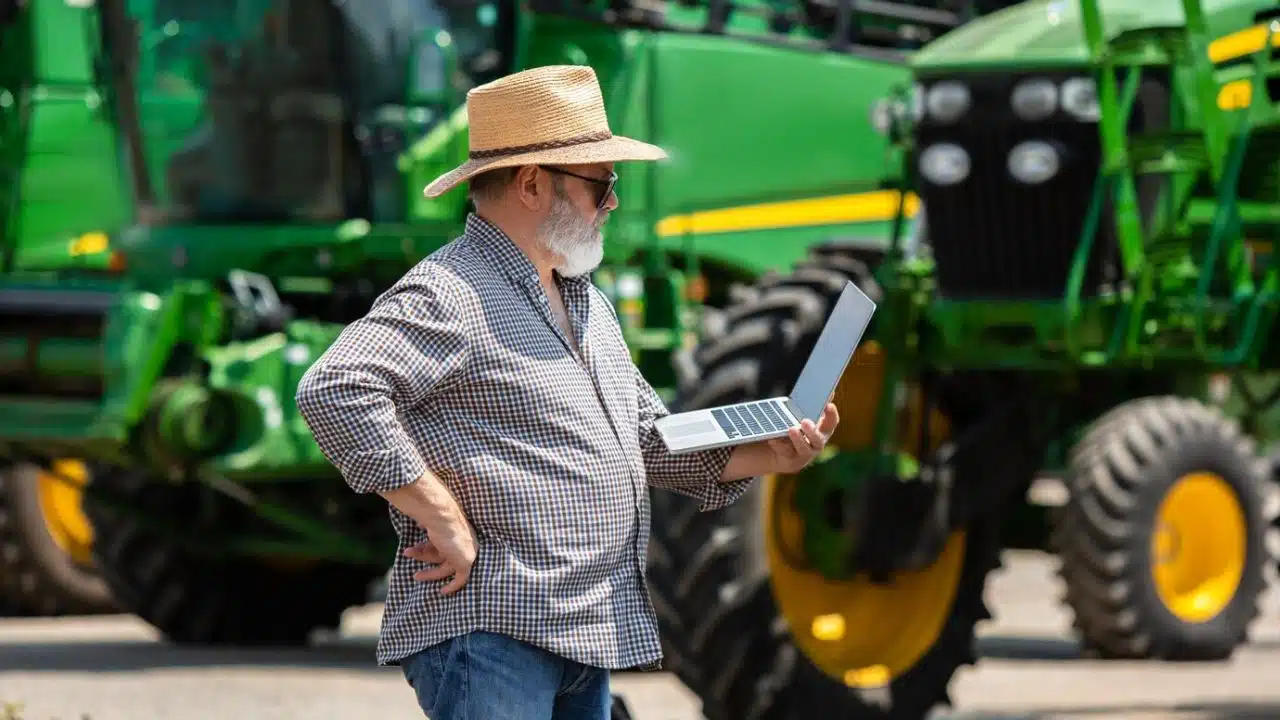
Tractors have come a long way since the early steam-powered models first emerged in the late 1800s. From primitive machines focused solely on pulling ploughs, modern tractors have evolved into sophisticated computerised vehicles that revolutionise farming. This article traces the key developments in tractor technology over the years – from basic mechanical traction to today’s GPS-guided, self-driving smart tractors.
From Traditional to Smart: A Technological Evolution
For over a century, tractor design was focused mainly on improving engine power, efficiency, and traction. Although innovations emerged periodically, tractors remained basically manual machines relying on the skill and judgment of operators. This changed towards the late 20th century with the introduction of electronic systems and data-driven technologies.
Tractor manufacturing entered the digital age, paving the way for automation, connectivity, and intelligence. Today’s smart tractors leverage advanced technologies to optimise performance and take farming to the next level.
The Traditional Era: Steam and Internal Combustion Engines
The origins of powered farming machines date back to the late 1800s when steam-powered traction engines were devised to haul heavy loads and till soil. Steam tractors had immense pulling capacity but were beset with limitations like high fuel costs and safety issues. This led to a transition to internal combustion engines in the early 20th century.
Gasoline-fueled tractors offered greater efficiency and usability than their steam-powered predecessors. Tractor manufacturers commenced mass production to meet rising demand, with Ford’s Model F marking an iconic model from this era. Further engine and transmission technology advancements made tractors even more robust and productive.
Diesel emerged as the preferred fuel in later years, enabling more torque while simplifying maintenance. From the 1920s to the 1950s, diesel tractors became faster, more durable, and more efficient, establishing themselves as indispensable global farm equipment.
The Introduction of Hydraulics (1940s)
A notable advancement came in the late 1930s with Harry Ferguson’s revolutionary hydraulic lift system integrated into the Ford 9N tractor model. This three-point hitch design enabled smooth lifting and controlling of mounted implements. Tractors with hydraulics could accomplish more tasks with greater precision and less manual effort. This boosted operational flexibility massively while reducing soil compaction from heavy equipment.
Hydraulic advancement transformed tractor capabilities. Over subsequent decades, hydraulic power and control mechanisms were widely adopted across models from all major manufacturers. More sophisticated hydraulic systems emerged that could regulate several parameters with sensitive precision.
The Shift to Electronic Controls (1970s)
While most tractor models in the 1960s still used mechanical systems, manufacturers commenced experimenting with electrical and electronic solutions. These offered benefits like better diagnostic abilities, simplified maintenance, and more measured performance control.
Electronic control technology was initially in its infancy and limited by high costs. But by the late 1970s, electronics became commonplace in tractor design. Early electronic systems focused mainly on engine and transmission management. They helped regulate engine speed, automate gear shifting, and reduce fuel wastage.
Further enhancements in subsequent years saw electronic circuits actively monitoring and controlling hydraulic pressure, fluid levels, power delivery to PTO shafts, and other key parameters. This improved safety and enabled early failure detection. Dashboard displays and monitoring equipment continuously informed operators about machine performance.
The Emergence of Smart Tractors (21st Century)
While electronics and basic automation improved tractor performance from the 1970s onward, models remained essentially operator-controlled manual machines. The real transformation occurred at the turn of the 21st century with the emergence of smart technologies. GPS, telematics systems, and advanced sensors combined with ever-increasing computing power to deliver next-generation intelligent tractors.
Integrated on-board computers could collect and analyse real-time data from numerous sensors and automate sequences of farm machinery operations. GPS receivers and associated satellite-correction services enabled centimetre-level positioning accuracy. This allowed automated guidance systems to steer and manoeuvre tractors precisely along optimal paths. Telemetry systems enabled bidirectional data transfer between tractors and external software, allowing remote monitoring and control.
Technological Advancements in Smart Tractors
Numerous technology enhancements continue to expand smart tractors’ capabilities:
- Advanced vision systems, LIDAR, and radars increase navigation accuracy and safety in low visibility conditions. This facilitates continuous operation and enables autonomous point-to-point tractor mobility.
- High-precision GNSS and associated correction services like RTK enable reliable sub 2.5 cm positional accuracy. This allows ultra-precise planting, field boundary mapping and repeatable controlled traffic farming.
- Integrated crop health sensors leverage spectral analysis and machine learning algorithms to detect signs of disease, pest manifestation or nutrient deficiency early. This allows preventative treatment before proliferation.
- Wireless connectivity and IoT infrastructure rapidly accelerate data transfer speeds to offboard storage and analytics engines. This unlocks sophisticated real-time optimisation of intricate field activities and fleets of smart tractors.
- Artificial Intelligence capabilities in onboard and cloud-based analytics systems extract deeper insights from aggregated farm data over time. This drives forecasting, predictive modelling and prescription mapping capabilities to new levels.
Benefits of Smart Tractors in Modern Agriculture
Intelligent tractors impart numerous technological and sustainability benefits:
1. Increased operational efficiency
The automation and precision guidance capabilities of smart tractors lead to significant improvements in operational efficiency. Auto-steering allows the vehicles to drive with ultra-high accuracy irrespective of terrain or weather conditions. This enables perfectly straight parallel passes with minimal overlap or gaps during various field activities like sowing, spraying and harvesting. By ensuring optimally spaced passes, auto-steering improves per-pass efficiency and coverage while minimising redundant miles driven and time wasted.
2. Enhanced resource management
Smart tractors facilitate precise modulation of input application rates based on granular mapping data. Variable-rate control technology allows customising treatment within fields rather than using a one-size-fits-all blanket approach. This ensures adequate seed, fertiliser, chemicals, or irrigation is applied based on specific localised requirements. Excess usage is minimised in areas that don’t require it. This prevents wasteful overuse of expensive chemicals and natural resources like water while aligning treatment to actual needs.
3. Sustainable farming practices
Smart tractors facilitate sustainable, eco-friendly farming in multiple ways. Precision auto-steering allows permanently controlled traffic lanes for tractors to minimise soil compaction. Limiting ground contact to specific lanes avoids random excessive compaction, allowing soil regeneration in other areas. Controlled traffic farming thus preserves soil structure and long-term health. Next, optimised variable-rate application aligns chemical, water, and nutrient dosing with actual field requirements, preventing excessive runoff, leaching, or wasteful surplus.
Conclusion
Over a century of mechanical, hydraulic and electronic innovations have transformed tractors into highly advanced autonomous vehicles. Smart technologies continue to reshape modern agriculture through data-driven, precision-based farming capabilities. As farmers strive to feed a growing global population sustainably against challenges like climate change and land constraints, smart tractors provide high-tech efficiency.
Continued automation and AI adoption offer the potential to protect both farm productivity and the planet we depend upon. The future seems bright for intelligent tractors, enabling greener, leaner and more bountiful harvests globally through technology’s might.





















