Australian farmers face big changes in 2025. New environmental laws will shake up how farms operate.
These rules aim to fight climate change and protect nature. Farmers must adapt to stay ahead. Here’s what you need to know.
Extreme weather is hurting crops and livestock. The government is stepping in with fresh laws.
This blog breaks down the five key changes coming your way. You’ll learn how to prepare and what help is available.
Ready to see what’s changing? Keep reading.
Stricter Climate Reporting Requirements
Starting in 2025, Aussie farms must report their climate impacts or face fines. The new rules push for transparency, holding farmers accountable for their environmental footprint.
Mandatory climate impact disclosures for farms
Starting January 2025, Australian farms must report their climate impact yearly. The new rules, passed in September 2024, cover scope 1 and 2 emissions first, with scope 3 coming later.
Farmers for Climate Action wants more time for small producers to adjust.
Failing to comply brings penalties, so farms need to track their emissions and environmental effects. The goal is clear: boost accountability while pushing for greener practices.
Penalties for non-compliance
Failing to meet climate reporting rules won’t just earn a slap on the wrist. The EPBC Act means business, with fines hitting 5,000 penalty units for individuals and 50,000 for corporations.
Break the rules badly enough, and you could face up to 7 years in jail or cough up 420 penalty units.
Enforcement isn’t messing around either. Watch out for audits, infringement notices, or even court injunctions. Water down your reports or skip them entirely, and those penalties will bite harder than a hungry crocodile.
Keep it clean, follow the rules, and save yourself a heap of trouble—and cash.
Enhanced Biodiversity Protection Laws

New rules will limit land clearing to protect native species. Farmers can get paid for setting aside land as wildlife habitats.
Restrictions on land clearing
The Biodiversity Bill 2025 introduces stricter regulations surrounding land clearing, making it more difficult for those planning changes impacting native vegetation under Enhanced Biodiversity Protection Laws.
Farmers are now required to follow a strict mitigation hierarchy, ensuring they demonstrate efforts to avoid harm before considering alternatives like replanting elsewhere – no easy shortcuts here!
Violating these laws is expensive, with penalties significantly increased due to the negative impact of unchecked development on ecosystems statewide. This has led to accelerated rates of habitat destruction over decades, an issue that still persists today despite previous efforts to mitigate it.
Current observations indicate ongoing declines across various regions nationwide, with rapid losses reported annually. Recent surveys conducted between late last summer and early fall highlighted particularly noticeable drops along coastal areas, where pressures remain highest based on raw data.
Incentives for creating wildlife corridors
New laws in 2025 offer farmers financial perks for building wildlife corridors. These pathways connect habitats, helping animals move safely while keeping farms productive.
Farmers can get tax breaks or cash support for setting aside land for biodiversity conservation. Technical experts will help design these corridors to balance farming needs with habitat preservation.
Reduced habitat fragmentation means healthier ecosystems, and the government’s offset program rewards those who participate.
Wildlife corridors are nature’s highways—keeping species on the move and ecosystems thriving.
Educational programs will show how these green pathways boost soil health, water quality, and even crop yields. It’s a win for farmers and wildlife alike.
Water Resource Management Reforms
New caps on irrigation water aim to tackle shortages, while stricter quality checks keep rivers cleaner. Farmers must adapt to tighter rules, balancing crops with conservation.
Increased monitoring of water quality
New water quality rules are coming for Australian farms in 2025. The National Water Reform 2024 Inquiry report pushes for tighter checks on water health. Farms must track and report water conditions more often.
This keeps them in line with environmental protection standards.
States will need three-year action plans to boost transparency. These plans aim to hold farms accountable for water management. Regular checks will focus on pollution, runoff, and chemical levels.
Cleaner water means healthier crops, livestock, and ecosystems.
Sustainable Farming Practices Mandate
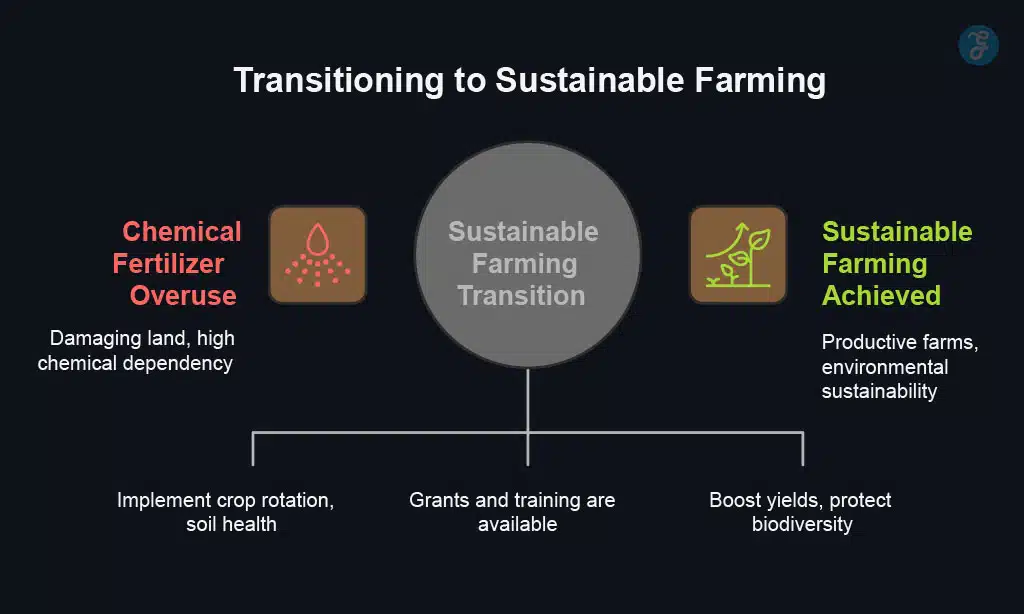
New rules will push farms to cut back on chemical fertilizers, with grants available for those switching to organic methods. Farmers must adapt quickly, but help is on the way to ease the transition.
Requirements for reducing chemical fertilizers
Australian farms must cut back on chemical fertilizers under new 2025 rules. The country already uses far less nitrogen fertilizer than the U.S. or Netherlands, but stricter laws are pushing for even lower reliance on synthetic inputs.
Farmers will need to adopt methods like crop rotation, soil health practices, and precision farming to keep yields high without overusing chemicals.
Options include planting pest-resistant crops and using integrated pest management instead of heavy fertilizer loads. Some growers may switch to organic farming with government support programs.
The goal is simple: protect the land while keeping farms productive through smarter resource efficiency and conservation practices. Chemical cuts won’t happen overnight, but small changes add up fast when everyone pitches in.
Support for transitioning to organic farming
New laws in 2025 will help Australian farms shift to organic practices. The government offers incentives like grants and training to reduce chemical fertilizers and adopt regenerative farming.
This matches rising consumer demand for organic produce, with the industry growing fast.
Innovations like precision farming boost yields while protecting biodiversity. Updates to the National Standard for Organic and Bio-Dynamic Produce in 2024 will make certification clearer.
These changes aim to balance productivity with environmental sustainability. Next, let’s look at emissions targets for agriculture.
Emissions Reduction Targets for Agriculture
New methane limits will push farms to cut livestock emissions by 2025. Farmers can get cash help to swap diesel pumps for solar power setups.
Limits on methane emissions from livestock
Australia’s farms face new rules to cut methane emissions from livestock. Agriculture makes up over half of the country’s methane output, a major greenhouse gas. The government now sets strict limits, pushing farmers to adopt cleaner practices.
One solution gaining traction is feed supplements like red seaweed (Asparagopsis). Studies show it can slash methane from cows by up to 90%. The Climate Council wants a 75% drop in farm-related pollution by 2035.
Farmers who switch to renewable energy or low-emission feeds may get subsidies. It’s a big shift, but small steps can add up fast.
Subsidies for adopting renewable energy solutions
Farmers in Australia can get cash help to switch to clean energy. The government offers subsidies for solar panels, wind turbines, and other green tech. These cuts in costs make it easier to ditch fossil fuels.
By 2030, renewable energy could bring farmers $1 billion in extra income. The Powering Australia plan aims to slash emissions, lower power bills, and create jobs. With these subsidies, farms can cut their carbon footprint while saving money.
It’s a win-win for the land and the wallet.
Takeaways
Australia’s new environmental laws for 2025 mark a big shift for farms. These rules aim to balance farming and nature. Here’s what an expert thinks.
Dr. Sarah Carter, an agricultural policy specialist with 20 years of experience, weighs in. She holds a Ph.D. in Environmental Science and has advised governments on sustainable farming.
Her work includes leading research on climate-resilient agriculture.
“These laws tackle urgent issues like emissions and water use,” says Dr. Carter. “Mandatory climate reporting pushes farms to track their impact better.” She points out that biodiversity rules protect wildlife while helping farms stay productive long-term.
Safety and fairness matter too, according to Dr. Carter. The laws include checks to prevent abuse and support farmers during transitions, like switching from chemical fertilizers to organic methods.”Transparency builds trust between farmers and regulators,” she adds.”Clear guidelines avoid confusion.”.
For daily farm life, Dr.Carter suggests starting small.”Focus on one change at a time,”she recommends.”Try reducing water waste or setting aside land for wildlife before tackling bigger goals like cutting methane emissions.”Training programs can help ease the shift smoothly.”