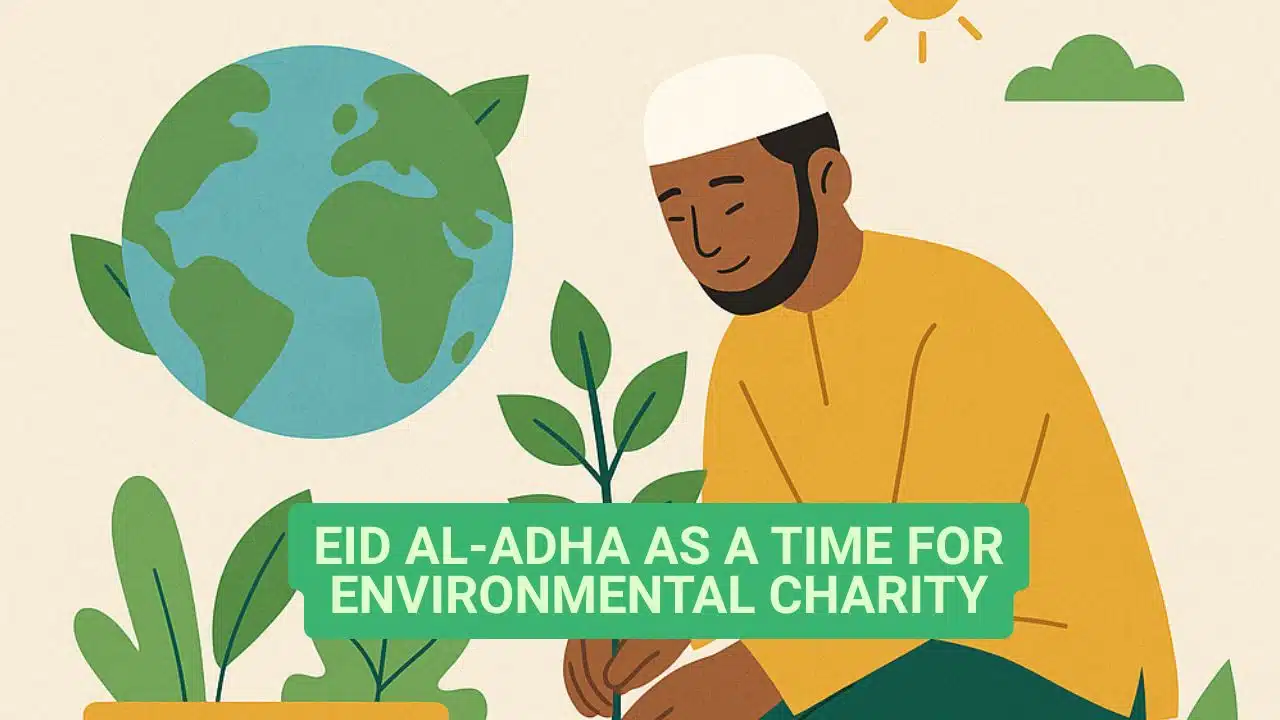
Eid al-Adha is a time of sacrifice, gratitude, and deep reflection. Rooted in the legacy of Prophet Ibrahim (AS) and his unwavering faith, this sacred occasion invites Muslims around the world to demonstrate devotion through the act of Qurbani—offering and sharing meat with the less fortunate.
But what if this spiritual celebration could also become a moment to give back—not just to people, but to the planet?
In a world facing rising temperatures, water scarcity, and environmental degradation, the values of compassion, balance, and stewardship—central to Islam—can be extended to our relationship with the Earth. Eid al-Adha and environmental charity are not contradictory ideas. In fact, they are perfectly aligned.
This article explores how Muslims can embrace the spirit of Eid while making it more sustainable—turning Qurbani into a holistic act of kindness that includes care for creation.
The Environmental Impact of Eid al-Adha
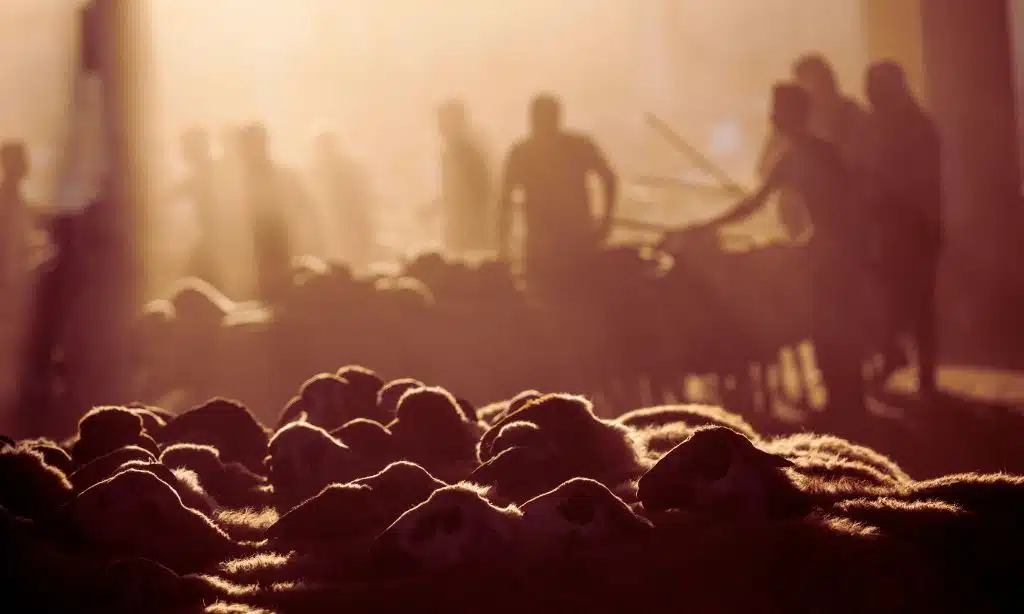
Every year, millions of animals are sacrificed during Eid al-Adha. While this ritual is an important part of Islamic tradition, it also generates a significant environmental footprint.
Key concerns include:
-
Greenhouse gas emissions from large-scale livestock rearing and transport
-
Waste generation from meat packaging, leftovers, and food disposal
-
Single-use plastics used during gatherings and distributions
-
Overconsumption and meat surplus in affluent communities
The goal is not to discourage Qurbani, but to practice it mindfully—so that our devotion does not unintentionally harm the Earth, which is itself a sign of Allah’s mercy.
“The Earth has been made a place of worship—so do not pollute it.”
— Prophet Muhammad ﷺ (Hadith)
Environmental Stewardship in Islam
Islamic teachings are rich with ecological wisdom. The Qur’an speaks repeatedly about the balance of nature, the beauty of creation, and the responsibility of humans as caretakers.
Core principles include:
-
Khalifa (stewardship): Humans are trustees of the Earth, not its owners
-
Mizan (balance): All things are created in balance, and we are warned not to disturb it
-
Ihsan (excellence): Doing things with sincerity and care—including how we treat the environment
Allah commands believers to avoid excess:
“Eat and drink, but do not be wasteful. Indeed, He does not like the wasteful.”
(Qur’an 6:141)
When Muslims give to others—through Zakat, Sadaqah, or Qurbani—it is not only an act of charity to people but potentially an act of mercy to all of creation.
How to Practice Environmental Charity During Eid
1. Choose Ethical Qurbani Providers
Not all meat is equal in terms of environmental or ethical impact. Opt for:
-
Local farms that use humane and sustainable animal husbandry
-
Certified organic or eco-labeled livestock providers
-
Digital Qurbani services that reduce emissions from transport and plastic use
Some platforms also allow for Qurbani in regions where meat is scarce—reducing waste and maximizing impact.
2. Offset the Carbon Impact
Qurbani is a symbolic and spiritual sacrifice. To honor this further, consider:
-
Donating to tree-planting projects to offset carbon emissions
-
Supporting climate-vulnerable communities with solar energy kits or clean water access
-
Funding reforestation or wetland restoration in high-impact areas
Pairing Qurbani with a climate sadaqah amplifies the spirit of giving—and helps heal the planet.
3. Reduce Waste and Consumption
Sustainability doesn’t mean sacrificing celebration. It means celebrating with care.
-
Share meat efficiently to avoid spoilage or freezer overflow
-
Store and prepare Qurbani meat with planning to minimize waste
-
Avoid plastic bags and use reusable containers
-
Cook traditional recipes that utilize all parts of the animal (e.g., liver, bones, fat)
-
Compost any biodegradable waste
At family gatherings, swap disposable cutlery and décor for reusable or natural alternatives—jute, clay, bamboo, and cotton.
Eco-Eid Checklist:
✔ Ethical Qurbani
✔ No plastic bags
✔ Cook thoughtfully
✔ Offset carbon
✔ Donate to green charities
Real-World Inspiration: Eco-Conscious Eid Initiatives
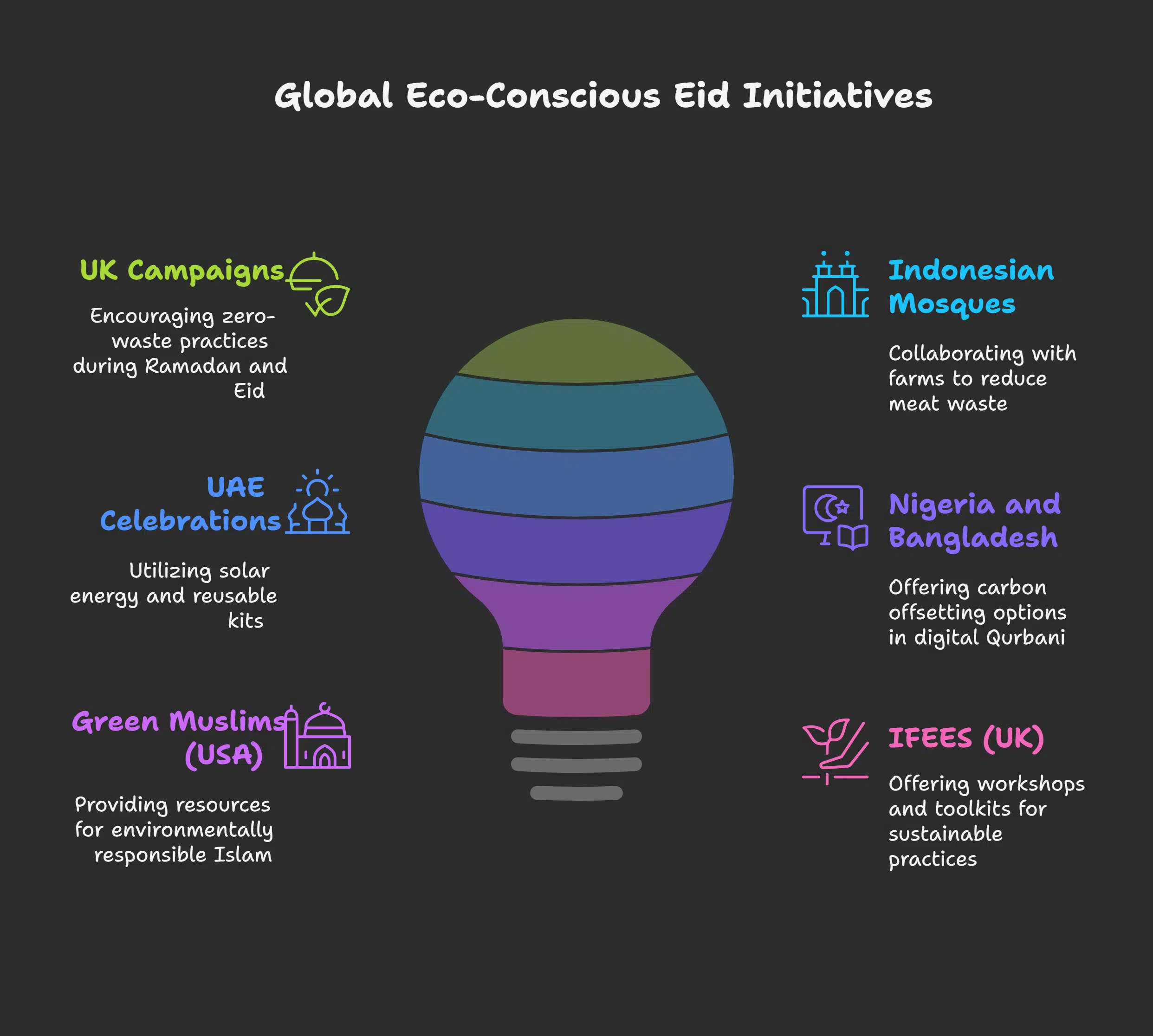
All over the world, Muslim communities are combining faith and sustainability:
-
In the UK, Green Ramadan and Green Eid campaigns encourage zero-waste iftar and Qurbani practices.
-
In Indonesia, mosques collaborate with local farms to minimize meat waste and reduce emissions.
-
In the UAE, Eid celebrations are increasingly powered by solar energy, and eco-conscious charity groups distribute reusable Qurbani kits.
-
In Nigeria and Bangladesh, digital Qurbani platforms now include carbon offsetting options as part of the sacrifice.
Organizations like Green Muslims (USA) and IFEES (UK) provide resources, workshops, and toolkits for practicing Islam in an environmentally responsible way.
These efforts prove that sustainability is not a Western import—it’s deeply Islamic.
Takeaways: Giving Back to the Earth Is Worship Too
Eid al-Adha is a sacred time. It reminds us of sacrifice, gratitude, and the importance of serving others. But today, the circle of service must expand. The Earth is in need, and we have the tools—and the spiritual framework—to respond.
Giving back to the planet does not diminish our worship. It deepens it. It honors Allah’s creation. It aligns our lifestyle with our values. And it sets a powerful example for future generations.
“To serve the Creator, we must care for His creation.”
This Eid, let our charity go beyond meat. Let it be green, intentional, and regenerative—a gift that reflects both tradition and transformation.