

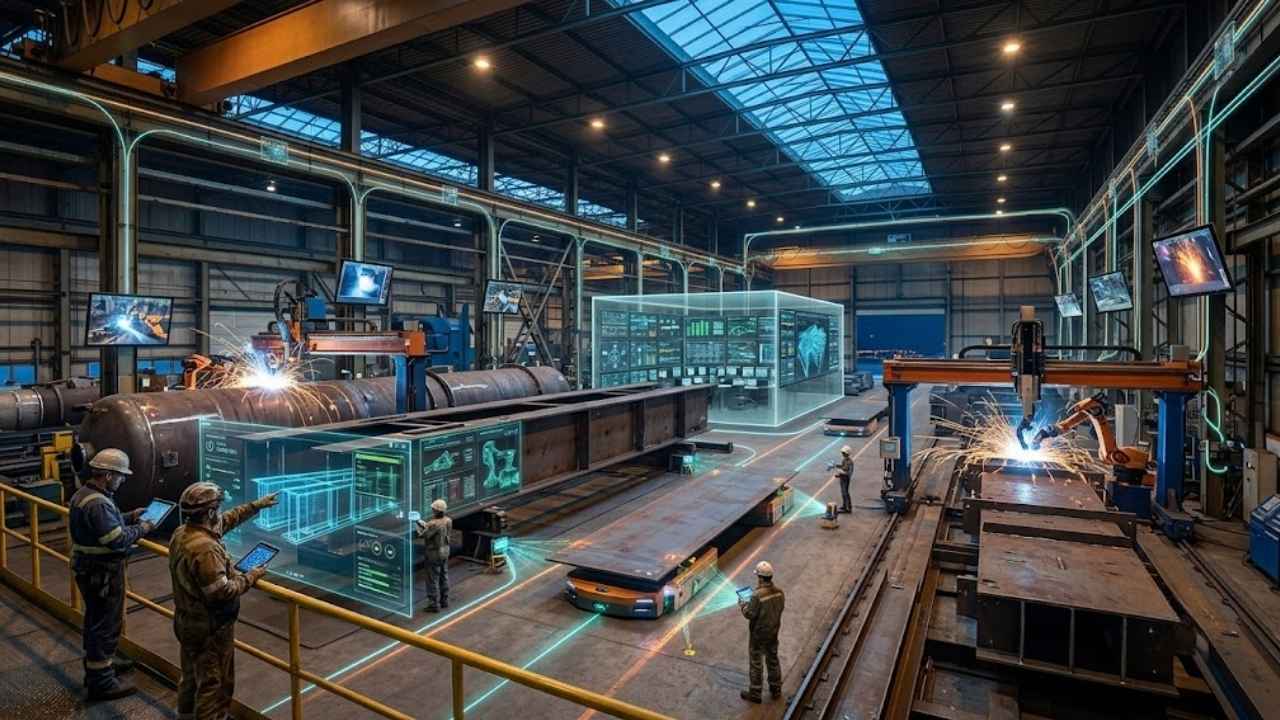
Automation is changing heavy fabrication quickly. Shop floors that once relied on manual checks, paper orders, and operator experience now use sensors, dashboards, connected controls, robotics, and digital maintenance tools. These upgrades help manufacturers improve safety, reduce downtime, and make production more predictable.
Heavy fabrication still depends on force, pressure, alignment, tooling, clean hydraulic fluid, and skilled people. A sensor can warn that a machine is drifting out of range, but it cannot repair a worn seal. A dashboard can show downtime trends, but it cannot prevent failure unless the team acts on the data.
Smart Software Still Needs Strong Machinery
Modern fabrication floors are more connected than ever. Machines can track cycle times, pressure changes, temperature shifts, vibration patterns, and production counts. Maintenance teams can use that information to spot problems sooner and plan repairs before production stops.
This is where traditional metal forming equipment is meeting the digital age. Press brakes, hydraulic presses, forming lines, shears, and rolling systems are no longer judged only by size or power. They are also judged by how consistently they perform and how well they support modern monitoring tools.
Smart software cannot hide weak equipment. If hydraulic fluid is dirty, sensors may show pressure problems, but the system still needs filtration or service. If cylinders are worn, software may reveal uneven motion, but the machine still needs repair. If hoses are leaking, alerts may flag pressure loss, but the leak must be fixed.
That is why digital transformation should never be treated as a software-only project. The best results come when companies pair connected tools with reliable machinery, good maintenance, and trained operators.
The National Institute of Standards and Technology describes smart manufacturing as the integration of systems that respond in real time to changing factory and supply chain conditions. That level of response depends on accurate data, and accurate data depends on stable equipment.
Why Hydraulic Reliability Matters
Hydraulic systems remain central to heavy fabrication. They deliver the force needed to bend, press, lift, clamp, punch, and shape strong materials. As shops add more automation, these systems become even more important.
Automated equipment often runs tighter schedules and more repeatable cycles. That can increase output, but it also leaves less room for hidden problems. A small hydraulic issue can create a larger chain reaction. Dirty fluid can damage valves and pumps. Worn seals can cause pressure loss. Poor temperature control can shorten fluid life. A slow cylinder can affect timing and quality.
Sensors can help catch these issues early. Pressure readings may show a steady drop during a forming cycle. Temperature data may reveal that a system runs too hot near the end of a shift. Flow readings may show that a pump is losing efficiency. These clues are useful, but only when maintenance teams respond quickly.
This is where predictive maintenance adds value. Instead of waiting for a breakdown, teams can track changes over time, compare performance against normal patterns, and schedule service before a failure affects production.
The U.S. Department of Energy notes that advanced manufacturing includes modern materials, information, and production technologies that improve products and processes. In heavy fabrication, that means digital systems and physical equipment must work together.
Skilled workers still matter. Operators often know when a press sounds wrong, when a cycle feels off, or when material is not responding as expected. Digital tools support that judgment with clearer information.
Better Technology Must Support Better Decisions
For business leaders, digital transformation affects more than the shop floor. It shapes cost control, delivery speed, labor planning, quality, and customer trust.
When a fabrication shop has better machine data, it can quote work more accurately. It can see which jobs take longer than planned. It can identify machines that cause the most downtime. It can decide whether to repair, rebuild, or replace equipment based on real evidence.
Automation can also help with labor challenges. Heavy fabrication requires skill, and many shops struggle to hire experienced workers. Digital controls, guided workflows, and automated handling systems can help teams work more efficiently and train new employees faster.
Quality can improve too. If a press holds steady pressure and the system tracks each cycle, teams can spot variation earlier. If inspection data is tied to machine settings, managers can see which changes improved results and which caused defects.
Yet the business case falls apart when hardware is ignored. A company can spend heavily on software and still lose money if leaks, poor calibration, worn parts, or dirty fluid keep stopping production. Digital tools should make maintenance smarter, not optional.
The Future Belongs to Reliable, Connected Shops
Heavy fabrication is moving toward smarter, more connected operations. Sensors, automation, and software will continue to change how shops plan work, monitor machines, and serve customers.
Still, the foundation has not changed. A factory needs dependable equipment, clean hydraulic systems, precise motion, and skilled people who understand the process. A smart sensor is only useful if the machine behind it can respond. A dashboard is only valuable if the team uses it to prevent problems.
The next generation of heavy fabrication will not be defined by software alone. It will be led by shops that connect smart tools with reliable machinery, disciplined maintenance, and practical decision-making.





















