It’s acceptable to be uncertain about the metaverse. Those who are pessimistic can refer to Meta’s struggles over the past year to persuade us that we will all live in this immersive 3D world.
Optimists can point to Meta’s new $499 Quest 3 virtual and mixed reality headgear and a rival device Apple is likely to unveil in the coming days as proof that tech giants are still supporting the concept of an immersive digital world.
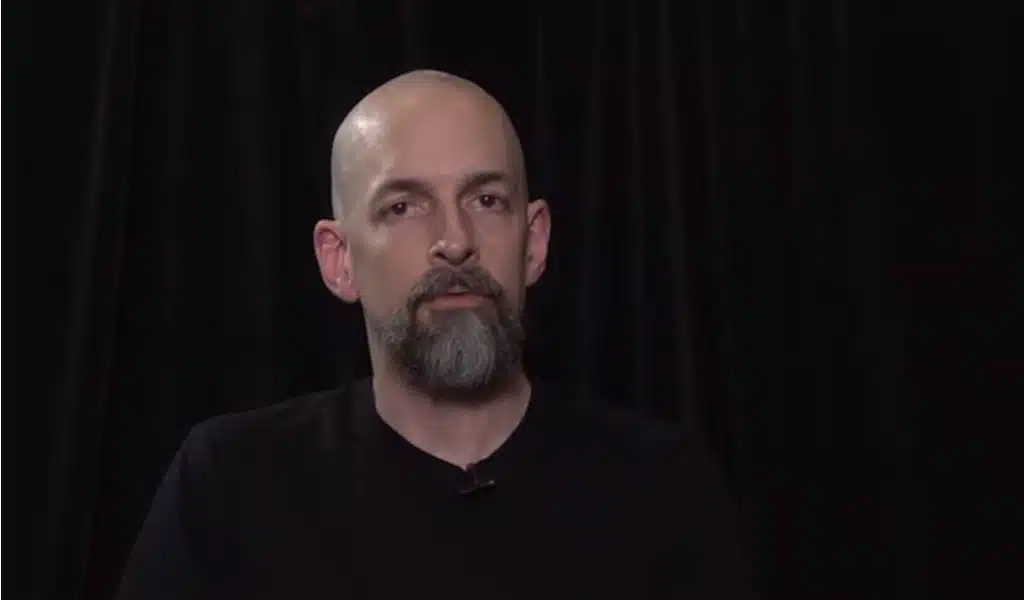
Neal Stephenson is an optimist. The word “metaverse” was first used in his bleak science fiction book Snow Crash, which came out in 1992.
“In the last couple of years, it seems like a lot of things have come together,” Stephenson said in a talk at Augmented Reality Expo on Wednesday. “These are the things we need to have in place before we can really start building a metaverse.”
Stephenson’s personal interest has nothing to do with his book. Since the 1990s, he has worked at several startups, including Magic Leap, which makes augmented reality headsets. His current company, Lamina1, is working on metaverse plumbing, which it hopes will lead to an open base that developers can use and people can visit.
It won’t be easy to sell. The talk about the metaverse in 2021 has died down a lot. Facebook changed its name to Meta, but investors don’t like how it wants to make money from the metaverse. And the Web3 movement, which wanted to make “decentralized” tools for the metaverse that would reward people who made things that could be sold in the metaverse, has had a lot of trouble. This includes scams, security holes, and “rug pulls,” in which project leaders hype a cryptocurrency, then cash out, leaving investors with worthless assets.
Olivier Blanchard, an expert at Creative Strategies, is skeptical about the widespread use of computer-generated virtual reality (VR), augmented reality (AR), which combines computer images with the real world, and mixed reality (XR), a term that includes both VR and AR.
Blanchard said, “Once the AI gold rush dies down and Apple gives it some direction, it will need to decide what it wants to be when it grows up if it ever wants to attract mainstream consumers.” “Metaverse and XR companies will have to make it clear to users how their solutions will make their lives better, not just more expensive and difficult.”
But the metaverse might not be as hard to sell soon.
Apple’s expected headset, which has been in development for years and is likely to be shown off at the company’s WWDC developer meeting, could persuade developers to make mixed reality apps. Apple was able to convince mobile app makers to make millions of apps for the iPhone and iPad. And the video pass-through mode on Meta’s Quest 3 XR device will give it AR capabilities.
The metaverse still has a long way to go before it becomes as popular as the web or the metaverse in the book Snow Crash.
Snow Crash is a funny and exciting book that shows a bleak future in a funny and exciting way. The metaverse is a big part of the book, but Stephenson says that the nightmare is caused by people in general. Stephenson wanted the metaverse to be a place where people could do many different things with technology.
Stephenson said, “Our first experience with the metaverse is a kind of very large market, a lowest common denominator that includes… the worst of TV.” “But as we read more of the book, we see that it has been used to make beautiful works of art. Some people have put a lot of time and care into making homes in the metaverse that are beautiful works of art, both in terms of how they look and how they sound.
That metaverse was all about VR, but Stephenson now calls it “a three-dimensional shared virtual environment,” which includes AR. Snow Crash is known for its metaverse, but there are also “gargoyle” characters in the real world of the book. These are super-techy people who hide behind AR goggles and are always connected to data feeds.
Stephenson said that he was amazed by the progress in VR, AR, and XR, especially with game engine tools like Unity and Unreal Engine that are widely used for 3D graphics and gaming. But so far, there isn’t enough to do in the metaverse to hang out there.
Stephenson said, “If we’re going to have a metaverse that millions or billions of people use all the time, there have to be good things to do in the metaverse.” The goal of Lamina1 is to make the tools for the metaverse better so that developers and other producers can make these kinds of experiences. That includes blockchain and NFT technology, which has lost a lot of its shine since 2021, when coins were at their most valuable.
Lamina1 is building relationships to make the metaverse more real. One of them works for Mira, which scans the real world to make a virtual version of it, but most of the others work for game makers.
Stephenson helped start Lumina1 in 2022, but he has since stepped back. He is still head, but in 2023, he said, he also went back to writing books.
At the Augmented World Expo, there are a lot of AR fans. The show’s organizer, AugmentedReality.org Chief Executive Ori Inbar, shared the stage with a virtual form of himself that looked almost as big as real life and was shown in a telepresence box made by ARHT Media. Inbar spent most of his 20 minutes on stage at the show supporting the technology, saying that it is still doing well even though everyone is talking about artificial intelligence (AI).
“We won’t stop until XR is used by everyone, everywhere, all the time.”