


Organizations search for individuals who can navigate complex challenges and develop new ideas when confronted with unexpected obstacles in today’s fast-changing work environment. Companies are no longer satisfied with candidates who simply follow instructions; they seek those who think quickly and creatively under pressure. Cognitive ability tests have become a cornerstone of the hiring process by offering clear insights into how applicants can handle problem-solving tasks on the job. By revealing a candidate’s capacity to learn quickly, process information, and apply logic, these tests help organizations identify those who can rise to meet modern challenges.
Cognitive Exams or Ability Tests Explained
Cognitive ability tests measure an individual’s mental capacity to solve problems, learn from experience, and use acquired knowledge to overcome obstacles. The best assessment tools for hiring contain sections on logical reasoning, numerical interpretation, and verbal comprehension. Employers can clearly understand their intellectual strengths and potential shortcomings when candidates sit for such a test. These tests show how quickly a person can analyze a situation, draw conclusions, and tackle multifaceted problems. In many ways, this assessment method has evolved into an essential tool for organizations that want to hire individuals capable of making sound decisions when faced with challenging scenarios.
Importance of Problem-Solving Skills
Problem-solving is at the heart of success in modern workplaces. Employees who recognize issues, develop thoughtful strategies, and implement practical solutions contribute to a company’s overall progress. When workers possess this talent, they overcome daily obstacles and help create a workplace that is adaptive to change and growth. This quality is about handling routine tasks and engaging with each new challenge as an opportunity for improvement. For many companies, the ability to navigate through complex problems represents one of the highest priorities when selecting new team members. Stories of individuals who have turned setbacks into stepping stones illustrate why problem-solving remains essential in any professional setting.
Enhancing Hiring Accuracy
Traditional hiring methods, such as interviews and resume reviews, often miss the deeper aspects of a candidate’s intellectual capacity. Cognitive ability tests, however, provide a more detailed assessment of how a person approaches problems and processes information. These tests capture data beyond what is on paper, which offers a clearer picture of a candidate’s potential to handle the role’s challenges. Using these assessments, companies can reduce the risk of choosing a candidate who may not be well-suited for a demanding position. The test results complement other evaluation methods and help employers feel more confident that they invite the right person to join their team. The experience of using these tests has led many organizations to share stories of improved team dynamics and better overall performance after the right candidates were chosen based on their cognitive abilities.
Promoting Diversity and Inclusion
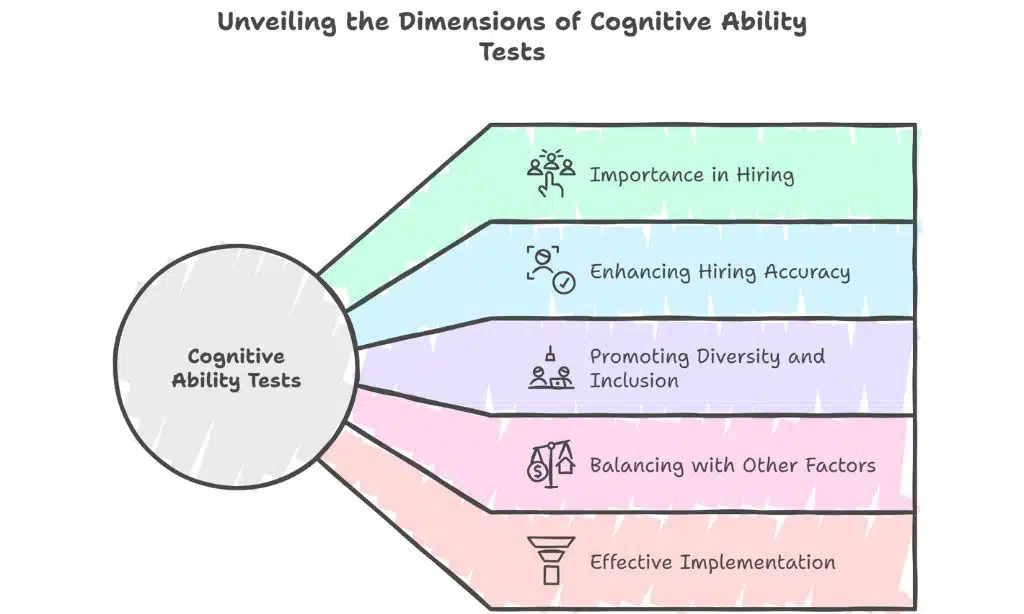
One of the most meaningful benefits of cognitive ability tests is their role in supporting diversity and inclusion in the workplace. Unlike traditional hiring practices that rely heavily on experience, educational background, or other subjective criteria, these tests focus on the raw ability to reason and solve problems. This shift in focus opens doors to individuals employers might have overlooked because of a lack of conventional credentials. Over time, companies have shared examples of how candidates from different backgrounds and varied life experiences have excelled when allowed to demonstrate their mental agility. In this way, cognitive assessments contribute to a richer mix of perspectives within a company, which encourages a culture where every voice can bring unique insights to the table.
Balancing Cognitive Assessments with Other Factors
While cognitive ability tests provide valuable data about a candidate’s potential, they represent just one piece of the puzzle. Organizations understand that they can best determine a candidate’s overall fit by combining the results of assessment tools for hiring with interviews and other evaluative methods. By integrating multiple sources of information, hiring managers can form a complete picture of an applicant’s skills and personality. This broader approach uncovers talents that might go unnoticed if they only use one assessment form. Blending different evaluation techniques has helped many companies build teams capable of analytical reasoning and adept at navigating interpersonal challenges.
Implementing Cognitive Ability Tests Effectively
Cognitive ability tests must be introduced and administered with care to deliver their full value. Clear communication about the purpose and structure of these assessments helps candidates approach them confidently. Some organizations provide practice materials or detailed instructions ahead of time, which allows applicants to feel prepared and at ease during the testing process. At the same time, it is essential to review and update the tests regularly to maintain their relevance in a changing work environment. Companies that have embraced these practices share stories of how a thoughtful implementation process led to a better match between the candidate’s abilities and the job requirements. Such experiences underline the importance of using cognitive assessments as part of a well-rounded hiring strategy.
Takeaways
The demands of the workplace continue to evolve, and cognitive ability tests have emerged as a crucial tool for identifying true problem-solvers. These assessments provide a window into a candidate’s potential by revealing strengths beyond the traditional markers of success. By pairing these tests with other evaluation forms, organizations can create teams ready to meet any challenge with a clear head and a practical approach. As companies search for adaptable and innovative talent, the role of cognitive ability tests is likely to grow, which becomes a fundamental part of hiring strategies that value insight, preparation, and the capacity to overcome obstacles.





















