Have you noticed your new phone or laptop costs a lot more than it did last year? You probably wait longer for it to arrive. Sometimes the model you want has simply vanished from the shelves. That is no accident. The prices of chips inside these devices are rising fast. Global power struggles are a big reason why. Here is one fact that might surprise you.
Semiconductors run almost everything we rely on every day. These tiny chips act as the brains for your gadgets. In this guide to Chip Wars 2026, we will look at how chip shortages and world politics hit your wallet hard. Wondering who holds the real power? Curious what this means for families like yours? Keep reading to find out.
The Importance of Semiconductors in the Modern World
Chips sit at the core of almost every gadget you use. They run everything from your smartphone to your car’s dashboard. Without them, screens go dark. Progress hits a brick wall.

The backbone of technological innovation
Smartphones, cars, and even your fridge need semiconductors to work right. These tiny chips act as the brains inside almost every electronic device you own. Every swipe on your phone screen depends on these little pieces of technology.
Modern electric vehicles act like computers on wheels. According to industry reports from 2024, a standard electric car now requires over 3,000 individual chips to function. That is double the amount needed for a traditional gas car.
Semiconductors are as vital to modern tech as water is to plants. Without a steady flow, growth stops immediately.
Factories in Taiwan build over 60 percent of the world’s chips. They also make more than 90 percent of the most advanced ones. This gives them huge influence in global trade.
Without a steady chip supply, companies lose their edge fast. Progress stalls like a bicycle with a flat tire. New gadgets get smarter each year because faster chips power fresh ideas from companies like Nvidia and AMD.
Global industries reliant on chips
It is not just about phones. Cars, planes, and medical equipment all need semiconductors to work. Factories use smart machines powered by chips to build products faster.
Here is a breakdown of who needs these chips the most:
- Healthcare: MRI machines and pacemakers rely on specific, high-reliability chips.
- Finance: High-speed trading servers need the fastest processors to manage stock markets.
- Energy: Solar panels and wind turbines use power management chips to convert energy efficiently.
Cloud companies like Amazon rely on high-speed chips for storing data. They need them for streaming movies or handling online shopping during Black Friday sales.
Even farm tractors come packed with sensors controlled by tiny silicon brains inside them. This helps crop yields grow while waste shrinks. Chips push innovation across every corner of trade and life.
What Sparked the Chip Wars?
Tensions started rising as countries tried to control these tiny but mighty chips. From secret deals to big risks, these battles changed the price of your next phone or laptop.
The U.S.-China rivalry
China wants to be a chip leader. It spends billions on its own semiconductor plants to make that happen. The United States does not like this.
The U.S. government blocked China from buying some advanced chips and tools starting in late 2022. Updates to these rules in 2023 made them even stricter. This created a race to control the supply chain.
Both countries now rush to make new technology. They write trade policies that give them an edge. The fight impacts everyone’s wallet. Prices for phones and computers climb as each side pushes for dominance.
Chips are the oil of tomorrow, said Gina Raimondo, U.S. Commerce Secretary.
Taiwan’s pivotal role in semiconductor manufacturing
Tension between the U.S. and China shines a bright spotlight on Taiwan. This small island holds huge power in technology.
Around 60 percent of global semiconductors come from Taiwan. TSMC leads the pack there. Apple, Nvidia, and Qualcomm all rely on TSMC for their high-end processors.
Factories there use top-tier machines to produce tiny chips that drive iPhones and AI systems. A single hiccup in Taiwan could shake up supply chains everywhere. It could send prices soaring for everything from laptops to electric cars. Companies scramble to secure chip orders. Any risk near Taiwan spells trouble far beyond its shores.
Key Players in the Chip Wars
Big names are fighting for the crown. Each has its own tricks up its sleeve. Competition heats up as new players try to steal the spotlight.
NVIDIA: The AI powerhouse
NVIDIA makes chips that power smart cars and huge data centers. Its GPUs act like racecar engines for artificial intelligence.
ChatGPT runs on thousands of Nvidia chips stacked in big server farms. Their new Blackwell architecture chips are designed to run trillion-parameter AI models. This puts them years ahead of most competitors.
In 2024, Nvidia’s value shot past three trillion dollars. This put it right next to tech giants such as Apple and Microsoft. Every time you use voice search an Nvidia chip likely did the heavy lifting.
AMD: The ambitious challenger
AMD dreams big in the chip wars. The company keeps breaking its own records. In 2024, it surprised many by launching chips that can match some of Nvidia’s best for AI tasks.
Gamers notice AMD, too. Its graphics cards often give more features for less money than rivals like Nvidia. Famous for its Ryzen processors, AMD now pushes deeper into data centers.
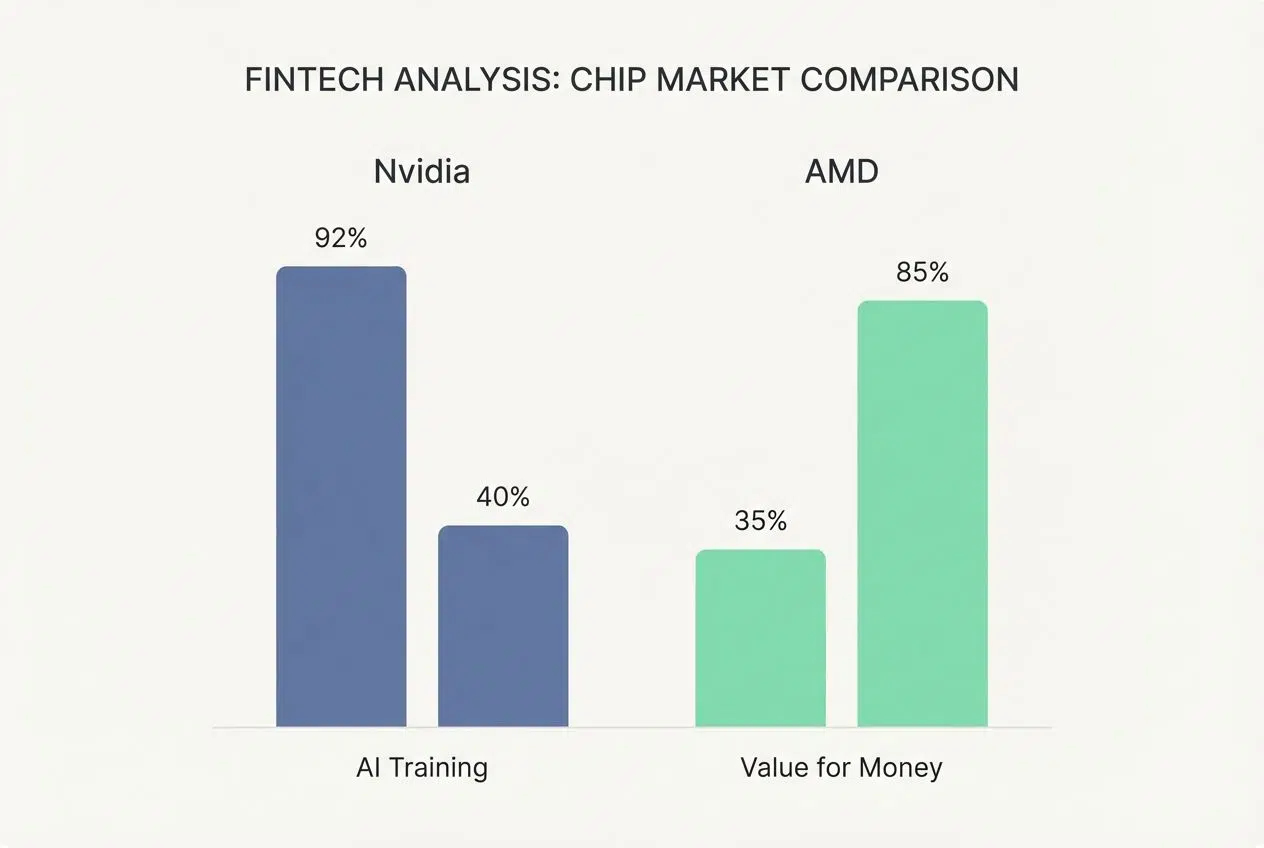
Here is how the two giants stack up for consumers:
| Feature | NVIDIA (The Leader) | AMD (The Challenger) |
|---|---|---|
| Primary Strength | AI Training & High-End Gaming | Value for Money & Multitasking |
| Top Product Line | GeForce RTX & Blackwell AI | Radeon RX & MI300 AI Series |
| Best For | Professional creators & AI developers | Budget-conscious gamers & students |
Qualcomm may rule mobile chips, but AMD shows no signs of slowing down.
Qualcomm: From mobile dominance to AI aspirations
After AMD jumped into the chip race with new ideas, Qualcomm kept its edge in phones. Snapdragon chips powered most Android devices. They made them fast and smart.
Then tech needed to change gears again. Demand for artificial intelligence pushed Qualcomm to think bigger.
Now Qualcomm is racing to put AI smarts into more than just smartphones. Their Snapdragon 8 Elite chips bring desktop-level power to mobile phones. Their plans even target industrial robots.
Specialized ASICs: The rising niche market
Qualcomm is not the only chip maker with its sights on AI. Specialized ASICs are taking center stage. Unlike general chips, these Application-Specific Integrated Circuits do one job very well.
They can process crypto or train AI models. In 2026, tech giants and startups both chase this niche to outrun rivals.
Demand jumped thanks to Bitcoin mining booms and huge leaps in smart home devices. NVIDIA stays ahead with GPUs for gaming. ASIC makers carve out their own path by beating standard chips at single tasks.
The Role of Taiwan in the Global Chip Supply Chain
Tiny Taiwan holds a giant piece of the chip pie. Its role could tip the scales in ways you might not expect. Curious yet?
TSMC’s dominance
TSMC makes over 60 percent of the world’s chip supply. Big names like Apple and Nvidia rely on its advanced factories in Taiwan. No other company matches TSMC for making tiny, powerful chips at a massive scale.
Chips built by TSMC run your phones and cars. They even help power AI. This control gives Taiwan huge economic strength. It also puts the global technology supply chain at risk if trouble erupts. Keeping production steady is a top concern for many countries. They depend on these chips for their industries to survive.
Potential risks of geopolitical conflicts
Geopolitical conflicts can throw a wrench in the chip supply chain. Factories could halt if trade routes close or shipping gets blocked. Imagine most of the world’s advanced chips come from Taiwan. Tensions rise near its shores. That spells trouble for tech everywhere.
- Price Spikes: Risks drove chip prices up significantly between 2022 and 2024.
- Stockpiling: Companies now hoard semiconductors as a backup. This pushes costs even higher.
- Production Halts: Car makers had to park thousands of unfinished vehicles in lots during past shortages.
A single hiccup between big countries means laptops get pricier. Game consoles vanish from shelves faster than candy after Halloween.
How Chip Wars Are Impacting Global Markets
Chip wars push prices up and slow product launches. They leave your wallet feeling lighter. Keep reading to see how deep this rabbit hole goes.
Rising production costs
Factories are paying more for rare metals. Tighter export rules from China on metals like gallium and germanium sent prices soaring recently. These metals are essential for making chips work.
Energy bills jumped after global tensions spiked. Making chips now costs about 20 percent more than it did just two years ago. Every new plant is pricier due to stricter safety laws.
These rising costs ripple down. Your phone or laptop quietly gets pricier with every upgrade. You might not even see what changed under the hood.
Supply chain disruptions
Broken links in the semiconductor supply chain slow down chip production worldwide. A shortage of raw materials leaves whole factories waiting for parts.
In 2021, car makers like Ford lost billions in revenue because chips ran out. The ripple effect hits phones and medical devices, too. Rising tensions between the U.S. and China keep making things worse. New export rules mean fewer suppliers can send special equipment across borders. Buyers pay more. They just hope their order arrives on time.
Consumer electronics are becoming more expensive
Smartphones and TVs now pinch your wallet harder than ever. Rising costs for semiconductors mean higher prices on shelves.
Pro Tip for Buyers: Tech prices often drop right after the holiday season in January. If you can wait to upgrade your laptop until then, you might save 10 to 15 percent as stores clear old inventory.
Companies like Apple and Samsung pass these costs to buyers. Game consoles and tablets sometimes vanish fast. They often come with steeper price tags.
Some experts warn that basic tech gadgets could soon feel like luxury items if the Chip Wars drag on into 2026. Consumers face tough choices. You may have to spend more or wait longer for deals that may never show up again.
Innovations Driving the 2026 Chip Race
Big ideas are shaking up chip design and speed. These changes leave the old ways in the dust. They can make your next phone faster and smarter.
18A process breakthroughs
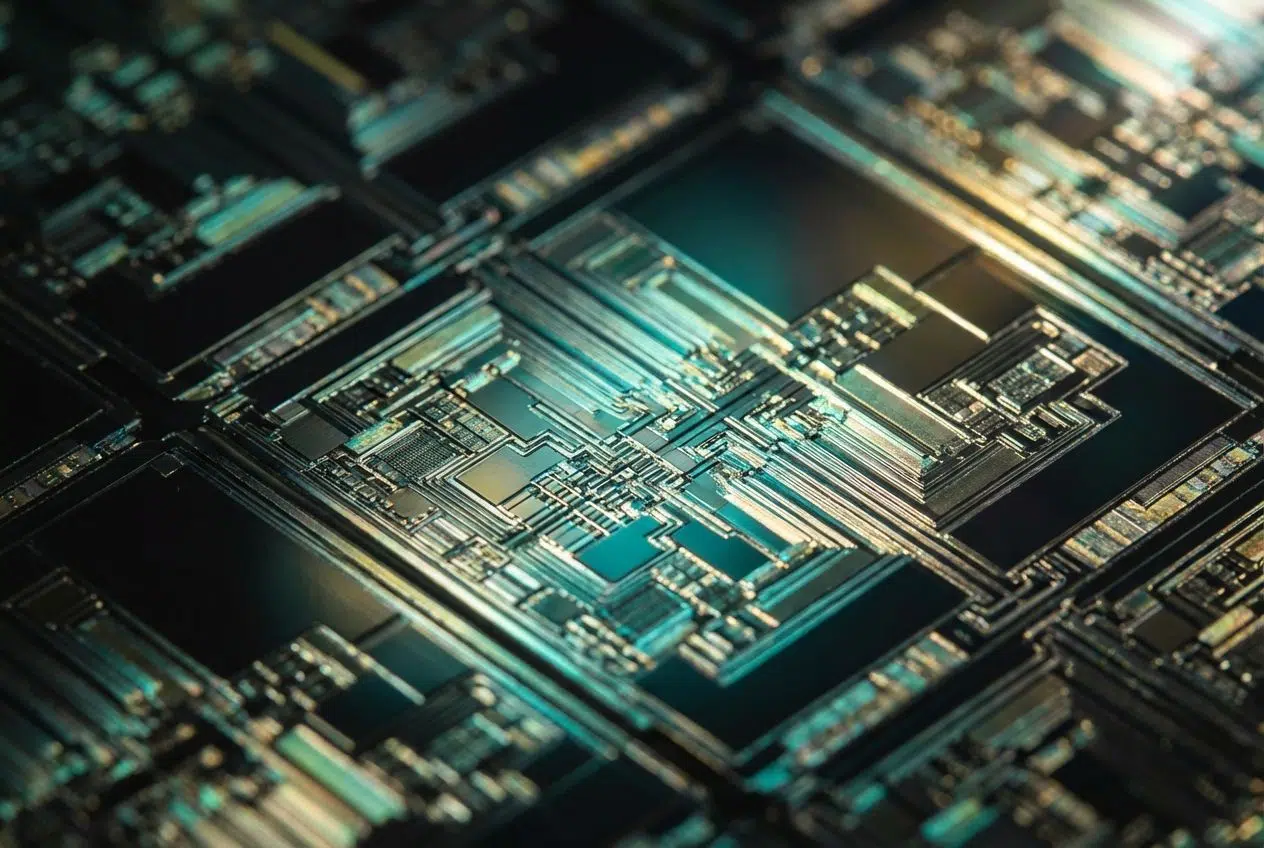
18A process chips pack more power into tinier spaces. Companies like Intel and TSMC plan to roll out these chips by 2025. This is sooner than many experts thought possible.
This tech means smaller transistors. You can fit billions on a chip the size of a fingernail. With this jump, computers run faster while using less energy.
New 18A process technology shakes up competition in semiconductors. Manufacturers race to hit tighter deadlines. Production costs go up since only advanced factories can make such tiny circuits.
AI-optimized chip designs
AI shapes chip designs like never before. These chips learn fast and work smarter. NVIDIA pushes out graphics cards that handle complex AI tasks with ease in 2026. Factories now use machines to spot flaws. They improve chip layouts on the fly.
Apple’s M-series chips boost speed while saving battery. They let AI control how the brain of your phone works. Each year, giants like Qualcomm roll out smarter mobile processors that predict what you need next.
Quantum computing advancements
Quantum computers now threaten to crack codes that kept data safe for years. A chip the size of your thumb can solve tasks in seconds. Regular supercomputers would need thousands of years to do the same job.
In 2024, IBM built a quantum chip with over 1,000 qubits. Companies like Google and Intel are racing to make these chips faster.
This means stronger tools for science and trade. It also creates bigger headaches for cybersecurity across markets. As global players pour billions into research, every leap forward sparks new trade policies.
The Hidden Cost of the Chip Wars
There is more to the chip race than price tags and shiny gadgets. Some problems lurk just beneath the surface. They touch your daily life in ways you never expected.
Environmental implications of chip production
Chip factories use a lot of water and power. A single large fab can consume up to 10 million gallons of water per day. That is enough to supply a small city.
Waste from these plants often contains dangerous metals. If not handled right, this waste can hurt rivers or soil near factories.
Making chips also creates mountains of carbon emissions. Every new chip plant needs huge amounts of energy just to run its machines around the clock. Greenpeace has called out the industry for heavily depending on coal power in places like China.
Economic inequalities in access to technology
While chip-making pollutes air and water, the ripple effect hits wallets too. Nations with strong economies snap up advanced semiconductors quickly.
Poorer countries get older tech at higher prices. Many families find new phones and computers out of reach as costs jump. The gap keeps growing each year, as chips get pricier.

- Education Gap: Students in rural areas often share slow devices while classmates abroad use cutting-edge gear.
- Business Hurdles: Small businesses face delays getting key parts for repairs.
- Health Impact: Hospitals in developing nations struggle to maintain modern diagnostic equipment.
Rising trade barriers add extra hurdles. This stifles growth and opportunity.
Who’s Winning the Chip Wars?
Some chip giants are pulling ahead. Others scramble to catch up. The race for digital power is heating up fast.
NVIDIA owns the largest piece of the AI chip market. They have grabbed over 80 percent of it so far. AMD keeps charging in, too.
Qualcomm holds strong in mobile chips. They are trying to push into new AI spaces. Taiwan’s TSMC makes most of these advanced chips. New tech grows fast. The “18A” process lets companies squeeze more power from smaller chips. AI-optimized designs pop up everywhere.
The battle for geopolitical influence
It is easy to see why world powers care about these tiny pieces of tech. Countries race to lead in semiconductors because chips help run phone grids and banking systems.
The United States passed the CHIPS and Science Act. This provides $52.7 billion to boost American semiconductor research and production.
China replied by investing billions into its own factories. Taiwan stays at the center of this high-stakes game. Europe is also pouring money into local production.
The Future of Semiconductors and Global Power Struggles
Big changes are on the horizon. New tech is shaking up old power games. Stay tuned for where chips and global influence go next.
Predictions for 2030 and beyond
Factories will keep moving outside Asia. They aim to balance global chip supply. The U.S. and Europe plan to pour billions into new semiconductor plants.
Homegrown chips may lower risks from trade wars. However, they could cost more for everyone. AI-powered chip designs could make gadgets even smarter by 2030. Countries will fight harder for control over minerals. Climate rules might push companies to use cleaner energy. Prices won’t drop fast.
The push for technological sovereignty
Countries want to control their chip supply. The U.S. and China are racing to make more semiconductors at home. Each region fears losing power if it depends too much on others.
China poured billions into local companies like SMIC. They are trying to break free from American tools. Europe set a goal to produce twenty percent of global chips by 2030. These moves spark heavy spending. As governments fight for self-reliance, making smartphones gets pricier. Tech sovereignty sounds smart, but raises costs for everyday people.
Final Words
Chips shape our lives from smartphones to cars. Now, world leaders are fighting for control over them. This race makes gadgets pricier and supply chains tangled. Big players like Nvidia and AMD keep pushing new ideas. Taiwan’s factories stay at the center of the action. Think about how these changes might affect your wallet next year.
Have you noticed prices rising already? Keep asking questions because technology is moving at lightning speed.