In 2026, the benchmark for a “competitive” workplace in Canada has moved far beyond basic statutory compliance. As the Canada’s Top Family-Friendly Employers project celebrates its 25th anniversary this year, the focus has shifted toward holistic caregiving support that spans from fertility and adoption to elder care and the “sandwich generation.” Leading companies are no longer just offering time off; they are actively engineering cultures that remove the professional “parenthood penalty” and normalize caregiving for all genders.
How We Selected Our 9 Best Canadian Corporate Family Benefits Trends
To provide you with actionable insights for 2026, we analyzed the latest winners of the Mediacorp Canada Inc. rankings and the most recent shifts in Employment Insurance (EI) maximums. Our selection focuses on benefits that go beyond the federal standard, emphasizing “top-up” parity, inclusivity for 2SLGBTQ+ families, and support for the rising number of employees balancing both child and elder care. We prioritized strategies that offer measurable improvements in employee retention and mental well-being.
The following benchmarks were used to evaluate which corporate strategies are defining the current year.
-
Top-Up Duration and Depth: Focusing on companies providing 80 percent to 100 percent of salary for extended periods.
-
Inclusivity of Support: Evaluating benefits for adoption, surrogacy, and fertility treatments like IVF.
-
Caregiver Flexibility: Prioritizing “phase-back” programs and remote work arrangements for those returning from leave.
-
Holistic Wellness: Assessing the integration of mental health and financial planning services for growing families.
By filtering these developments through the 2026 economic landscape, we identified the most effective ways Canadian firms are attracting and keeping top talent.
9 Essential Trends in Canadian Corporate Family Benefits
The current era of family support is defined by a move toward “caregiving equity,” where the needs of the employee are met regardless of the stage of their family life. These nine tips highlight the most significant changes currently being implemented by Canada’s leading employers.
1. Market-Leading Parental Leave Top-Ups
While federal EI benefits in 2026 provide a baseline of 55 percent of earnings, leading firms are bridging the gap to ensure employees do not face a financial crisis while bonding with their children. Companies like BCI and Creative Options Regina have set a high bar, offering top-ups to 85 percent or higher for up to 52 weeks. This ensures that the “economic penalty” of taking leave is virtually eliminated for high-performing staff.
Best for: Employees in high-cost urban centres who need financial stability to take their full allotted leave time.
Why We Chose It:
-
It is the most direct indicator of a company’s commitment to “walk the talk” on family support.
-
Competitive top-ups are the number one driver of retention for employees in their peak career-building years.
-
It allows families to choose the “Extended” EI option without the standard 33 percent pay cut being prohibitive.
Things to consider: Top-up policies often require a minimum period of service (usually 12 months) before they become active.
Beyond the standard leave, companies are now addressing the high costs associated with starting a family through medical intervention.
2. Comprehensive Fertility and Surrogacy Support
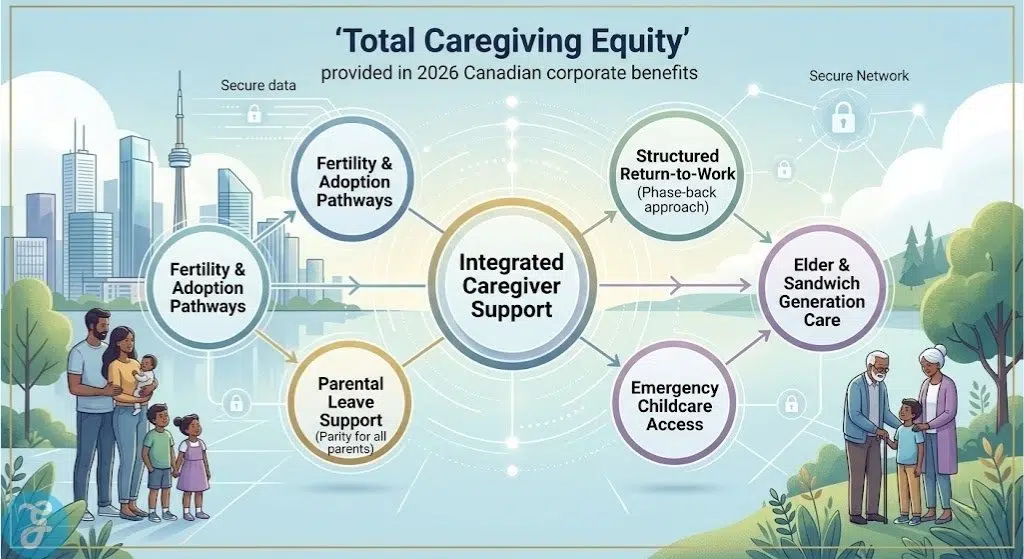
A standout feature of Canadian Corporate Family Benefits in 2026 is the expansion of health coverage to include IVF, egg freezing, and surrogacy expenses. Winners of the 2026 Top Family-Friendly Employers list are increasingly providing “lifetime maximums” of $15,000 to $25,000 for these treatments. This recognizes the diverse paths to parenthood, particularly for 2SLGBTQ+ employees and those facing medical fertility challenges.
Best for: Employees who are starting families later in life or through non-traditional biological paths.
Why We Chose It:
-
It significantly reduces the immense financial stress associated with fertility treatments.
-
This benefit demonstrates a high level of inclusivity and modern social awareness.
-
It supports employees during what is often a long and emotionally taxing pre-parenting phase.
Things to consider: Some plans may require employees to use specific “preferred” clinics to access the full benefit amount.
Once the child arrives, the focus shifts from the leave itself to how the parent reintegrates into the workforce.
3. Structured “Phase-Back” and Return-to-Work Programs
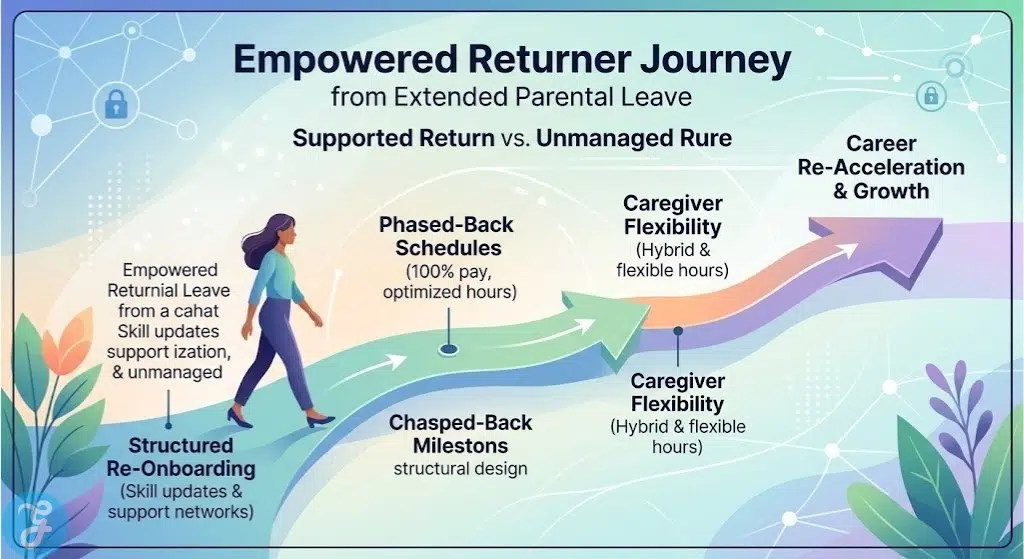
The transition back to full-time work after a year or more away is one of the highest-risk periods for employee turnover. Forward-thinking Canadian firms have introduced “phased-back” schedules where employees work 60 percent to 80 percent of their hours for the first three months while receiving 100 percent of their pay. This prevents burnout and allows for a smoother adjustment to new childcare routines.
Best for: Parents returning from extended leave who want to maintain their career momentum without sacrificing family time.
Why We Chose It:
-
It provides a psychological safety net for employees who fear being “out of the loop.”
-
These programs drastically reduce the “shock” of returning to high-pressure environments.
-
It encourages a culture where taking leave is seen as a normal part of a long-term career path.
Things to consider: These arrangements typically need to be negotiated and documented at least two months prior to the return date.
While biological parents have long been the focus, equity for adoptive and kinship caregivers is finally becoming a standard.
4. Adoption and Kinship Care Equity
Leading Canadian employers now offer the exact same top-up and leave durations for adoptive parents and legal guardians as they do for biological parents. In 2026, this often includes specific “adoption grants” to help cover the legal and agency fees associated with the process. This shift ensures that every child entering a home is afforded the same bonding time with their new caregiver.
Best for: Employees building families through adoption, fostering-to-adopt, or kinship care arrangements.
Why We Chose It:
-
It removes the historical bias that prioritized biological birth over other forms of family building.
-
Adoption grants can help mitigate the five-figure costs often associated with international or private adoptions.
-
It supports the “bonding period” which is just as critical for older adopted children as it is for infants.
Things to consider: Benefit eligibility usually begins only once the child is officially placed in the home.
The logistical challenge of childcare remains a massive hurdle, leading companies to provide direct physical and financial support.
5. Childcare Subsidies and Emergency Care Access
Access to affordable childcare is a primary concern for the 2026 workforce. Leading companies are partnering with national providers to offer “priority spots” for their employees or providing direct monthly subsidies to offset costs. Furthermore, many now offer “back-up care” benefits, where the company pays for emergency in-home care if a child’s regular school or daycare is closed.
Best for: Working parents who do not have local extended family support to help with last-minute childcare gaps.
Why We Chose It:
-
Emergency care access prevents “forced absenteeism” when a daycare provider is sick.
-
Direct subsidies can bridge the gap while families wait for subsidized government spots to become available.
-
It shows a granular understanding of the day-to-day challenges of being a working parent.
Things to consider: Back-up care benefits are often limited to a set number of days per year (e.g., 10 to 15 days).
Family care in 2026 increasingly involves looking “up” the family tree as well as “down” toward children.
6. Elder Care and “Sandwich Generation” Resources
One-third of the Canadian workforce is now balancing care for both children and aging parents. The 2026 crop of Top Employers has introduced “caregiver leave” and access to professional elder care navigators who help families find long-term care beds or organize home support. This recognition of “elder care” as a primary family benefit is a defining shift of the current decade.
Best for: Mid-to-senior level employees who are managing the complex health needs of aging parents.
Why We Chose It:
-
It addresses the “hidden” stress that frequently leads to burnout among experienced leaders.
-
Professional navigators save employees dozens of hours of stressful administrative research.
-
It recognizes that caregiving is a lifelong responsibility, not just one limited to the early years of a child’s life.
Things to consider: These benefits are often underutilized because employees may not self-identify as “caregivers” for their parents.
As the physical logistics are managed, the emotional health of the family unit has become a high-priority area for investment.
7. Holistic Mental Health Support for New Parents
Postpartum depression and the “new parent” identity shift are being met with specialized mental health benefits. Leading Canadian plans in 2026 include unlimited access to virtual therapy specifically for prenatal and postnatal anxiety. Some firms have even added “parenting coaches” to their benefits suites to help employees navigate sleep training, behavioral challenges, and neurodiversity in children.
Best for: Parents experiencing the significant mental health strain of a major life transition.
Why We Chose It:
-
It provides immediate, stigma-free access to specialists during a vulnerable time.
-
Parenting coaches can offer practical solutions that reduce daily household stress.
-
It treats mental well-being as a core component of “health” rather than an optional add-on.
Things to consider: Many of these services are delivered through third-party apps and require a separate login from standard health portals.
The culture of care is only effective if it applies to everyone, regardless of their role in the family.
8. Normalizing Secondary Caregiver and Paternity Leave
To truly achieve gender equity, Canadian companies are actively encouraging fathers and secondary caregivers to take their full allotted leave. In 2026, many firms have introduced “use-it-or-lose-it” top-up periods specifically for secondary caregivers. By seeing male leaders take three to six months off, the “stigma” of taking leave is dismantled for the entire organization.
Best for: Fathers and secondary caregivers who want to be active, present parents from day one.
Why We Chose It:
-
It prevents the “default” caregiving burden from falling solely on the birthing parent.
-
When men take leave, it helps close the long-term gender pay gap by normalizing career breaks for all.
-
It builds a more empathetic and balanced leadership pipeline.
Things to consider: High-profile support from senior management is necessary for these policies to be effectively adopted.
Financial stability is the foundation of a healthy family, leading to a new focus on long-term family planning.
9. Financial Wellness and Education for Growing Families
The final pillar of Canadian Corporate Family Benefits in 2026 is the provision of “family financial planners.” These specialists help employees navigate the complexities of Registered Education Savings Plans (RESPs), life insurance, and updating wills. Providing this expertise for free is a powerful way to reduce the background noise of financial anxiety for new parents.
Best for: Young families who are overwhelmed by the long-term financial implications of raising a child.
Why We Chose It:
-
It turns “benefits” into “wealth-building” opportunities for the next generation.
-
Professional advice helps families maximize government grants like the Canada Education Savings Grant (CESG).
-
It creates a sense of long-term partnership between the employer and the employee’s family.
Things to consider: These planners should be fee-only fiduciaries to ensure their advice is unbiased and in the employee’s best interest.
Overview of Canadian Corporate Family Benefits in 2026
The shift toward total caregiver support has redefined the “gold standard” for Canadian workplaces. The following table summarizes the key performance indicators for a truly family-friendly organization this year.
The data below represents the current benchmarks for industry leaders in the 2026/27 cycle.
| Benefit Category | Statutory Baseline | 2026 Corporate “Gold Standard” | Target Outcome |
| Parental Top-Up | 55% (Standard EI) | 85% to 100% for 30+ weeks | Financial Neutrality |
| Caregiving Scope | Children only | Newborn to Elder Care | Holistic Support |
| Return-to-Work | Standard Job Protection | Phased-Back (100% pay, 80% hours) | Retention & Zero Burnout |
| Fertility/Adoption | Varies by province | $15k – $25k Lifetime Maximum | Inclusivity for All Paths |
| Flexibility | Discretionary | Default Hybrid/Flexible Hours | Daily Stress Reduction |
Our Top 3 Critical Benefit Factors and Why?
While all nine trends contribute to a healthy culture, these three are the most vital for any Canadian firm looking to remain competitive in 2026.
-
Parity in Top-Ups: Providing a high percentage of salary for both primary and secondary caregivers is the only way to achieve true workplace equity.
-
Flexible Return Pathways: The “Phased-Back” model is the most effective tool for preventing the mid-career exodus of talented parents.
-
Elder Care Integration: As the population ages, companies that fail to support “sandwich generation” caregivers will face an attrition crisis.
How to Audit Your Current Corporate Benefits Package?
Whether you are an HR leader or an employee evaluating a job offer, you must look beneath the surface of the “Standard Benefits” brochure. A truly family-friendly culture is visible in the details of the policy and the actions of the leadership.
-
Check the Top-Up Ceiling: Ask if there is a maximum weekly cap on the top-up, as high-earners may still face a significant pay cut if the cap is low.
-
Look for Gender-Neutral Language: Ensure the policy uses terms like “Primary” and “Secondary” caregiver rather than “Maternity” and “Paternity” to ensure full inclusivity.
-
Verify “Invisible” Support: Check if the plan includes fertility drugs and psychological support, which are often excluded from standard drug and paramedical lists.
-
Observe the Leadership: Look for examples of senior managers who have taken extended parental leave or utilized flexible work for elder care.
The following table can help you determine if a company’s benefits are “Standard” or “Market-Leading.”
| Standard Benefits | Market-Leading Benefits |
| 15 weeks maternity top-up. | 30+ weeks top-up for all parents. |
| Job-protected leave only. | Structured 3-month phased return program. |
| Basic health/dental coverage. | Fertility, surrogacy, and adoption grants. |
| Standard unpaid compassionate leave. | Elder care navigators and paid caregiver days. |
The Final Corporate Family Checklist
-
[ ] Review the “reasons for selection” for the 2026 Top Family-Friendly Employers on Eluta.ca.
-
[ ] Calculate your potential net income during leave using the 2026 EI maximum of $668/week.
-
[ ] Inquire if your company’s “Wellness Account” can be used for childcare or tutoring costs.
-
[ ] Check if your EAP (Employee Assistance Program) offers specialized support for neurodiverse children.
-
[ ] Confirm if your benefits coverage continues while you are on an extended parental leave.
Fostering a Culture of Permanent Care
The evolution of Canadian Corporate Family Benefits in 2026 reflects a deeper societal shift: the realization that employees are whole people with lives that extend far beyond their desks. By investing in the “caregiving cycle” from fertility to elder care, Canadian companies are not just being “nice”; they are building resilient, loyal, and diverse workforces that are equipped to lead in the global economy. A family-friendly culture is no longer a perk—it is the baseline for excellence in the modern Canadian workplace.
Frequently Asked Questions About Canadian Corporate Family Benefits
Is a company legally required to offer a parental leave top-up?
Things to consider: No, there is no legal requirement in Canada for an employer to provide a top-up. However, it has become a standard competitive practice for “Top 100” employers in 2026.
Does the top-up apply if I take the “Extended” 18-month leave?
Best for: Most top-up policies are designed around the “Standard” 12-month timeline. If you take the extended leave, the company may spread the same dollar amount over a longer period or stop the top-up after the first year.
Can I use fertility benefits if I am not married?
Why We Chose It: Yes, modern 2026 benefit plans are designed to be inclusive and typically do not require proof of marital status to access fertility or adoption supports.
Things to consider: This is a professional consultant, often provided through the company’s benefits, who helps you manage the logistics of caring for an aging parent, from finding housing to coordinating medical appointments.
How do I know if my company’s culture is truly family-friendly?
Best for: Look at the data on how many men take their full five weeks of “paternity” leave. If the uptake is low, it suggests a culture where taking time off is still subtly discouraged.