
Ever feel like a brand gets lost in the crowd, even with great products? Many businesses face this challenge when customers don’t connect beyond features and discounts, simply scrolling past.
In a crowded market, attention is hard to earn. Brand storytelling helps cut through the noise by creating emotional connections that spark real interest and lasting recall.
Stories activate the brain in powerful ways. They can trigger dopamine for focus, oxytocin for trust, and endorphins for positive emotion. This makes audiences more likely to remember and care about a brand.
Know, how to build a strong brand narrative using key elements like the hero, the challenge, and the transformation. It also highlights real-world examples from brands like Nike and Airbnb that excel at emotional storytelling.
A well-crafted story can turn a brand from forgettable to unforgettable.
What Is Brand Storytelling?
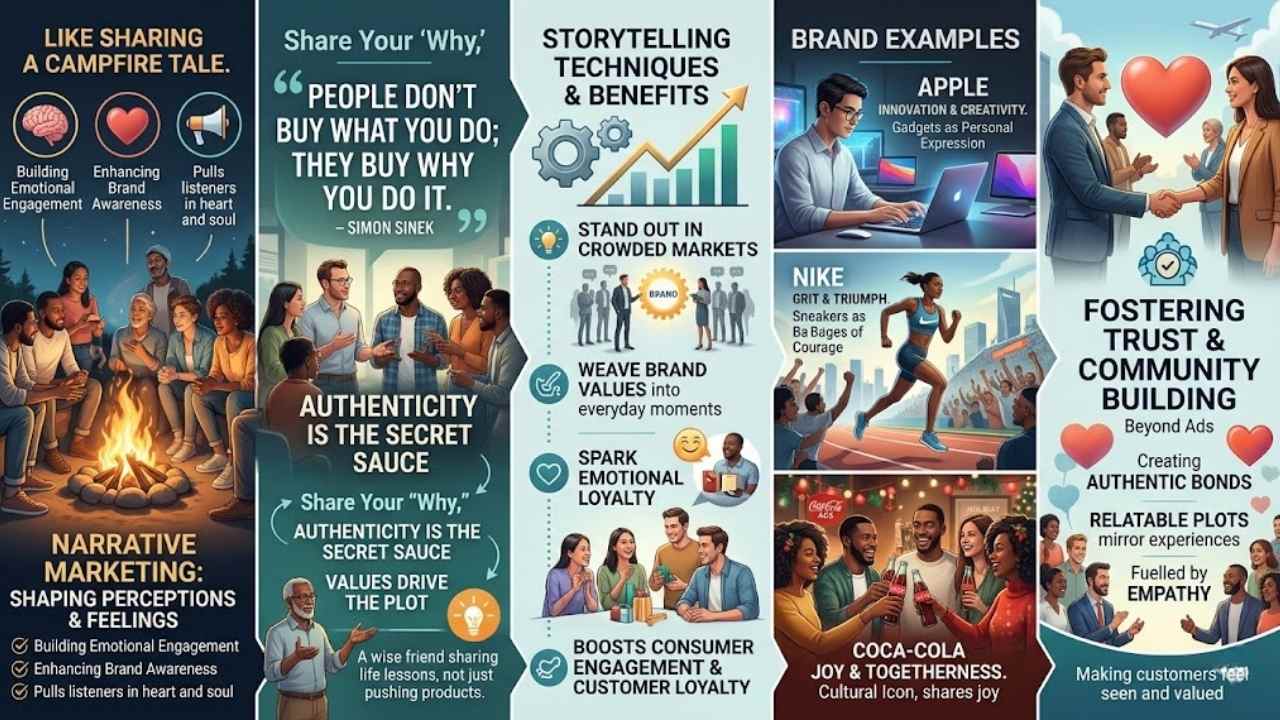
Brand storytelling taps into narrative marketing to shape how people see and feel about a brand. Companies use it to build emotional engagement and brand awareness. Think of it like sharing a campfire tale that pulls listeners in, heart and soul.
Apple spins stories around innovation and creativity, turning gadgets into symbols of personal expression. Nike inspires with tales of grit and triumph, making sneakers feel like badges of courage.
These narratives go beyond ads; they create authentic bonds through relatable plots. Brands craft tales that mirror customer experiences, fostering trust and community building. Authenticity shines as the secret sauce, letting values drive the plot.
Your business brand as a wise friend sharing life lessons, not just pushing products.
People don’t buy what you do; they buy why you do it. – Simon Sinek
Storytelling techniques help business brands stand out in crowded markets. They weave brand values into everyday moments, sparking emotional loyalty. Coca-Cola shares joy through holiday ads, turning soda into a symbol of togetherness.
This approach boosts consumer engagement and customer loyalty. It transforms marketing strategy from sales pitches to heartfelt chats. Brands like these become cultural icons by inviting audiences into their world.
Empathy fuels these connections, making customers feel seen and valued.
Why Brand Storytelling Matters
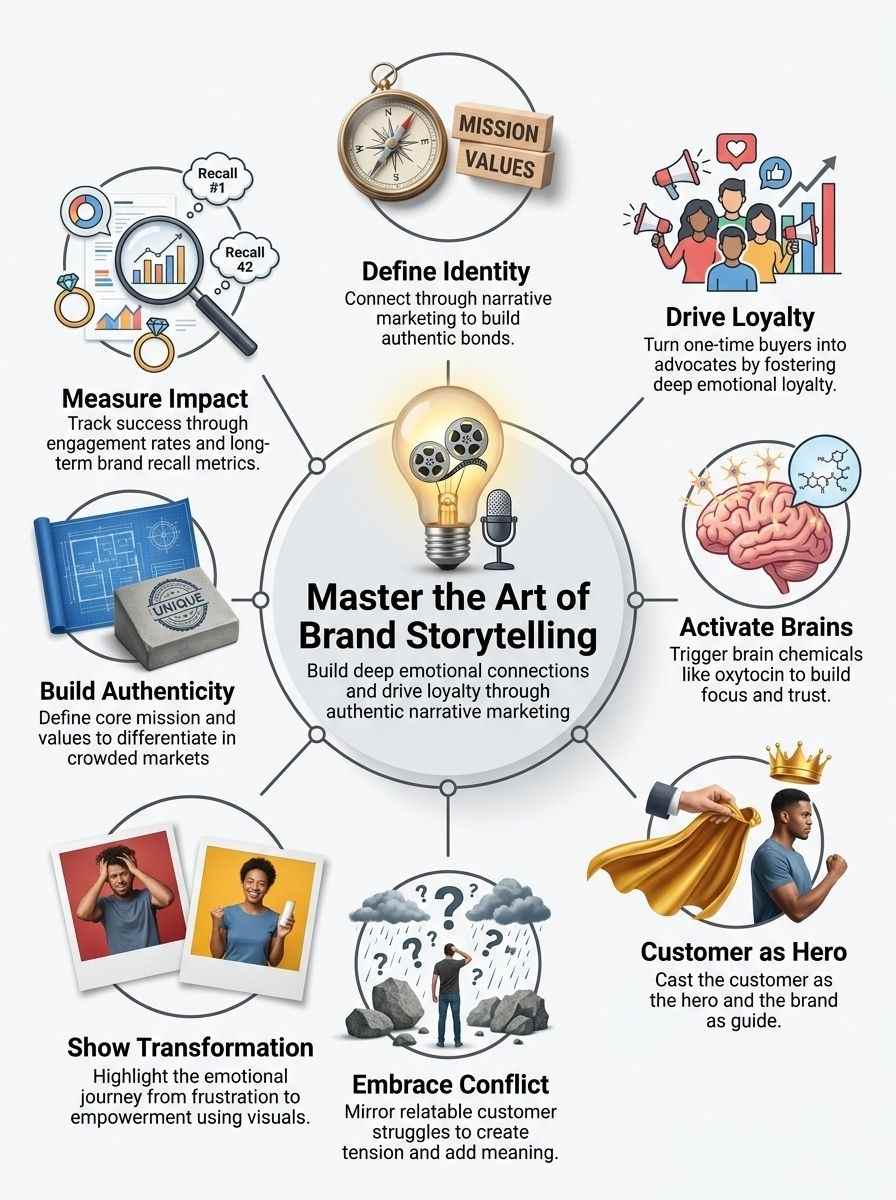
Your brand as a campfire tale that draws folks in, warms their hearts, and sticks with them long after the flames die down. It sparks real bonds, boosts loyalty like a trusted old friend, and sets you apart in a crowded market, hey, who wouldn’t want that edge?
Builds Emotional Connections
Storytelling sparks joy, sadness, excitement, or nostalgia in your audience. Brands use this power to forge deep ties with customers. Think of it as a warm hug from a friend, not just a sales pitch.
Emotional bonds sway buying choices and boost brand loyalty over time. They turn one-time buyers into lifelong fans. Humanize your brand identity by sharing the folks behind it, their paths, and core values.
Authenticity wins big in today’s market, where personal tales matter most. Picture a luxury marketing approach from Hermès or Cartier; they craft stories around craftsmanship that pull at heartstrings.
Customer engagement soars when you personalize narratives, much like Deloitte Digital advises in their reports.
These connections make brands feel alive and relatable. Ravouth Keuky might explore scientific topics on ResearchGate, showing how empathy drives trust. Patek Philippe excels here, weaving tales of modern fatherhood or digital transformation into their ads.
Animation in the App Store brings stories to life, stirring nostalgia. Ambroise Rezeau could nod to this in his work. Such efforts differentiate you in a crowded space. They enhance loyalty through shared values and journeys.
Keep it real, and watch those emotional links strengthen.
Enhances Customer Loyalty
Emotional connections foster loyalty and create lasting relationships with the audience. Think of it like a favorite old sweater, comfy and reliable, that you keep coming back to. Customers with strong emotional connections are three times more likely to recommend the brand.
This turns them into long-term advocates, cheering for you at every turn. Engagement leads to community building around a brand and expanded brand awareness. Personalization plays a key role here, making each story feel like it’s just for them, drawing folks closer.
Strong emotional connections result in customer loyalty, like glue that holds everyone together.
Stories are the currency of human connection, says a wise marketer, reminding us how tales build bonds that last.
Chatting with a pal over coffee, sharing laughs and deep talks; that’s the vibe brand storytelling brings to loyalty. It sparks that warm feeling, encouraging folks to stick around.
Differentiates Your Brand
Stand out in a crowded market, folks. Differentiation proves vital for brands today. Storytelling sets you apart by sharing your journey, values, and vision. This creates an identity that competitors can’t copy.
Think of it like a fingerprint; no two match exactly. Customers pick brands that echo their own values, making that special touch the tiebreaker.
Facts and features alone bore people in this busy world. A strong story grabs attention instead. It builds real bonds, turning casual buyers into loyal fans. Your brand’s tale, like a secret sauce, adds flavor that plain info lacks.
Use it wisely, and watch your spot shine brighter than the rest.
The Psychology of Storytelling in Marketing
Stories fire up our brains, stirring joy and sadness that lock brands into long-term recall, while empathy from shared tales builds real trust with folks just like you.
Curious how this boosts your brand? Dive deeper below.
Engages Emotions and Memory
Storytelling lights up your brain like a fireworks show. It triggers dopamine, that feel-good chemical, sparking attention and building anticipation for what comes next. Imagine you’re hooked on a tale about a brand’s journey, and suddenly endorphins kick in, forging those warm, positive links to the product.
Brands use this magic to draw you in, making every ad feel like a chat with an old friend. Emotions run the show here, folks, turning simple pitches into unforgettable rides.
People hold onto emotional experiences way longer than dry facts, no contest. Stories crank up audience engagement because they stick in your mind better than plain old ads. Think about it, a heartfelt narrative about real struggles and wins creates bonds that facts alone can’t touch.
You feel the pull, right? This approach helps brands etch their message deep into your memory, keeping customers coming back for more.
Triggers Trust Through Empathy
Brands spark trust when they share stories that hit home. Think about it, a good tale releases oxytocin in your brain, that feel-good chemical. This builds empathy right away. You feel connected, like the brand gets you.
Storytelling does this by fostering trust through oxytocin, plain and simple. Add transparency to the mix, and credibility soars. People sense the realness, the honesty in every word.
Share challenges with empathy, and watch connections deepen. Customers trust you more when you acknowledge their struggles, like a friend lending an ear. This approach boosts credibility, creates stronger bonds.
Your brand as a trusted confidant, always there with open arms. Empathy in stories turns skeptics into loyal fans, one heartfelt moment at a time.
Core Elements of a Powerful Brand Story
Core elements of a powerful brand story act like the heartbeat that forges real emotional ties with your customers, pulling from classic narrative arcs to spark loyalty and trust, so keep reading to see how you can use them in your own marketing adventure.
The Hero: Your Customer
Brands thrive when they put you, the customer, in the spotlight. Think of your favorite stories; the hero always faces big challenges and grows from them. In marketing, successful brands do the same.
The brand mentors you, supports your journey, and helps you tackle obstacles. Customers spot their challenges reflected in these tales, and that pulls them in.
Your story matters most to a brand that gets it right. They build narratives around your needs, your dreams. Take Apple; they make you the innovator, the creative force, with their products as your trusty sidekick.
Brands act as mentors, offering tools to transform your path. You face the conflict, sure, but they provide the support to win. This setup creates trust, sparks empathy. Customers connect when they recognize their own journeys in the brand’s message.
Loyalty blooms from that real, heartfelt link.
The Challenge: The Conflict That Adds Meaning
Customers face real problems every day, and that’s where the challenge kicks in. This part of your brand story shows those struggles, like a hurdle in a race that makes the win feel sweeter.
Articulating these challenges with empathy boosts credibility and connection, making folks nod and say, “Yeah, they get me.” Sharing them openly gives your brand personality and voice, which amps up relatability and trust, like confiding in an old friend over coffee.
Think of the challenge as the storm before the calm in your customer’s journey. It adds meaning by turning everyday gripes into epic tales. Customers battle doubts or setbacks, and your story spotlights those to spark empathy.
You articulate them kindly, which strengthens bonds and makes your brand feel human. This approach enhances trust, as people warm to voices that echo their own. Empathy in these moments creates that “aha” spark, drawing folks closer without any pushy sales talk.
The Transformation: The Emotional Journey
Think about the transformation as the heart of your brand story, that magical shift from frustration to fulfillment. It captures the emotional ride your customer takes, feeling stuck at first, then breaking free.
Brands shine here by zooming in on real feelings, like that sweet relief or a burst of empowerment. Skip the dry outcomes; focus on those gut-level emotions that stick with people long after.
Strengthen this portrayal with visual storytelling, such as vivid testimonials or detailed case studies. Pull in visuals, fresh customer stories, and honest testimonials to show the change your brand sparks.
Envision a video where someone shares their turnaround; it pulls readers right into the journey, making the empowerment feel real and close.
The Purpose: Your Brand’s “Why”
A brand’s purpose goes beyond profit. It anchors the story in a deeper mission, like a compass guiding every step. This core “why” draws in customers who share your values and initiatives, folks who feel that spark of connection.
Ask yourself key questions, “Why do we do what we do?” and “What impact do we want to make on people’s lives?” These probes uncover the heart of your brand, much like peeling an onion to reveal its true layers.
Purpose-driven storytelling builds authenticity, trust, and loyalty. It turns everyday customers into passionate advocates, cheering for your cause.
Your brand as a wise old tree, roots deep in purpose that weather any storm. This foundation fosters real bonds, where empathy meets action. Customers stick around because they see their own dreams reflected in your mission.
Stay true to this “why,” and watch loyalty bloom like wildflowers in spring. Authenticity shines through, creating trust that feels as solid as a handshake. Advocates emerge naturally, spreading your story far and wide.
How to Create Your Brand Story
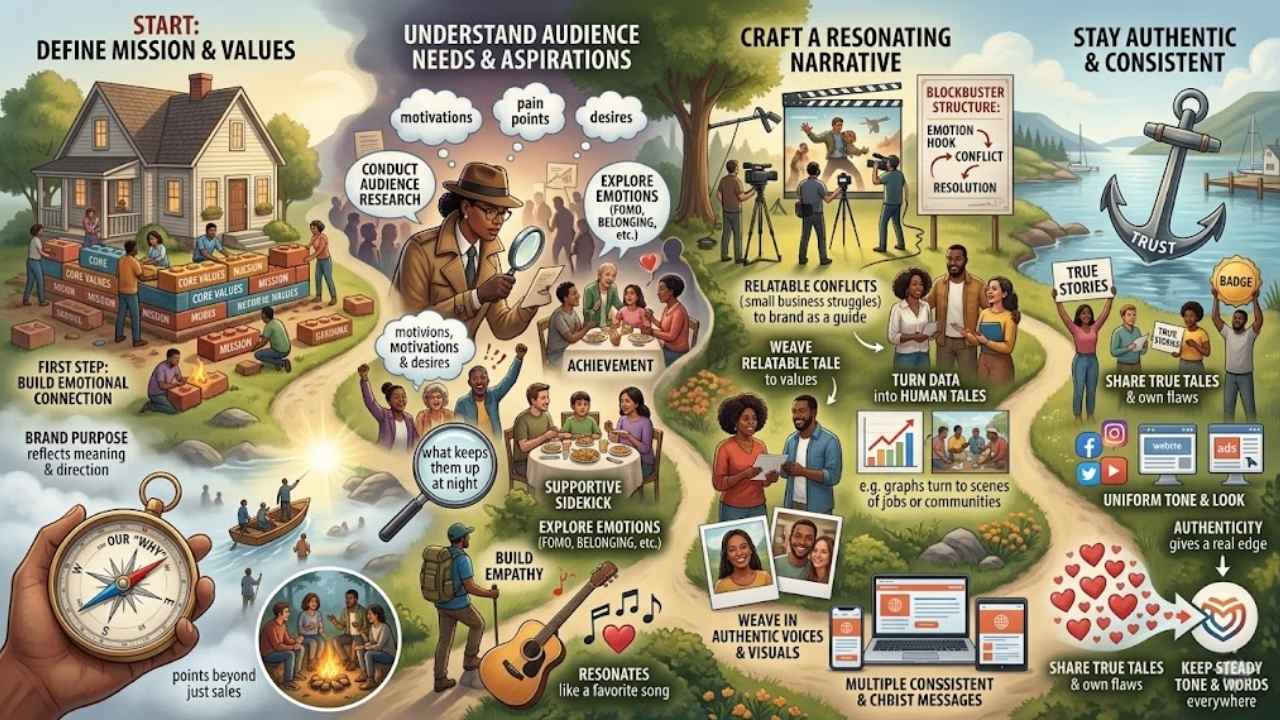
Want to spin a tale that grabs hearts? Dig into your company’s core goals and what folks in your crowd dream about, then weave a yarn that feels real and sticks around.
Define Your Brand’s Mission and Values
Start by identifying your brand’s core values and mission. This acts as the first step in building emotional connection with your audience. Think of it like laying the foundation for a house; get this right, and everything else stands strong.
Your brand purpose needs to reflect the meaning and emotional direction of your brand. Picture a compass guiding you through a foggy sea, that’s what a clear purpose does. It points to why your brand exists beyond making sales.
Establishing brand purpose helps differentiate the brand from competitors. Plus, it fosters long-term loyalty through shared beliefs with customers. Sharing passions and intended impacts gives brands personality and voice.
Understand Your Audience’s Needs and Aspirations
Understand your audience’s needs and aspirations to craft a brand story that hits home. Start audience research first. Identify their motivations, pain points, and desires through surveys or chats.
Think of it like being a detective, uncovering what keeps them up at night. Explore emotions that drive their choices, like fear of missing out, a sense of belonging, the thrill of achievement, or sparks of hope.
This step builds empathy, key for authentic tales.
Conduct that research well, and your story resonates like a favorite song. Readers feel seen, heard, and ready to join in.
Craft a Narrative That Resonates
Build your brand story as the second step in forging emotional bonds. Tie a relatable tale to your core values, like a thread weaving through fabric. Picture your audience nodding along, feeling seen and understood.
Structure it like a blockbuster film. Kick off with raw emotion to hook them. Ramp up the tension with real conflicts they face every day. Lead to a satisfying resolution where your brand steps in as the guide.
Turn dry data into vivid human tales too. Link sales jumps to new jobs or thriving communities, making numbers breathe with life.
Take the third step by weaving in authentic voices and visuals. Let real people share their journeys in your narrative, raw and unfiltered. Pair those stories with genuine images that pop off the screen.
Your story then resonates deep, turning casual viewers into loyal fans.
Stay Authentic and Consistent
Authenticity gives your brand a real edge, especially amid all this info chaos. Share true tales that own up to flaws. People spot fakes a mile away, like spotting a bad actor in a play.
Real stories build trust and spark loyalty. Customers rally behind brands that feel genuine.
Keep your tone, looks, and words steady on every platform. This strengthens those heart ties. Emotion-packed stories, told the same way everywhere, pull folks in deeper. They make your brand’s core stick in minds.
Examples of Effective Brand Storytelling
Top companies spin tales that grab hearts, like a sports gear maker urging folks to chase dreams with a bold motto. A lodging service weaving yarns of welcome for all travelers, or a soap brand flipping old beauty ideas on their head to cheer real folks.
Nike: Empowerment Through “Just Do It”
Nike’s “Just Do It” campaign hits home by stressing empowerment and the grit needed to beat tough odds. Picture everyday folks pushing through sweat and doubt, not just star athletes shining in the spotlight.
This story spotlights the hard work that leads to wins, turning Nike into more than shoes or gear. People join in, feeling part of a bigger push for personal triumphs.
Effective tales like this make a brand feel like a rally cry, something folks crave to rally around. Nike nailed it, weaving narratives that boost loyalty and spark real bonds. Through smart storytelling, they climbed to cultural icon status, proving a simple slogan can fuel a global movement.
Airbnb: Inclusion with “Belong Anywhere”
Airbnb masters brand storytelling with its slogan, “Belong Anywhere.” This phrase highlights real stories from hosts and guests, pulling you right into their world. A traveler finding a cozy spot in a new city, feeling like they fit in instantly.
The campaign promotes themes of inclusion and community, like sharing a meal with locals or discovering hidden gems together. It emphasizes the concept of belonging, addressing that deep human need for connection we all share.
Airbnb frames travel as a way to create feelings of home, no matter where you roam. Hosts open their doors, and guests build bonds that last. This approach draws you in, makes you smile at the idea of adventure with heart.
Think about it, a simple stay turns into a story of warmth and welcome. Their narrative resonates because it feels genuine, like chatting with an old friend over coffee.
Dove: Redefining Beauty with “Real Beauty”
Dove’s “Real Beauty” campaign shakes up old ideas about looks. It features everyday women, not models. This move challenges societal beauty standards head-on. Picture a world where ads show real bodies and faces, flaws and all.
Dove promotes self-acceptance this way. People feel seen, you know? The campaign builds deeper personal connections, like a warm chat with a friend. Dove uses storytelling to spark authenticity.
Trust grows from that honest vibe. Loyalty follows suit, strong as an oak.
The effort has reshaped beauty tales in ads. Brands now think twice about perfect images. Dove’s approach fosters empathy, a key in marketing. Imagine your own story reflected back at you.
That emotional pull sticks. Customers return, drawn by the truth. Dove’s narrative proves stories can change views. It turns routine buys into meaningful bonds.
Measuring the Impact of Brand Storytelling
You know that gut feeling when your story hits home? Track it with tools like Google Analytics for likes, shares, and comments, plus sentiment analysis from Brandwatch to gauge how folks really feel.
Then, explore net promoter scores and repeat purchase rates to see if loyalty sticks, sparking that “aha” moment for your next big tale.
Track Engagement and Customer Sentiment
Track engagement to see how your brand story grabs hearts. Engagement rate shows emotional resonance with metrics like comments, shares, and saves. People chime in when a tale hits home, right? Spot those spikes, and you know your narrative sparks joy or stirs souls.
Website time-on-page tracks how long folks linger on your content, like guests at a good party who hate to leave. Video watch time does the same for clips, revealing if viewers stick around for the full emotional ride.
Gauge customer sentiment next, it’s like checking the pulse of your audience. Brand sentiment evaluates the balance of positive versus negative mentions of the brand. This ratio highlights audience perception, showing if your story builds trust or misses the mark.
Tools like social listening apps catch these vibes in real time. Positive buzz means loyalty grows, while negatives signal tweaks needed. Keep tabs, and watch your connection deepen, one heartfelt share at a time.
Monitor Brand Recall and Loyalty Metrics
Check how well your brand sticks in people’s minds. Strong storytelling boosts brand recall and emotional affinity. Customers with emotional ties recommend your brand three times more often.
Watch branded search volume. It shows more searches for your brand name. This points to better recall and audience connection. Tools like Google Search Console help track these searches.
Look at customer retention too. It tracks repeat visits and referral traffic. These signal loyalty from your stories. Use platforms such as Google Analytics to measure them. See the numbers rise as your narrative hits home.
Keep an eye on these metrics, and adjust your approach. Your brand grows stronger with each insight.
Final Thoughts
Brand storytelling turns facts into feelings that stick with people. You can start by making your customer the hero and sharing real challenges they face. These steps build trust fast and keep loyalty strong without much effort.
Check out books like “Building a StoryBrand” for more tips on crafting your tale. Go tell your story now, and watch connections grow like wildfire.
Frequently Asked Questions (FAQs) About Brand Storytelling
1. What is brand storytelling all about?
Brand storytelling is like sharing a campfire tale that draws people in, it helps your business share its heart and soul through stories that stick. Think of it as the secret sauce that turns bland facts into something folks remember, and feel.
2. How can I build emotional connection with my audience?
Start by knowing what makes your crowd tick, then weave in stories that mirror their joys and struggles. It’s like being that friend who gets you, right? This approach turns casual viewers into loyal fans who care about your brand.
3. Why does emotional connection matter in marketing?
Emotional connection acts as the glue that keeps customers coming back. Without it, your brand might fade into the background like yesterday’s news.
4. Any tips for crafting stories that connect on an emotional level?
Dig into real-life anecdotes from your brand’s journey, keep them honest and relatable. Mix in a dash of humor to lighten things up, and always tie back to shared human experiences. That way, your tale resonates, builds trust, and sparks that warm fuzzy feeling.