If you are just slapping a generic “Start your 14-day free trial” button on your homepage and hoping for the best, you are leaving money on the table.
In the trenches of SaaS growth, we see it all the time: founders treat the SaaS free trials like a passive waiting room. But the most successful companies don’t just give software away for a couple of weeks. They treat their trials as a calculated, psychological mechanism engineered to push users toward their “Aha!” moment before the clock runs out.
If you want to move beyond the lazy standard, here is a masterclass in trial strategy, featuring 8 companies that built brilliant conversion engines, and exactly why their models work.
1. Dropbox: The Viral Referral Loop
Let’s start with a classic that redefined growth. Instead of putting a strict time limit on their trial, Dropbox tied its free version directly to its core product value: cloud storage. They built a double-sided reward where both the referrer and the invited friend received 500MB of extra space.
Why it works: It turns your new signups into a highly motivated, unpaid sales team. Because storage space was the literal currency of the product, users aggressively invited their colleagues to earn more. This brilliantly simple gamified loop helped Dropbox skyrocket from 100,000 to 4 million users in just 15 months.
2. Groove: The Power of Radical Clarity
While Dropbox relied on product virality, customer support platform Groove looked at a much more basic conversion killer: confusion. They realized their overly complex pricing tiers were actively giving prospects anxiety. They completely gutted their pricing page to focus on a simplified model and added a clear comparison tool.
Why it works: Decision fatigue destroys conversions. By removing the guesswork around what the software would eventually cost, Groove saw a massive 358% increase in free trial signups. The lesson here is simple: if a user has to do math to figure out your pricing, they won’t even bother starting the trial.
3. Slack: The “Bottom-Up” Usage Limit
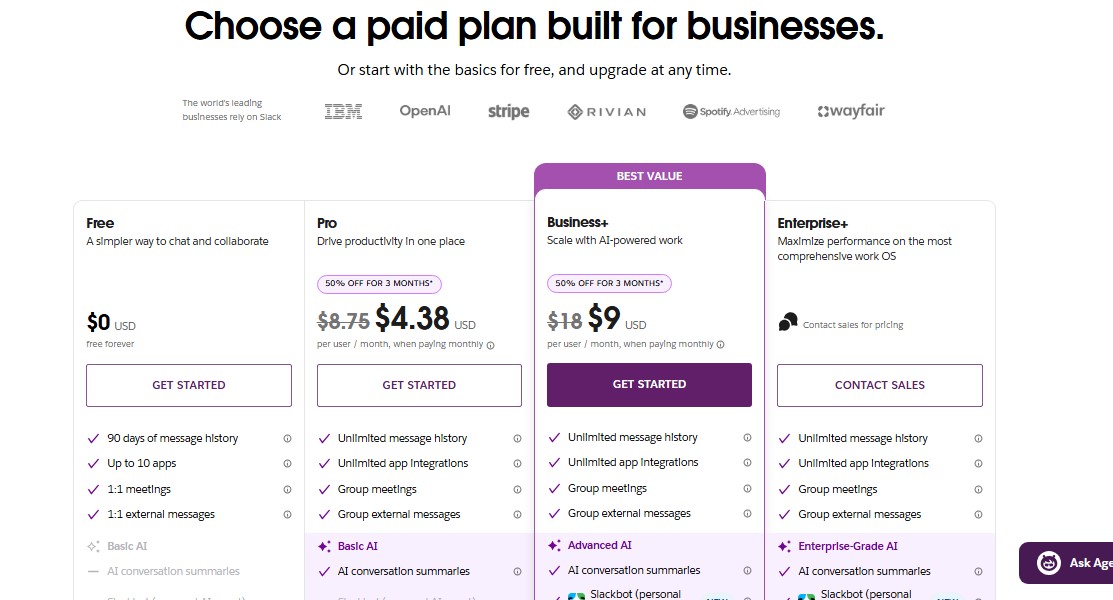
Slack took a completely different approach. They allow unlimited users on their free tier, making it frictionless for small teams to adopt the software. But they hide a very painful, strategic hook inside the product: you can only search your most recent 90 days of message and file history.
Why it works: This is the holy grail of “bottom-up” adoption. Teams build their entire daily communication workflow on Slack without paying a dime. But once that 90-day mark hits, their institutional knowledge vanishes behind a paywall. Upgrading is no longer an optional luxury; it is a sudden operational necessity.
4. Canva: The “Reverse Trial” Paywall
Canva’s approach proves that timing is everything. Their drag-and-drop editor is free forever, but premium assets, like specific fonts, stock photos, and brand kits, are gated behind a tiny crown icon. The second a user clicks on one of those assets, they are offered an immediate 30-day free trial to unlock it.
Why it works: Intent is highest when a user is actively trying to accomplish a task. Instead of asking for a trial signup blindly on the homepage, Canva hits them with the offer right in the middle of their creative workflow. The trial becomes an instant, frictionless solution to a very specific problem.
5. Spotify: Monetizing the Trial Phase
What if you intentionally made your free trial a little bit annoying? Spotify offers a free tier containing its entire music catalog, but intentionally degrades the experience with unskippable ads, restricted skips, and no offline listening.
Why it works: The free version is good enough to build a daily, addictive habit, but just annoying enough to make the premium upgrade irresistible. Every single ad break effectively serves as a pitch for the paid version, driving an industry-leading free-to-paid conversion rate.
6. Crazy Egg: Pre-empting User Objections
Crazy Egg didn’t reinvent their product mechanics; they reinvented their messaging. Using their own survey tools, they discovered users were abandoning the signup page because they were terrified of hidden fees and complicated cancellation processes. Crazy Egg redesigned their trial pages to address these exact fears head-on.
Why it works: Trial hesitation is almost entirely driven by the fear of the unknown. By systematically answering the most common objections right next to the signup button, they cleared the psychological roadblocks out of the way.
7. Trello: The Frictionless Freemium Hybrid
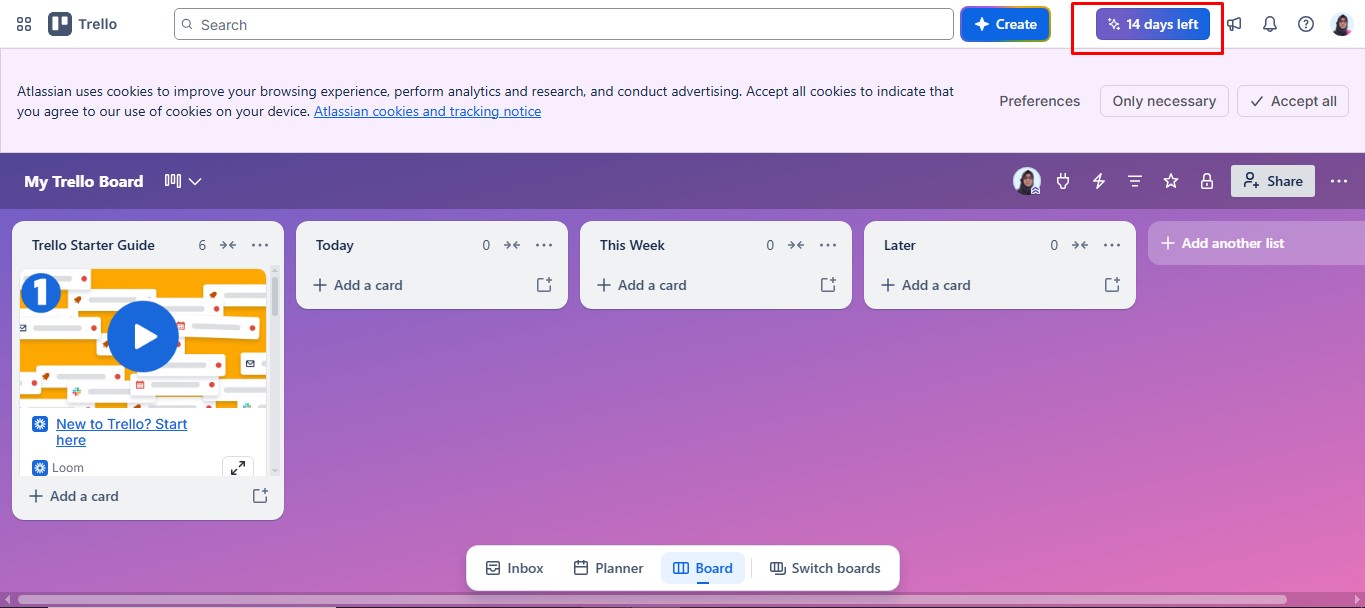
Trello operates on a forever-free baseline tier where you can build completely functional Kanban boards. When you want to try premium features, Trello offers a seamless 14-day trial without ever asking for a credit card.
Why it works: It completely eliminates the “empty room” problem. When you start a standard SaaS trial, you usually have to spend hours configuring it before seeing the value. With Trello’s hybrid model, users activate the trial and instantly apply premium automations to the established workflows they’ve already built.
8. ProdPad: The “Earn More Time” Gamified Trial
Finally, we have the model that represents the future of B2B SaaS. Instead of handing out a flat 30-day trial, ProdPad gives new users a highly urgent 7-day window. However, users can “earn” more free days by completing key onboarding actions, like inviting a colleague, adding a product idea, or integrating a tool.
Why it works: A 30-day trial is useless if the user never actually sets up the software. ProdPad’s gamified trial actively forces users to engage with the product’s core features to keep using it. It aligns the length of the trial directly with user activation.
The Bottom Line
A truly effective SaaS trial doesn’t just hand over the keys and hope the prospect figures it out. Whether you are gamifying the onboarding experience like ProdPad, utilizing strategic friction like Slack, or removing checkout anxiety like Groove, the best free trials actively guide the user to a point of no return. Optimize for activation, eliminate decision fatigue, and watch your conversion rates climb.
Frequently Asked Questions About SaaS Free Trials
1. Should I require a credit card upfront for my free trial?
It depends on your current bottleneck. Requiring a credit card upfront filters out the casual tire-kickers and yields a much higher conversion rate (often up to 60%). However, if you are struggling with top-of-funnel growth, dropping the credit card requirement will drastically increase your volume of signups, though they will convert at a lower rate.
2. How long should a free trial actually be?
The default 30-day trial is dying, and for good reason. Most modern B2B software only requires 7 to 14 days for a user to evaluate its value. Shorter trials create a necessary sense of urgency, forcing the user to log in and configure the software today rather than putting it off until next week.
3. What exactly is the “Aha!” moment?
The “Aha!” moment is the precise second a user experiences the core value of your product and thinks, “Wow, this makes my life easier.” Your entire trial onboarding flow, emails, tooltips, and prompts, should be aggressively optimized to drag the user to this exact moment as fast as humanly possible.
4. How do I stop free users from abandoning the software?
You have to make leaving painful. If your trial guides users to upload their own data, build custom workflows, and invite their team members, they develop psychological ownership over the account. By the end of the trial, the switching cost of abandoning the software should feel heavier than just paying the monthly fee.
5. Is a Freemium model better than a standard Free Trial?
Freemium (a forever-free basic version) is incredible for bottom-up adoption and building brand dominance, but it can cannibalize your revenue if the free version is too generous. Standard free trials are generally better for complex B2B products where you need to force a definitive purchasing decision within a set timeframe.