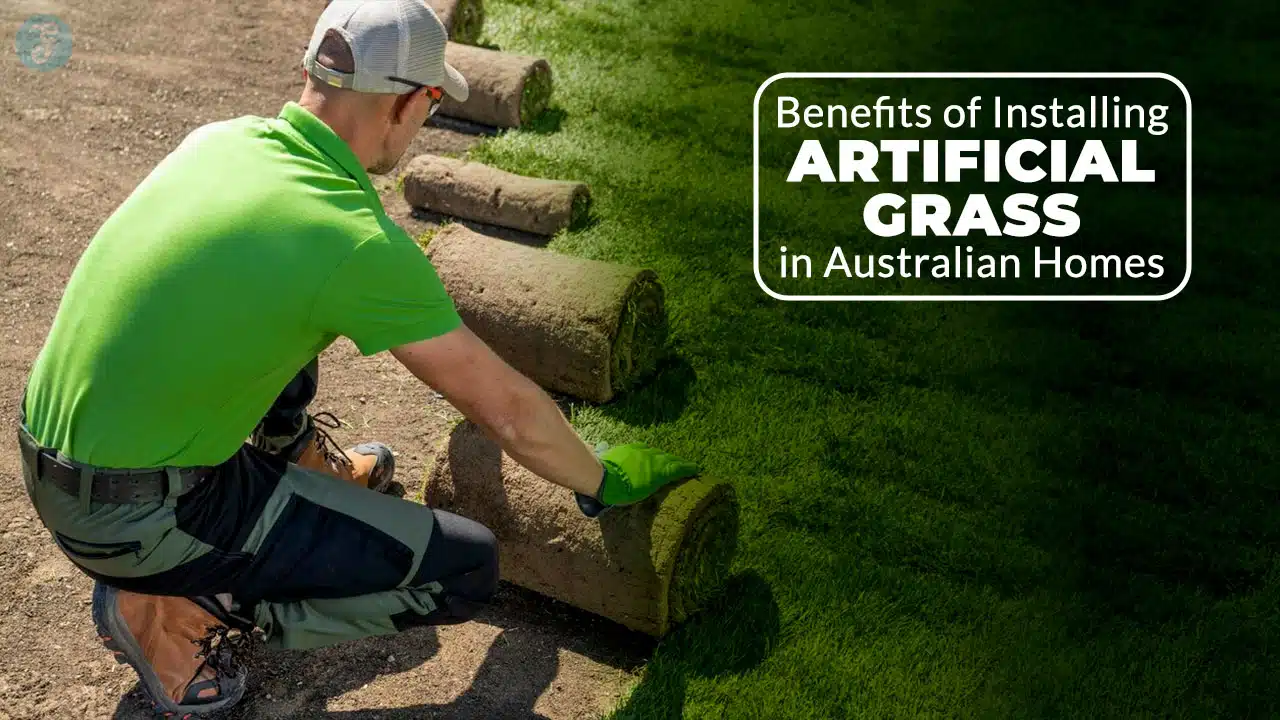
Do you dread mowing and watering your lawn every weekend? You fight brown patches, sticky mud, and high water bills. It wears you out.
Here is one fact: top-grade synthetic turf can look green for up to 25 years. This post on Benefits Of Installing Artificial Grass In Australian Homes will help you slash water use, tame radiant heat, and boost curb appeal.
We also cover tools like cooling infills and infrared-reflective pigments, and show how evaporative cooling makes your yard more fun. Keep reading.
Key Takeaways
- Synthetic turf lasts 20–25 years and carries a 10-year UV warranty. Its polypropylene blades use infrared-reflective pigments and cooling infills to cut surface heat by 30% (about 28 °C).
- It slashes water use by 65%, needs no sprinklers, and channels 60% of rain into rain barrels or soak wells—meeting Australian council drought-zone bans.
- You avoid mowing, fertilizing, and weed control. A weekly hose-down and stiff-broom sweep keep fibers upright and debris-free, saving hours and lowering bills.
- After three toddlers suffered burns in 2020, makers now test each roll under radiant heat and add cooling granules. Infills also absorb pet urine and tame odors for child- and pet-safe play.
- Pro installation costs US$75–130 per m² plus US$55–60 labor; a 50 m² DIY kit runs US$1,600–4,500. Artificial turf can boost property value by about 5% and serves sites like Ken Rosewall Arena, Buckley Park College, and a private court in Lorne.
How does artificial grass reduce maintenance needs?
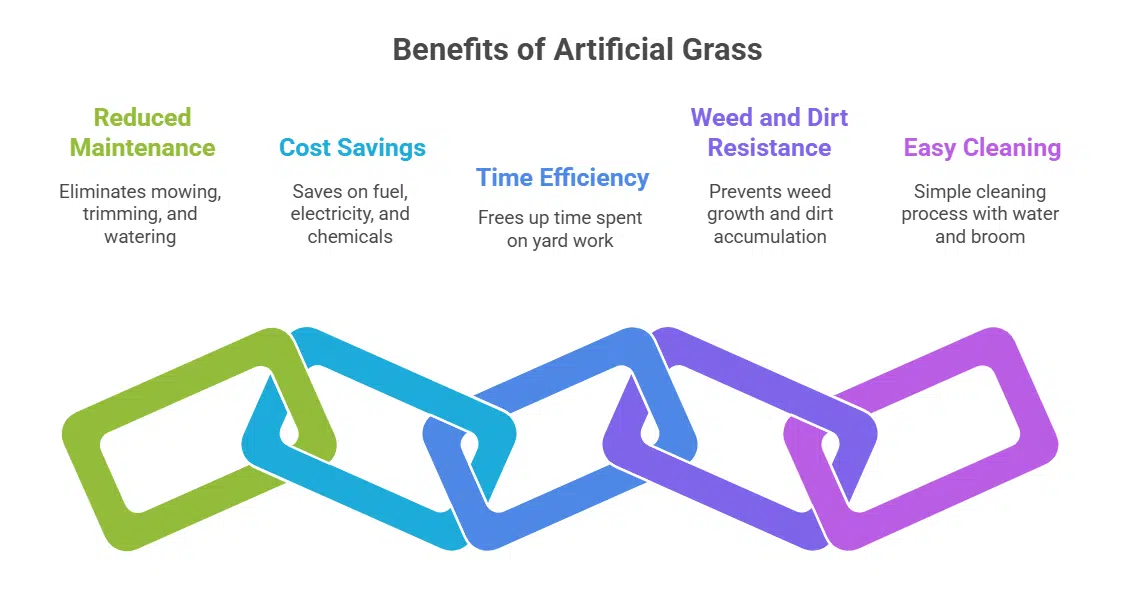
Artificial grass cuts out mowing and trimming chores. Synthetic turf stays neat without fuel or electric mowers. Families save hours each week on yard work. It needs no fertilizer, weed killer, or extra water.
The artificial lawn resists weeds and dirt.
Homeowners hose down their fake grass once a week. Next, they sweep blades against the grain using a stiff broom. This simple action lifts fibers and clears debris. The low maintenance lawn looks great with little effort.
How does artificial grass help save water in Australian homes?
Homeowners slash water bills by choosing synthetic turf in drought zones. Artificial grass never needs a sprinkler or hand watering. Many Australian councils ban or limit watering real lawns.
Synthetic grass meets those rules. It cuts lawn care time and water use by 65%.
Up to 60% of rain flows off a fake lawn, so you can install a simple catchment system. Rain barrels or soak wells help capture that water for garden beds and flower pots. Your outdoor spaces shine green thanks to water-conserving design.
Synthetic turf fits water-conserving landscaping plans.
Why does artificial grass stay green and vibrant all year?
Bright green blades come from UV stabilization inside each polypropylene fiber of artificial grass. Manufacturers blend infrared-reflective pigments and cooler yarns to cut heat and block sun damage.
This mix fights patchy spots and fading. It locks in radiant heat in outdoor spaces. You get year-round perfection, without dead areas. High-quality turf carries a 10-year UV warranty.
Cooling infills add a fresh feel under bare feet. These granules sit beneath the pile, soak up less solar heat, and cushion each step. Kids and pets can run free without brown patches.
Property owners choose synthetic turf in spaces like backyards, playgrounds, and rooftop gardens. Artificial turf holds green color every season, rain or shine.
Durability in harsh Australian weather conditions
The turf shrugs off heat waves, it laughs at blazing days, thanks to thermoplastic PP strands. Microscopic zinc oxide layers reflect sun rays, they keep the blades cool when storms hit.
How does artificial grass withstand extreme heat and drought?
Artificial grass resists radiant heat. Designers embed infrared-reflective pigments into synthetic blades. Direct sunlight can boost surface temps to 100 °C or 212 °F. Cooling infills with evaporative technology drop heat by 30 percent, or about 28 °C.
No soil base ends watering needs during drought. Synthetic turf fibers lock in shape under dry spells. Homeowners dodge watering bans and save on water bills.
Can artificial grass handle heavy rain and storms?
A strong gravel base and a perforated drainage pipe sit beneath the turf. This layer directs up to 60 percent of rainfall away from the lawn. The synthetic turf blades lock into cooling infills.
They stand firm during gusty storms and heavy rain. The lawn drains fast and never turns into a muddy swamp.
A quality artificial lawn lasts 20 to 25 years, even under harsh Aussie storms and blazing sun. Its semi-permeable design mimics a natural meadow more than an impermeable patio. You keep water use low and cut low maintenance chores.
This smart synthetic turf meets water conservation goals and fits sustainable landscaping plans.
Is artificial grass safe for children and pets?
Kids can run across synthetic turf without leaving holes or muddy footprints. Many products use non-toxic materials and polypropylene (PP) blades. Pet owners rest easy knowing special infills absorb pet urine and tame odors.
No weed killer or harsh sprays sit on this child-friendly lawn.
Staff at one childcare centre saw safety issues under full sun. In 2020, three toddlers suffered second-degree burns from hot turf. Brands now mix cooling granules and infrared-reflective pigments into artificial grass.
Labs test each roll under radiant heat to keep outdoor spaces safe.
How is artificial grass an allergy-free alternative to natural grass?
Artificial grass stops pollen at the source so kids and adults breathe easy. Real lawns trigger sneezes, watery eyes, and coughs. Synthetic turf never blooms. Families use non-toxic materials in this artificial lawn.
It cuts out weed killer and limits topsoil upheaval that stirs up allergens.
Parents host barbecue nights without itchy noses. Children sprint on a child-friendly lawn with no runny nose. Pets roam free on low maintenance turf. Outdoor spaces stay green without mowing.
Fake grass looks lush and calm, minus the pollen storm.
How does artificial grass eliminate the need for harmful chemicals?
Fake grass keeps weeds at bay, weeds cannot break through its tough fibers. It saves you from hauling out weed killer on the weekend. It needs no fertilizer or pesticide at all. It lets real plants thrive without harsh sprays.
A quick rinse works wonders, just mix a 50/50 water-vinegar solution in a pump sprayer. This synthetic turf soaks up the spray, kicking bacteria to the curb without toxic fallout. You ditch plastic bottles of harsh cleaners, slash artificial lawn maintenance costs at once.
That cuts chemical run-off, keeps soils and rivers free of pollutants.
How does artificial grass enhance property value and curb appeal?
Artificial grass lifts curb appeal with vivid green all year. Buyers admire a flawless, low maintenance lawn. Landscapers tuck synthetic turf around paths and flowerbeds to boost aesthetic appeal.
Real estate agents report a 5 percent uptick in price after installing synthetic turf. Homeowners ditch weed killer and avert dried patches to keep yards neat. That clean look draws attention on every block.
What are the versatile uses of artificial grass in different spaces?

Artificial grass fits backyards and patios. It shines around pools. It pads playgrounds. It suits indoor gyms. TigerTurf placed synthetic turf at Ken Rosewall Arena, Buckley Park College, and a private court in Lorne.
Homeowners add cooling infills and cooler yarns to cut radiant heat. Solar rays bounce off infrared-reflective pigments. Kids race on a child-friendly lawn. Pets chase balls on a clean artificial lawn.
Landscapers praise a low maintenance lawn.
Is artificial grass cost-effective over time?
Homeowners pay $75 to $130 per square meter for a pro install. Labor adds $55 to $60 each. That synthetic turf system can last 20 to 25 years with little fuss.
A 50m² DIY kit costs $1600 to $4500 up front. That artificial grass drives water conservation and slashes mower costs. Weed killer, plant food and watering chores vanish. Cooling infills curb heat, cutting energy bills.
Curb appeal climbs with a green, low maintenance outdoor space.
How is artificial grass an eco-friendly and sustainable option?
Artificial grass boosts water conservation in dry yards. It needs no irrigation systems or chemical weed killer. New synthetic turf uses 60% sugar cane instead of oil. Makers add infrared-reflective pigments, cooler yarns for heat control.
Many products use non-toxic materials and avoid plastic waste.
Synthetic turf still shows a larger carbon footprint than real lawns once you count production, installation, disposal. It can disrupt soil ecosystems and release microplastic pollution during storms.
Recyclable backings help curb plastic waste. Urban ecology benefits when grass fibers come from plant-based sources and recycled plastics.
Takeaway
Installing artificial grass in Australian homes is more than just a landscaping trend—it’s a smart, long-term investment in comfort, sustainability, and curb appeal. With benefits like reduced maintenance, lower water bills, year-round greenery, and increased durability, it’s no wonder more Australians are making the switch. Whether you’re looking to create a family-friendly backyard, a pet-safe space, or a stylish outdoor area that thrives in any climate, artificial grass offers a practical and visually appealing solution. Now is the perfect time to transform your lawn with artificial turf and enjoy the lasting advantages it brings to your home and lifestyle.
FAQs
1. Will artificial grass save water?
Artificial grass, or synthetic turf, needs no constant watering, so you cut water bills and boost water conservation. You skip brown patches and enjoy a low maintenance lawn.
2. Is fake grass safe for kids and pets?
Synthetic turf uses non-toxic materials, so no toxic weed killer or extra chemicals. It makes a soft, child-friendly lawn and perfect artificial turf for pets, with fast drainage and no mud mess.
3. Can a fake lawn stay cool under the Aussie sun?
New artificial turf technology sports cooler yarns and special cooling infills. Infrared-reflective pigments deflect radiant heat, so the surface feels fresh, like a cool bite of shade on a hot day.
4. How much upkeep does an artificial lawn need?
A low maintenance lawn runs smooth; no mowing, no weed killer, no messy organic matter to rake. You just rinse off dust, brush the fibres, and spend your free time elsewhere.
5. Will artificial grasses help with seasonal allergies?
Fake grass cuts pollen and dust, so you dodge seasonal allergies and allergic reactions. You get a neat outdoor space, sneeze free, ready for bare-feet fun.
6. Does a fake lawn hurt the environment?
It is an impermeable surface, so rain runs off fast, but you ditch pesticides and save water. Add real grass borders for bees and birds, and keep your curb appeal and aesthetic appeal high.