Apple’s new era came into clearer focus at its September 9, 2026 event. The iPhone Duo, Apple’s first foldable iPhone, delivered the biggest visual surprise. But it was only one part of a wider launch that also introduced the iPhone 18 Pro and Pro Max, Apple Watch Series 12, Apple Watch Ultra 4 and AirPods 5.
Taken together, these products show a company placing expensive new hardware, health tracking and artificial intelligence inside one increasingly connected ecosystem. I think that complete picture is more revealing than the foldable phone alone. This explainer looks at what Apple announced, what each product adds and which promises still need to prove themselves outside the presentation.
Siri AI, private cloud compute, and Apple Reference Image showed where Apple believes its next advantage lies. The direction is coherent, but its promises still need to work outside a managed presentation.
The iPhone Duo Is a Statement, Not a Mainstream Phone
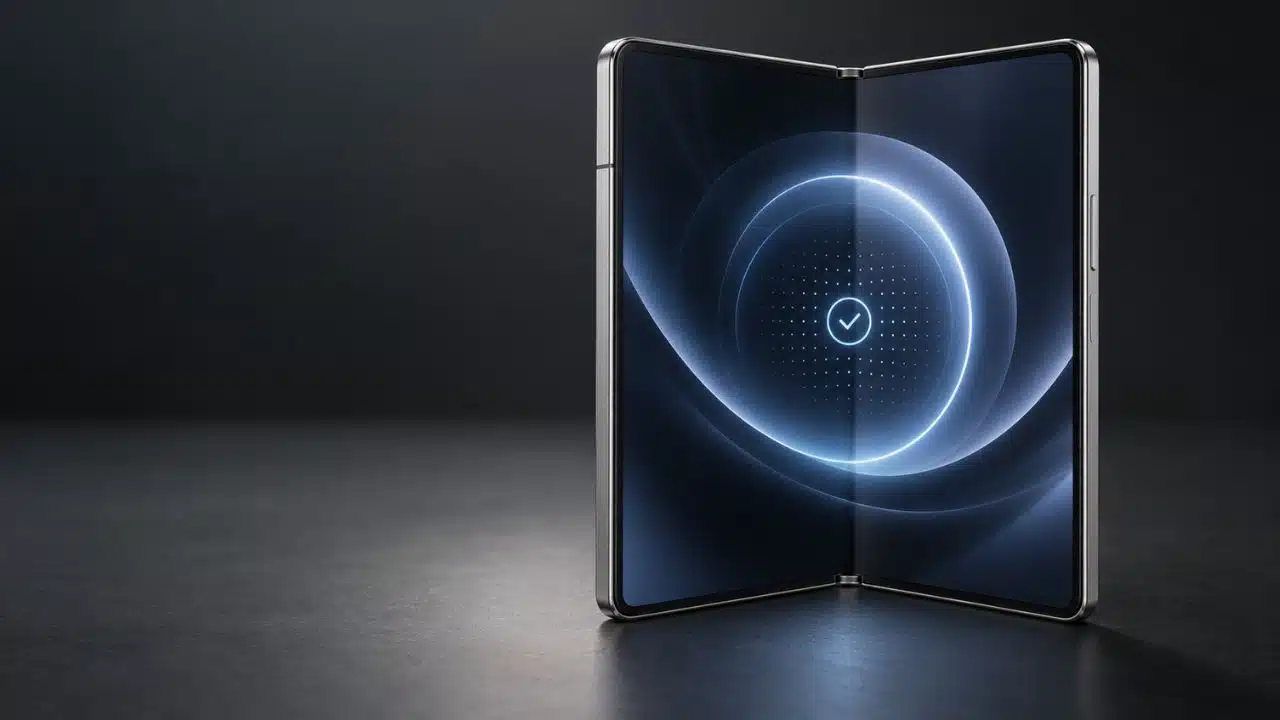
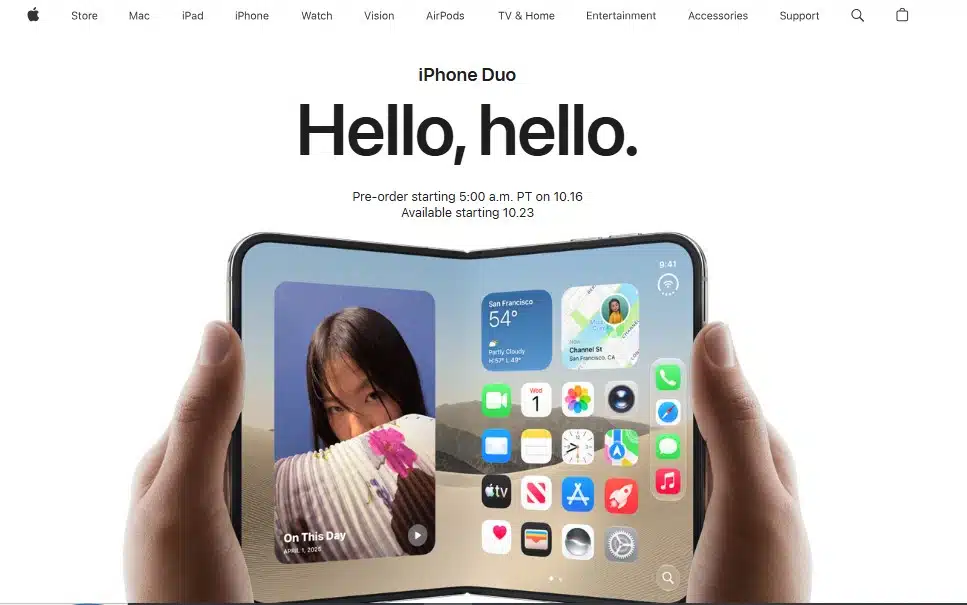
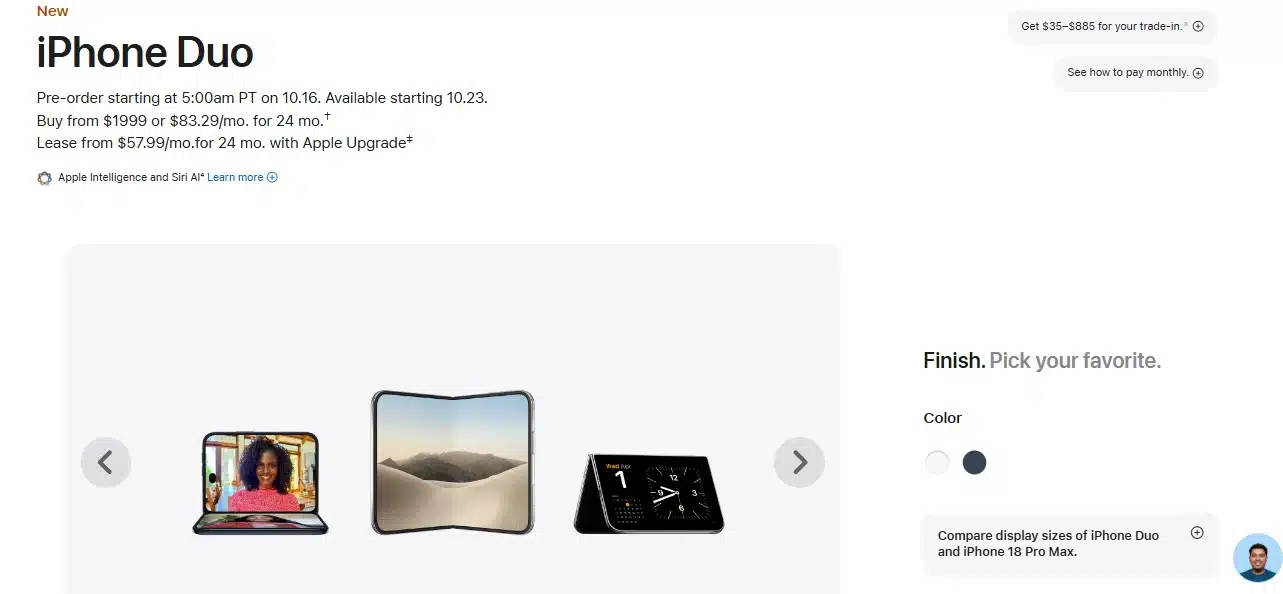
The iPhone Duo is Apple’s boldest hardware change in years, but its importance goes beyond the folding display. I see it as a showcase for Apple’s hardware-and-software integration rather than an immediate replacement for the standard iPhone.
Apple Arrives Late—but With a Familiar Strategy
Apple did not invent the foldable phone. Samsung has sold foldable models since 2019, while Huawei and other manufacturers have continued developing the category.
Apple has often allowed others to establish a category before introducing a more controlled version of its own. This time, it wants consumers to believe it has made the foldable that finally feels like an iPhone.
Software Gives the Fold a Purpose
The Duo has a 5.4-inch outer display and opens to reveal a 7.6-inch inner display. Apple has adapted iOS 27 so the extra space does more than enlarge existing content.
Split View allows two applications to run side by side on an iPhone for the first time. Users can save application pairs, open two Safari windows or keep a Siri AI conversation visible beside another application.
The A20 Pro chip and vapor-chamber cooling support these more demanding uses. Yet a folding screen becomes valuable only when people have a practical reason to open it. That will depend on software support and everyday habits, not the novelty of the hinge.
Premium Hardware Sits at the Center of Apple’s Strategy
Apple is introducing its most ambitious ideas through devices designed for customers willing to pay more. This reduces the financial risk of experimenting with expensive technology, but it also limits who can experience Apple’s newest thinking.
A $1,999 Testing Ground
The iPhone Duo starts at $1,999 for 256GB of storage. Preorders begin October 16, with availability starting October 23. At that price, I do not see it becoming the default iPhone soon. It is better understood as a statement product and a public testing ground.
Early users will reveal whether the larger display changes everyday behavior. They will also expose issues a keynote cannot settle: hinge durability, display wear, application compatibility and repair costs.
Premium pricing extends beyond the Duo. The iPhone 18 Pro starts at $1,199, while the Pro Max begins at $1,299. Both cost $100 more than the previous Pro models. Their upgrades include the A20 Pro chip and a 48-megapixel main camera with variable aperture.
Launching expensive new technology at the top of the market gives Apple room to refine it. The weakness is accessibility. A $1,999 phone may influence the industry, but most consumers will observe that future long before they can afford it.
iPhone 18 Pro and Pro Max Focus on Cameras and Performance
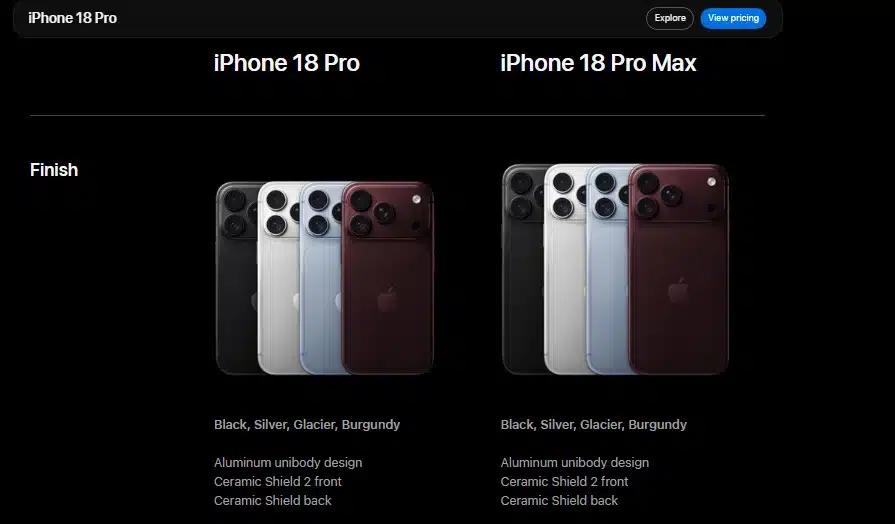
The iPhone 18 Pro and Pro Max are the more conventional flagships. They use 6.3-inch and 6.9-inch displays, respectively, and share the A20 Pro chip with next-generation vapor-chamber cooling. Apple says the Pro Max can provide up to 45 hours of video playback.
All three rear cameras use 48-megapixel sensors. The main camera adds a variable aperture for greater control over light and depth of field, while the telephoto system offers up to 8x optical-quality zoom. Apple Reference Image can securely sign photo data at capture, creating a record of what the camera sensor originally received.
The iPhone 18 Pro starts at $1,199 and the Pro Max at $1,299. For most buyers considering a new high-end iPhone, these models remain the practical alternative to the Duo.
Apple Watch Series 12 Expands Health Tracking
Apple Watch Series 12 centers on a redesigned Health Sensing System powered by the S11 chip. It takes background heart-rate readings more frequently, measures heart-rate variability more often and introduces a readiness score based on recent activity, sleep and vital signs.
Apple rates the watch for up to 24 hours of normal use. The aluminum versions also gain Ceramic Shield 2, while the wider lineup includes aluminum, titanium and ceramic finishes. Series 12 starts at $399.
The health changes look more useful than a cosmetic annual refresh, but their value will depend on clear interpretation. More measurements are helpful only when users understand what the data means and when a reading warrants professional medical advice.
Apple Watch Ultra 4 Adds Satellite Communication and Longer Battery Life
Apple Watch Ultra 4 carries the same S11 chip, updated health sensors and readiness features into a rugged 49mm titanium design. Its more important differences are endurance and off-grid communication.
Apple rates Ultra 4 for up to 50 hours of normal use, up to 84 hours in Low Power Mode and as much as 45 hours of Max Extended Workout tracking. Built-in satellite communication can support messages, location sharing and Emergency SOS when cellular and Wi-Fi connections are unavailable. The watch starts at $799.
For runners, hikers and other outdoor users, those improvements have a clear purpose. For everyone else, Series 12 will probably offer the more sensible balance of health features and price.
AirPods 5 Make Noise Cancellation Standard
AirPods 5 retain an open-ear design while adding Active Noise Cancellation to both models. They use the H2 chip and a redesigned acoustic architecture, with Adaptive Audio, Transparency mode, Personalized Spatial Audio, Live Translation and access to Siri AI through a paired iPhone.
The standard model costs $129 and provides up to four hours of listening with noise cancellation active. The $149 version adds a wireless charging case, a volume-swipe control and up to five hours of listening with noise cancellation. Both carry an IP57 rating for dust, sweat and water resistance and arrive on September 18.
This may be the most broadly accessible launch of the event. The upgrades address ordinary listening, calls and travel rather than asking users to adopt an entirely new device category.
Siri AI Connects Apple’s New Hardware
Hardware supplied the event’s most visible announcements, but Siri AI is the common layer running through the iPhones, watches and AirPods. Its importance comes from connecting information and actions across devices rather than existing as a separate chatbot.
Personal Context Is the Main Promise
Siri AI is designed to search information across messages, emails, photos and other supported apps. It can use onscreen awareness, respond conversationally and take certain actions inside applications. On the iPhone Duo, users can keep a Siri conversation visible beside another app. On Apple Watch and AirPods, the goal is faster access without constantly returning to the phone.
The beta begins rolling out with iOS 27 on September 14, initially for supported devices set to English. French, Japanese, Korean, Portuguese and Spanish support is scheduled for October, while feature availability will continue to vary by language and region.
Trust Still Has to Be Earned
Apple Intelligence processes suitable requests on the device and can use Private Cloud Compute when more processing power is required. Apple says data sent for those requests is not stored or made accessible to the company.
That architecture is important, but technical design alone will not settle the trust question. Siri AI must perform reliably, ask before taking sensitive actions and make its permissions understandable. Apple Reference Image addresses a related problem by helping verify original camera capture, although it cannot prove that every caption or claim attached to a genuine photograph is true.
What the Complete Lineup Says About Apple’s Strategy
Seen together, the launches reveal a consistent approach. Apple is using tightly integrated hardware, software and services to make each product more valuable when it is used with the others.
Premium Hardware Creates Room to Experiment
The $1,999 iPhone Duo gives Apple room to introduce an expensive display, hinge and cooling system without immediately redesigning the mainstream iPhone. The Pro phones continue pushing performance and camera technology at the top of the conventional lineup. Ultra 4 follows the same logic for outdoor wearables.
This strategy reduces the risk of experimentation, but it also puts some of Apple’s most interesting ideas beyond the reach of many buyers. A product can influence the wider market without becoming widely affordable.
Practical Improvements Matter More Than Keynote Claims
What interests me most is that the strongest upgrades are not always the most dramatic. Longer watch battery life, more useful AirPods controls, improved health readings and better multitasking may affect daily routines more than the novelty of folding an iPhone.
There are still reasons for caution. Siri AI launches in beta. Some health and language features arrive later or vary by region. The Duo’s long-term durability is untested, and several products carry premium prices. These are not small details; they will determine whether Apple’s new ecosystem feels genuinely helpful or simply more expensive.
Apple’s New Era Will Be Judged After the Launch
Apple’s September event was not only about a foldable iPhone. It refreshed the company’s most important personal devices and placed Siri AI across the lineup. The iPhone Duo represents the largest hardware gamble. The iPhone 18 Pro models offer the safer flagship path. Series 12 and Ultra 4 deepen Apple’s health and safety ambitions, while AirPods 5 bring practical improvements at the lowest entry price.
I see a clear strategy rather than a revolution already achieved. Apple is betting that people will value products that share context, intelligence and services while preserving a familiar experience. The direction is convincing on paper. Now the hardware, AI and trust claims have to hold up in ordinary use.