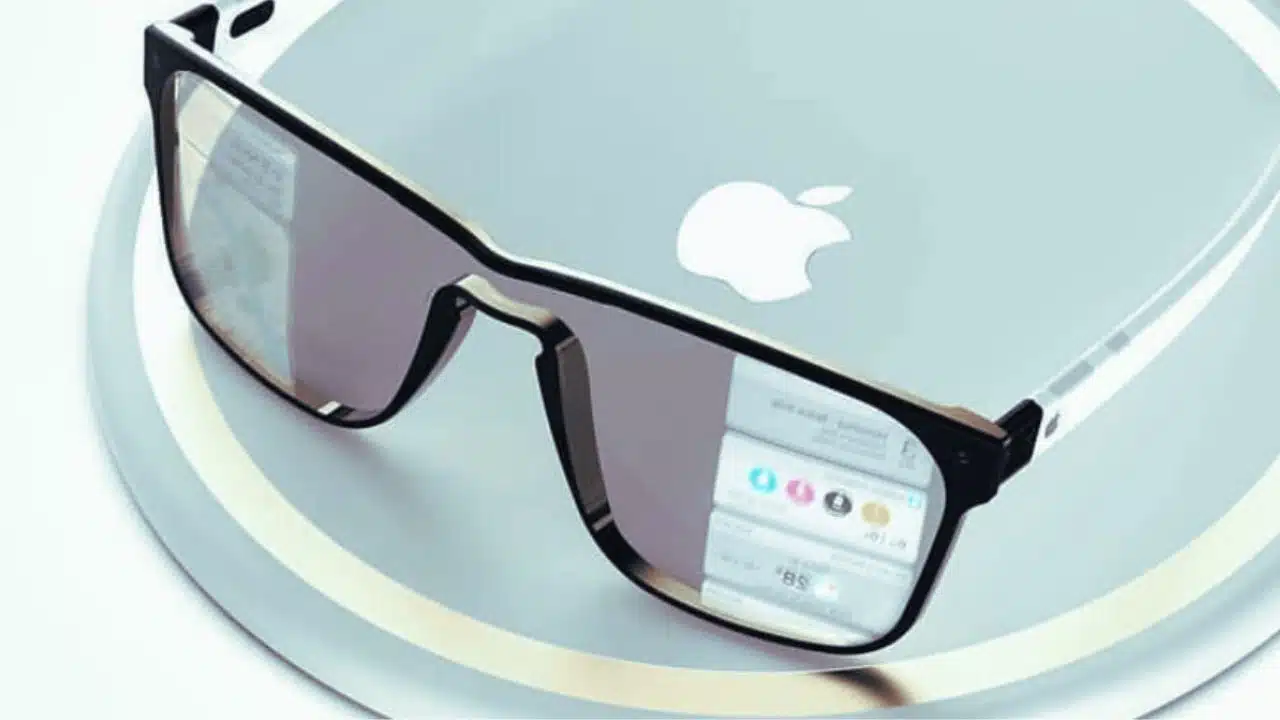
Apple is setting the stage for a transformative leap in wearable technology, focusing on extended reality (XR) headsets and smart glasses over the next three years. According to a comprehensive report from TF International Securities analyst Ming-Chi Kuo, the tech giant is not planning to release any new head-mounted devices in 2026. However, a lineup of innovative products is in development for launch beginning in 2027. This roadmap highlights Apple’s strategic positioning in the evolving consumer electronics and spatial computing markets, and its intention to expand methodically with both audio-based and visual-based wearables.
No New Apple Headsets Expected in 2026
In 2026, Apple is expected to hold back on releasing any head-mounted devices, according to Kuo. Despite rapid developments in the extended reality (XR) industry, the company will not introduce new products in this segment during that year. The delay reflects Apple’s focus on refining its hardware and software to deliver breakthrough experiences in future iterations. Instead, the tech giant is preparing a major wave of launches starting from 2027 onward.
This gap year may also serve as a period for Apple to observe market feedback, improve user experience design, and coordinate cross-device ecosystem integration before scaling production of more advanced wearable devices.
Apple’s Smart Glasses Strategy: Two Distinct Product Paths
Apple’s entry into the smart glasses market will begin with a model that resembles traditional Ray-Ban glasses, expected to launch in 2027. These audio-first glasses will be followed by a second, more technologically advanced category—XR Glasses with integrated display capabilities—targeted for 2028.
Audio Smart Glasses (Without Display) – Launching in 2027
Apple’s first smart glasses product will not include a built-in display. Instead, these glasses will feature audio playback, a camera system for photos and video recording, voice command functionality, and gesture-based control. One of the key components is AI-driven environmental sensing, which will enable contextual responsiveness to surroundings without the need for visual overlays.
The design of these glasses will resemble popular sunglass models and come in multiple frame and temple material options. They will be lightweight and stylish enough for everyday use, similar to Meta Platforms’ existing Ray-Ban smart glasses, but are expected to offer tighter integration with Apple’s ecosystem and more advanced privacy controls.
Projected shipments for this model are between 3 million and 5 million units in 2027 alone. Apple’s launch is expected to significantly boost the category’s total shipments to more than 10 million units globally that year, establishing a strong foothold in what is still a relatively niche market segment.
XR Glasses (With Display) – Scheduled for 2028
Apple’s second smart glasses product will incorporate a full color display system and serve as a true augmented reality device. These XR Glasses will use Liquid Crystal on Silicon (LCoS) display technology with a waveguide optical system, enabling visuals to appear overlaid on the physical environment. This product is scheduled for mass production in the second half of 2028.
In addition to supporting voice and gesture commands, this model will heavily rely on artificial intelligence for real-time environmental analysis, content generation, and system navigation. The inclusion of a display allows for immersive applications such as virtual collaboration, heads-up navigation, and real-time translation.
Despite the technological advancement, Apple is expected to position the product with an emphasis on utility, comfort, and integration rather than competing directly with gaming-focused headsets like Meta’s Quest Pro or Microsoft’s HoloLens.
Apple’s Vision Series Headsets: A Gradual Evolution
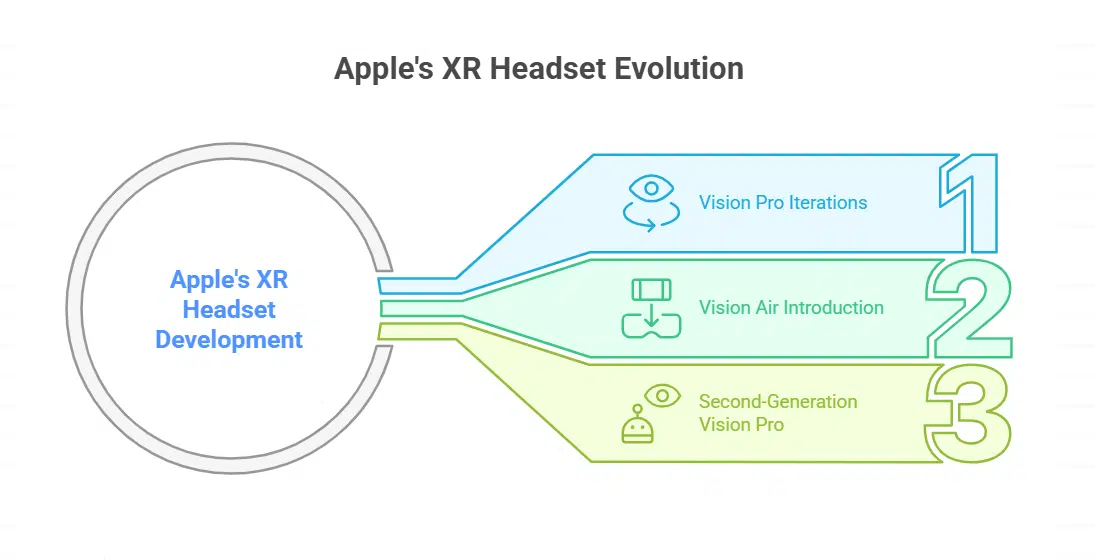
Parallel to its smart glasses initiatives, Apple is advancing its Vision series XR headsets. These include iterative improvements to the Vision Pro, the introduction of a lighter and more affordable Vision Air, and eventually, a second-generation Vision Pro with redesigned components.
Vision Pro with M5 Chip – Coming in 2025
Apple plans to upgrade its first-generation Vision Pro headset with a new processor in 2025. This version, internally referred to as the Vision Pro M5, will feature the M5 chip instead of the current M2, while keeping other specifications mostly unchanged.
Mass production for the Vision Pro M5 is expected to begin in the third quarter of 2025, with an estimated production volume between 150,000 and 200,000 units for that year. The relatively low output suggests that this version will serve more as a bridge to support developers, enterprise users, and ecosystem maturity than as a mass-market product.
The upgrade focuses on performance optimization, likely improving battery efficiency and AI capabilities while maintaining compatibility with the visionOS ecosystem and spatial computing apps.
Vision Air – A Lighter, Cheaper XR Headset in 2027
Apple is preparing a new XR headset called Vision Air, with a scheduled mass production date in the third quarter of 2027. This model will introduce a significantly lighter design—expected to weigh over 40% less than the current Vision Pro—thanks to the use of plastic lens housing instead of glass, a magnesium alloy middle frame, and a reduced number of sensors.
Despite being lighter and more affordable, Vision Air will offer high performance. It will run on Apple’s flagship iPhone processor, which helps reduce production costs and enable mass-market pricing. The Vision Air will also have an all-new form factor, distinguishing it from the original Vision Pro in both design and ergonomics.
Apple aims to attract a broader user base with Vision Air by balancing high-quality immersive experiences with greater comfort and affordability.
Second-Generation Vision Pro – Full Redesign for 2028
Apple is also planning a second-generation Vision Pro headset, with mass production scheduled for the second half of 2028. This next-gen device will come with a complete design overhaul, significantly lighter weight, and an enhanced set of features.
Most notably, the device is expected to include a Mac-grade processor, pushing its performance capabilities far beyond the current models. With improvements in hardware, optics, and weight distribution, the second-generation Vision Pro will likely cater to professionals and creatives who require high-performance spatial computing tools at a lower entry price.
This version reflects Apple’s long-term vision of transitioning XR headsets from experimental gadgets into practical, productivity-enhancing tools.
Display Accessory: A Product on Hold
Apple was originally planning to launch a tethered display accessory for its devices, such as the iPhone, Mac, or iPad, by the second quarter of 2026. This product would have used Birdbath optics and included an electrochromic dimming function, essentially serving as a portable monitor that users could wear.
However, due to design limitations—particularly the accessory’s weight—and concerns about user experience, development has been paused as of the fourth quarter of 2024. Apple may revisit this concept in the future, but for now, the company appears to be focusing its resources on more immersive and scalable wearables.
Market Context and Competitive Landscape
While Apple is pacing itself with a strategic roadmap, competitors like Meta Platforms have already entered the smart glasses space. Meta’s Ray-Ban smart glasses, developed in partnership with EssilorLuxottica, offer audio, camera, and live-streaming features. Other tech companies are also exploring AI-integrated wearables, but Apple’s deep ecosystem, tight integration across devices, and premium hardware design give it a competitive advantage.
That said, smart glasses with displays still face technological hurdles, including battery life, weight, lens transparency, and privacy concerns. These issues are likely the reason Apple is introducing display-free audio glasses first—building user familiarity before transitioning to more advanced visual AR solutions.
AI and Voice Control: Key to Future Wearables
Across all the product categories—whether it’s audio glasses, XR glasses, or Vision headsets—Apple is placing a strong emphasis on artificial intelligence and natural user interfaces like voice and gesture control. These technologies will be critical in enabling intuitive interactions, seamless environment sensing, and contextual assistance without physical controllers.
As Apple ramps up its investment in AI infrastructure and on-device intelligence, these features will likely serve as the foundation for next-generation wearable computing.
Apple’s Strategic Leap into Wearables
Apple’s roadmap reveals a carefully orchestrated entry into the smart glasses and XR market, focused on gradually introducing consumers to wearable technology while addressing usability, design, and performance concerns. While no new releases are planned in 2026, the years following will see major product introductions that could reshape how users engage with their environment, work, and digital content.
With a mix of audio-first wearables, high-performance headsets, and eventually, display-based AR glasses, Apple is positioning itself as a leader in the spatial computing future. The success of these devices will depend not only on hardware innovation but also on Apple’s ability to deliver seamless AI-driven experiences that users can trust and enjoy daily.