Chandrayaan 3’s Landing on the Moon a Milestone for India

Chandrayaan 3 Landing on the Moon

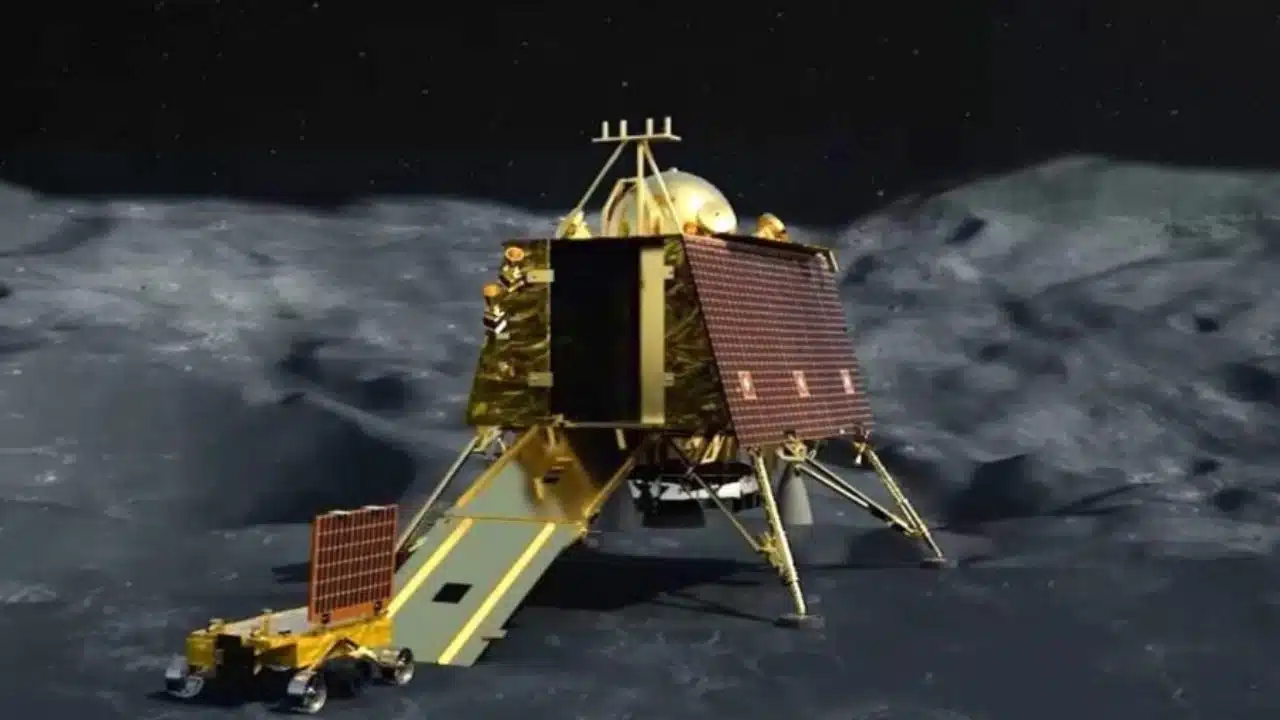
ISRO has unveiled the intricate landing procedure for the Vikram Lander module of Chandrayaan-3, showcasing its daring attempt to achieve a soft landing on the Moon’s south pole. This endeavor is especially challenging due to the difficulty of landing softly on the lunar surface, particularly around its poles.

Scheduled for August 23, the last 15 minutes of the landing sequence are pivotal. During this window, the lander faces the tricky task of transitioning from a horizontal flight at high speeds to a vertical orientation, setting the stage for a gentle descent onto the Moon.

This 15-minute period is crucial to the mission’s success. In a past attempt in July 2019 for the Chandrayaan-2 mission, the Indian Space Research Organisation (ISRO) had to cancel due to challenges encountered during this phase, which was dubbed “15 minutes of terror.”

ISRO Chairman S Somanath recently shared insights into the upcoming landing. The lander begins the process nearly horizontal, around 90 degrees from the vertical landing position it needs. The challenge lies in smoothly maneuvering the lander into the vertical position, a feat that requires meticulous calculations and algorithmic precision to conserve fuel and ensure accurate distance calculations.

Here’s a breakdown of the landing procedure:

Rough Braking Phase: The lander starts at a high horizontal speed of 6048 km/h. The primary goal is to reduce this speed to 1,290 km/h horizontally and 61 m/s (approximately 220 km/h) vertically. This phase, known as the “rough braking phase,” should last around 690 seconds, during which the lander descends from 30 kilometers to 7.42 km above the lunar surface, covering a distance of about 713.5 km.

Attitude Hold Phase: As the lander reaches 7.42 km altitude, it enters the “attitude hold phase” for about 10 seconds. In this phase, the lander shifts its orientation from horizontal to vertical while moving about 3.48 kilometers across the lunar surface. Altitude drops to 6.8 km, with horizontal and vertical speeds at 336 m/s and 59 m/s, respectively.

Fine Braking Phase: The “fine braking phase” lasts about 175 seconds, wherein the lander completes its transition to a vertical position. It covers the final 28.52 km to the landing site, reaching an altitude of around 800-1,000 meters. Ideally, the lander’s speed drops to 0 m/s for a calm landing.

Learnings from Chandrayaan-2’s failure have been instrumental in refining Chandrayaan-3’s approach. The key improvement lies in managing the critical transition between the “attitude hold phase” and the “fine braking phase.” In case sensors or systems fail, the lander, if its propulsion system remains functional, is designed to attempt a landing. This robust design ensures a degree of resilience to handle contingencies.

Despite the intricate planning, the landing will have a significant impact. The Vikram Lander will touch down at a speed of 3 meters per second (about 10.8 km/h), equivalent to a safe speed for instrument preservation. However, this speed is sufficiently forceful that if a human were subjected to it, their bones would be crushed. The module’s combined mass of over 2000 kgs, even on the Moon, emphasizes the need for a controlled landing. The lander can handle a tilt of up to 12 degrees during landing, adding an extra layer of security to accommodate potential variability.

In sum, ISRO’s Chandrayaan-3 mission aims to master the complex procedure of executing a soft landing on the Moon’s south pole. With improvements based on Chandrayaan-2’s experiences, the mission is poised to make history, but the challenges and risks remain formidable.



Subscribe to Our Newsletter

Related Articles

Top Trending

Organic vs Paid Social
Organic vs Paid Social: How to Split Your Effort [Build the Right Strategy]
Illustrated city map showing local link sources connected to businesses, news outlets, schools, events, and community organizations
9 Local Link Sources Hiding in Your Own City
Best AI Writing Assistants for Work Documents feature image with a robot using a laptop and various task icons.
9 Best AI Writing Tools for Work Documents in 2026
Infographic highlighting key Real-World Applications of Natural Language Processing (NLP), including Information Retrieval, Speech Recognition, and Text Summarization
10 NLP Real-World Applications Changing Everyday Life
ImagineLab Art vs Krater AI
ImagineLab.art Vs Krater.ai: Which Unified AI Platform Wins in 2026

Technology & AI

Best AI Writing Assistants for Work Documents feature image with a robot using a laptop and various task icons.
9 Best AI Writing Tools for Work Documents in 2026
Infographic highlighting key Real-World Applications of Natural Language Processing (NLP), including Information Retrieval, Speech Recognition, and Text Summarization
10 NLP Real-World Applications Changing Everyday Life
ImagineLab Art vs Krater AI
ImagineLab.art Vs Krater.ai: Which Unified AI Platform Wins in 2026
SaaS Churn Benchmarks
12 SaaS Churn Benchmarks and What They Reveal
white label saas
What Is White-Label SaaS and How Does It Make Money?

GAMING

Complete Guide on Game Programgeeks
Game Programgeeks: A Complete Guide on PC, Game Dev, and Tech
Online Color Game Philippines
Online Color Game Philippines: What Every Beginner Should Know Before Playing
Ways to Reduce Game Development Costs
12 Ways Studios Cut Game Development Costs
NFT game development cost
How Much Does NFT Game Development Cost? A Realistic Budget Breakdown
Reasons Why You No Longer Need the Best Roblox AI Scripter
Forget Best Roblox AI Scripter: 10 Reasons Why You No Longer Need It

Business & Marketing

AI marketing profitability illustrated by balancing faster campaign production against editing time, software costs, and revisions.
AI Marketing Profitability: The Hidden Costs Crushing Agency Margins
Why Long-Term AI Data Center Investment Matters Now
Why Driving Long-Term Investment in AI Data Center Infrastructure Is Front and Center Today
cut company saas spend
How to Cut Company SaaS Spend: 10 Proven Tactics
Best Communities for SaaS Founders
12 Best Communities for SaaS Founders to Find Mentors and Peers
Bootstrapping vs VC for SaaS founders reviewing growth and burn trends, showing how funding choices can affect control, spending, and sustainable company growth
Bootstrapping vs VC for SaaS: How To Evaluate Capital Strategy

EdTech & E-Learning

AI in University Assessments
How Universities Are Redesigning Assessment for the AI Era
Selecting edtech tools through a structured review of learning value, privacy, usability, integration, and cost.
Selecting EdTech Tools: 7 Questions School Leaders Must Ask Before Buying
Alphabet Recognition and Why It Matters
What Is Alphabet Recognition and Why Does It Matter
Assistive Technology for Diverse Learners
How Assistive Technology Supports Diverse Learners
VR and AR in Classrooms
How VR and AR Are Actually Being Used in Classrooms Today

Software & Apps

ImagineLab Art vs Krater AI
ImagineLab.art Vs Krater.ai: Which Unified AI Platform Wins in 2026
How to Sell SaaS to Enterprises as a Small Team
A guide comparing best password manager software for their security features, value, and plans, featuring a secure shield and app icons
Best Password Managers Compared: 10 Secure Choices for 2026
ImagineLab.art vs Canva for Non-Technical Marketers
ImagineLab.art vs Canva for Non-Technical Marketers: Which One Fits the Real Workflow?
automations students can build with free tools
9 Best Automations Students Can Build With Free Tools