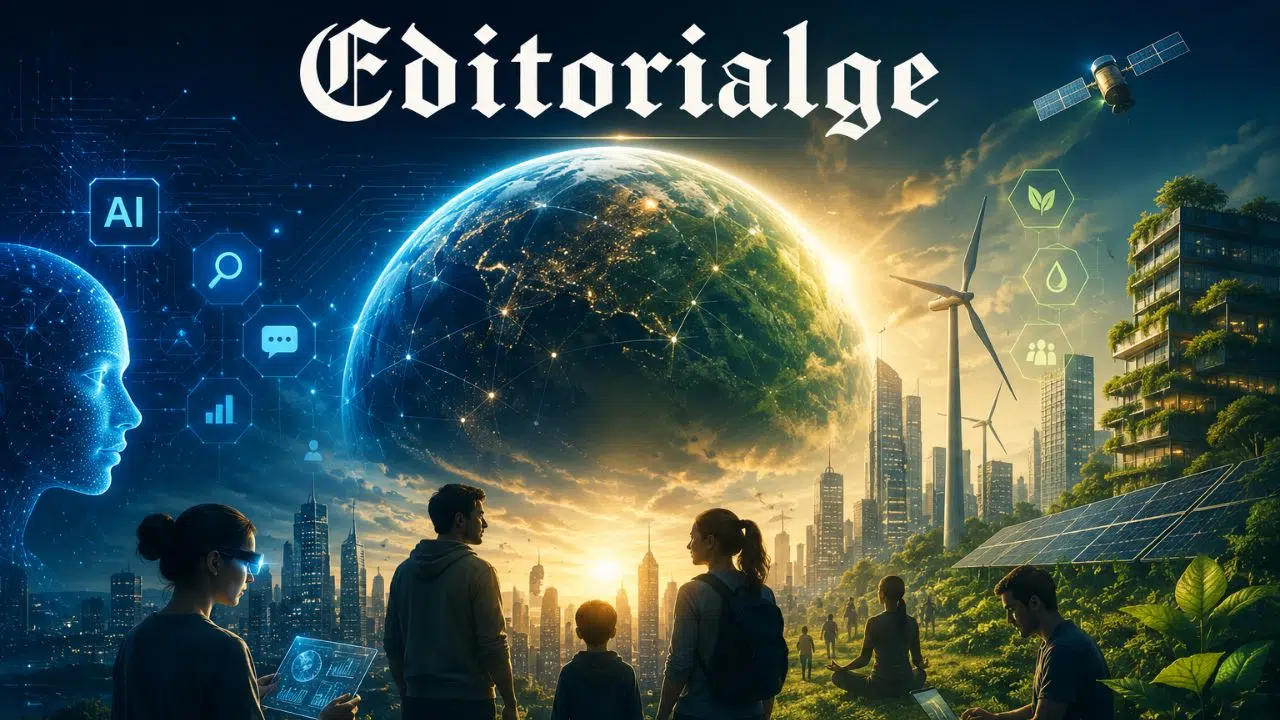
The June issue maps how AI search is rewriting online visibility, how transparent AI is reshaping climate strategy, and what a human-centered digital world should refuse to give up.
Editorialge released the 18th edition of its e-magazine on June 26, 2026, built around a single question that now lands in every industry and most homes: how do we keep digital progress human, visible, and accountable?
Founder and CEO Sukanta Kundu frames the theme around a turning point in how people find information. Search is becoming an answer-driven experience, climate pressure is reshaping daily life, and readers are asking not just what technology can do but what it should do.
Acting Editor Sayeul Haq Mihir treats June as a mid-year checkpoint. His argument across the issue is that urgency is not the same as clarity and that the strongest ideas in a noisy season are the most usable ones: clearer sourcing, honest measurement, less waste, and design that values dignity over compulsion.
Editorialge Launches 18th Edition of E-Magazine
Editorialge published the 18th edition of its e-magazine on June 26, 2026, under the theme Signal Shift 2026: AI Visibility, Climate Action & the Human Future of Digital Life. The issue is built around one question that now reaches every industry and most homes: how do we keep digital progress human, visible, and accountable?
The edition pulls together the publication’s core beats—technology, business, sustainability, and human-centered thinking—across features on AI search, transparent climate AI, algorithmic accountability, edutainment, and low-waste living.
AI Search Takes the Cover Story
A three-part run opens the edition on the shift from classic SEO to AI-driven discovery. “The GEO Shift” argues that a page can rank well and still vanish from the first answer a reader sees because AI systems now summarize, compare, and cite before anyone reaches the source. The follow-up feature, “AI Visibility Is the New SEO,” lays out what publishers must fix before traffic drops: clearer structure, stronger sourcing, author signals, freshness, and measurement that tracks citations and brand mentions rather than clicks alone.
The practical takeaway running through both pieces is blunt. If AI can answer the query without a click, a page has to earn inclusion, not just ranking.
Climate Gets the Longest Run
Sustainability anchors the back half of the issue. “Code Green” examines how transparent AI is rewiring global climate strategy, from grid planning to early-warning systems, and pairs it with the reference frameworks behind the reporting, including UNESCO’s AI ethics recommendation, the OECD AI Principles, and IEA energy data.
The numbers are the news here. The edition reports that data centers accounted for roughly 1.5% of global electricity use in 2024, with the IEA projecting demand to climb from about 485 TWh in 2025 to around 950 TWh by 2030—close to 3% of global electricity. A “Green Algorithms” feature scores the front-runners, noting DeepMind’s control systems cut data center cooling energy by up to 40%, Microsoft’s aim to be carbon negative by 2030, AWS infrastructure is described as up to 4.1 times more energy-efficient than on-premises, and Meta’s net-zero operations since 2020.
At the household level, the magazine keeps the advice concrete: LED bulbs use at least 75% less energy and last far longer, household leaks waste roughly a trillion gallons of water a year in the US, and the buildings and construction sector accounts for 28% of global energy use and 37% of emissions. A seven-day home climate challenge turns the data into a checklist.
A Manifesto and the Kids’ Learning Shift
The edition’s spine is “The Signal Shift Manifesto,” ten rules for a human-centric digital world that range from “put people before engagement” to “keep humans in consequential decisions.” A separate op-ed presses the case for algorithmic transparency in 2026, citing the EU AI Act timeline and the NIST AI Risk Management Framework.
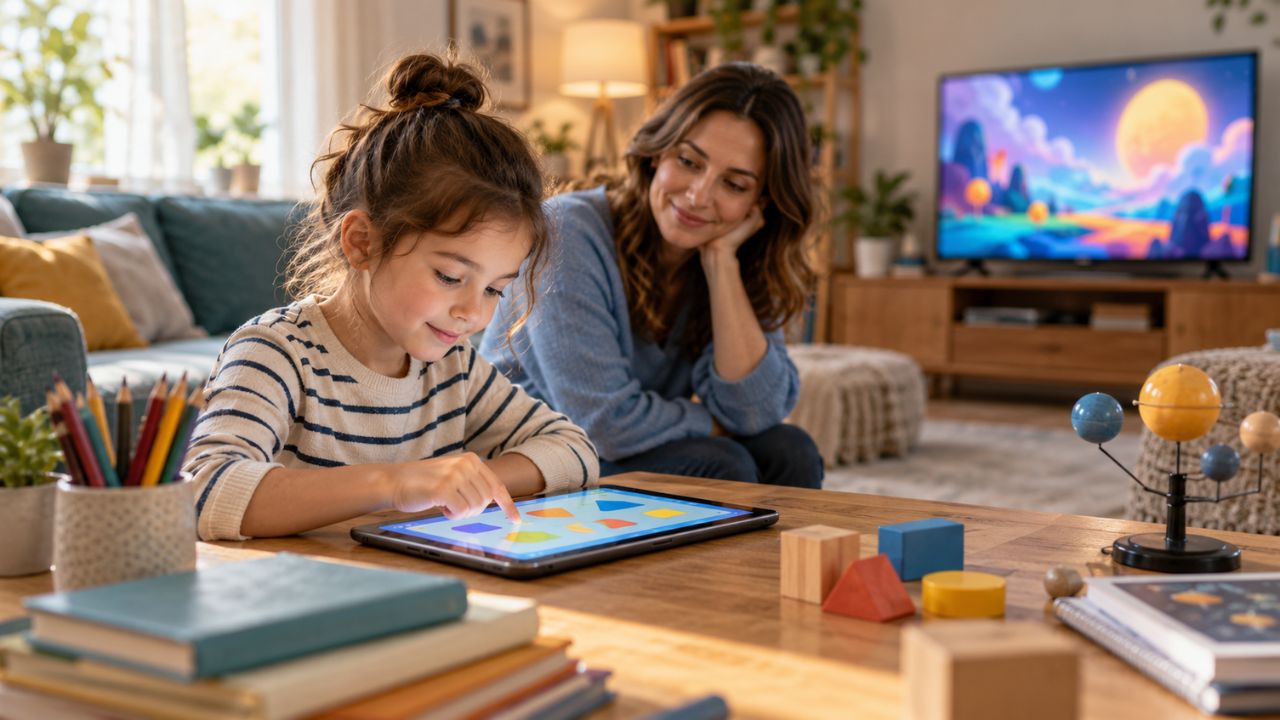
On the EdTech beat, “Edutainment in 2026” reports that learning games are moving from classroom extra to core toolkit, citing ESA data that 83% of US children aged 5 to 12 play video games weekly and 82% of gaming parents play alongside their kids—with the caveat, echoed by UNESCO and WHO, that good games should support teachers and active play, not replace them.
Where It’s Headed
The issue closes on Editorialge’s 2026 roadmap, spanning the ImagineLab Art platform, the Rank Pilot AI writing and SEO SaaS, the Edutorial kids-gaming venture, an e-commerce shop, and the Happiness Fit wellness line. The magazine notes editions are rolling out in Spanish, French, German, Portuguese, Chinese, Hindi, and Bengali.
The 18th edition is available now through Editorialge.com.