

Biden Meets Microsoft and Google CEOs on AI Risks

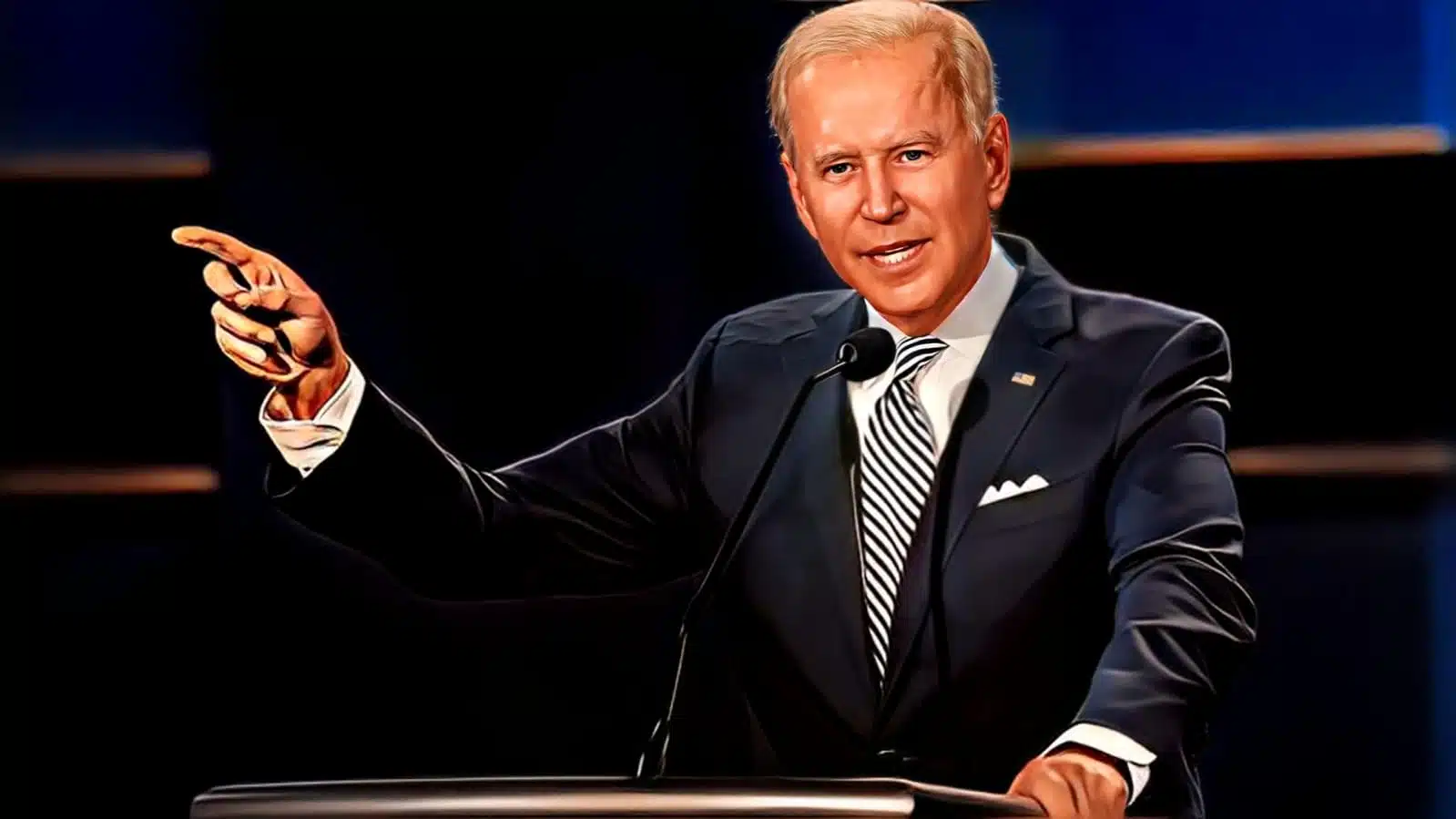
Joe Biden in a Meeting

Listen to the Podcast:

President Joe Biden participated in a White House meeting on Thursday with the CEOs of leading artificial intelligence companies, including Alphabet Inc’s Google and Microsoft, to discuss risks and safeguards as the technology gains the attention of governments and legislators.

This year, generative artificial intelligence has become a buzzword, with apps like ChatGPT capturing the public’s attention and causing a rush among businesses to introduce similar products that they believe will alter the nature of work.

Millions of users have begun testing such tools, which proponents claim can make medical diagnoses, write screenplays, create legal briefs, and debug software, causing growing concern that the technology could lead to privacy breaches, skewed employment decisions, power scams, and misinformation campaigns.

A White House official told Reuters that Biden, who “dropped by” the meeting, also uses ChatGPT. “He has been thoroughly briefed on ChatGPT and has experimented with it,” said an official who requested anonymity.

Thursday’s two-hour meeting which began at 11:45 am ET (1545 GMT), includes Google’s Sundar Pichai, Microsoft Corp’s Satya Nadella, OpenAI’s Sam Altman, and Anthropic’s Dario Amodei, along with Vice President Kamala Harris and administration officials including Biden’s Chief of Staff Jeff Zients, National Security Adviser Jake Sullivan, Director of the National Economic Council Lael Brainard and Secretary of Commerce Gina Raimondo.

Harris stated in a statement that while the technology has the potential to enhance lives, it may also pose safety, privacy, and civil rights concerns. She told the chief executives that they have a “legal responsibility” to ensure the safety of their artificial intelligence products and that the administration is willing to advance new regulations and support new artificial intelligence legislation.

Altman of OpenAI told reporters before the meeting that the White House wants to “get it right.”

When asked if the White House was moving quickly enough on AI regulation, he replied, “It’s good to try to get ahead of it.” “It will undoubtedly be a challenge, but one I am confident we can overcome.”

The administration also announced a $140 million investment from the National Science Foundation to establish seven new AI research institutes and that the White House’s Office of Management and Budget would issue policy guidance on the federal government’s use of AI. Anthropic, Google, Hugging Face, NVIDIA Corp, OpenAI, and Stability AI will take part in a public evaluation of their AI systems.

Shortly after Biden announced his reelection candidacy, the Republican National Committee produced a video depicting a dystopian future during a second Biden term using only artificial intelligence (AI)-generated imagery.

As AI technology proliferates, such political ads are anticipated to become more prevalent.

United States regulators have fallen short of the rigorous approach European governments have taken to tech regulation and the development of strong rules regarding deepfakes and disinformation.

The senior official stated, “We don’t see this as a race,” adding that the administration is working closely with the U.S.-EU Trade & Technology Council on the matter.

In February, Vice President Biden signed an executive order directing federal agencies to eliminate bias in the use of artificial intelligence. In addition, the Biden administration has issued a Bill of Rights for AI and a risk management framework.

The Federal Trade Commission and the Civil Rights Division of the Department of Justice announced last week that they would use their legal authority to combat AI-related injury.

Tech titans have repeatedly pledged to combat election propaganda, false information about the COVID-19 vaccines, pornography and child exploitation, and hateful messages directed at ethnic groups. However, research and current events demonstrate their failure.



Subscribe to Our Newsletter

Related Articles

Top Trending

How to Sell SaaS to Enterprises as a Small Team
Parent using picture cards with a child to practice sound patterns, showing the importance of rhyming in phonics for early reading readiness.
Why the Importance of Rhyming in Phonics Matters for Early Reading Success
A guide comparing best password manager software for their security features, value, and plans, featuring a secure shield and app icons
Best Password Managers Compared: 10 Secure Choices for 2026
Best AI cybersecurity tools for smarter threat detection, endpoint protection, enterprise security, and AI analytics in a futuristic digital security graphic
10 Best AI-Powered Cybersecurity Tools for Smarter Threat Detection
Complete Guide on Game Programgeeks
Game Programgeeks: A Complete Guide on PC, Game Dev, and Tech

Technology & AI

How to Sell SaaS to Enterprises as a Small Team
A guide comparing best password manager software for their security features, value, and plans, featuring a secure shield and app icons
Best Password Managers Compared: 10 Secure Choices for 2026
Best AI cybersecurity tools for smarter threat detection, endpoint protection, enterprise security, and AI analytics in a futuristic digital security graphic
10 Best AI-Powered Cybersecurity Tools for Smarter Threat Detection
Complete Guide on Game Programgeeks
Game Programgeeks: A Complete Guide on PC, Game Dev, and Tech
ImagineLab.art vs Canva for Non-Technical Marketers
ImagineLab.art vs Canva for Non-Technical Marketers: Which One Fits the Real Workflow?

GAMING

Complete Guide on Game Programgeeks
Game Programgeeks: A Complete Guide on PC, Game Dev, and Tech
Online Color Game Philippines
Online Color Game Philippines: What Every Beginner Should Know Before Playing
Ways to Reduce Game Development Costs
12 Ways Studios Cut Game Development Costs
NFT game development cost
How Much Does NFT Game Development Cost? A Realistic Budget Breakdown
Reasons Why You No Longer Need the Best Roblox AI Scripter
Forget Best Roblox AI Scripter: 10 Reasons Why You No Longer Need It

Business & Marketing

AI marketing profitability illustrated by balancing faster campaign production against editing time, software costs, and revisions.
AI Marketing Profitability: The Hidden Costs Crushing Agency Margins
Why Long-Term AI Data Center Investment Matters Now
Why Driving Long-Term Investment in AI Data Center Infrastructure Is Front and Center Today
cut company saas spend
How to Cut Company SaaS Spend: 10 Proven Tactics
Best Communities for SaaS Founders
12 Best Communities for SaaS Founders to Find Mentors and Peers
Bootstrapping vs VC for SaaS founders reviewing growth and burn trends, showing how funding choices can affect control, spending, and sustainable company growth
Bootstrapping vs VC for SaaS: How To Evaluate Capital Strategy

EdTech & E-Learning

AI in University Assessments
How Universities Are Redesigning Assessment for the AI Era
Selecting edtech tools through a structured review of learning value, privacy, usability, integration, and cost.
Selecting EdTech Tools: 7 Questions School Leaders Must Ask Before Buying
Alphabet Recognition and Why It Matters
What Is Alphabet Recognition and Why Does It Matter
Assistive Technology for Diverse Learners
How Assistive Technology Supports Diverse Learners
VR and AR in Classrooms
How VR and AR Are Actually Being Used in Classrooms Today

Software & Apps

How to Sell SaaS to Enterprises as a Small Team
A guide comparing best password manager software for their security features, value, and plans, featuring a secure shield and app icons
Best Password Managers Compared: 10 Secure Choices for 2026
ImagineLab.art vs Canva for Non-Technical Marketers
ImagineLab.art vs Canva for Non-Technical Marketers: Which One Fits the Real Workflow?
automations students can build with free tools
9 Best Automations Students Can Build With Free Tools
ImagineLab.art vs adobe for design team
ImagineLab.art vs Adobe for Professional Design Teams: Which One Fits the Real Workflow?





















