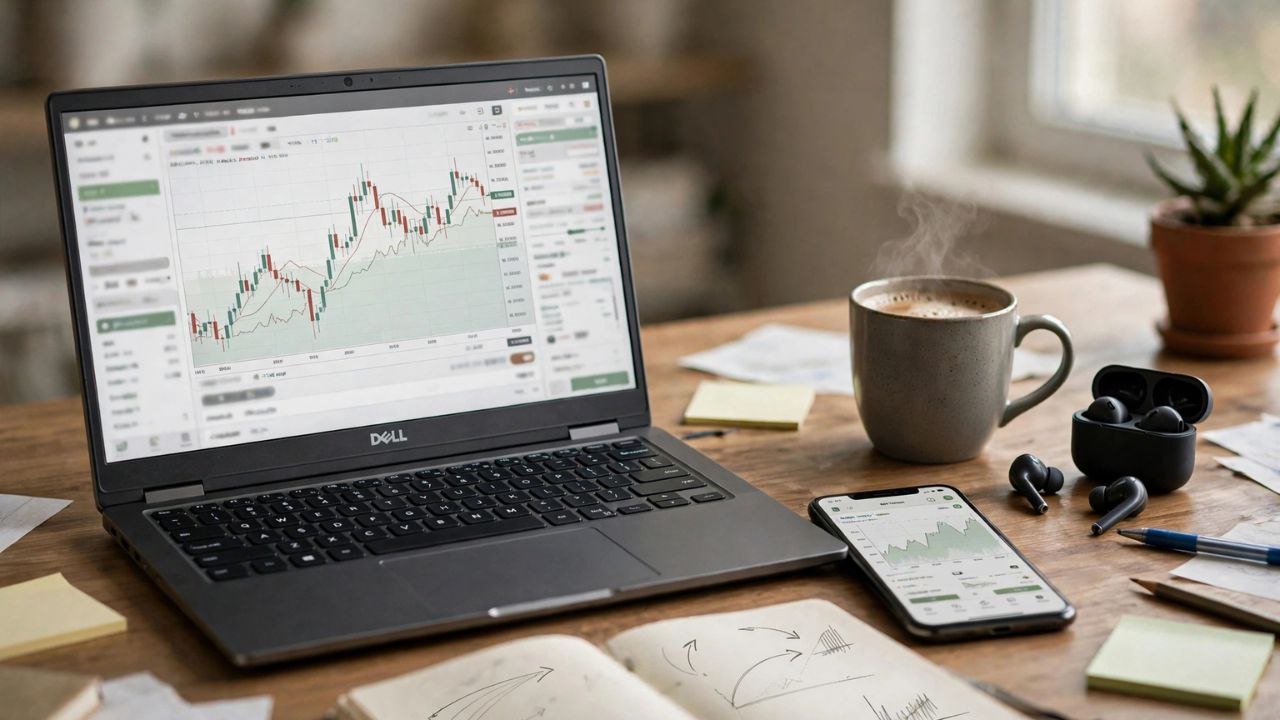
Most beginners pick an options app for its $0 banner, then get blindsided by approval levels and surprise fees. Our top pick among options trading platforms for beginners is Charles Schwab’s thinkorswim, thanks to free paper trading and deep education.
Below, you’ll get a fee chart, 10 honest reviews, and the 2026 rule change most guides miss.
Quick Comparison: Fees and Practice Accounts
Fees are less than you think. The biggest split between options trading platforms for beginners is whether you can practice with fake money first. Fees below were checked against each broker’s published pricing in late 2026.
| Platform | Stock/ETF option fee | Paper trading | Best for |
|---|---|---|---|
| Charles Schwab (thinkorswim) | $0.65 per contract | Yes | Learning on pro tools |
| Fidelity | $0.65 per contract | No | Research-first investors |
| E*TRADE | $0.65 ($0.50 at 30+ trades a quarter) | Yes | Guided strategy building |
| Robinhood | $0 (index options $0.50, or $0.35 with gold) | No | The simplest app |
| Webull | $0 (some index options $0.50) | Yes | Free trades plus practice |
| tastytrade | $1 to open, $0 to close, $10 cap per leg | No | Future active traders |
| Interactive Brokers | $0.65 ($1 minimum per order) | Yes | Future power users |
| Public | $0, plus a $0.06 to $0.18 rebate | No | Pure cost cutters |
| Moomoo | $0 (index options $0.50) | Yes | Chart lovers |
| SoFi | $0 | No | Simple calls, puts, and covered calls |
Bottom line: if you’ve never placed an options trade, pick a platform with a “Yes” in the paper trading column.
The 10 Best Options Trading Platforms for Beginners, Reviewed
Each pick below lists real costs, at least two flaws owners complain about, and who should walk away. Ranked for learning value first, price second.
1. Charles Schwab (thinkorswim): Best Overall
Schwab earns the top spot among options trading platforms for beginners because it lets you fail for free. Thinkorswim’s paperMoney account mirrors the real platform, so the habits you build in practice carry over.
Picture this: you want to sell a covered call on 100 shares of a stock you own. In Thinkorswim, you can model the trade, see your break-even on a risk graph, and run it in paperMoney for a month before risking a dollar.
The pricing is plain: $0 commission, $0.65 per contract, and no fee for exercise or assignment.
Cons:
- thinkorswim is dense. The desktop version has layers of menus, and a first session can feel like a cockpit.
- $0.65 adds up on spreads. A 10-lot iron condor is 40 contracts, so that’s $26 to open and another $26 to close.
Who Should Skip This: traders who only want to buy one call now and then. A $0 app costs less and asks less of you.
2. Fidelity: Best for Research-Driven Beginners
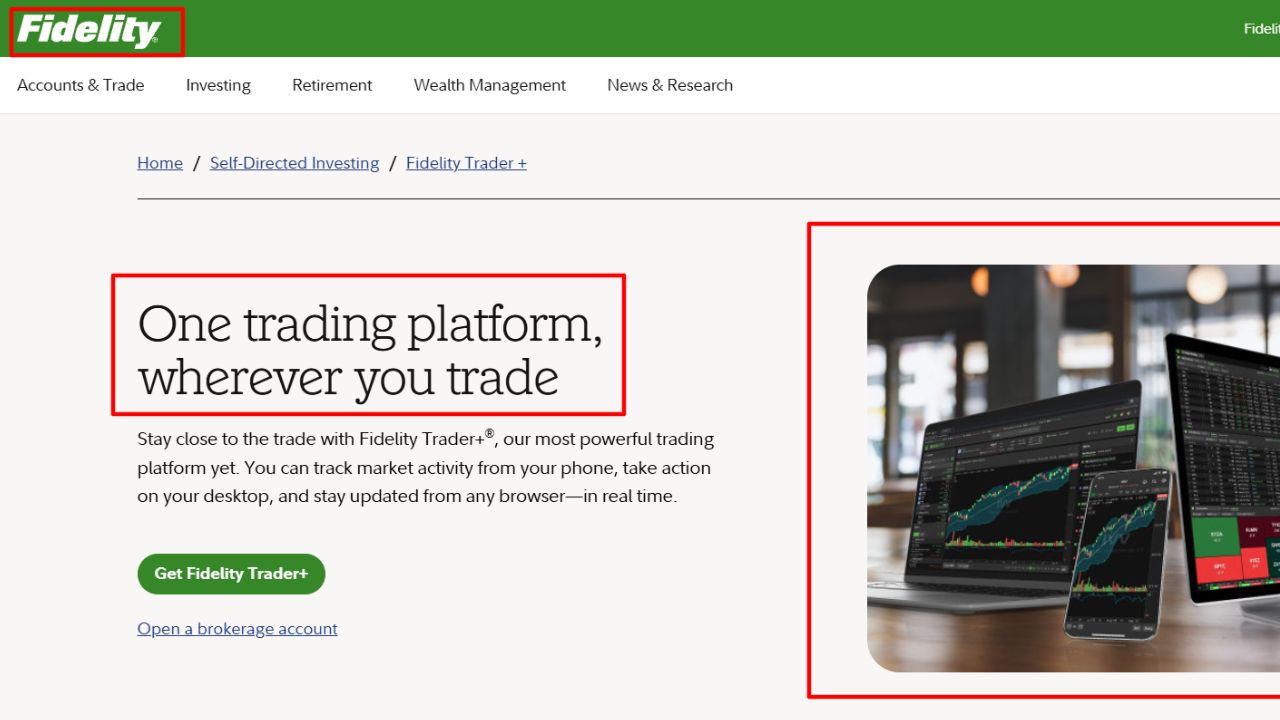
Fidelity is the “grown-up” choice. Its research library, options education, and customer service run deep, and the $0.65 contract fee matches Schwab.
Cons:
- No paper trading. You learn with real money from day one.
- No volume discounts on options, so active traders pay full price forever.
Who Should Skip This: anyone who wants a practice account before going live.
3. E*TRADE: Best for Guided Strategy Building
ETRADE splits into two tools: the simpler ETRADE web and mobile platforms and Power ETRADE for options. Power ETRADE’s strategy builder and real-time Greeks help a new trader see risk before clicking “submit.” Paper trading is available too.
The best part? Its Dime Buyback Program waives the contract fee when you close a short option priced at 10 cents or less.
Cons:
- Index options carry separate per-contract fees, such as $0.54 for SPX and $0.66 for NDX.
- Base margin rates sit on the high side, above 12% at last check.
Who Should Skip This: traders who hate switching between two apps to get one job done.
4. Robinhood: Best for Simplicity
Robinhood’s options chain is the cleanest on a phone. Stock and ETF options cost $0 per contract for regular accounts; the $0.50 fee Robinhood added on October 15, 2026 only hits accounts flagged as “professional” traders. Index options cost $0.50 per contract, or $0.35 with gold, plus exchange fees.
Here’s the catch: that simplicity can hide risk. A two-tap order makes a 0DTE (same-day expiration) gamble feel like buying a song — and it can go to zero by 4 p.m.
Cons:
- No paper trading account.
- Education on assignment and spread risk is thin compared with Schwab or E-TRADE.
Who Should Skip This: anyone who needs a phone call with a human when a trade goes wrong.
5. Webull: Best Free Platform With Paper Trading
Webull pairs $0 equity options with a full paper trading mode — a rare combo at this price. Charts and Level 2 data are strong for a free app.
Cons:
- The screen is crowded. On a 6-inch phone, an option chain with Greeks turned on becomes a wall of tiny numbers.
- Order-type confusion is a common complaint, and some users report slow fills on thinly traded contracts. A $75 fee applies when you transfer out.
Who Should Skip This: beginners who freeze when a screen shows more than five numbers.
6. tastytrade: Best Once You Know the Basics
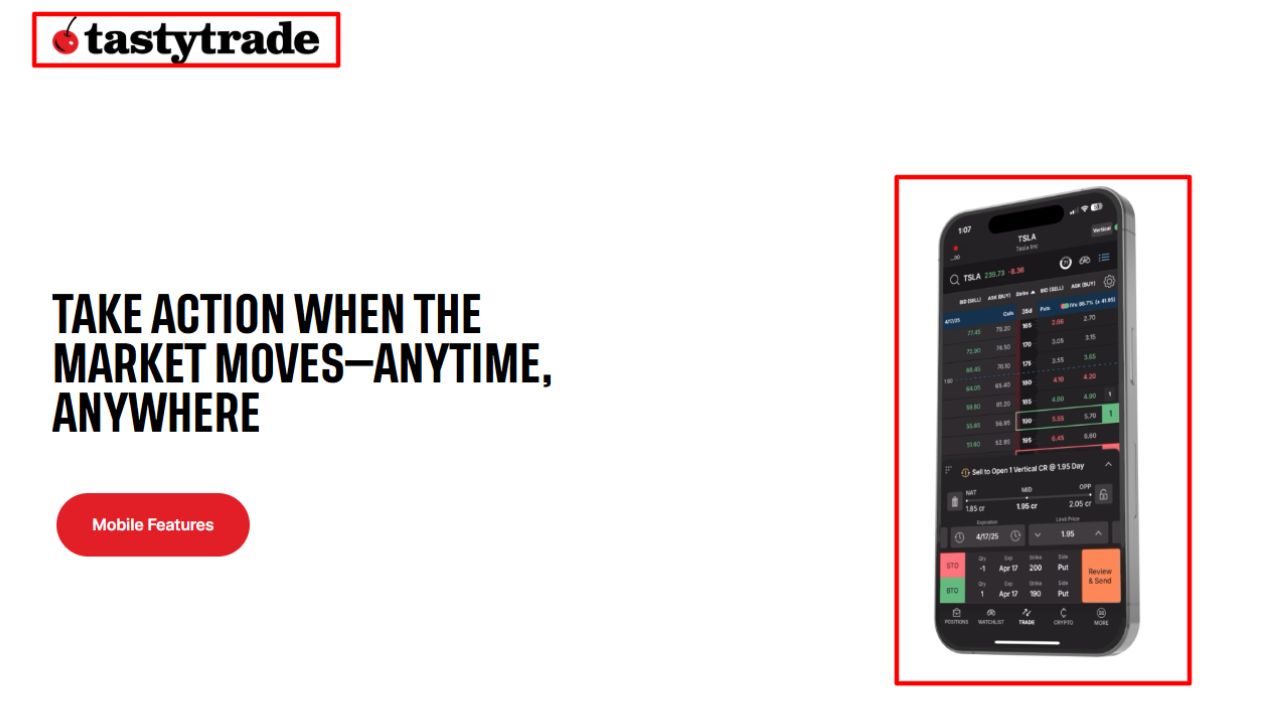
TastyTrade is built by options traders, for options traders. Probability of profit, IV Rank, and one-click strategy tools sit front and center.
The pricing rewards activity—$1 per contract to open, $0 to close, capped at $10 per leg.
Cons:
- No paper trading in the main platform, so mistakes cost real money.
- Exercise and assignment each cost $5, which stings on small accounts.
Who Should Skip This: absolute beginners. Learn elsewhere, then graduate here.
7. Interactive Brokers: Best for Future Power Users
IBKR offers paper trading, global market access, and pro-grade tools. The $0.65 contract fee drops with volume.
Cons:
- Steep learning curve, and much of the education skips the basics.
- A $1 minimum per order makes tiny single-contract trades pricier.
Who Should Skip This: casual traders who want one simple screen.
8. Public: Best for Cutting Costs
Public flips the fee model: no commissions, no contract fees, and a rebate of $0.06 to $0.18 per stock or ETF contract, based on monthly volume.
Cons:
- The rebate drops on SPY, QQQ, and IWM, the very tickers many beginners trade.
- No paper trading, and the analytics feel lighter than thinkorswim’s.
Who Should Skip This: traders who value deep risk graphs over a few cents back.
9. Moomoo: Best for Chart Lovers
Moomoo charges $0 on equity options and includes paper trading, free Level 2 data, and detailed charts.
Cons:
- Index options cost $0.50 per contract plus exchange fees.
- News, community posts, and data share one busy screen. It’s a lot for a first-timer.
Who Should Skip This: anyone who wants a calm, minimal layout.
10. SoFi: Best for the Very Basics
SoFi Active Investing charges $0 commissions and $0 contract fees. If you only plan to buy calls and puts or sell covered calls, that’s enough.
Cons:
- Limited approval levels, so spreads may be off the table.
- Options can’t be bought on margin, and the tools are basic.
Who Should Skip This: anyone planning to trade spreads within a few months.
Hidden Costs Beginners Miss on Options Platforms
“Commission-free” rarely means free. Here’s what still shows up on statements at most options trading platforms for beginners:
- Regulatory pass-through fees: Robinhood, for example, charges a combined $0.04 per contract for exchange regulatory and clearing costs.
- Index option fees: SPX and similar products often carry extra fees, even at $0 brokers.
- Exercise and assignment fees: $0 at Schwab, Fidelity, and E-TRADE, but $5 at tastytrade.
Big mistake: ignoring these on multi-leg trades. Four legs means four sets of fees.
The $25,000 Day-Trading Rule Is Gone
Now, you might be wondering about the old Pattern Day Trader rule. The SEC approved its removal on April 14, 2026, and the $25,000 minimum ended on June 4, 2026.
Here’s what changed for anyone choosing between options trading platforms for beginners:
- Day trades are no longer counted to flag your account.
- A real-time intraday margin standard replaced the flat $25,000 floor.
- Brokers roll out the new system on their own timelines, so check yours.
The truth is, easier day trading also means easier losses. Freedom isn’t a strategy.
How to Get Approved for Options Trading
Every broker must approve you before your first options trade, and even the friendliest options trading platforms for beginners follow this rule. Expect questions about income, net worth, experience, and goals, plus a copy of the Options Disclosure Document from the OCC.
Most platforms use tiers. Level 1 usually covers covered calls and cash-secured puts, Level 2 adds buying calls and puts, and higher levels open up spreads and, eventually, naked selling.
On the flip side, don’t inflate your answers to get a higher level. Those limits protect a new account from trades that can lose more than you put in.
Which Platform Should You Pick?
That brings us to the biggest mistake people make: choosing by fees alone. Among options trading platforms for beginners, the right pick depends on how you learn.
- You want to practice first: Schwab, E*TRADE, Webull, or moomoo.
- You want the cheapest trades: Robinhood, Public, or SoFi.
- You plan to trade weekly within a year: tastytrade or Interactive Brokers.
Before you fund any account, lock it down with an authenticator app instead of SMS codes. If you’re still choosing a main investing account, see our US brokerage accounts compared by fees and features.
Frequently Asked Questions (FAQs)
What is the best options trading platform for a beginner?
Charles Schwab’s thinkorswim is the strongest all-around pick because of its free paperMoney account and education. Robinhood is simpler if cost matters most.
How much money do you need to start trading options?
Many brokers have a $0 account minimum. Still, one contract covers 100 shares, so a call quoted at $1.50 costs $150.
Can you lose more than you invest with options?
Buying calls or puts limits your loss to what you paid. Selling uncovered options can lose far more, which is why brokers restrict it.
Do I need a margin account to trade options?
No for buying options and covered calls. Most brokers require margin for spreads and other higher-level strategies.
Is the $25,000 rule still in effect?
No. FINRA’s Pattern Day Trader rule and its $25,000 minimum ended on June 4, 2026.
Can I practice options trading for free?
Yes. thinkorswim paperMoney, Power E*TRADE, Webull, moomoo, and Interactive Brokers all offer paper trading.
Final Thoughts
The best options trading platforms for beginners let you learn before you lose. Open a Schwab or Webull account, place 20 paper trades, and track why each one won or lost.
Only then move real money — and start small. If income is your goal, pair covered calls with a long-term ETF core and track the payouts with a dividend tracking app.
Disclaimer: This article is for education, not financial advice. Options carry significant risk; read the Options Disclosure Document before trading.