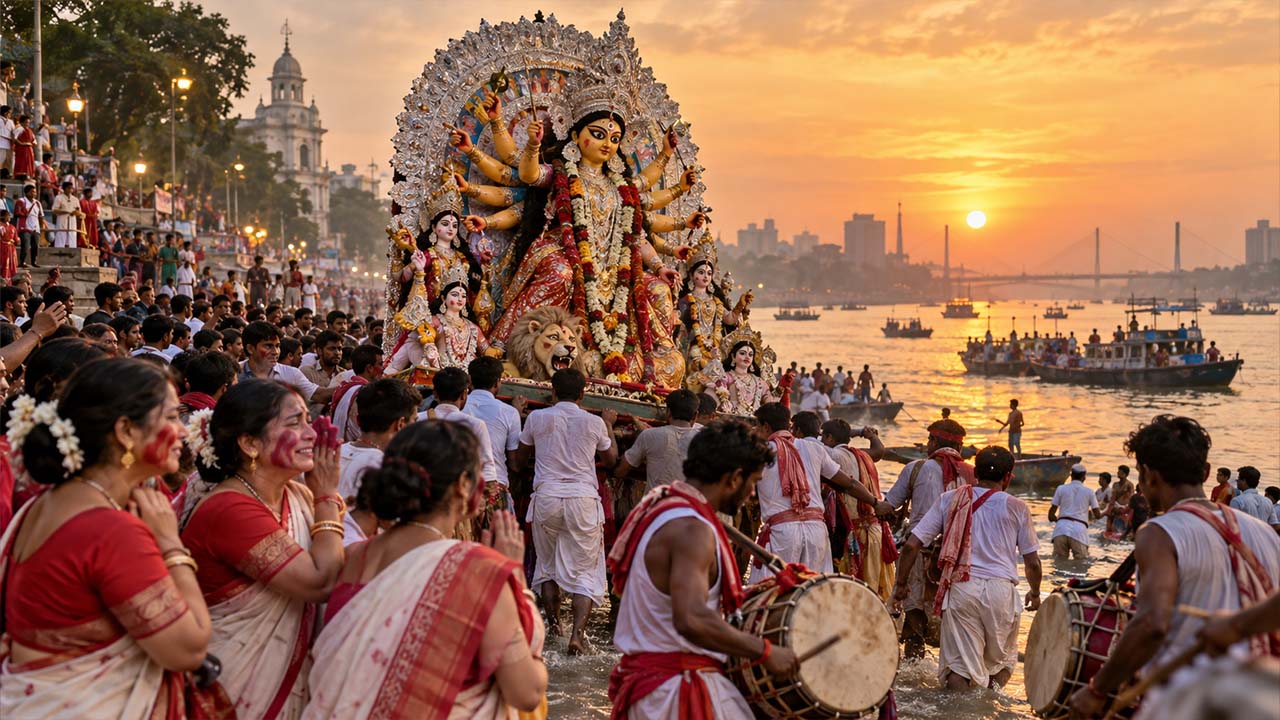
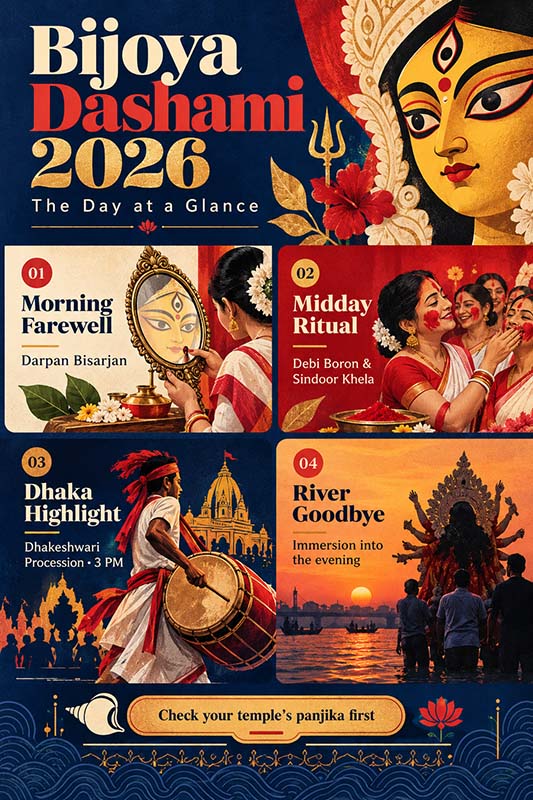
Bijoya Dashami 2026 falls on Wednesday, October 21, in both Bangladesh and West Bengal. It is the last day of Durga Puja. The goddess is given a mirror farewell in the morning, married women play Sindoor Khela at midday, and the idols go to the river in the afternoon. As the drums fade, the crowd shouts one line: “Asche bochor abar hobe.” It means “It will happen again next year.”
I ended my Durga Puja 2026 piece with that promise. “She’ll come again next year,” everyone says on Dashami evening, and I wrote that I say it too. A few readers asked why someone who grew up in a Muslim family would say it at all. This piece is my answer. It also gives you the timings you need for Wednesday.
Bijoya Dashami 2026: Date and Timings in Bangladesh and India
Both countries celebrate Dashami on the same day this year. The ritual times are different, though. In Bangladesh, temples follow one of two panjikas, the traditional Hindu almanacs. Most temples, including the Dhakeshwari National Temple, follow the Gupta Press panjika. The Ramakrishna Mission follows the Bishuddha Siddhanta panjika. The two put the morning puja almost five hours apart.
| Ritual | Bangladesh (Dhaka time) | West Bengal (India time) |
|---|---|---|
| Dashami Puja and Darpan Bisarjan | By 9:57 AM (Gupta Press); by 2:41 PM (Bishuddha Siddhanta) | Before 8:30 AM at Belur Math, Dashami tithi ends at 2:11 PM. |
| Debi Boron and Sindoor Khela | 11:30 AM at Dhakeshwari; varies by mandap | Late morning to afternoon; varies by pandal |
| Immersion | Dhakeshwari procession at 3 PM; immersions continue into the evening | From the evening, all immersions to finish by October 24 |
| Holiday | Public holiday; five-day break from October 20 to 24 | Government offices closed through October 24 |
If you plan to attend a morning ritual, ask your local temple or purohit which panjika they follow. A mandap running on Gupta Press time will have finished the mirror farewell before a Ramakrishna Mission crowd has even gathered.
In West Bengal, the state government has asked puja committees to finish all immersions by October 24, the day before Kojagari Lakshmi Puja on October 25. Not every idol goes into the river on Dashami itself. DJs are banned from immersion processions in Kolkata this year.
Why the Day Is Called “Bijoya”
Bijoya means victory. In Bengal, the day marks Durga’s victory over the buffalo demon Mahishasura. Much of the rest of India marks Vijayadashami, or Dussehra, as Rama’s victory over Ravana.
This year, the two fall on different days. Most of India keeps Dussehra on Tuesday, October 20. Bengal’s calendar counts the puja days differently, so the 20th is Maha Navami and Bijoya Dashami comes a day later. If friends in Delhi send Dussehra wishes a day early, that is the reason.
The Morning: A Goodbye in the Mirror
The first farewell is quiet. In the Darpan Bisarjan, the priest holds a mirror so that it catches the goddess’s reflection and then lets the reflection go. Ritually, this is the real immersion. The trip to the river later in the day is the farewell to the clay.
After this, some families perform the Aparajita puja, following their own custom. Aparajita means “the unconquered.”
Both panjikas agree on one thing this year. Because Dashami falls on a Wednesday, the goddess is said to leave by boat. Traditionally, that is read as a sign of more crops and more water in the year ahead. In a country that lives by its rivers and its harvest, people take that kind of sign seriously, and I understand why.
Debi Boron and Sindoor Khela
Late in the morning, married women line up for the Debi Boron. They offer the goddess sweets and paan, touch her forehead with sindoor (vermilion), and wipe her face, the way you would see off a daughter going back to her in-laws’ home. That comparison is the heart of the festival. Durga is not only a goddess here. She is a daughter who came home for a few days and now has to leave.
Then comes Sindoor Khela. The women smear vermilion on each other’s foreheads and cheeks until their faces are red and everyone is laughing. Traditionally, it was for married women. Some families and puja groups are now more open about who takes part. That is their decision, not an outsider’s.
If you are watching, the advice from my earlier piece still applies: ask before you take anyone’s photo. Sindoor is also hard to get out of fabric, so don’t wear your best clothes near the mandap.
The Procession to the River
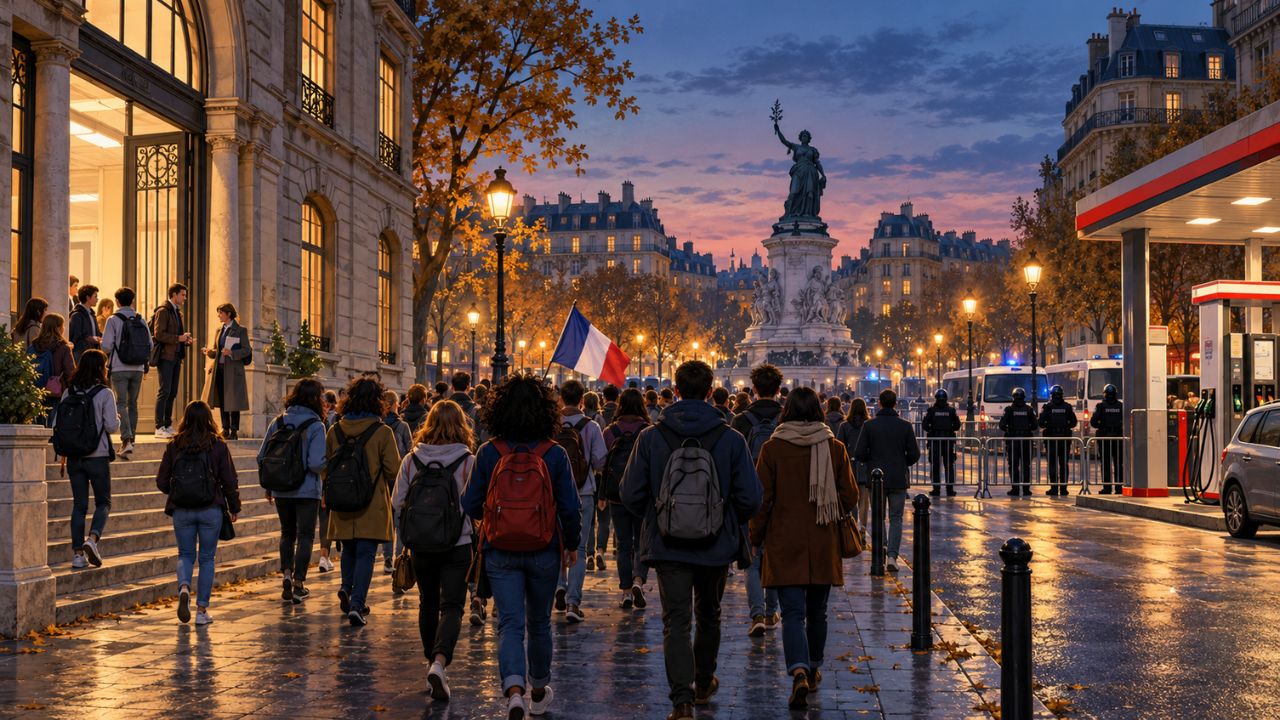
In the afternoon, the idols leave the mandaps on trucks, vans, and shoulders, with the dhak (drums) leading the way. In Dhaka, the main procession leaves the Dhakeshwari National Temple at 3 PM, and most of the city’s idols are immersed in the Buriganga. Across Bangladesh, rivers, ponds, and canals take the rest. In Kolkata, the immersions happen along the Hooghly at ghats such as Babughat, Bagbazar, and Nimtala.
The river banks get crowded and slippery. If you bring children, hold their hands and stay back from the water’s edge. The best view of an immersion is rarely from the front row.
Why I Also Say “Asche Bochor Abar Hobe”

The first time I heard the chant, I didn’t understand it. The idol was halfway into the water, the drummers were playing harder than they had all week, and the people around me were shouting about next year. I expected sadness. What I heard sounded more like a promise.
Over the years, I’ve come to think that’s exactly what it is. The line doesn’t say “She is gone.” It says the gathering will happen again: the same streets will fill, the same friends will come back from wherever they’ve moved, and the bhog line will form again with people of every faith in it.
So when I say it, I’m not borrowing someone else’s prayer. My faith hasn’t changed. What I’m saying is that I want this neighborhood’s joy to return and that I’d like to be standing in it again. On one Bijoya, my friend’s mother handed me a bowl of narkel naru and said, “You’re our son too.” After hearing that, I couldn’t stand on the bank and stay quiet.
After the Immersion: Kolakuli, Pranam, and Sweets
Bijoya really begins after the river. People come home, and visiting starts:
- Pranam: the young touch the feet of their elders and receive their blessings.
- Kolakuli: Friends and people of the same age hug each other. This is the Bijoya embrace.
- Shubho Bijoya: the greeting everyone exchanges, in person or by phone. Older generations used to write Bijoya letters to relatives far away. Today it is mostly a WhatsApp message, but the words haven’t changed.
- The sweets: Narkel Naru, Nimki, Ghugni, Rosogolla, and Sandesh appear in every home for days. Turning up empty-handed is fine. Leaving without eating is not.
The visiting doesn’t end on Wednesday. Many communities hold a Bijoya sammilani, a get-together, weeks later. The Dhakeshwari National Temple has scheduled its own for November 6.
If you are on your way to a friend’s home and want something to wear for the evening, our guide to Bijoya Dashami fashion has some ideas.
Final Thoughts
Bijoya Dashami 2026 is on Wednesday, October 21. If you want to see the morning rituals, check which panjika your temple follows, because the timings differ by hours. If you want to see the immersion, get there early, stay back from the water, and let the drummers through.
And if a Hindu friend sends you “Shubho Bijoya” this week, send it back. Visit if you can, eat the naru, and say the line with everyone else. You don’t have to share a faith to hope that a good thing comes back.
Asche bochor abar hobe.
Frequently Asked Questions (FAQs)
Is Bijoya Dashami 2026 a public holiday in Bangladesh?
Yes. October 21 is a public holiday. Navami (October 20) and Thursday, October 22, are holidays by executive order, so with the weekend there is a five-day break from October 20 to 24.
Can non-Hindus say “Shubho Bijoya”?
Yes, and it is warmly received. It is a seasonal greeting between neighbors and friends, much like wishing someone Eid Mubarak.
Why is the immersion in Kolkata allowed until October 24?
The West Bengal government set October 24 as the last date for all immersions so that the rivers and the police are free before Kojagari Lakshmi Puja on October 25. Many idols still go in on Dashami, following the panjika.