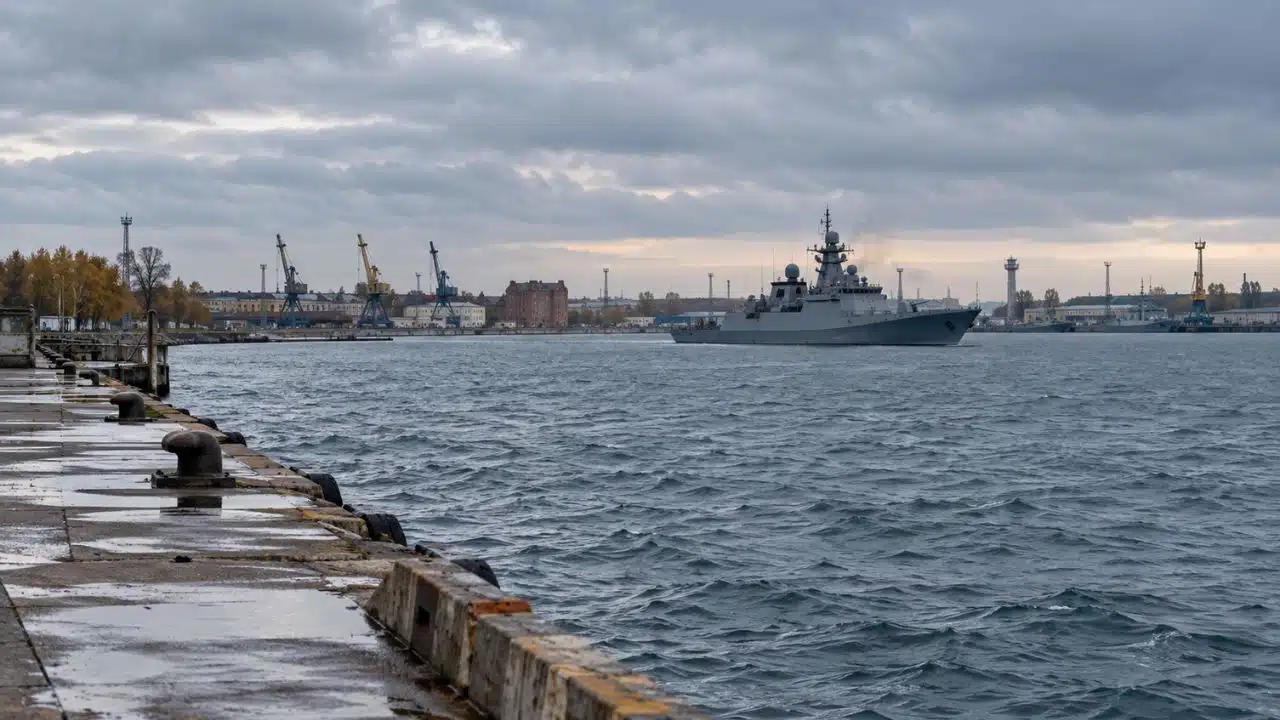
Russia’s Kaliningrad nuclear warning centres on a specific threat: Moscow says it could use nuclear weapons if NATO tries to isolate the region from the rest of Russia. Reuters reported the warning on September 30 after reviewing a diplomatic message sent to the alliance.
Kaliningrad is Russian territory on the Baltic Sea, sandwiched between Poland and Lithuania and geographically separated from mainland Russia. That location makes access to the region a sensitive security issue. NATO Secretary General Mark Rutte said on September 30 that there was “no imminent threat to NATO territory.”
For me, the central concern is miscalculation: a move intended to deter the other side could be interpreted as preparation for an attack. That is how a dispute over access could become a much wider confrontation.
What Exactly Did Russia Warn NATO About?
The diplomatic message also raised the possibility of strikes against NATO decision-making centres at the outset of a conflict. The quoted passage about those strikes did not specify nuclear weapons.
Russian embassies issued similar public warnings. According to AP, they alleged that NATO was preparing an air and naval blockade of Kaliningrad. NATO spokesperson Allison Hart confirmed on September 30 that the alliance had received a written message from Russia and had replied.
The warning leaves an important question unresolved: which actions would Moscow consider an attempt to isolate the region? That uncertainty matters because governments could interpret the same restriction or military activity differently.
Why Is Kaliningrad Separated From Russia?
Kaliningrad Oblast is a Russian administrative region. Its main city, Kaliningrad, shares the region’s name. It is an exclave, meaning a part of a country geographically separated from that country’s main territory.
The formerly German Königsberg area came under Soviet control at the end of World War II. When the Soviet Union dissolved in 1991, Kaliningrad remained Russian territory but became separated from mainland Russia by international borders.
Its Baltic coastline provides sea access, while overland connections require transit through other countries. That geography helps explain why transport and supplies feature so prominently in disputes over the region.
Is Kaliningrad Already Being Blockaded?
The reporting reviewed for this explainer does not establish an active NATO air or naval blockade as of October 1. Russia has alleged preparations for one. NATO says its activities and exercises pose no threat to Russian territory.
The earlier transit dispute involved restrictions on goods moving between Kaliningrad and other Russian territory through the European Union.
European Commission guidance issued in July 2022 distinguished road and rail transport. Sanctioned goods could not transit by road. Certain sanctioned goods could move by rail under monitoring and controls, while sanctioned military and dual-use goods remained prohibited.
That describes the historical guidance. Restrictions on particular goods and a military operation cutting off a territory’s access have different scope and consequences. Using “blockade” for both can obscure what happened and what Russia is now alleging.
How Has NATO Responded?
Rutte addressed the warning at the Euronews Defence and Space Summit in Brussels on September 30. He described NATO as defensive, called on Russia to stop its nuclear threats and said the alliance’s threat assessment had not changed.
He said preparations for an attack on an allied country would involve a military build-up NATO could detect. He also urged allies to continue investing in defence and supporting Ukraine.
His response combined reassurance about the immediate situation with continued defence preparations. It was an assessment of the evidence available at that moment, rather than a guarantee about how every future crisis would unfold.
Why Does Kaliningrad Matter Militarily?
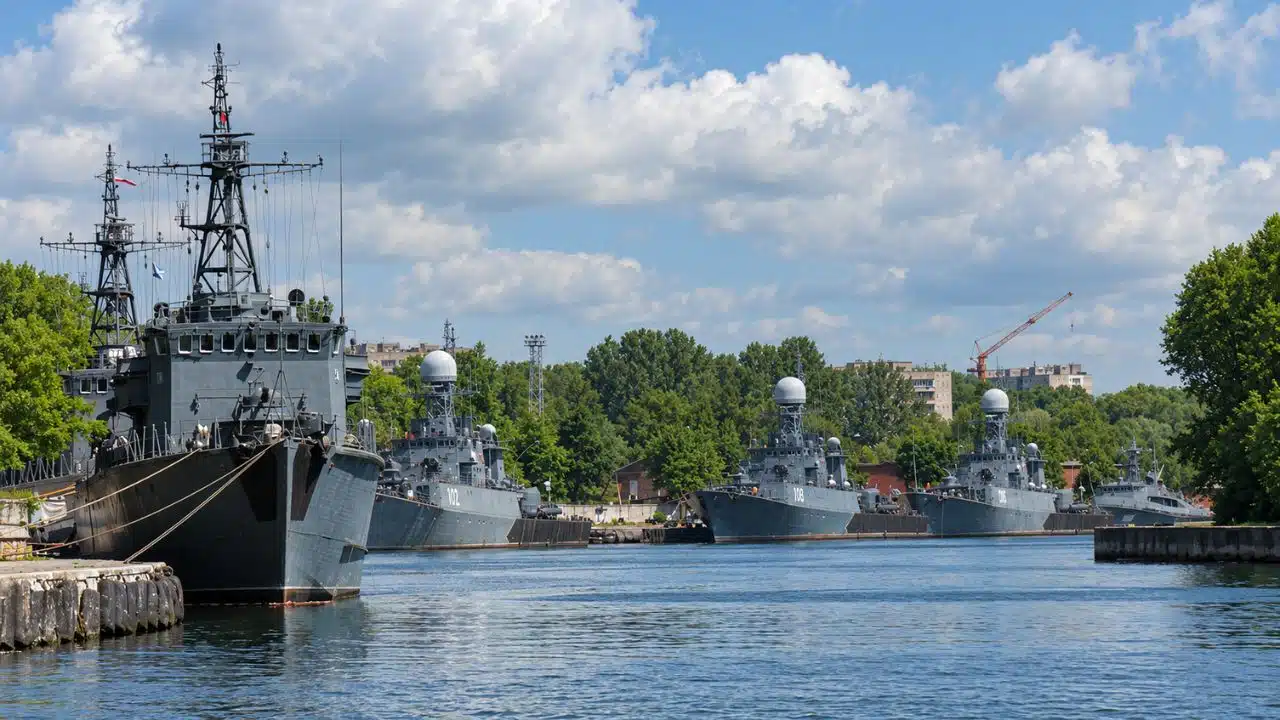
Kaliningrad contains Russia’s main Baltic naval base and nuclear-capable Iskander missiles, AP reports. These assets give the region an important role in Russia’s military position around the Baltic Sea.
Nuclear-capable describes what a weapons system can carry. The term alone does not establish that a particular missile currently has a nuclear warhead or that a decision to use one has been made.
Nearby is the Suwałki corridor, the border area connecting Poland and Lithuania. It links Poland with the Baltic countries while separating Kaliningrad from Belarus. Poland’s defence ministry identifies it as a strategically important connection between NATO allies.
Disruption there could complicate movement along an important land route. The geography therefore creates two connected security concerns: Russia’s access to Kaliningrad and NATO’s ability to maintain reliable connections between its members.
Why Has the Warning Come Now?
The warning follows a broader deterioration in Baltic security since Russia’s full-scale invasion of Ukraine in February 2022. Finland joined NATO on April 4, 2023, followed by Sweden on March 7, 2024, changing the alliance’s position around the Baltic Sea.
NATO launched Baltic Sentry on January 14, 2025, to strengthen protection of critical undersea infrastructure. It announced a role for frigates, maritime patrol aircraft and naval drones.
Arguments over Kaliningrad intensified in 2026. In May, Lithuanian Foreign Minister Kestutis Budrys said NATO should demonstrate its ability to penetrate Russia’s military defences there. The Kremlin sharply criticised his remarks, Reuters reported.
Reuters also reported, citing a Western military source, that NATO-member aircraft conducted an unannounced operation around Kaliningrad in mid-August. The source said it demonstrated capabilities to disrupt the region’s communications and air defences in a conflict.
These developments provide context for the latest exchange. Public statements about military capabilities, exercises and preparations still need to be distinguished from an approved operation to blockade the region.
How Serious Is the Risk of Escalation?
Nuclear analyst and former Russian diplomat Nikolai Sokov told Reuters that he saw a risk of mutual miscalculation. His concern was that actions European governments considered below the threshold of war could be interpreted by Russia as open conflict.
That is a possible route to escalation. During a crisis, a government could interpret an opponent’s limited action as the beginning of a larger attack. Acting on that assumption could intensify the confrontation further.
Russia’s Kaliningrad nuclear warning makes such interpretations especially consequential. The public reporting establishes a conditional threat and NATO’s response. It does not establish a nuclear launch decision or provide a reliable timetable for conflict.
Russia’s Kaliningrad Nuclear Warning: What Should We Watch Next?
The most useful developments to follow are verified restrictions on access, substantial military deployments, and announced changes in readiness. Further diplomatic exchanges could also clarify what each side considers a threat.
Timing, scale, and purpose matter. A scheduled exercise and an unusual deployment require different assessments. Reports should explain those details before drawing conclusions about escalation.
Kaliningrad and the surrounding countries are places where people live, work, and raise families. Their security is the reason to examine this warning carefully. They would bear the consequences if a dispute over access became a military confrontation.