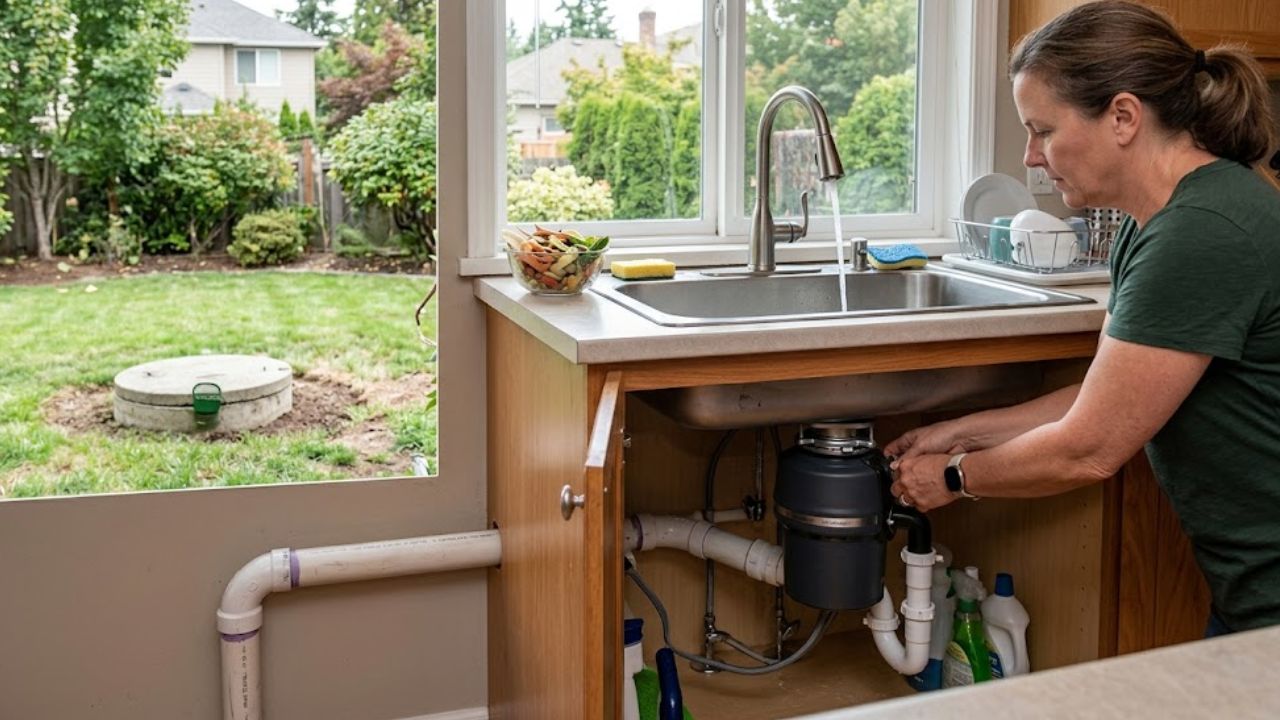
A home with a septic system can have a garbage disposal installation, provided the septic system is properly sized, functioning well, and maintained on schedule. In other words, having a garbage disposal with septic tank plumbing is possible when the system is in good condition.
A garbage disposal does not make food waste disappear. It grinds scraps into small particles and sends them through the drain, where they eventually reach the septic tank. Those particles add to the amount of solid and organic material the tank must store and break down. In a healthy system, limited amounts of finely ground food waste can usually be managed without causing an immediate problem.
The safest approach is to treat the disposal as a cleanup tool for small residual scraps rather than as the primary way to dispose of food. Scraping plates into the trash or compost before rinsing them greatly reduces the burden on the septic system. Occasional use of a garbage disposal and septic system together for small food remnants is generally easier on the system than routinely grinding leftovers, vegetable scraps, and meal-preparation waste.
Homes with older tanks, undersized systems, recurring drain problems, slow drainage, or a history of septic backups should be especially cautious about adding more solids through a garbage disposal.
How Does A Garbage Disposal For Septic System Affect Septic?
A garbage disposal for septic system use increases the amount of organic solids and suspended material entering the septic tank.
Inside the tank, wastewater typically separates into three general layers: floating material such as grease forms a scum layer, heavier solids settle as sludge, and relatively clarified wastewater remains between them before flowing toward the drainfield. Ground food particles contribute additional material that must settle, decompose, or remain suspended.
Frequent disposal use can cause the sludge layer to build up faster, increase the amount of suspended solids in the wastewater leaving the tank, contribute grease-rich food waste to the scum layer, reduce the tank’s effective working volume as solids accumulate, and allow more material to reach downstream components if the tank becomes overloaded. These are important considerations for anyone using a garbage disposal for septic systems in a home.
Food waste also increases the biological load inside the tank because microorganisms must break down more organic matter.
The drainfield is particularly important to protect. It is designed to receive wastewater that has already undergone substantial separation in the septic tank. If suspended solids leave the tank, they may collect on an effluent filter or move toward the drainfield, where excessive solids can contribute to clogging of soil pores and the biomat around the absorption area, reducing the system’s ability to disperse wastewater.
The overall impact of a garbage disposal with septic tank plumbing depends on how much waste is sent through the disposal, how large the tank is, how many people use the system, and how well the system is maintained.
What Problems Can Garbage Disposal For Septic Systems Cause?
Most problems arise from adding too much food waste, grease, fibrous material, or water to the plumbing and septic system. Using a garbage disposal for septic systems too heavily can increase this burden.
Kitchen drain clogs are another concern. Ground food can combine with grease, soap residue, starches, fibrous foods, and other debris inside pipes. Over time, that mixture can create sticky deposits that restrict flow and cause slow-draining sinks or disposal and drain line blockages.
Other possible problems include sewer odors and stress on an already undersized septic system.
A garbage disposal is rarely the sole cause of septic failure. Heavy food-waste loading can accelerate problems in a system that is already undersized, aging, poorly maintained, hydraulically overloaded, or nearing the end of its useful life. This is why a garbage disposal and septic setup should be managed with moderate disposal use and regular septic maintenance.
What To Avoid With Garbage Disposal With Septic
The best septic practice is to keep as much food waste out of the drain as practical. Some materials deserve particular attention because they create problems in plumbing, the disposal itself, or the septic tank.
Fats, oils, and grease, including cooking oil, bacon grease, butter, meat drippings, sauces, and similar materials, can cool and solidify inside pipes. They also contribute to the septic tank’s scum layer.
Fibrous foods such as celery, corn husks, asparagus ends, artichoke leaves, onion skins, and similar stringy materials can wrap around disposal components or collect in drain lines.
Large quantities of rice, pasta, potatoes, flour, and dough can absorb water and form thick, glue-like masses inside plumbing.
Coffee grounds do not readily dissolve and can accumulate in plumbing or add unnecessary solids to the septic tank. Eggshells become additional mineral-rich solids and provide little benefit to a septic system. Bones, fruit pits, and hard shells are difficult for many disposals to process and add unnecessary solid material.
Large quantities of vegetable peelings, including potato peels, carrot peelings, fruit skins, and similar scraps, can quickly overload a disposal and add substantial organic material to the septic tank. Meat scraps and fatty food increase both solid and grease loading.
Large amounts of any food waste are better placed in the trash or compost when a septic system is involved. The fact that a disposal can grind something does not mean the septic system benefits from receiving it, even when the unit is marketed as a septic safe garbage disposal.
How To Choose A Septic Safe Garbage Disposal
Some garbage disposals are marketed as suitable for homes with septic systems. The term “septic-safe,” however, should be understood as a design or marketing description rather than a guarantee that the disposal cannot affect a septic system. Any disposal sends additional ground solids into the wastewater system. A septic safe garbage disposal still needs to be used with the same basic precautions.
For a septic-connected home, useful features include a strong motor, effective grinding components, and a design that produces relatively fine food particles without requiring long operating times. Multi-stage grinding can reduce the size of food particles entering the drain line. A sufficiently powerful unit is less likely to struggle with small scraps or leave partially processed material behind. Stainless-steel grinding components can improve long-term performance, while anti-jam or auto-reverse features can reduce the likelihood of disposal jams and repeated grinding cycles.
Batch-feed models only operate when the stopper is engaged, which can encourage smaller, more deliberate loads.
Some manufacturers offer units designed specifically for septic households. Certain models dispense enzyme or microorganism-based additives while operating. These features may help break down certain organic material, but they should not be treated as a substitute for pumping, inspection, or proper septic maintenance.
The most important “septic-safe” feature is still how the disposal is used. A premium unit processing several pounds of kitchen scraps every day can place substantially more stress on a septic system than a basic disposal used only for residue left after plates are scraped. Choosing a septic safe garbage disposal does not change that basic rule.
How To Use Garbage Disposal And Septic Safely
Use the disposal for small leftover particles rather than bulk food waste. A garbage disposal for septic system use should be treated primarily as a cleanup tool.
Before washing dishes, scrape plates, pans, and cutting boards into the trash, compost bin, or food-waste collection container. This single habit can greatly reduce the amount of material entering the septic tank.
Run a steady stream of cool water while the disposal is operating, feed small amounts of food waste gradually, and allow the unit to finish grinding before adding more. Continue running water briefly after the grinding is complete to help move particles through the drain line.
Cool water is generally preferred while grinding because it helps keep fats more solid as they pass through the disposal rather than encouraging melted grease to coat the plumbing.
Do not use the disposal as a substitute for a trash can or compost bin.
Avoid attempting to “clean” the septic system by pouring large quantities of bleach, drain cleaner, antibacterial chemicals, or disposal cleaners down the drain. Harsh chemicals can interfere with septic treatment and may damage plumbing or septic components.
It can also help to avoid concentrating several high-water-use activities at the same time. Running multiple loads of laundry, using the dishwasher, taking several showers, and heavily using the garbage disposal within a short period can send a large volume of wastewater into the septic system at once.
Routine septic inspections, timely pumping, and sensible water use remain more important than any disposal-cleaning product or septic additive. For a home with a garbage disposal and septic system, these maintenance habits remain essential.
Does A Garbage Disposal With Septic Tank Need More Pumping?
It can.
Because a garbage disposal sends additional solids into the septic tank, frequent use may cause the sludge and scum layers to accumulate more quickly. That can shorten the interval between pump-outs. A garbage disposal with septic tank plumbing may therefore require closer attention to solids buildup.
There is no universal pumping schedule that applies to every home. Pumping frequency depends on factors such as tank size, number of household occupants, daily wastewater volume, amount of food waste entering the system, garbage disposal usage, tank condition, septic system design, and whether an effluent filter is installed.
The amount of additional maintenance depends on disposal habits. A household that only uses the disposal for small plate remnants may see little change, while a household that regularly grinds leftovers, vegetable scraps, and meal-preparation waste may build up solids much faster and may need more frequent pumping.
Homes with an effluent filter may also need the filter inspected or cleaned more frequently because increased suspended solids can contribute to filter buildup.
Many septic professionals recommend inspecting a residential system periodically and determining pumping needs based on actual sludge and scum levels rather than relying only on a fixed calendar interval. With a garbage disposal for septic system use, actual solids buildup is especially useful to monitor.
When To Avoid A Garbage Disposal For Septic System
Avoiding a garbage disposal is often sensible when the septic system already has limited capacity or known performance problems. This includes homes with an undersized septic tank, an aging or deteriorating system, a history of sewage backups, frequent drainfield saturation, slow household drains linked to septic performance, an overloaded system serving more occupants than originally designed, a failing or marginal drainfield, frequent effluent-filter clogging, persistent high liquid levels, an unknown maintenance history, limited access for regular septic pumping, or local regulations or septic design requirements that discourage disposal use.
Extra caution is also appropriate with older septic systems, especially when household occupancy has increased since the system was originally designed. In these homes, a garbage disposal for septic systems can add more solids than the system can comfortably manage.
If a septic inspection shows high solids levels, damaged components, poor drainage, or inadequate capacity, correcting those issues should take priority over adding a disposal.
Food waste can usually be managed easily without one. Composting is an excellent option for fruit and vegetable scraps, coffee grounds, and many other organic materials where local conditions allow it. Municipal organics collection is another option in areas that provide food-scrap pickup.
For material that cannot be composted, scraping dishes into a lined trash container or a countertop food-scrap container before washing them is simple and effective. A sink strainer can capture small scraps before they enter the plumbing.
For septic-system longevity, the guiding principle is straightforward: the less unnecessary solid material that goes down the kitchen drain, the less work the septic tank and drainfield have to do. Even with a septic safe garbage disposal, reducing food waste entering the drain is still the best practice.