Let’s be honest for a second: customer acquisition costs are through the roof. Paid ads are expensive, algorithms change every week, and consumers are more skeptical of traditional marketing than ever before.
But there is one channel that consistently cuts through the noise: a recommendation from a friend.
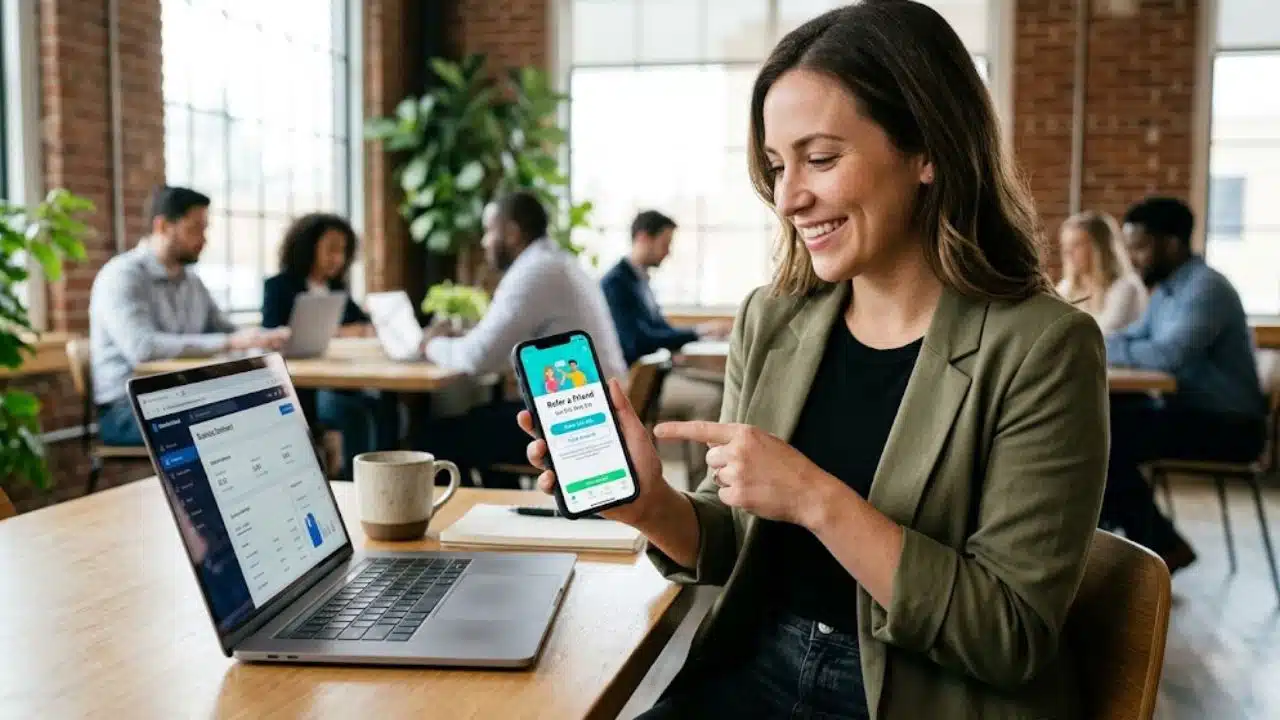
Word-of-mouth is the holy grail of growth. However, you can’t just slap a “Refer a Friend” button on your homepage and expect a flood of new users. The most successful companies engineer their referral programs to align perfectly with human psychology and their core product.
Let’s break down 10 of the best referral program examples in history, look at the actual mechanics they used, and uncover the secret sauce behind how you can replicate their success.
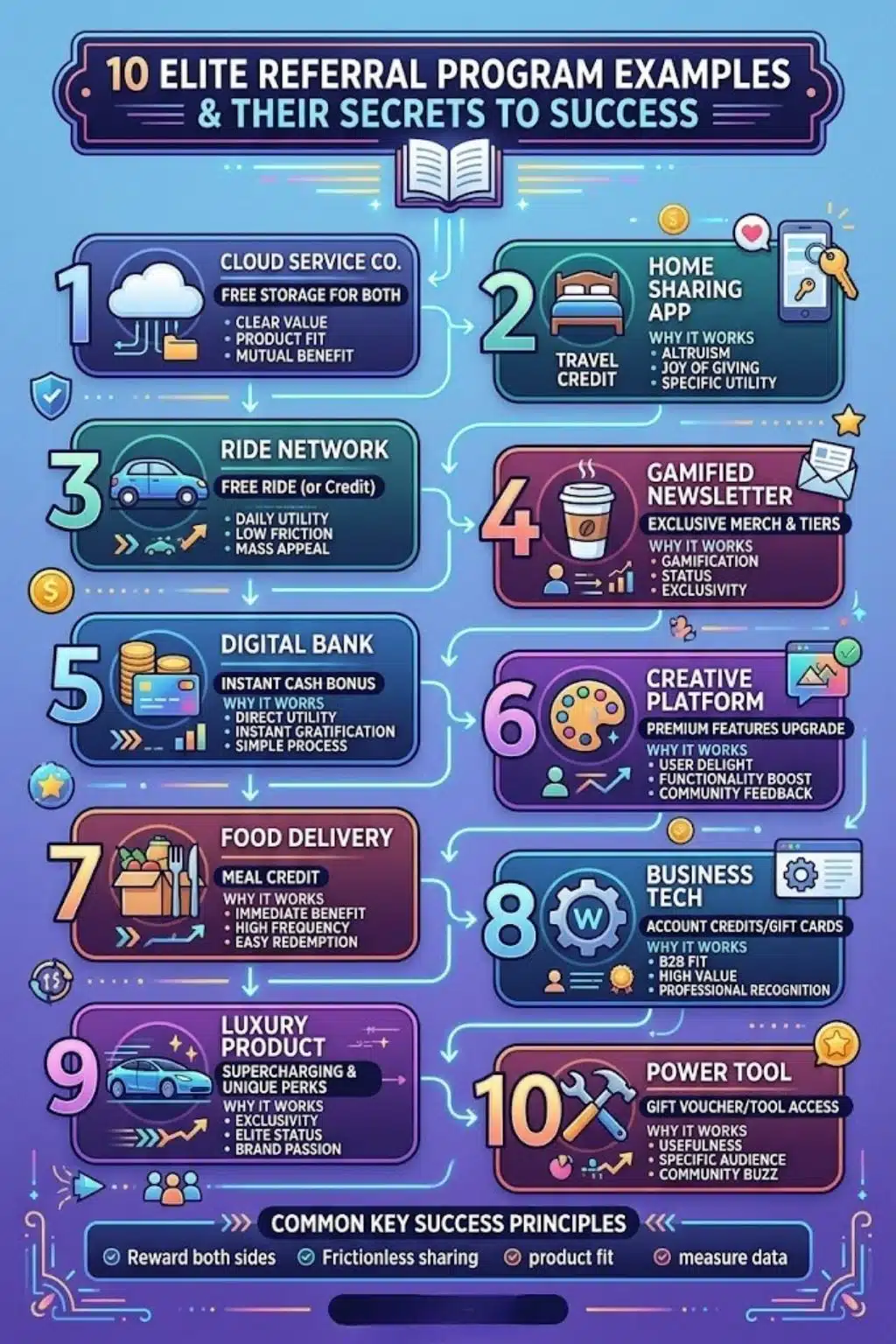
1. Dropbox: The Product-Aligned Incentive
When Dropbox was trying to convince the world to trust “the cloud,” paid ads simply weren’t converting. So, they turned to their users.
- The Mechanic: A two-sided storage reward. If you invited a friend, both of you received an extra 500MB of free storage space.
- Why it Worked: This is the gold standard of product-led growth. Dropbox didn’t offer cash; they offered more of the product. Because the reward was symmetric (both people benefited), sharing felt like giving a gift rather than asking for a favor. The result? They achieved a staggering 3,900% growth in just 15 months, scaling from 100,000 to 4 million users.
2. PayPal: The Direct Cash Catalyst
Before social media existed, PayPal needed to achieve critical mass fast to make their digital payment network viable.
- The Mechanic: Cold, hard cash. PayPal literally dropped $10 into the accounts of both the referrer and the new user.
- Why it Worked: Giving away free money reinforced exactly what PayPal was built for: moving money easily. To get the reward, new users had to link a bank account and complete a transaction. It wasn’t just a reward; it was forced, frictionless product onboarding. This strategy drove a mind-bending 1,650% average annual growth rate, helping them hit 1 million users in just two years.
3. Airbnb: The Power of Altruistic Framing
Airbnb struggled to get early traction until they completely redesigned their referral program to focus on the psychology of giving.
- The Mechanic: Double-sided travel credits. Users could send friends $25 in travel credit. Once the friend booked a trip, the referrer also received $25.
- Why it Worked: Airbnb shifted the messaging on their platform from “Get $25” to “Give $25.” This tiny psychological tweak reduced the social friction of sharing. People want to feel generous, not self-serving. This revamped program led to a massive 300% increase in daily signups and bookings.
4. Morning Brew: Gamification and Status
The daily business newsletter Morning Brew didn’t just ask for forwards; they turned reading the news into a game.
- The Mechanic: A milestone-based program. Instead of a one-off reward, subscribers earned increasingly valuable physical rewards (stickers, coffee mugs, premium sweaters) as their referral count grew.
- Why it Worked: Gamification. Morning Brew kept a visual progress bar in every single daily email. Once a reader got three referrals to earn a sticker, the sunk-cost fallacy kicked in, they just had to get to five to get the mug. It turned casual readers into highly motivated brand ambassadors.
5. Harry’s: The Pre-Launch Hype Engine
Men’s grooming brand Harry’s didn’t even have a product on the market when they launched their referral program, yet they gathered 100,000 emails in a single week.
- The Mechanic: An escalating physical reward ladder. Five referrals earned free shaving cream, 10 got you a razor, and 50 secured a year of free blades.
- Why it Worked: Scarcity and transparent waitlist positioning. People love being the “first to know” about a cool new brand. By making the rewards highly tangible and escalating the value, Harry’s tapped into competitive human nature.
6. Uber: Frictionless Mobile Utility
Uber tapped into the daily necessity of transportation, using a robust referral network to expand city by city with ruthless efficiency.
- The Mechanic: Dual-sided credits applied directly to rides. Both parties received a free ride (or a $10–$30 credit equivalent).
- Why it Worked: The sharing experience was hyper-optimized for the mobile era. Users could text a personalized code to their contacts in three seconds. Uber also brilliantly matched this with a highly lucrative driver referral program to ensure they had enough cars on the road to meet the sudden spikes in demand.
7. Tesla: High-Stakes Exclusivity
Tesla built an automotive empire without spending a dime on traditional advertising, relying instead on a cult-like customer base.
- The Mechanic: High-value, status-driven rewards. Over the years, referrers earned thousands of miles of free Supercharging, priority vehicle delivery, exclusive VIP event invites, or even entries into raffles to win a new car.
- Why it Worked: Tesla understands that their audience is passionate and status-driven. By offering exclusive perks that money literally couldn’t buy, they turned enthusiastic owners into the most effective luxury car sales force in the world.
8. SmartBear: Engineering the B2B Feedback Loop
Referral programs aren’t just for consumer apps. American IT company SmartBear proved that enterprise B2B can play this game, too.
- The Mechanic: Integrating Net Promoter Score (NPS) surveys directly with their customer success teams.
- Why it Worked: SmartBear used software to identify precisely which clients were highly satisfied. They then tasked account managers to ask only those specific clients for referrals. It removed the guesswork from lead generation, driving $6 million in new referral business and boosting their close rate from a standard 30% up to an incredible 47%.
9. ICON Communication: Service-Led Advocacy
In the B2B service industry, trust is everything. Call center provider ICON Communication generates a staggering 80% of its revenue from customer referrals.
- The Mechanic: An absolute obsession with closing the feedback loop and aiming for a 100% NPS response rate from clients.
- Why it Worked: By aggressively soliciting feedback and acting on it visibly, ICON proves its commitment to its clients. When you deliver an impeccable service experience and then ask a happy client who else they know that needs help, the referrals happen naturally.
10. HP TRONIC: The Revenue-Focused ROI
European electronics retailer HP TRONIC utilized a structured referral system to drive enterprise-level growth.
- The Mechanic: Deploying Account Experience tools to systematize their B2B referrals instead of relying on ad-hoc networking.
- Why it Worked: They bridged the gap between customer satisfaction and bottom-line revenue. By formally tracking where referrals came from and aggressively nurturing their happiest accounts, they turned goodwill into measurable, predictable revenue.
How to Build Your Own Referral Engine [Step-by-Step]
Reading about great examples is inspiring, but building one requires a clear strategy. If you want to create a referral engine that actually moves the needle, follow these three core steps:
Step 1: Identify the “Aha!” Moment
Timing is everything. Do not ask for a referral immediately after someone creates an account, they haven’t experienced your value yet. Instead, map out your user journey and identify the moment of peak delight. For an e-commerce brand, this might be immediately after the product is delivered. For a SaaS company, it might be right after the user successfully completes their first major task on the platform. Ask when they are happiest.
Step 2: Choose the Right Incentive Structure
Your reward must align with your business model and your customer’s desires.
- Subscription/SaaS: Offer free months, account credits, or premium feature unlocks (like Dropbox).
- E-commerce/Retail: Offer double-sided discounts (e.g., “Give $20, Get $20”).
- High-Ticket/B2B: Offer exclusive access, physical gifts, or personalized account upgrades. Cash rarely works as well in B2B because it feels like a bribe; focus on adding professional value instead.
Step 3: Eliminate Friction Completely
If a customer has to click through three menus, copy a complicated alphanumeric code, and draft an email to their friend from scratch, they will abandon the process. Make sharing effortless. Provide pre-written text messages and emails that sound human. Include one-click social sharing buttons. The less work your customer has to do, the more they will share.
How to Measure Success: 3 Key Metrics to Track
A referral program is only as good as the data backing it up. To know if your strategy is actually working, keep a close eye on these three metrics:
1. The Viral Coefficient (K-Factor)
This is the holy grail metric. It tells you exactly how many new users each existing user is bringing in. If your K-Factor is 1.2, it means every 100 users are bringing in 120 new users. Any number above 1.0 means your product is inherently viral and growing exponentially without paid ads.
2. Referral Participation Rate
This measures what percentage of your total active user base is actually participating in the program. If you have 10,000 customers but only 50 of them have sent a referral link, you don’t have a growth problem, you have an awareness or incentive problem. A healthy benchmark across industries is typically a 2% to 5% active participation rate.
3. Customer Lifetime Value (LTV) Comparison
Don’t just measure how many people come through the door; measure how long they stay. Pull the data on customers acquired through referrals and compare them to customers acquired through Facebook ads or organic search. Because referred customers come with built-in social proof and trust, they almost always have a higher retention rate and a significantly higher LTV.
The Real Secret to Referral Marketing
If you look closely at all 10 of these examples, from Airbnb to Tesla, you’ll notice a common thread. The most successful referral programs aren’t actually about the company, they are about the user.
Whether it’s Dropbox giving you the storage you desperately need, Airbnb letting you look generous to your friends, or Morning Brew giving you bragging rights with a cool sweater, the psychology is identical. If you build a referral engine that makes your customers look good, feel valued, and effortlessly solves their problems, they will happily become your best marketers.
Frequently Asked Questions About Referral Program Examples
1. Should I reward the person referring, the new user, or both?
Always reward both. It’s called a “double-sided” incentive. If you only reward the referrer, they feel selfish and spammy. If you only reward the new user, there’s no motivation for the existing customer to share. Rewarding both makes the transaction feel like a mutual win.
2. What is a good referral conversion rate?
While it varies wildly by industry, a healthy benchmark is a 2% to 5% referral rate (meaning 2-5% of your total user base actively refers to a new, paying customer). If you are hitting 10% or higher, you have a highly viral product on your hands.
3. When is the absolute best time to ask a customer for a referral?
Right after they experience a “win” with your product. Strike when customer delight is at its peak, like right after they make their first successful transaction, achieve a milestone, or give you a 9 or 10 on an NPS survey.
4. Can B2B companies really use referral programs successfully?
Absolutely, but the mechanics are entirely different. Instead of offering $10 gift cards, successful B2B programs offer account discounts, premium feature unlocks, or exclusive industry access. The key in B2B is identifying your happiest clients first and having an account manager make a direct, personalized request.
5. What’s the biggest mistake companies make with referrals?
Creating too much friction. If a user has to dig through menus, copy a long code, and manually draft an email to their friend, they won’t do it. The best programs allow users to share a pre-written, highly natural message to their contacts with a single tap.