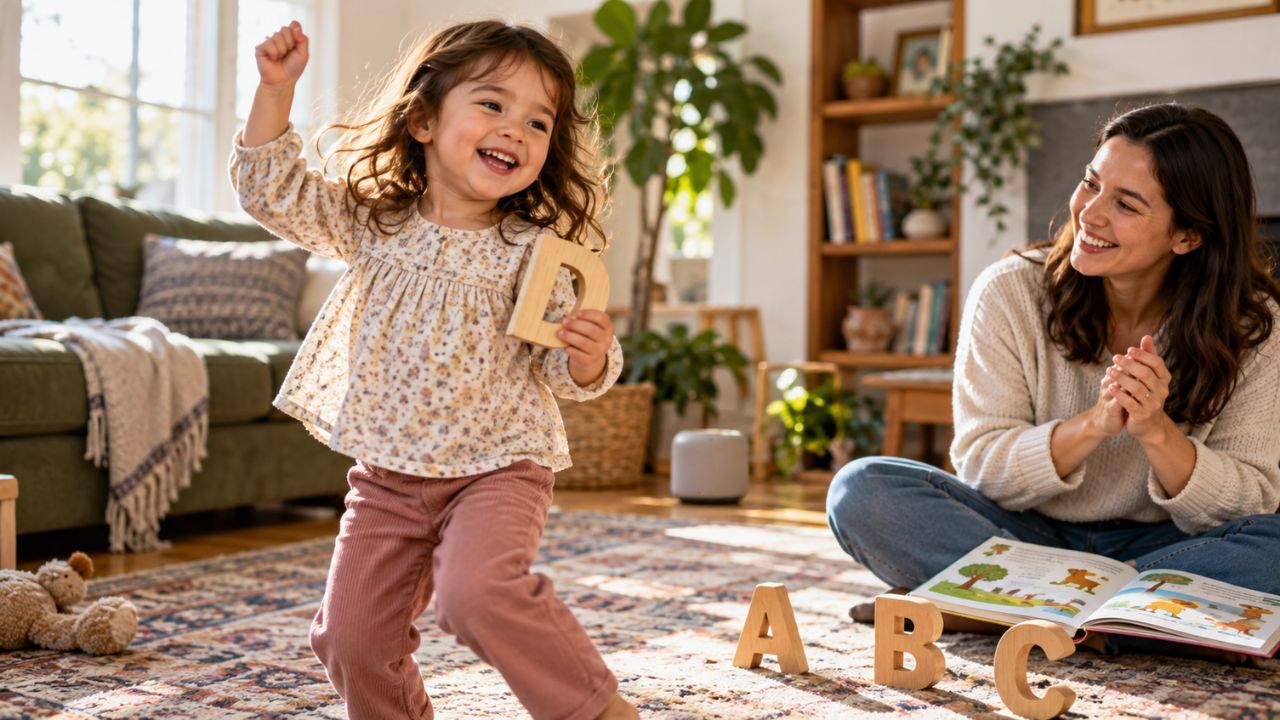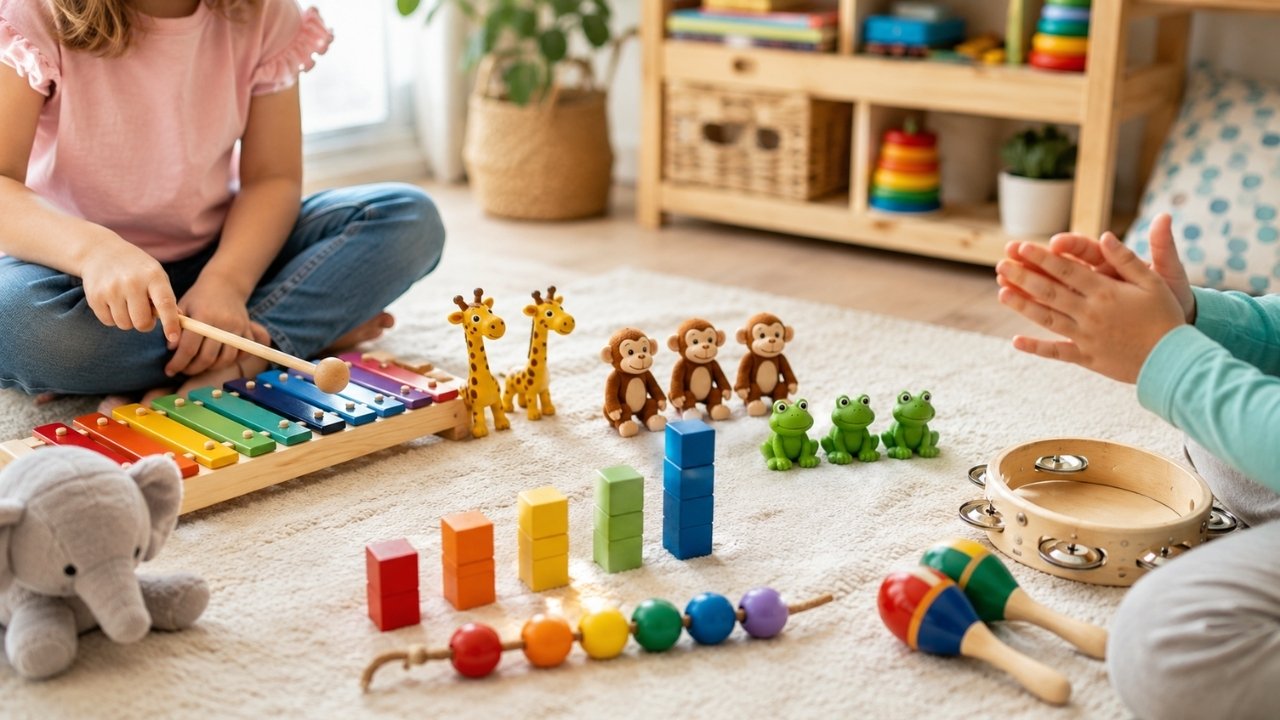
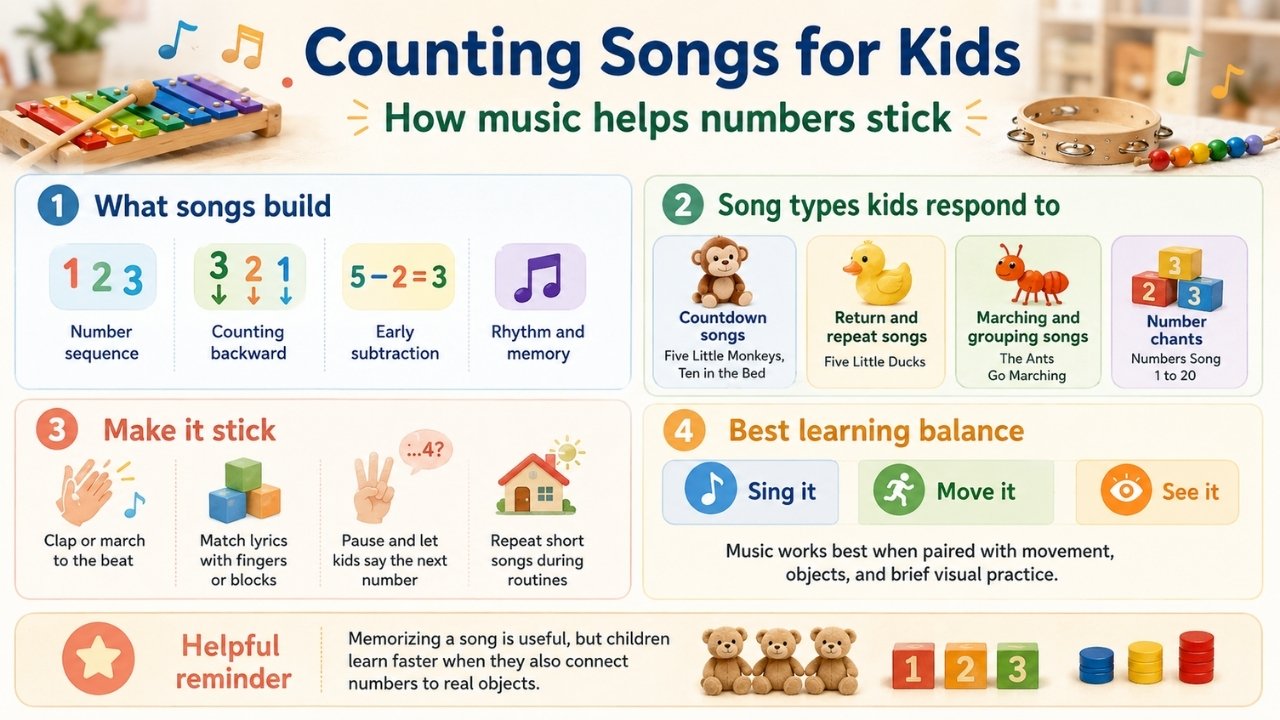
Music is one of the most effective vehicles for early childhood learning. When numbers are paired with melody, rhythm, and repetition, young children absorb mathematical sequences far more naturally than through static instruction. Rhymes and rhythm anchor abstract numerical concepts into long-term memory while keeping kids entertained.
Integrating auditory learning with movement and visual cues creates a well-rounded foundation for early numeracy. Below are 10 proven counting songs that kids love to sing, followed by a digital alternative to reinforce number recognition during quiet hours.
10 Fun Counting Songs for Kids to Build Math Skills
1. Five Little Monkeys Jumping on the Bed
This classic nursery rhyme uses repetitive subtraction and physical movement to keep toddlers and preschoolers engaged.
-
Song Overview: Five monkeys jump on a bed, falling off one by one until zero are left.
-
Key Learning Objective: Introduces countdown sequences and basic subtraction concepts (counting backward from 5 to 0).
-
Why Kids Love It: The dramatic storyline and physical bouncing action make it irresistibly fun to act out.
2. Five Little Ducks
A gentle narrative song that incorporates spatial awareness, sensory repetition, and simple subtraction.
-
Song Overview: Five ducks swim over the hill, and fewer return each verse until mother duck calls them all back.
-
Key Learning Objective: Reinforces subtraction, grouping, and sequential counting from 5 down to 1 and back to 5.
-
Why Kids Love It: The quacking sound effects and comforting resolution keep young listeners singing along.
3. The Ants Go Marching
A high-energy rhythmic song that introduces larger numbers and sets the visual foundation for skip counting.
-
Song Overview: Ants march in growing formations – one by one, two by two, all the way up to ten by ten.
-
Key Learning Objective: Prepares kids for multiplication and skip counting by grouping numbers rhythmically.
-
Why Kids Love It: The marching cadence encourages physical movement and loud, energetic participation.
4. One, Two, Buckle My Shoe
A simple rhyming song designed for toddlers that pairs numbers with everyday familiar actions.
-
Song Overview: Short two-line couplets pair sequential numbers from 1 to 10 with actions like buckling shoes and picking up sticks.
-
Key Learning Objective: Promotes basic number name recall and physical one-to-one correspondence.
-
Why Kids Love It: Short, predictable rhymes allow even non-verbal toddlers to anticipate the next stanza.
5. Ten in the Bed
A playful bedtime-themed song that focuses on spatial organization and counting backward from ten.
-
Song Overview: Ten characters roll over on a bed, causing one to fall out in each stanza until only one remains.
-
Key Learning Objective: Teaches backward counting from 10 to 1 and builds foundational subtraction awareness.
-
Why Kids Love It: The repetitive “roll over” prompt gives kids an active cue to move or roll across the floor.
6. Once I Caught a Fish Alive (1, 2, 3, 4, 5…)
A structured counting rhyme that reinforces the exact order of numbers from 1 through 10.
-
Song Overview: The singer catches a fish, lets it go because it bit a finger, and counts through the sequence twice.
-
Key Learning Objective: Strengthens forward number sequence identification from 1 to 10.
-
Why Kids Love It: The silly plot twist about a fish biting a little finger creates delight and laughter.
7. Hickory Dickory Dock
A traditional clock-themed nursery rhyme that introduces children to time-telling numbers and simple spatial directions.
-
Song Overview: A mouse runs up a clock, the clock strikes a number, and the mouse runs back down.
-
Key Learning Objective: Connects numerical values to clock faces and directional awareness (up/down).
-
Why Kids Love It: The rhythmic ticking sounds (“tick-tock”) and sudden clock strikes build anticipation.
8. This Old Man (He Played One)
A classic cumulative rhyme that pairs numbers with rhythm, rhyming structures, and motor movements.
-
Song Overview: An old man plays knick-knack on various objects corresponding to numbers 1 through 10.
-
Key Learning Objective: Builds auditory memory, rhythm keeping, and ordinal number familiarity.
-
Why Kids Love It: The catchy refrain (“knick-knack paddywhack”) is easy and satisfying to chant aloud.
9. Ten Green Bottles
A structured elimination song popular in group settings that visualizes physical deduction.
-
Song Overview: Ten bottles sit on a wall, falling off one at a time until no green bottles remain.
-
Key Learning Objective: Teaches subtraction and backward number sequences starting from 10.
-
Why Kids Love It: The dramatic pause before each bottle falls keeps kids on the edge of their seats.
10. The Numbers Song (1 to 20)
A modern educational chant designed specifically to transition kids from single-digit counting to double digits.
-
Song Overview: A upbeat melody that systematically counts from 1 up to 20 with clear visual and verbal emphasis.
-
Key Learning Objective: Expands counting range past 10, introducing teens and sequence continuity.
-
Why Kids Love It: Modern uptempo beats feel like a dance party rather than a classroom drill.
A Digital Alternative: Interactive Screen-Based Practice
While singing builds strong auditory memory, visual and tactile practice helps children connect sound to written symbols and concrete quantities.
123 Magic Number Fun
A great option to complement musical learning is 123 Magic Number Fun on Google Play, an early learning app developed by Edutorial. It transforms abstract numbers into interactive visual experiences for toddlers and preschoolers.
-
Teacher Approved Status: Features Google Play’s official Teacher Approved badge, confirming it meets educational standards for safety, content quality, and child development.
-
Core Activities: Features number tracing (1 to 50), balloon-popping counting games, and shape-matching mini-puzzles.
-
Designed for Early Learners: Provides an intuitive interface without high-pressure timers, allowing kids to learn at their own pace.
Balancing Musical Play and Screen Time
Combining auditory, physical, and digital formats gives young learners multiple pathways to master basic math concepts:
-
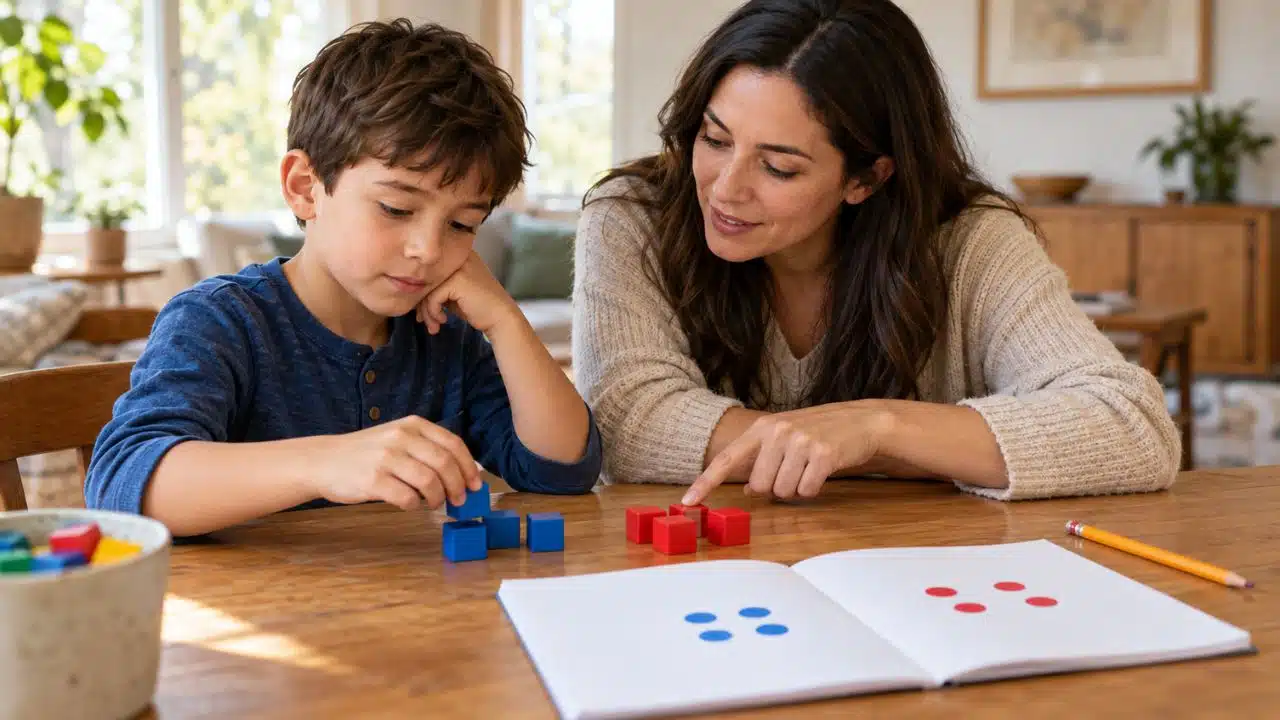
Pair Songs with Physical Objects: Use real blocks or fingers to match the numbers mentioned in the songs.
-
Use Apps for Reinforcement: Follow up a singing session with 10 minutes of interactive tracing in an app to anchor visual symbol recognition.
-
Integrate Music into Routines: Play counting songs during clean-up time, car rides, or transition periods to make learning effortless.
Limitations & Trade-Offs
While counting songs are highly effective for early learning, parents and educators should consider a few limitations:
-
Rote Singing vs. True Understanding: Children can easily memorize the words to a song without understanding that “five” represents a specific group size.
-
Over-Stimulation: Fast-paced musical tracks can sometimes cause sensory overload in younger toddlers.
-
Auditory-Only Focus: Songs alone do not teach number writing or fine motor control, requiring supplementary physical or digital practice.
Building Math Confidence Through Music
Counting songs remove the friction from early learning by turning numerical repetition into play. By pairing catchy music with hands-on activities and verified digital tools, parents and educators can set young learners up for long-term mathematical success.
Frequently Asked Questions(FAQs) Counting Songs for Kids
At what age should children start listening to counting songs?
Children can start listening to counting songs as early as infancy. By ages 18 to 24 months, most kids begin singing along and mimicking hand gestures.
How do counting songs help with early math development?
Music activates both hemispheres of the brain, linking auditory rhythm to sequential memory. This makes remembering abstract numerical order much easier for young minds.
Can musical counting replace concrete math manipulatives?
No. Music builds sequence memory, but physical manipulatives (like blocks or counters) are essential for teaching kids what those numbers actually represent.