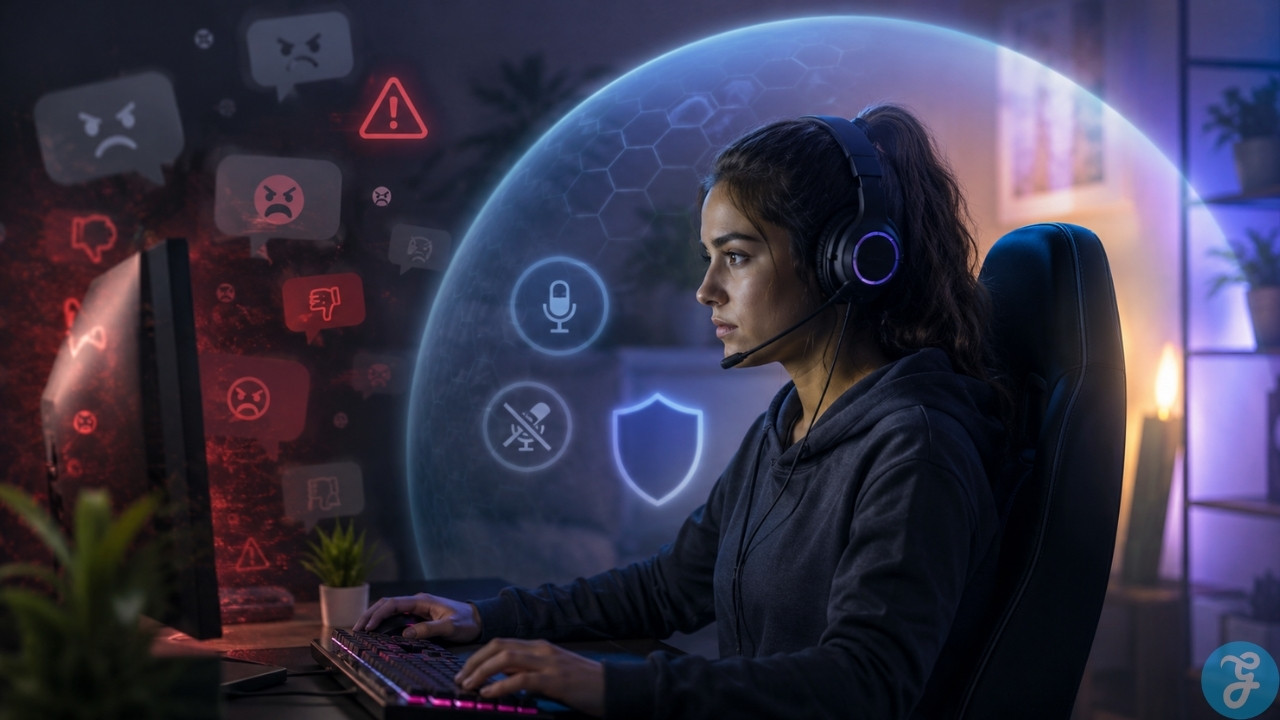
Have you ever queued up for a match, heard one comment in voice chat, and instantly felt your guard go up? Female gamers deal with that kind of harassment far too often, and it can turn a fun night of online gaming into stress in seconds.
That matters because women are not a tiny corner of gaming culture. The latest U.S. data from the Entertainment Software Association says 46% of players identify as female, so this is a mainstream community issue, not a side topic.
I want to make this practical. I will walk you through the most common forms of online harassment, how they affect women gamers, and the steps I would use to protect my privacy, report abuse, and push for safer systems.
Common Types of Harassment Female Gamers Encounter
Female gamers run into harassment in almost every corner of online gaming, from random lobbies to private servers. In the latest U.S. testing from ADL, hate or harassment showed up in almost half of online multiplayer sessions, which tells me this is a design and culture problem, not a rare bad-luck moment.
What makes it worse is how fast one ugly comment can turn into a pile-on. A sexist joke in a lobby can turn into coordinated abuse across Discord, streams, and social accounts within minutes.
What Verbal Abuse and Gendered Slurs do Female Gamers Face?
Voice chat is often where the harassment starts. The second a player sounds female, some strangers switch from normal trash talk to comments about sex, bodies, skill, or whether women belong in a first-person shooter at all.
A 2022 ADL report found severe harassment rising to 77% among adult U.S. online multiplayer gamers, including sustained harassment and physical threats. That number matters because it shows why so many women treat voice chat like a risk calculation instead of a feature.
Older academic work still helps explain the pattern. A 2016 study by Jesse Fox and Wai Yen Tang found that women in online games regularly faced both general harassment and sexual harassment, which helps explain why simple advice like “just ignore it” usually falls flat.
- Common verbal attacks: sexist slurs, sexualized insults, “go back to the kitchen” comments, and instant claims that a woman was carried.
- Common gatekeeping moves: surprise skill tests, pressure to prove rank, and teammates assuming a woman does not understand maps, weapons, or strategy.
- Why it matters: these comments are meant to push women out of communication, which hurts teamwork and makes the target feel isolated.
How are Threats and Doxing used Against Female Gamers?
Threats are where online abuse stops being “just words.” In gaming spaces, that can mean rape threats, death threats, stalking, or attempts to expose real names, phone numbers, school details, or home addresses.
ADL’s 2022 U.S. report found that 17% of adult online multiplayer gamers had been doxed and 12% had been swatted. Those numbers are a big reason I tell players to separate their gamer tag from their real-life identity before anything goes wrong.
Current platform rules show this is taken seriously on paper. Discord’s doxxing policy treats sharing someone’s personal information as a reportable safety violation, and Twitch’s community guidelines ban sharing personally identifiable information or asking viewers to reveal it in ways that could put them at risk.
If a harasser knows your main username, email pattern, city, school, or another social handle, they do not need much else to start digging. Privacy habits matter before the first threat appears.
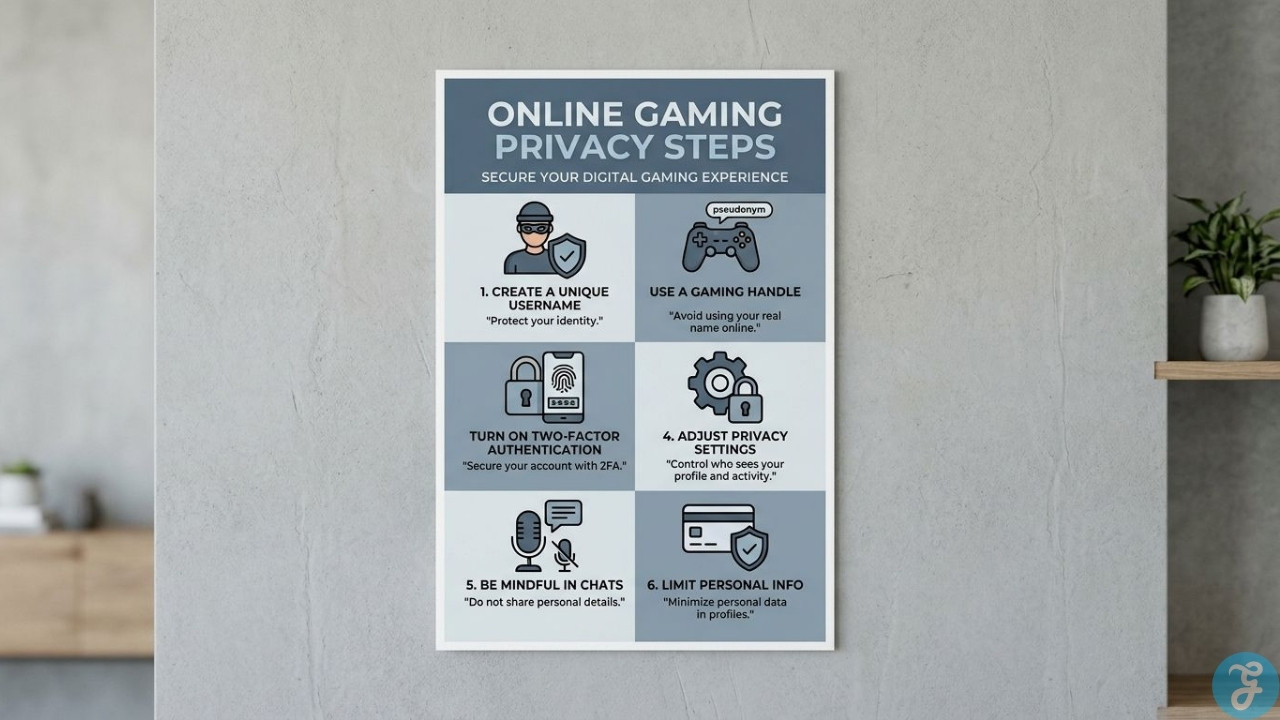
- Use a gaming handle that does not match your real name or other public profiles.
- Turn on two-factor authentication and review direct message settings on every platform you use.
- Save screenshots, clips, match IDs, and timestamps as soon as threats appear.
- If personal information is exposed or a threat sounds credible, report it to the platform and law enforcement right away.
In What Ways are Female Gamers Excluded or Discriminated Against?
Some harassment is loud, but some of it looks like exclusion. Women get talked over in raid planning, denied leadership roles, kicked from teams, or ignored until a man repeats the same callout.
A 2026 systematic review on inclusion in gaming communities found a familiar pattern: women are often assumed to have lower skill and then change their behavior to avoid abuse, including hiding their identity or avoiding voice communication. That tells me the problem is bigger than rude language. It changes who gets to participate fully.
Industry examples matter too. Gamergate became the most famous case of coordinated misogynistic harassment in video game culture, and later workplace scandals at Activision Blizzard showed that sexist behavior can spill across both player spaces and the gaming industry itself.
| Type of exclusion | What it looks like in play | Why it hurts |
|---|---|---|
| Gatekeeping | Skill quizzes, disbelief about rank, forced “proof” | Turns every match into a test of legitimacy |
| Communication shutdown | Talking over women, mocking callouts, muting targets | Reduces teamwork and confidence |
| Social exclusion | Not invited to squads, clans, scrims, or Discord groups | Cuts players off from growth and support |
| Visibility penalties | Harassment on streams and public profiles | Makes women less likely to create content or compete |
How Does Harassment Affect Female Gamers?
Harassment changes how people play, how long they stay, and how safe they feel in gaming spaces. I have seen players go from confident and social to quiet, cautious, and ready to leave after a few bad sessions.
That shift is not small. It changes the entire gaming community because fewer women speak, stream, lead groups, or stick around long enough to build influence.
What Mental Health Impacts Result From Online Harassment?
Online harassment can trigger stress, anxiety, sleep problems, and rumination, which is the cycle of replaying an upsetting event in your mind. For teens and younger players especially, that stress can leak into school, friendships, and self-confidence.
ADL’s earlier gaming research found that 23% of harassed players became less social and 15% felt isolated because of in-game harassment. Those numbers help explain why a player may still seem “fine” in public while quietly pulling back everywhere else.
Recent teen cyberbullying research in the United States also shows this is part of a wider mental health problem. The Cyberbullying Research Center’s 2025 data found that common harms included humiliation, exclusion, and repeated mean comments, all of which can stack onto the pressure already present in online games.
- Short-term effects: panic after matches, anger, fear of logging in, and trouble sleeping.
- Longer-term effects: avoidance, isolation, lower self-confidence, and symptoms linked with anxiety or depression.
- A practical response: take breaks after targeted abuse, document what happened, and talk to a trusted friend, parent, or counselor instead of carrying it alone.
Why Does Harassment Lead to Reduced Participation in Gaming Communities?
When speaking gets punished, silence starts to feel safer. That means fewer callouts in team fights, fewer friendships, and fewer chances to join a squad, a tournament, or a creator community.
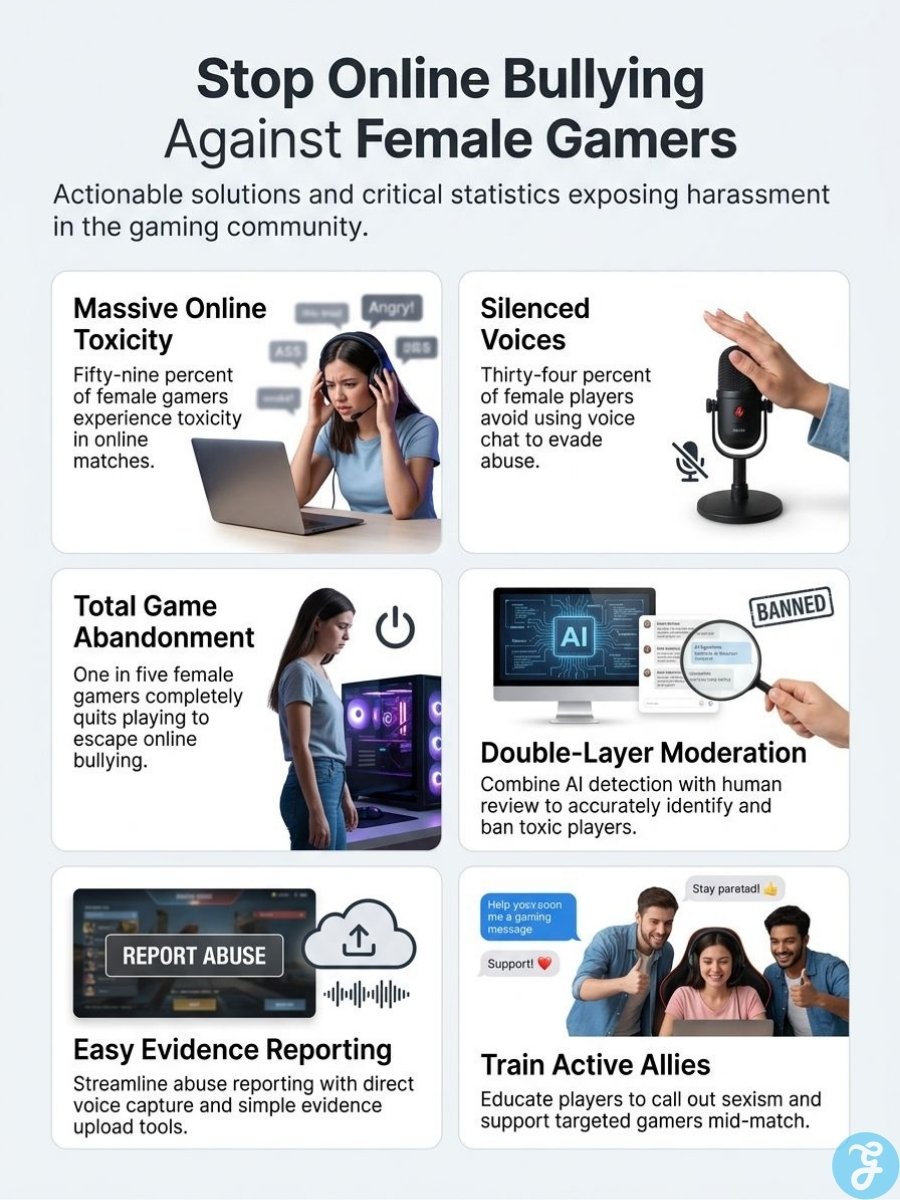
ADL reported that over a quarter of young people who experienced harassment in online multiplayer games quit specific games. That is one of the clearest signs that misogynistic harassment is not just a player problem, it is a retention problem for the whole video game community.
Older research on women in online games also found withdrawal behaviors such as hiding gender, avoiding multiplayer, or changing play habits after repeated abuse. I see that as a warning sign for studios: if women need to disappear to feel safe, the system is failing.
Esports openings shrink for women when harassment keeps players out of voice chat, ranked ladders, and public competition. That loss affects future creators, team leaders, streamers, and pro talent, not just one match on one night.
Effective Ways to Fight Online Bullying in Gaming
Stopping harassment in gaming takes more than telling players to mute and move on. Good systems make abuse easier to report, easier to prove, and harder for repeat offenders to shrug off.
I also want to be honest here. Player safety works best when developers, moderators, stream platforms, and players all do their part at the same time.
How Can Stronger Moderation and Policies Help Reduce Harassment?
Clear rules matter because vague rules get vague enforcement. A platform that spells out what counts as harassment, doxxing, hateful conduct, and stalking gives moderators a better standard and gives players a better reason to report.
There is also real movement on tools. In 2024, Riot said its Riot Voice Evaluation system had expanded to almost every Riot region for English voice chat in VALORANT, across Xbox, PlayStation, and PC. That matters because voice chat is where a lot of gendered harassment happens fastest.
Roblox announced major reporting updates in July 2026, including routing reports to the right team with the most relevant evidence and building a persistent inbox for report status. That kind of feedback loop matters because players are more likely to report abuse when the process feels real and trackable.
| Safety tool | What it does | Why it helps women gamers |
|---|---|---|
| AI detection | Flags slurs, threats, and repeat patterns quickly | Reduces the delay between abuse and action |
| Human review | Adds context before penalties are finalized | Catches coded misogyny and avoids lazy false flags |
| Evidence capture | Saves chat logs, clips, and timestamps | Makes reports easier to prove |
| Transparent appeals | Explains outcomes and lets users contest errors | Builds trust in the moderation system |
- Write community rules in plain language, especially around sexual harassment, threats, stalking, and off-platform targeting.
- Let players report from the match screen with as few steps as possible.
- Show status updates after a report so victims do not feel ignored.
- Track repeat offenders across linked accounts, not just one username.
What Actions Promote Safe and Inclusive Gaming Spaces?
Safer spaces do not happen by accident. They are built through moderation, community leadership, and design choices that reduce the power of harassers.
For example, Twitch states that streamers and moderators can use customizable safety tools to set channel standards, while Discord now uses a warning system for some severe violations and gives teens safety alerts that encourage blocking and reporting. Features like these work best when communities actually teach people how to use them.
- Use platform tools early: block, mute, filter direct messages, and limit who can contact you after a match.
- Join moderated hubs: communities such as GirlGamers-style spaces can give players a place to squad up without starting from zero every time.
- Back up the target: one teammate saying “report that” or “not okay” changes the tone faster than silence.
- Push developers for safer defaults: private-by-default friend requests, stronger voice moderation, and better reporting flows protect more players.
- Support better representation: more women and nonbinary leaders in community roles often leads to clearer enforcement and a stronger sense of belonging.
The best anti-harassment feature is not a single button. It is a system where reporting is easy, evidence is saved, moderators are trained, and players can see that action was actually taken.
I push for stronger community guidelines, AI moderation, and a clear report system to cut levels of toxicity and protect women in the video game community. I also think communities need transparent reporting systems that show players their safety matters after the match ends.
The Verdict
Female gamers should not have to trade fun for safety. Harassment in online gaming can take the form of slurs, threats, doxing, exclusion, and constant pressure to stay quiet.
The damage is real. It can hurt mental health, shrink participation, and push women out of games, teams, streams, and the wider gaming community.
I think the best response is simple and practical: use privacy tools, save evidence, report abuse, join moderated spaces, and keep pushing developers to build better systems. If enough players, moderators, and studios treat online harassment like a real community threat, gaming can feel fun and fair again.
Frequently Asked Questions (FAQs) on Female Gamer Harassment
1. What is female gamer harassment?
Female gamer harassment is bullying and abuse aimed at women in games. It hurts Women and video games spaces, and it makes the User (computing) feel unsafe.
2. How does harassment show up?
Abusers send insults, threats, and sexual messages, they may post Pornography, or they target stream chats. They act like trolls under a bridge, loud and mean. Many women just leave the game to stay safe.
3. Has harassment changed over time?
Yes, it has gotten worse as play moved online and streams grew. The hits are real, they raise Stress (biology), and they wear people down.
4. What can be done?
Game makers must set clear rules, block offenders fast, and add better tools. Players should report abuse, back each other up, and lock their accounts. That keeps Women and video games open, so fewer people have to leave the game.