Supply chain traceability used to sound like a back-office problem. A few spreadsheets. Some supplier declarations. Maybe a quality certificate sitting in somebody’s inbox. Enough to satisfy internal teams, but not enough to answer the hard questions customers, regulators, investors, and procurement leaders are asking now.
Where did this material come from? Who handled it? What happened to it along the way? Is the recycled-content claim real? Can the supplier prove the data? Did the product stay within the right temperature range? Is the factory information current, or just another form filled out once and forgotten? That is where the market has changed.
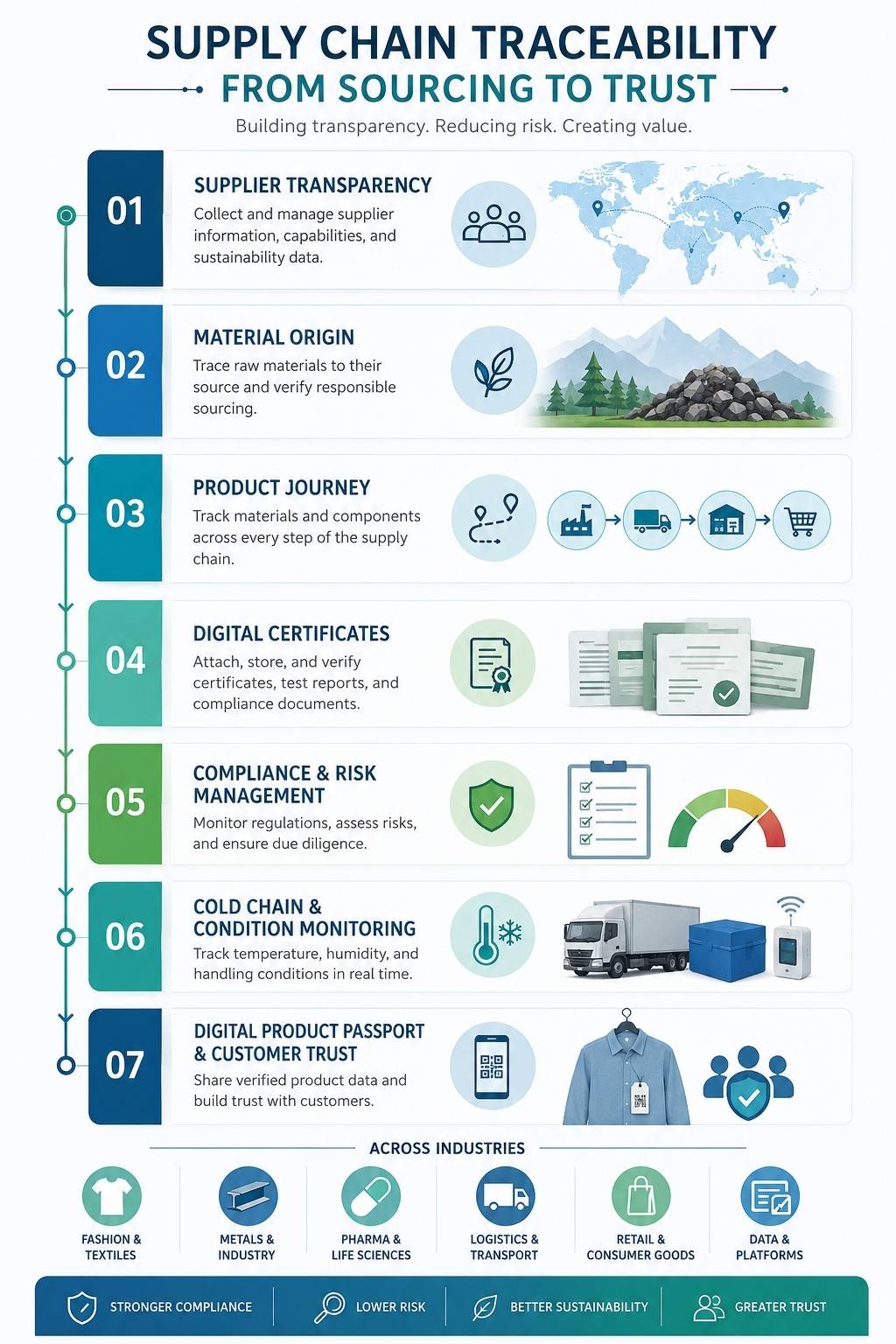
Traceability is no longer only about tracking a shipment from point A to point B. It now covers materials, supplier tiers, emissions data, product certificates, working conditions, digital product passports, cold-chain integrity, shelf-life decisions, and compliance evidence. A company can no longer claim to know its supply chain just because it knows the name of its first-tier supplier.
Sweden is an interesting market for this shift because its strongest platforms do not all solve the same problem. Some focus on fashion and textiles. Some work with metals and industrial materials. Some support supplier ESG due diligence. Others operate in pharmaceutical and medical cold chains, where traceability is tied directly to patient safety.
So this list does not force every company into one neat category. These are Swedish supply chain traceability platforms I researched, but each one attacks a different layer of the transparency problem.
How I Selected These Platforms
This list was built around verified relevance, not loose SaaS branding. To be included, each platform had to meet most or all of these criteria:
- It had to be Swedish, Sweden-based, or clearly operated as a Swedish company.
- It had to be active and publicly verifiable.
- It needed a clear connection to traceability, supplier transparency, product data, digital certificates, cold-chain monitoring, compliance, or supply-chain risk.
- It had to provide a software platform, SaaS product, digital system, or traceability technology.
- It had to serve real business use cases, not only publish sustainability advice.
- Its claims had to be specific enough to discuss without inventing facts.
One important note: not every platform here is product-level traceability in the same way. That is intentional. A textile brand, a steel manufacturer, a pharma company, and a hospital blood bank do not need the same traceability system. The common thread is that each company helps organizations replace vague supply-chain claims with better data, documentation, and visibility.
Quick Overview of 6 Swedish Supply Chain Traceability Platforms
| Platform | Main Traceability Role | Strongest Industry Fit | Best Use Case | Platform Type |
| TrusTrace | Product and material traceability | Fashion, footwear, textiles | Multi-tier supply chain mapping, compliance, product data | Traceability SaaS |
| ChainTraced | Material and certificate traceability | Steel, metals, industrial manufacturing | Raw material to finished product traceability | Industrial traceability SaaS |
| Worldfavor | Supplier transparency and ESG due diligence | Enterprise supply chains | Supplier data, compliance, risk, ESG performance | Sustainability data platform |
| PaperTale | Product-level garment transparency | Fashion, textiles, consumer goods | Digital twins, NFC, blockchain-enabled transparency | Traceability startup |
| TSS AB | Cold-chain monitoring and traceability | Pharma, life sciences | Temperature-controlled drug supply chains | SaaS and monitoring platform |
| Tridentify | Real-time package-level cold-chain traceability | Blood, plasma, vaccines, biologicals | Shelf-life and condition monitoring | MedTech SaaS platform |
1. TrusTrace
TrusTrace is the most direct fit for this article. The Stockholm-founded platform focuses on supply chain traceability and compliance, especially for fashion, footwear, and textile brands. That industry badly needs better traceability because its supply chains are deep, fragmented, and often difficult to verify. A finished jacket or pair of shoes may involve raw materials, spinning, weaving, dyeing, trimming, assembly, warehousing, shipping, and retail distribution across several countries.
That is a lot of room for data to disappear. TrusTrace’s role is to help brands collect and manage supply-chain data across materials and supplier tiers, so they can make stronger decisions around compliance, risk, sustainability claims, and product transparency.
Business Snapshot
| Field | Details |
| Main solution | Fashion, footwear, and textile supply chain traceability |
| Swedish fit | Swedish-founded traceability SaaS platform |
| Best suited for | Apparel, footwear, textile, and retail brands |
| Strongest traceability layer | Product, material, supplier-tier, and compliance data |
| Buyer profile | Brands that need deeper supply-chain visibility beyond Tier 1 suppliers |
Why It Stands Out in Fashion Traceability
Fashion has a trust problem because the product on the shelf rarely tells the whole story. A brand may know who stitched the garment, but not who produced the fabric. It may know the nominated mill, but not where the fiber came from. It may publish a sustainability claim, but struggle to prove the underlying chain of custody. That gap is exactly where traceability software becomes useful.
TrusTrace helps brands bring supplier and material data into a central platform. Its strongest public positioning is around high-volume traceability for fashion, footwear, and textile supply chains, with primary data across materials and tiers. That is a meaningful distinction because supplier self-reporting alone is often not enough.
For brands preparing for Digital Product Passports, forced-labor scrutiny, product-level sustainability claims, and due-diligence pressure, this kind of structured traceability is becoming less optional.
The Business Value
TrusTrace is not just a sustainability storytelling tool. Its business value sits in risk management. If a brand cannot prove where a material came from, it becomes vulnerable to compliance problems, reputational damage, shipment delays, and weak sustainability claims. Traceability data also supports sourcing decisions, supplier engagement, certification management, and product-level disclosure.
For large fashion brands, that can affect everything from procurement to marketing.
What Buyers Should Check
TrusTrace is strongest in fashion, footwear, and textiles. It should not be described as a universal traceability platform for every industry.
A buyer should ask how the platform handles supplier onboarding, data verification, certificate management, product identifiers, audit trails, and Digital Product Passport readiness. The platform’s value depends on whether suppliers actually share accurate and usable data.
Best Fit
TrusTrace is best for fashion, footwear, textile, and retail brands that need multi-tier product and material traceability at scale.
2. ChainTraced
ChainTraced takes traceability into a very different world: metals. That matters because metal supply chains are not simple. A steel or metal component can move through raw material extraction, melting, alloying, processing, cutting, forming, machining, coating, assembly, and certification before it becomes part of a car, bridge, machine, rail system, or industrial product.
In that chain, quality data, emissions data, recycled-content claims, and certificates can become scattered quickly.
ChainTraced is a Swedish SaaS platform focused on digital end-to-end traceability across the metallic value chain. Its work is especially relevant as industries ask for stronger proof around green steel, product carbon footprint, and material origin.
Business Snapshot
| Field | Details |
| Main solution | Digital traceability for the metallic value chain |
| Swedish fit | Swedish SaaS traceability company |
| Best suited for | Steel, metals, automotive, industrial manufacturing, infrastructure suppliers |
| Strongest traceability layer | Raw material to finished product, certificates, emissions and quality data |
| Buyer profile | Industrial companies needing trusted product and material documentation |
The Traceability Problem in Metals
Metal supply chains are full of documentation, but documentation is not the same as traceability.
A PDF certificate can be useful, but it can also be hard to connect to the exact product, batch, supplier, emissions profile, or processing stage. Once material is transformed several times, companies need a way to keep the digital record connected to the physical flow.
ChainTraced focuses on that industrial problem. It helps companies trace material from raw input to finished product across the metallic value chain, with digital product certificates and data that can support quality, sustainability, and compliance.
This is especially important for sectors where traceability is tied to safety and regulation, not just sustainability. If a metal component fails in a critical application, companies need to know exactly what material was used, where it came from, and what data followed it.
Why It Deserves Attention
ChainTraced is one of the strongest Swedish examples of traceability built for heavy industry rather than consumer goods.
That makes it valuable. The metals sector is under pressure to prove lower-carbon production, recycled inputs, and responsible sourcing, but those claims require trusted data across many actors. A traceability platform can help convert scattered supplier documents into a more connected record.
For buyers of steel and industrial components, this is not only about transparency. It is about quality assurance, emissions accountability, and supply-chain resilience.
What Buyers Should Check
ChainTraced is not a generic retail traceability platform. Its sweet spot is metals and industrial value chains.
Companies should check how the platform handles certificate integrity, product carbon footprint data, chain-of-custody logic, supplier participation, and integration with existing quality systems. The platform becomes more valuable when multiple actors in the value chain participate properly.
Best Fit
ChainTraced is best for steel producers, metal processors, industrial manufacturers, automotive suppliers, infrastructure companies, and buyers of traceable low-carbon materials.
3. Worldfavor
Worldfavor should be framed carefully. It is not mainly a product-level chain-of-custody platform like TrusTrace or ChainTraced. Its strength is supplier transparency, sustainability data, ESG due diligence, and compliance workflows.
That still makes it highly relevant to supply chain traceability, because many companies first need to understand who their suppliers are, what risks they carry, and whether they can provide current sustainability data. Before a company can trace every product component, it often needs a working supplier data foundation.
Worldfavor helps companies collect, manage, and share sustainability data across business relationships and supply chains.
Business Snapshot
| Field | Details |
| Main solution | Sustainability data, supplier transparency, ESG due diligence |
| Swedish fit | Stockholm-based Swedish sustainability platform |
| Best suited for | Enterprises, procurement teams, ESG teams, supplier networks |
| Strongest traceability layer | Supplier visibility, risk data, sustainability disclosure, compliance workflows |
| Buyer profile | Companies managing large supplier bases and due-diligence requirements |
The Supplier Transparency Layer
Most supply-chain problems start with a simple but uncomfortable truth: many companies do not know enough about their suppliers.
They may have supplier names and contracts, but not current ESG data. They may have a code of conduct, but no reliable way to monitor supplier performance. They may have a sustainability strategy, but weak visibility into where the biggest risks sit across the supplier base.
Worldfavor works in that layer. Its platform supports supplier engagement, sustainability data collection, risk profiles, due diligence, and compliance management. That makes it useful for companies preparing for regulations and customer requirements that demand more proof across value chains.
This is less about tracking one product unit and more about understanding the business network behind products and services.
Why It Belongs on This List
Worldfavor belongs here because traceability does not begin with a QR code. It begins with reliable supplier data. If a company cannot manage supplier information, it will struggle to trace product data later. Supplier transparency, ESG due diligence, and risk management are the groundwork for deeper traceability.
Worldfavor is especially relevant for companies that need to engage many suppliers, request data repeatedly, manage documentation, and understand where sustainability or compliance risks are concentrated.
What Buyers Should Check
Worldfavor should not be sold as a product-level traceability platform unless that wording is clearly qualified.
Its value is strongest in supplier transparency and due diligence. Buyers should ask how it supports supplier engagement, data quality, compliance frameworks, reporting workflows, and risk prioritization. For product-level chain-of-custody, it may need to sit alongside more specialized traceability tools.
Best Fit
Worldfavor is best for enterprise procurement, ESG, compliance, and sustainability teams that need supplier transparency and due-diligence workflows across large supply chains.
4. PaperTale
PaperTale brings a more human-facing version of traceability into the list. The Swedish startup is tied closely to fashion and textile transparency, with technology that connects product-level data to supply-chain evidence through digital twins, NFC tags, and blockchain-backed records. Its work has been used in garment supply-chain projects where the goal is not only to show where a product came from, but also to make workers, factories, and production steps more visible.
That gives PaperTale a different angle from TrusTrace. TrusTrace is the stronger enterprise-scale traceability platform. PaperTale feels more like a product-story and transparency layer where the consumer, worker, factory, and brand can all become part of the record.
Business Snapshot
| Field | Details |
| Main solution | Product-level textile and garment transparency |
| Swedish fit | Swedish traceability startup |
| Best suited for | Fashion, garments, textile pilots, consumer goods transparency |
| Strongest traceability layer | Digital twins, NFC-linked product data, worker and factory visibility |
| Buyer profile | Brands that want consumer-facing traceability with social-impact context |
Making the Product Tell Its Own Story
Fashion traceability often gets reduced to material origin, but the social side matters too. Who made the product? Was the worker paid? Which factory handled the work? What steps happened before the product reached the customer? PaperTale’s model is interesting because it tries to connect product-level transparency with people and processes inside the supply chain.
In one public project example, PaperTale was used to map a garment supply chain from farmers in Australia to garment workers in Pakistan and consumers in Scandinavia, using NFC tags and blockchain technology to connect product data and supply-chain evidence.
That is a strong fit for brands that want traceability to become visible at the product level, not buried inside internal reports.
Why It Belongs Here
PaperTale belongs here because smaller traceability companies can sometimes explore the parts of transparency that larger enterprise systems handle more cautiously.
Its model points toward a future where consumers can scan a product and see more than a generic sustainability message. The product can carry proof, context, and a record of the chain behind it.
This is especially relevant for Digital Product Passport-style thinking, where product-specific data needs to move with the item.
What Buyers Should Check
PaperTale should be described as a smaller traceability startup, not as a broad enterprise traceability leader.
Brands should ask about deployment scale, supplier onboarding, NFC implementation, blockchain architecture, data verification, factory participation, and how worker-related data is handled ethically. Traceability can create value, but only if the data is accurate and the people behind the data are protected.
Best Fit
PaperTale is best for fashion, garment, and consumer-goods brands that want product-level transparency with a visible social and supply-chain story.
5. TSS AB
TSS AB moves the article into regulated cold-chain traceability. The company provides SaaS, data loggers, and services for temperature monitoring in life sciences and pharma. That makes it different from the fashion and metals platforms above, but the traceability logic is just as important.
In pharma, a shipment is not enough. The condition of that shipment matters. A medicine, vaccine, biologic, or clinical-trial product may become unusable if it is exposed to the wrong temperature for too long. So traceability must answer not only where the product went, but what happened to it during the journey.
Business Snapshot
| Field | Details |
| Main solution | Temperature monitoring and cold-chain traceability |
| Swedish fit | Swedish-headquartered life-science supply-chain technology company |
| Best suited for | Pharma, life sciences, clinical trials, biologics, vaccines |
| Strongest traceability layer | Temperature-controlled supply chain visibility, GxP monitoring, shipment release |
| Buyer profile | Life-science companies needing compliant cold-chain monitoring |
The Cold-Chain Integrity Problem
Cold-chain logistics is a traceability problem with higher stakes. If a shipment of apparel has weak product-origin data, the brand may face compliance and reputation risk. If a shipment of temperature-sensitive medicine is mishandled, the impact can reach patient safety.
TSS focuses on this regulated environment. Its platform and monitoring tools help life-science companies track temperature conditions, manage shipment data, and support end-to-end drug delivery. The company says its solutions are used by more than 20,000 users in 150 countries, which gives it a much broader footprint than a small niche tool.
This is traceability through a quality and compliance lens.
Why TSS Matters
TSS matters because pharmaceutical traceability is not just about location. It is about evidence. Companies need to know whether a product stayed within the required conditions, whether an excursion happened, whether the shipment can be released, and whether the data can support audits or compliance processes.
A cold-chain monitoring platform helps turn shipment movement into usable quality data.
What Buyers Should Check
TSS should not be described as a general supply-chain traceability tool. It is strongest in life-science temperature monitoring and cold-chain visibility.
Buyers should check GxP validation, data hosting, logger compatibility, shipment-release workflows, integration options, audit readiness, and how the platform handles exceptions. For pharma, the traceability platform must fit the quality system, not sit outside it.
Best Fit
TSS AB is best for pharmaceutical, life-science, clinical-trial, vaccine, and biologics supply chains that need compliant temperature monitoring and end-to-end cold-chain visibility.
6. Tridentify
Tridentify also works in cold-chain traceability, but its position is more package-level and shelf-life focused.
The Swedish MedTech and SaaS company develops the QTA Tracer System, which is designed to safeguard cold-chain logistics through real-time tracking and automatic shelf-life management for temperature-sensitive products such as medicines, vaccines, blood, plasma, and biologicals.
That makes it a strong fit for healthcare and medical supply chains where the question is not only “Where is the product?” but also “Is this individual package still safe and usable?”
Business Snapshot
| Field | Details |
| Main solution | Real-time cold-chain tracking and automatic shelf-life management |
| Swedish fit | Swedish MedTech and SaaS company |
| Best suited for | Blood banks, hospitals, pharma logistics, vaccines, biologicals |
| Strongest traceability layer | Package-level condition monitoring and remaining shelf-life decisions |
| Buyer profile | Healthcare and life-science organizations handling sensitive medical products |
Why Shelf-Life Traceability Is Different
Cold-chain traceability becomes especially difficult when the product’s remaining usable life depends on real conditions.
A fixed expiry date is useful, but it does not always tell the whole story. If a product experiences temperature changes, light exposure, or handling events, the decision should be based on actual condition data. That is where real-time shelf-life management becomes valuable.
Tridentify’s QTA Tracer System is designed to monitor condition and communicate remaining shelf life for sensitive medical products. Its public material describes use cases around medicines, vaccines, blood, plasma, stem cells, and biologicals.
In healthcare, that matters because wasted products can be expensive, and unsafe products can be dangerous.
Why It Belongs on This List
Tridentify belongs here because it shows a more precise form of traceability: individual product or package-level condition intelligence.
A shipment dashboard may tell you that a box arrived. A shelf-life system can help determine whether the contents inside that box should still be used. That is a different level of operational value.
For hospitals, blood banks, and medical logistics providers, this is not only a sustainability or efficiency issue. It is a safety issue.
What Buyers Should Check
Tridentify overlaps with TSS in cold-chain monitoring, so the distinction should stay clear.
TSS is better framed around broader life-science supply-chain temperature monitoring and GxP-ready SaaS. Tridentify is better framed around patented real-time monitoring and automatic shelf-life management for sensitive medical products.
Buyers should check certification status, device compatibility, data access, workflow fit, regulatory requirements, and whether the system works for their exact product category.
Best Fit
Tridentify is best for blood banks, hospitals, vaccine logistics, pharma distribution, and healthcare organizations that need real-time condition monitoring and shelf-life decisions at package level.
What These Swedish Platforms Reveal About Traceability
The biggest lesson is that supply chain traceability is not one software category.
A fashion brand needs to trace materials across supplier tiers. A steel buyer needs trusted material and emissions certificates. A procurement team needs supplier ESG data. A garment brand may want product-level consumer transparency. A pharma company needs temperature-controlled shipment evidence. A hospital needs package-level shelf-life confidence.
These are different problems. That is why the Swedish market is interesting. The strongest platforms do not all chase the same buyer. They specialize around different data gaps:
- TrusTrace works deep in fashion and textile supply chains.
- ChainTraced focuses on the metallic value chain.
- Worldfavor handles supplier transparency and due diligence.
- PaperTale brings product-level transparency into fashion and consumer goods.
- TSS AB handles cold-chain monitoring for life sciences.
- Tridentify supports real-time shelf-life management for sensitive medical products.
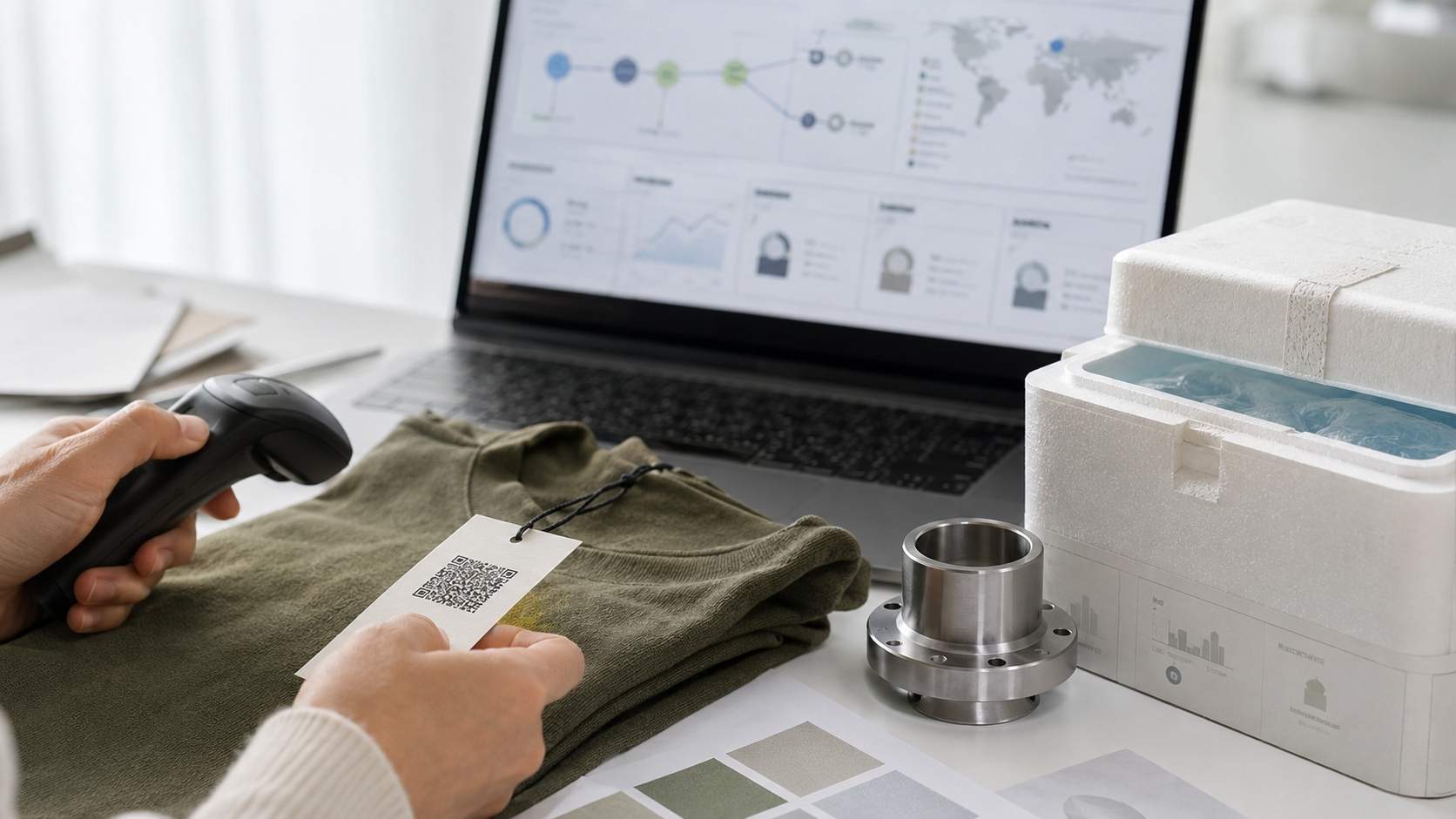
Together, they show that traceability has moved beyond logistics tracking. It is becoming a business infrastructure layer for compliance, quality, sustainability, safety, and trust.
What Buyers Should Check Before Choosing a Traceability Platform
A traceability platform can look impressive in a demo and still fail in real supply-chain conditions. Before choosing one, companies should ask practical questions.
- What exactly needs to be traced? Supplier data, materials, product batches, emissions, certificates, shipments, temperature, shelf life, or consumer-facing product records?
- Who must provide the data? Tier 1 suppliers, deep-tier suppliers, logistics partners, factories, auditors, cold-chain handlers, or internal teams?
- How will the data be verified? A platform is only as strong as the evidence behind it. Supplier-entered data may be a start, but certificates, transaction records, sensor logs, and audit trails often matter more.
- Does the tool match the industry? A fashion traceability system and a pharma cold-chain monitoring platform solve very different problems.
- Can the platform integrate with existing business systems? Traceability data should not live in a pretty dashboard that nobody uses. It needs to connect with procurement, quality, compliance, ERP, PLM, logistics, or reporting workflows.
The best platform is not the one with the broadest claim. It is the one that fits the exact chain, product, risk, and decision the business needs to manage.
Why Traceability Is Becoming a Boardroom Issue
Traceability used to sit mostly with quality, logistics, or sustainability teams. Now it is moving closer to legal, finance, procurement, risk, and board-level strategy.
Regulation is one reason. Companies operating in or selling into Europe face growing pressure to understand human-rights, environmental, product, and supplier risks across value chains. Digital Product Passport requirements are also pushing companies toward more structured product data. But regulation is not the only driver.
Customers are more skeptical. Retailers want proof. Investors ask better questions. Procurement teams need to reduce supplier risk. Product teams need reliable data before making sustainability claims. Logistics teams need condition records. Quality teams need evidence when something goes wrong.
Traceability is becoming the connective tissue between all of those demands. Swedish platforms are well positioned because many of them do not treat traceability as a marketing feature. They treat it as a data, compliance, quality, and operations problem. That is the right direction.
Wrapping Up
The best Swedish supply chain traceability platforms are not all doing the same job, and that is exactly why this list works.
TrusTrace is the strongest direct fit for fashion, footwear, and textile traceability. ChainTraced brings traceability into metals and industrial value chains. Worldfavor gives enterprises a supplier transparency and due-diligence layer. PaperTale adds product-level fashion transparency with a stronger social-impact angle. TSS AB supports cold-chain visibility for life sciences. Tridentify goes even deeper into real-time condition monitoring and automatic shelf-life management for sensitive medical products.
The common thread is proof. Modern supply chains no longer need more vague claims. They need better records, cleaner data, verified movement, stronger certificates, and systems that can explain what happened to a product or material before it reached the buyer.
That is where Swedish supply chain traceability platforms are doing meaningful work. Not by making supply chains simple. By making them harder to hide.
Frequently Asked Questions About Swedish Supply Chain Traceability Platforms
1. What are Swedish supply chain traceability platforms?
Swedish supply chain traceability platforms are software or SaaS tools developed by Swedish companies to help businesses track materials, products, suppliers, certificates, shipments, conditions, or compliance data across supply chains.
2. Is Worldfavor a product traceability platform?
Worldfavor is better described as a supplier transparency, ESG data, and due-diligence platform. It supports supply-chain visibility, but it is not primarily a product-level chain-of-custody system like TrusTrace or ChainTraced.
3. Why is supply chain traceability important now?
Supply chain traceability is important because companies need stronger proof for compliance, sustainability claims, supplier risk, product quality, cold-chain safety, and customer trust. Regulations such as due-diligence laws and Digital Product Passport requirements are increasing that pressure.
4. Is blockchain necessary for traceability?
No. Blockchain can help in some use cases, especially where immutable product records or consumer-facing verification matter. But many traceability systems rely on databases, APIs, certificates, sensors, supplier data, and integrations. The method should match the business problem.
5. What should companies check before choosing a traceability SaaS?
Companies should check industry fit, data verification methods, supplier onboarding, system integrations, audit trails, compliance support, scalability, and whether the platform traces the exact thing they need to manage, such as materials, suppliers, certificates, temperature, or shelf life.