Every content creator knows the drill. You start the quarter with a notebook full of brilliant ideas, ready to drive engagement, capture leads, and cement your brand’s authority. But then reality hits. Deadlines slip. Your publishing cadence gets erratic. Soon enough, your biggest ideas get lost in the day-to-day shuffle, and your marketing goals start to drift.
Pulling off a successful content operation requires more than just good intentions—it requires structure. That’s exactly where a comprehensive editorial calendar guide becomes your most valuable asset.
An editorial calendar isn’t just a glorified spreadsheet of dates. Think of it as a strategic engine that aligns your daily output with your overarching business objectives, audience needs, and campaign timelines. When you organize your topics, assign clear responsibilities, and map out your workflows, you empower your team to produce purposeful, measurable work. Paired with a broader content strategy guide, a well-built calendar ensures your messaging actually resonates, supports your SEO targets, and maximizes your return on investment.
This guide walks you through the entire process. From setup and tool selection to avoiding common pitfalls and applying advanced tactics, here is how to turn a chaotic production schedule into a streamlined, results-driven machine.
Why Editorial Calendars Matter for Modern Marketing
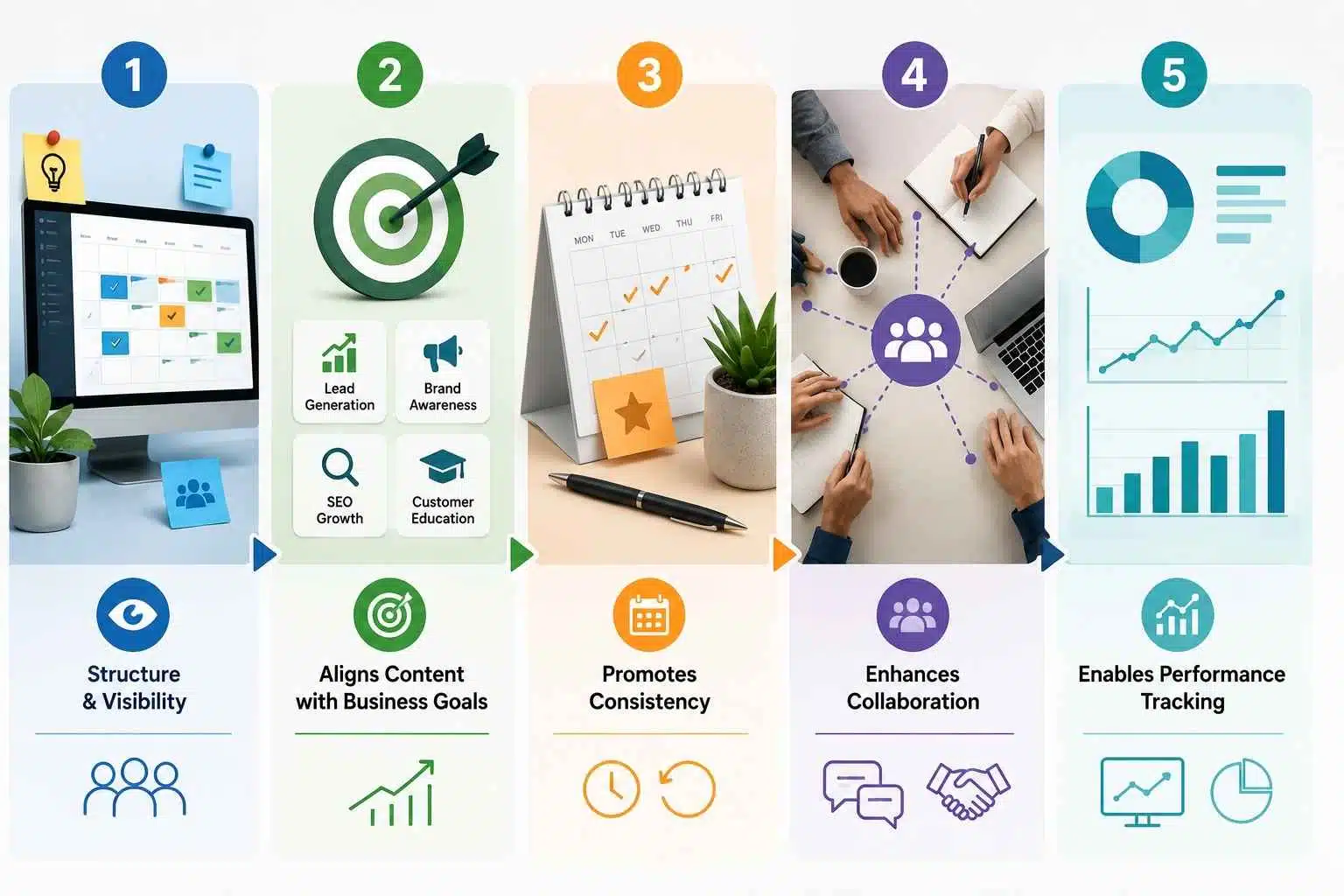
An editorial calendar is the backbone of any successful marketing operation. Without one, even the most brilliant creative concepts will struggle to make an impact. Here is why mastering this tool is absolutely non-negotiable for modern teams:
It Provides Structure and Visibility
Marketing teams usually juggle a dizzying array of projects at once—multiple social media platforms, blog series, product launches, and weekly newsletters. A centralized calendar gives you a bird’s-eye view of every single initiative. For lean startups, this visibility is a lifesaver. It helps you allocate limited resources smartly, ensuring nothing falls through the cracks and no one on your team burns out.
It Aligns Content with Business Goals
A solid calendar guarantees that every blog post, video, or infographic serves a distinct purpose. Whether you’re chasing lead generation, brand awareness, SEO growth, or customer education, your content needs a job to do. By tying your daily publishing tasks back to your master content strategy guide, you can seamlessly support upcoming product launches and capitalize on industry trends.
It Promotes True Consistency
Audiences trust brands that show up reliably. A set schedule eliminates those awkward, weeks-long gaps in your publishing cadence and keeps your messaging cohesive across platforms. When people know they can expect high-quality material from you every Tuesday, you build habit and loyalty.
It Breaks Down Silos and Enhances Collaboration
Communication bottlenecks disappear when your in-house staff, freelance writers, and agency partners share a single digital workspace. Everyone knows exactly who is drafting, designing, editing, or approving a piece of content, stripping away the friction of endless email threads.
It Enables Precise Performance Tracking
By building analytics directly into your workflow, you can easily monitor what’s working and what isn’t. These data-driven insights feed right back into your next planning cycle, allowing you to constantly refine your approach and improve your bottom line.
A Step-by-Step Guide to Creating an Editorial Calendar
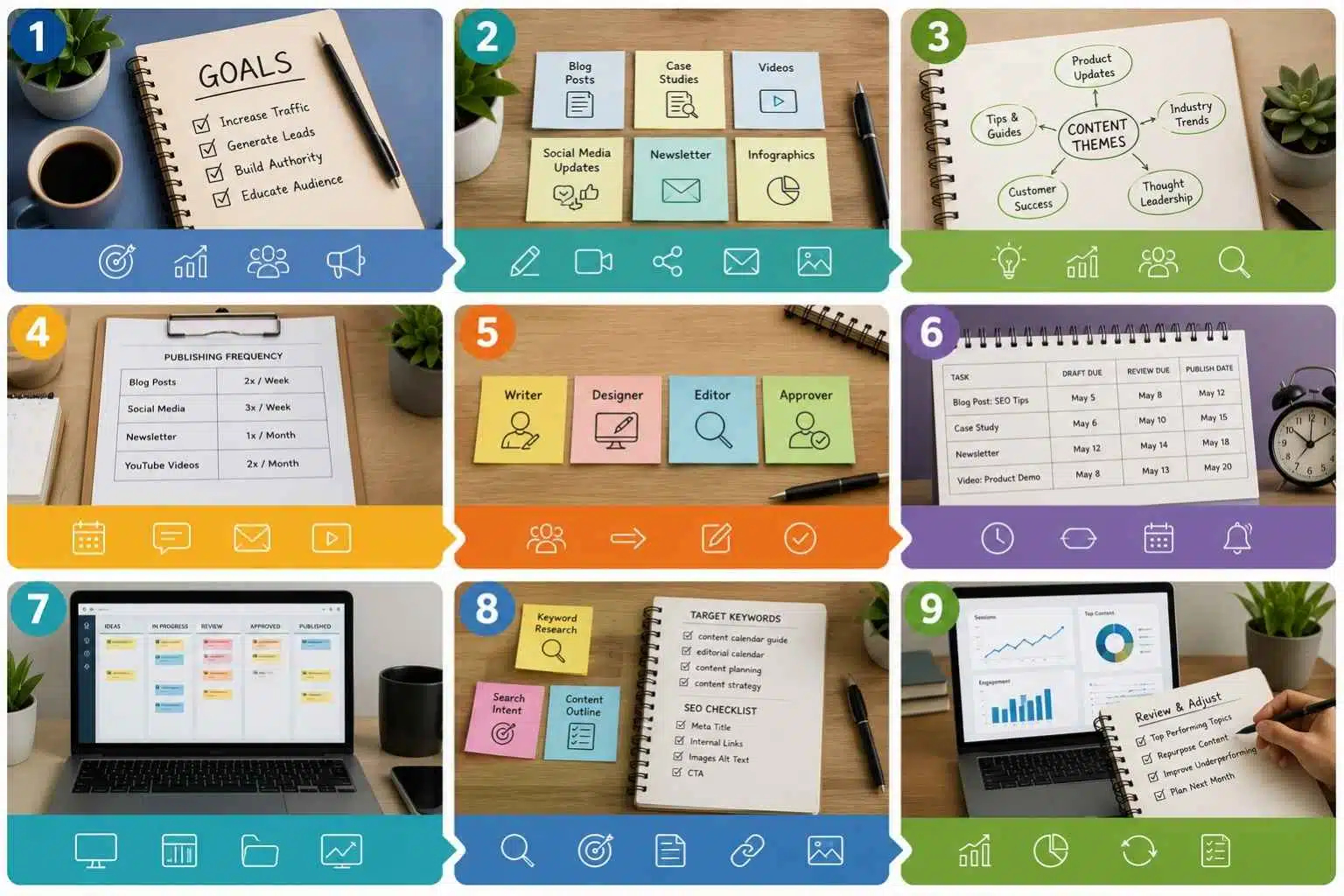
Building an effective editorial calendar doesn’t require a master’s degree in project management. Following this structured editorial calendar guide will help you lock down the essentials quickly and efficiently.
Step 1: Define Your Core Goals
Always start with the “why.” Are you hunting for top-of-funnel website traffic, nurturing qualified leads, or trying to educate an existing user base? Pinning down clear, measurable objectives makes it incredibly easy to prioritize what you create.
Step 2: Identify Your Content Types
Figure out exactly what formats you’ll be producing. A deeply researched case study requires a vastly different workflow and set of resources than a quick social media infographic or a weekly newsletter.
Step 3: Map Out Topics and Themes
Brainstorm themes that matter to both your business and your target audience. Startups, for example, should lean heavily into product updates and thought leadership. Consult your content strategy guide to ensure you are focusing strictly on high-impact subjects that move the needle.
Step 4: Determine a Realistic Publishing Frequency
Decide how often you can actually hit publish without sacrificing quality. Maybe that’s two long-form articles a week and one monthly newsletter. The secret here is balancing ambition with unwavering consistency.
Step 5: Assign Clear Responsibilities
Ambiguity is the enemy of execution. Clearly dictate who writes the draft, who sources the images, who edits the copy, and who gives the final sign-off. A transparent, step-by-step workflow is the best way to prevent bottlenecks.
Step 6: Set Firm Deadlines
Assign realistic due dates for initial drafts, revisions, and final reviews. Always build in a little buffer time for unexpected hiccups or sudden sick days.
Step 7: Adopt the Right Calendar Tool
Move the plan out of your head and into a shared digital workspace. Platforms like Trello, Asana, Notion, or Airtable allow teams to visualize the entire content pipeline and track progress in real-time.
Step 8: Integrate SEO and Keywords
Don’t publish into a void. Map your topics to target keywords and search intent so that every piece of writing works hard to passively grow your organic traffic over time.
Step 9: Review, Rinse, and Adjust
Treat your calendar as a living document. Regularly weigh your output against your performance metrics to prune underperforming ideas and double down on the formats that your audience loves.
Tools and Templates for Editorial Calendars
Choosing the right software can make or break your team’s rhythm. Starting with a solid template—whether it’s geared toward weekly planning, SEO-focused content, or complex cross-channel campaigns—gives you an immediate structural advantage.
Color-coding your calendar by status (e.g., Drafting, Editing, Ready to Publish) or content type keeps things visually intuitive. Integrating due dates directly into the software ensures absolute accountability. For startups and SMEs, leaning on these tools is the easiest way to ensure your publishing schedule stays perfectly aligned with your broader strategy.
Here are the top options to consider:
- Trello: Offers a highly visual, flexible, drag-and-drop Kanban board experience that is incredibly easy to learn.
- Notion: A deeply customizable, all-in-one workspace ideal for drafting articles and storing brand assets right alongside your calendar.
- Airtable: Blends the simplicity of a spreadsheet with the power of a backend database, making it perfect for larger, more complex marketing operations.
- Asana: Excellent for task-focused teams that need granular control over subtasks, specific deadlines, and multi-person responsibilities.
Google Calendar & Sheets: The classic, free option. It remains highly effective for smaller operations that just need a clean, shared space.
Pro tip: It honestly doesn’t matter which tool you choose, as long as it fits your team’s natural workflow. Even a basic spreadsheet is a formidable tool if your team updates it consistently.
Common Mistakes to Avoid for Editorial Calendar
Even with a meticulous editorial calendar guide in hand, it’s easy to stumble. One of the most common traps is schedule overload. Packing your calendar with completely unrealistic publishing frequencies inevitably leads to burnout and a sharp, noticeable drop in content quality.
Ignoring SEO is another major misstep. Without early keyword planning, even the most brilliantly written article will struggle to find a wider audience. Teams also frequently forget to repurpose their best work, leaving valuable cross-channel engagement on the table. If you spend 10 hours on a blog post, it should also become a Twitter thread, a LinkedIn update, and a newsletter segment.
Furthermore, if you aren’t tracking your metrics, you’re flying blind. You have to learn from past campaigns to improve future ones. Finally, watch out for rigidity. A calendar exists to enforce structure, but it still needs the flexibility to adapt to a sudden industry trend or an urgent company announcement. Keep your responsibilities clear, communicate your deadlines, and always leave room to pivot.
Editorial Calendars in Action: Case Studies
To see the real-world impact of this structure, let’s look at a few practical scenarios where smart planning turned scattered ideas into highly measurable wins:
- The Startup Blog Series: A SaaS startup committed to a rigorous calendar, scheduling 12 monthly blog posts specifically targeted at high-value search terms. By strictly adhering to the plan and executing flawlessly, they saw a 45% increase in organic traffic within just three months.
- E-commerce Seasonal Campaigns: A retail brand synchronized their upcoming product launches with a web of blog posts, social media teasers, and targeted email newsletters. Coordinating this massive push through a central calendar resulted in a 60% spike in pre-orders and overall brand engagement.
- Cross-Channel Coordination: A marketing agency used a shared calendar to precisely align their email blasts, social posts, and YouTube video drops. Presenting a unified front across all platforms boosted their audience engagement by a staggering 70%.
How to Track Analytics and Measure Content Performance
An editorial calendar guide isn’t complete without a plan for performance monitoring. Hitting “publish” is only half the battle; you have to know if your efforts are actually moving the needle.
Leverage tools like Google Analytics, SEMrush, or Ahrefs to keep a close eye on crucial KPIs—specifically organic traffic, social shares, lead generation, and engagement rates.
By utilizing dedicated reporting dashboards, your team can quickly spot which topics, formats, and distribution channels are driving the most impact. Use these hard numbers to iterate on your strategy. If a specific video format is falling flat, swap it out for something else. Regular analysis keeps your daily publishing aligned with your broader content strategy guide and transforms raw data into actionable decisions for continuous improvement.
Advanced Tips for Teams and Startups
Ready to level up? Teams looking to maximize their creative output should implement a few advanced tactics to keep their marketing sharp.
First, try establishing monthly or quarterly editorial themes. Dedicating January to “Financial Literacy” or Q2 to “Scaling Operations” naturally keeps your messaging cohesive and focused on broader business goals.
Maintain team alignment by holding brief, 15-minute weekly editorial meetings to discuss progress, unblock writers, and shift priorities if necessary.
To save serious time, embrace content batching. Writing three blog posts or designing a month’s worth of social graphics in a single, focused sitting vastly improves both efficiency and tonal consistency.
Don’t forget to aggressively repurpose your content. A high-performing guide can easily be sliced into an infographic, a quick email blast, and a week’s worth of social updates, allowing you to reach a wider audience with minimal extra effort.
Finally, let automation do the heavy lifting. Use scheduling tools to distribute your content automatically. The less time your team spends pushing buttons, the more time they can spend doing the deep, creative, strategic work that actually drives growth.
Final Thoughts
A well-executed editorial calendar guide is the difference between chaotic guessing and a strategic, scalable system. Startups and SMEs that embrace this level of structure immediately benefit from better visibility, unwavering publishing consistency, and measurable ROI. When you pair tactical scheduling with a robust content strategy guide, you guarantee that every single post you publish serves both your audience and your business goals.
By prioritizing regular updates, tracking performance data, and maintaining a flexible workflow, your editorial calendar will quickly become the quiet, driving force behind your digital marketing success.
Frequently Asked Questions (FAQs) About Editorial Calendar
What is an editorial calendar?
A strategic planning tool that maps out content topics, publishing dates, team responsibilities, and workflows to align with broader business goals.
Why is it essential for marketing?
It eliminates content chaos by ensuring consistent publishing, improving team collaboration, and tying daily output to larger SEO and revenue targets.
What are the best tools to build one?
Trello, Notion, Asana, Airtable, and Google Sheets. The best platform is whichever one your team will update consistently.
How far in advance should I plan?
Most teams plan 4 to 12 weeks out. This provides enough structure to maintain a steady cadence while leaving room to pivot for breaking industry trends.
What is the most common calendar mistake?
Schedule overload. Committing to an unrealistic publishing frequency inevitably leads to team burnout and a sharp drop in content quality.
Should I track performance on the calendar?
Yes. Integrating KPIs (like organic traffic and engagement) directly into your workflow helps you identify top-performing formats and adjust future content accordingly.
How do I know if my editorial calendar is working?
Your editorial calendar is working if your team publishes consistently, deadlines are easier to manage, and content performance improves over time. Track metrics such as organic traffic, engagement, leads, social shares, and conversions. Then use those insights to improve future planning.