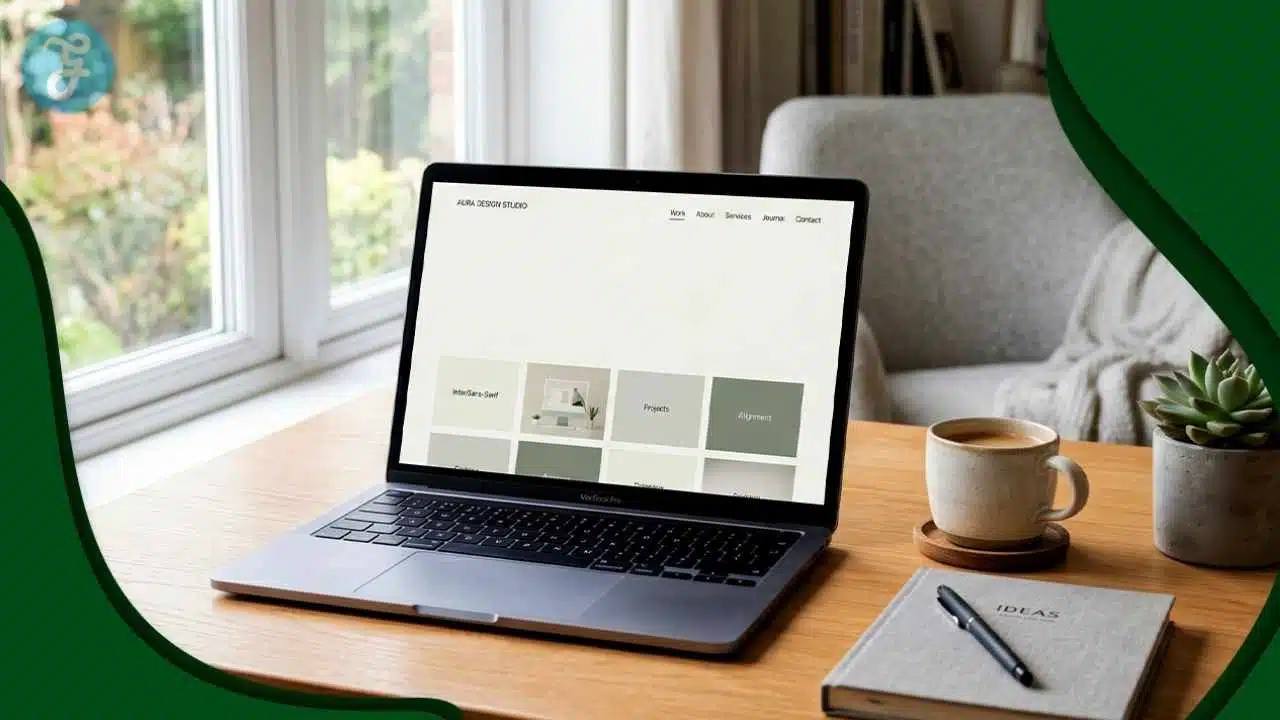
If you spend enough time looking at websites from around the world, you start to notice distinct regional flavors. Some areas favor incredibly dense pages packed with animations and popups. Others lean heavily into corporate uniformity. But when you land on a site built with Scandinavian web design principles, you feel an immediate sense of calm. The layout is clean, the text is easy to read, and you instantly know exactly where to click. This is not an accident. The Nordic countries have spent decades perfecting a design philosophy that champions the user above all else.
This approach goes far beyond choosing a white background and a simple font. It is deeply rooted in a cultural history that values function, equality, and natural beauty. By blending these traditional ideals with modern digital engineering, Scandinavian designers have cracked the code on building websites that look beautiful while delivering flawless user experiences. We are going to explore exactly why Scandinavian web design leads the global industry and how it perfectly balances aesthetics with hardcore usability. You will learn the psychological principles behind their color choices, the mathematical precision of their grid systems, and how a deep seated cultural empathy translates into highly accessible software.
The Core Philosophy Behind Nordic Digital Spaces
To truly understand how these websites function, you have to look back at the physical world and the history of Nordic industrial arts. Scandinavian design gained massive international recognition in the mid 20th century. Designers in Denmark, Sweden, Norway, and Finland decided that beautiful, functional everyday items should not be restricted to the wealthy. They wanted to create furniture and household goods accessible to everyone. When the world shifted online, these same designers and their successors took those exact principles and applied them to user interfaces. A digital screen is just another space to inhabit, and the rules of good architecture still apply.
| Core Nordic Philosophy | Digital Application | Main User Benefit |
| Democratic Design | Accessible user interfaces for everyone | Ensures equal access for all demographics |
| Functionalism | Form strictly follows the function | Reduces user friction and confusion |
| Natural Materials | Neutral, muted color palettes | Lowers eye strain during long sessions |
| Quality Craftsmanship | Lean, optimized codebase | Delivers lightning fast loading speeds |
Removing Noise Instead of Hiding Content
There is a massive misconception in the modern tech industry regarding minimalism. Many novice designers think minimalism means hiding everything. They will take six important headlines and hide them behind a tiny hamburger menu just to make the homepage look empty. That is actually terrible user experience because it forces the visitor to click multiple times just to see what the site offers. It increases the interaction cost and frustrates the user trying to quickly scan the page.
True Scandinavian web design does not hide content it removes noise. If you look at major Nordic news platforms like Dagens Nyheter in Sweden or Politiken in Denmark, you will see homepages that are incredibly dense with information. They publish hundreds of complex stories every single day. Yet, the sites never feel overwhelming. They achieve this by eliminating useless decorations. You will not see unnecessary gradients, drop shadows, or floating animations distracting you from the journalism. By stripping away the visual garbage, they can present a massive amount of actual content without burning out the user’s brain.
Bringing the Concept of Hygge to the Digital Screen
You have probably heard the Danish word hygge by now. It roughly translates to a feeling of coziness, comfort, and contentment. In the physical world, it means lighting a candle on a cold night or drinking warm tea under a heavy blanket. It sounds strange to apply this to software, but it makes perfect sense when you think about how stressful the internet can be. The web is often an aggressive place competing for your limited attention span.
Most websites scream at you. They hit you with auto playing videos, newsletter popups, and flashing banner ads the second you arrive. It is an actively hostile environment that spikes user anxiety. Nordic design aims to create a digital sense of hygge. The websites are built to be quiet and welcoming. They guide you smoothly from one section to the next without demanding your attention through aggressive marketing tactics. The color palettes are soothing, the transitions are smooth, and the copy is conversational. It is a respectful approach to digital hospitality one that makes users actually want to stay on the page longer because they feel safe and comfortable navigating the interface.
1. Unmatched Clarity Through Purposeful Minimalism

Clarity is the ultimate metric of a successful website. If a visitor cannot figure out what you do and how to get what they want within three seconds, they will leave and never come back. Scandinavian web design guarantees clarity because it removes everything that does not actively help the user reach their goal. Every single pixel on the screen must justify its existence. This ruthless editing process ensures that only the most critical information remains, creating a direct path between the user’s intent and the final action.
| Minimalism Strategy | Implementation Tactic | UX Improvement |
| Whitespace Utilization | Large margins around text blocks | Improves reading comprehension by 20% |
| Visual Hierarchy | Largest fonts for primary actions | Guides the eye without relying on arrows |
| Cognitive Load Reduction | Grouping related items together | Helps users process information faster |
| Predictable UI Patterns | Standard menu placements | Eliminates the learning curve for new visitors |
Using Whitespace as an Active Design Element
In many design cultures, whitespace is viewed as a problem. It is seen as empty real estate that needs to be filled with an advertisement, a widget, or a stock photo. Nordic designers treat whitespace entirely differently. To them, empty space is an active, vital component of the layout. It is the structural glue that holds the entire interface together and gives the content meaning.
Whitespace gives the content room to breathe. When you surround a block of text or an image with ample empty space, you signal to the human brain that this item is important. It reduces cognitive load, meaning the user does not have to expend mental energy trying to separate one piece of information from another. The brain naturally groups items based on proximity, a concept known in psychology as the Law of Proximity. By utilizing large margins and generous padding, Scandinavian websites effortlessly guide the human eye down the page in a logical, relaxed manner.
Navigation menus are often the most frustrating part of using a website. Companies try to be clever by giving their pages unique names or using bizarre icons that no one recognizes. Scandinavian web design completely rejects this approach. The focus is always on predictability and reducing friction. You never want your user to guess what a button does or where a link will take them.
When you use a site built on these principles, the navigation is aggressively simple. Labels use plain, natural words like Pricing, About, and Contact. The menu is located exactly where you expect it to be, usually at the top or in a clean sidebar. There are no massive, complicated mega menus that cover the whole screen when you hover over them. Instead, they utilize progressive disclosure. This means they show you only the top level options first. Once you make a choice, they reveal the next set of relevant options. It keeps the user moving forward without ever overwhelming them with fifty choices at once, adhering closely to Hick’s Law, which states that the time it takes to make a decision increases with the number and complexity of choices.
2. Masterful Use of Grid Systems and Typography
Because Scandinavian design strips away decorative images and background graphics, the underlying structure of the page becomes fully exposed. You cannot hide bad layout behind a flashy video. This is why Nordic developers are absolute masters of grid systems and typography. These two elements become the entire foundation of the visual experience. Without strong typography and a rigid grid, a minimalist site just looks broken and unfinished.
| Structural Element | Design Rule | Impact on Reader |
| Grid Alignment | Strict 12 column layouts | Creates subconscious trust and order |
| Typeface Choice | Clean sans serif fonts | Maximizes legibility on small mobile screens |
| Line Spacing | Generous leading between lines | Prevents text from looking like a dense wall |
| Font Scaling | High contrast between H1 and Body | Makes scanning the page incredibly fast |
Rigid Grids to Handle Dense Information
A grid system is the invisible skeleton of a website. It dictates exactly where every column, image, and text block should sit. While many modern sites play around with broken grids and asymmetrical layouts to look edgy, Scandinavian sites usually stick to strict, mathematical grids. They treat digital layout the exact same way a Swiss newspaper treats print layout.
This rigidity is not boring it is highly functional. When a grid is perfectly aligned, the user’s eye can travel down the screen in a straight, predictable line. This is especially crucial for software dashboards, e-commerce stores, and news publications where the user needs to absorb a lot of data quickly. A strict grid creates a sense of trust and reliability. You always know where to look to find the price of an item or the author of an article. The layout itself does the organizing for you, completely removing the burden of sorting information from the user’s shoulders.
Typography as the Primary Visual Anchor
When you refuse to use decorative graphics, your text has to do the heavy lifting. In Scandinavian web design, typography is treated as a major art form. Designers spend hours agonizing over font pairings, line heights, and letter spacing. They understand that reading on a screen is inherently tiring for the human eye, so they optimize every single character to be as frictionless as possible.
You will typically see clean, modern sans serif fonts used across these projects. Fonts like Helvetica, Inter, or custom geometric types lack the little feet and flourishes at the ends of the letters, making them incredibly legible on digital screens of all sizes. But it is not just about choosing a nice font. It is about hierarchy. By using massive, bold fonts for main headings and soft, highly readable sizes for the body paragraphs, designers create a clear path for the reader. You can scan a Nordic website in seconds and immediately understand the core message just by reading the oversized typography. The text literally becomes the graphic design.
3. High Contrast and Muted Color Palettes
Color is an incredibly powerful psychological tool. It can make a user feel anxious, excited, or relaxed within milliseconds of a page loading. The color palettes used in Nordic web design are instantly recognizable and heavily influenced by the natural environment of Northern Europe. They borrow heavily from the surrounding landscapes, utilizing stones, woods, and winter skies to inform their digital canvases.
| Color Strategy | Typical Implementation | Psychological Effect |
| Backgrounds | Off white, pale gray, warm beige | Soothes the eyes and creates a calm vibe |
| Primary Text | Charcoal, dark slate, soft black | Reduces harsh glare compared to pure black |
| Action Buttons | Vibrant blue, forest green, stark red | Draws immediate attention for conversions |
| Image Tones | Desaturated, natural lighting | Keeps visuals from overpowering the text |
The Psychology Behind Neutral Background Tones
Scandinavia experiences very long, dark winters. Because of this, their physical interior design relies heavily on light colors like white, beige, and soft gray to maximize whatever natural sunlight enters the room. This exact color theory is applied to their websites. They treat the screen as an illuminated room that needs to feel spacious and airy rather than cramped and dark.
You will rarely see a Scandinavian site with a neon or pitch black background. Instead, they use vast expanses of off white or very light gray. These neutral tones create a feeling of cleanliness and modernity. More importantly, they reduce eye strain. Staring at a bright white screen with harsh black text for hours can give you a headache. By softening the background to a gentle gray and changing the text to a dark charcoal, the reading experience becomes much more comfortable. It is a subtle adjustment that massively improves user retention and session length.
Improving Readability Across All Devices
While the backgrounds are muted, the contrast ratios are strictly enforced. Accessibility standards require a certain level of contrast between the text and the background so that people with visual impairments can actually read the screen. Scandinavian designers take this very seriously, ensuring their sites pass strict Web Content Accessibility Guidelines without sacrificing visual appeal.
They use pops of color, but they use them strategically. A site might be entirely gray and white, but the primary action buttons will be a vibrant, unmistakable blue or green. This creates an immediate visual hierarchy. The user never has to search for the checkout button or the subscribe link. The high contrast draws the eye exactly where the designer wants it to go, improving conversion rates without being obnoxious or pushy. This method proves that you do not need a rainbow of colors to build a high converting website you just need one strong color applied with deep intention.
4. Form Follows Function for True Usability
There is a famous design rule that originated in the 20th century: form follows function. This simply means that the shape and look of an object should be primarily based upon its intended purpose. In the context of web design, this means you never sacrifice usability just to make something look cool. Every aesthetic decision must support a functional requirement. If a beautiful animation makes a button harder to click, the animation gets deleted.
| Usability Principle | Practical Application | Business Benefit |
| Fitts’s Law | Enlarging buttons on mobile screens | Increases click through rates and sales |
| Asset Optimization | Compressing images and removing videos | Drops bounce rates significantly |
| Input Simplification | Removing optional fields from forms | Drives higher lead generation metrics |
| Code Efficiency | Using semantic HTML and minimal CSS | Boosts organic search rankings on Google |
Lowering the Interaction Cost for Every Visitor
In the UX industry, there is a concept called interaction cost. This is the amount of physical and mental effort required for a user to reach their goal on a website. Every time a user has to scroll, click, read a complicated paragraph, or wait for an animation to finish, the interaction cost goes up. If the cost gets too high, the user simply abandons the site and goes to a competitor.
Scandinavian design is obsessed with keeping the interaction cost as low as humanly possible. If a checkout process can be completed in two steps instead of five, they will rewrite the entire system to make it happen. Forms ask only for the absolutely necessary information. Buttons are large and easy to tap on a mobile phone, adhering to Fitts’s Law, which states that the time required to move to a target is a function of the target size and distance to the target. By making targets large and placing them logically, the physical effort required to use the site drops near zero.
Lean Code for Lightning Fast Loading Speeds
Functionality extends to the actual codebase of the website. A site can look beautiful, but if it takes ten seconds to load, it is a total failure. Because Scandinavian design avoids heavy background videos, complex javascript animations, and massive image sliders, the underlying code is naturally lean. They do not load heavy libraries just to add a hover effect to a menu.
This lean architecture results in websites that load instantly. Fast loading speeds are critical for keeping users engaged, especially those browsing on slower cellular networks while commuting. Furthermore, search engines actively reward fast websites with higher search rankings. By focusing on a minimalist aesthetic, these sites accidentally create the perfect technical environment for search engine optimization. It is a perfect feedback loop where good design leads to good performance, which leads to better business results. When you strip away the bloat, you get a site that scales effortlessly.
5. A Deep Connection to Accessibility and Empathy

Perhaps the most important factor driving the quality of Nordic web design is a deep seated cultural empathy. The societies in this region place a massive emphasis on social equality and making sure everyone is taken care of. This worldview bleeds directly into how they build technology. They do not view users as metrics on a dashboard; they view them as human beings who deserve a respectful, frustration free experience online.
| Empathy Metric | Design Execution | Community Impact |
| Screen Reader Support | Semantic tags and robust alt text | Allows visually impaired users full access |
| Keyboard Navigation | Visible focus states on all links | Assists users with motor skill limitations |
| Error Forgiveness | Clear, non blaming error messages | Reduces user anxiety during complex tasks |
| Plain Language | Avoiding corporate jargon | Helps non native speakers understand content |
Building Inclusive and Equal Digital Experiences
A website is only truly successful if everyone can use it. Many modern web trends completely ignore users who rely on screen readers or users who cannot operate a traditional mouse. Scandinavian designers view accessibility as a fundamental human right, not an optional feature to be added at the end of a project just to avoid a lawsuit. They bake accessibility into the earliest wireframes of the product.
They build sites with semantic HTML, ensuring that screen readers can perfectly interpret the structure of the page. They ensure all images have highly descriptive text. They design navigation that can be operated entirely with a keyboard, ensuring robust focus states outline exactly where the user is on the screen. This commitment to inclusive design means their websites reach a much wider audience. When you build a site that is easy for a visually impaired person to use, you inevitably make it easier and more logical for everyone else.
Anticipating Needs With Human Centric Interactions
Empathy in design also means anticipating what the user wants before they have to ask for it. It is about treating the user like a human being rather than a data point to be monetized. It involves writing copy that actually helps instead of copy that just tries to sell something.
For example, if you are filling out a complex form on a Nordic financial site and you make an error, the site does not just flash a generic red warning box. It will highlight the exact field that needs fixing and provide a clear, friendly explanation of how to correct it. The language used in error messages and instructions is always conversational and helpful, never robotic or blaming. This human centric approach builds deep trust between the brand and the consumer. It proves that the company actually cares about the person sitting on the other side of the screen.
How You Can Apply These Principles to Your Next Project?
You do not need to be based in Stockholm or Copenhagen to build a website with these qualities. Any developer or designer can adopt this philosophy to dramatically improve their digital products. The transition just requires a massive shift in mindset from adding features to refining essentials. You have to stop asking what else you can put on the page, and start asking what else you can remove.
| Actionable Step | What to Do | What to Avoid |
| Audit Elements | Delete useless carousels and popups | Keeping features just because competitors do |
| Simplify Copy | Rewrite text using conversational words | Using industry jargon to sound smart |
| Fix Colors | Switch to neutral backgrounds and dark text | Using pure black (#000000) on pure white |
| Test Usability | Wireframe in grayscale first | Designing with full color from day one |
Audit Your Site and Focus on Essential Elements
The best way to start is by performing a brutal audit of your current website. Look at every single element on your homepage. Ask yourself if it directly helps the user achieve their goal or if it just looks nice. If you have a rotating image carousel at the top of your page, delete it. Data proves that users almost never click past the first slide, and it just slows down your load time while pushing important content below the fold.
Remove social media feeds from your footer. Take out the decorative dividing lines and replace them with empty whitespace. Simplify your copywriting. Stop using corporate jargon and start speaking to your customers using natural, conversational words. You will be amazed at how much more professional your site looks when you simply take the visual clutter away. Your users will immediately notice the difference in speed and clarity.
Test for Pure Usability Before Adding Aesthetics
When you are wireframing a new project, completely ignore colors, fonts, and images for as long as possible. Build the entire layout using just black text and gray boxes. This forces you to focus entirely on the information architecture and the user flow.
If the site is difficult to navigate when it is just gray boxes, no amount of beautiful photography is going to save it. You have to get the fundamental architecture right first. Test the raw structure with actual users. See if they can find the contact page or complete a purchase without getting confused. Once the bare bones structure is proven to be flawless, then you can slowly introduce your muted color palette and crisp typography. Always let the function dictate the form. Build the skeleton first, ensure it is strong, and only then add the skin.
Final Thoughts
Scandinavian web design is not just a passing visual trend. It is a highly analytical, deeply empathetic approach to building digital tools that respect the user. By prioritizing pure usability over flashy aesthetics, Nordic designers create environments that feel calm, predictable, and incredibly fast. They understand that a website is a tool, and a tool is only valuable if it works perfectly every single time you pick it up.
When you apply the core principles of Scandinavian web design to your own projects focusing on whitespace, strict grids, high contrast typography, and lean code you do not just build a prettier website. You build a more profitable, accessible, and user friendly platform. As the internet continues to grow louder and more cluttered, adopting this minimalist, human centric philosophy is the smartest way to make your digital presence stand out from the noise.
The primary focus is always the user experience. It aims to create functional, highly usable, and accessible interfaces by stripping away unnecessary decorative elements. The goal is to present information as clearly and efficiently as possible while maintaining a calm, welcoming aesthetic that respects the user’s time and attention.
Is minimalist design always better for user experience?
Minimalism is highly effective when done correctly, but it can ruin an experience if misunderstood. Bad minimalism hides important tools and content just to make a page look clean, which frustrates users trying to get things done. Good minimalism keeps all necessary information visible but organizes it cleanly using grids and whitespace to prevent cognitive overload.
Because these websites lack heavy graphics and complex background visuals, typography becomes the main tool for creating structure and personality. Designers rely on clean sans serif fonts, utilizing massive variations in size and weight to guide the reader’s eye and establish a clear hierarchy of information without relying on arrows or boxes.
Can these principles work for content heavy websites?
Absolutely. In fact, these principles are most effective on content heavy sites like news portals, software dashboards, and massive e-commerce stores. By utilizing rigid mathematical grids and strict alignment, a website can display a massive amount of data without making the user feel overwhelmed or confused.
What colors are typical in Nordic web design?
The palettes are heavily inspired by nature and the desire to maximize light during long, dark winters. You will primarily see off whites, soft grays, and muted earth tones serving as the background. High contrast, vibrant colors like deep blue or stark red are reserved strictly for typography and call to action buttons to ensure they stand out perfectly against the neutral canvas.