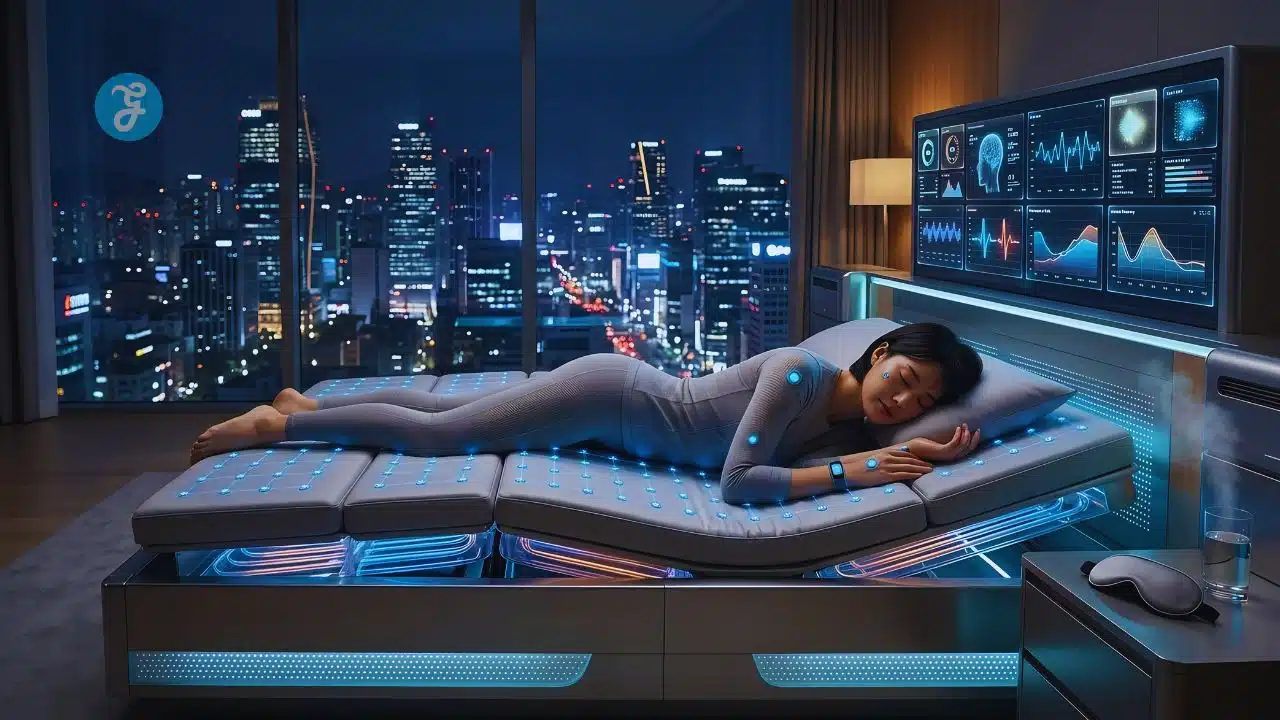
Seoul’s hustle culture is hitting a biological ceiling. For decades, South Korea’s productivity narrative was built on sleeping less to achieve more. That model is now breaking down. As the South Korea sleep economy 2026 projections approach 3 trillion won (roughly $2.2 billion USD), rest is being redefined as a measurable, investable asset.
The shift is structural. The era of the passive mattress is over. Consumers and B2B buyers are no longer satisfied with static comfort. They are demanding systems that actively improve recovery. Temperature regulation, pressure adaptation, and posture control are moving from premium features to baseline expectations.
This is not about feeling well rested. It is about physical recovery, biological efficiency, and performance. The market is moving beyond sleep tracking apps toward hardware that directly shapes the sleep environment in real-time. At the center of this transition are South Korean startups and SMEs building the next layer of sleep infrastructure, where rest is no longer passive but engineered.
Hardware Takes the Lead: Scaling the South Korea Sleep Economy 2026
The “Seul-po-nom-iks” (Sleep Economy) is booming because sleep debt in South Korea has reached a breaking point. The user base is no longer limited to elderly patients or those with medical insomnia. The new demand is being driven by high-performance urbanites and fitness-focused recovery seekers.
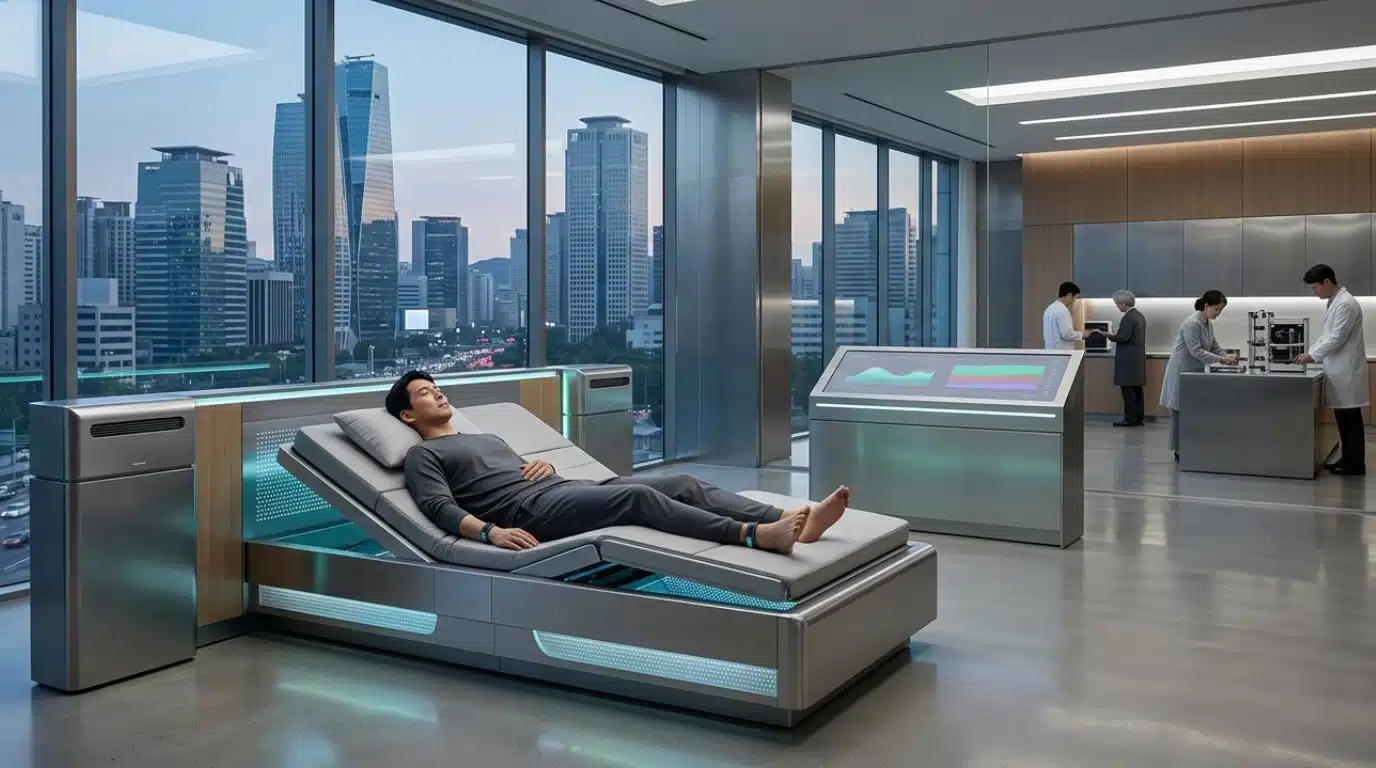
These users have realized that an Apple Watch can tell you that you slept poorly, but it cannot fix the problem. That gap has fueled a hardware-first shift. Consumers are increasingly willing to invest $3,000 or more in smart beds as a form of personal health infrastructure.
The boom is driven by a convergence of factors: world-class IoT infrastructure, a highly stressed workforce, and a growing cultural focus on bio-optimization as a competitive advantage.
Selection Framework: South Korea’s Sleep Tech Startups and SMEs
Navigating the Korean tech landscape requires a strict filter. This selection applies a zero conglomerate policy, intentionally excluding large chaebols to focus on more agile, independent innovators. The framework is built on three core criteria:
- Hardware Independence: Each company must design and manufacture physical sleep hardware. Software-only solutions such as tracking apps or white noise platforms were excluded.
- SMEs and Startup Integrity: The focus is on independent players actively shaping the market. Priority was given to companies with venture certifications, proprietary manufacturing, or proven direct-to-consumer scale.
- Wellness and Recovery Focus: Only brands positioning their products around physical recovery, spinal alignment, and thermal regulation were included, rather than general home or lifestyle positioning.
This approach ensures the companies featured represent the emerging edge of South Korea’s physical sleep hardware ecosystem, not legacy incumbents.
10 Innovators Transforming Sleep into a Recovery System
South Korea’s sleep tech market is transitioning from passive comfort toward a specialized infrastructure of engineered recovery. The following 10 brands span connected systems, motion-based hardware, and advanced material science, each prioritizing measurable physiological outcomes like spinal alignment and thermal balance over subjective feel. By integrating automation with mechanical precision, these innovators are redefining the sleep environment as a direct tool for performance and resilience in high-stress urban settings.
I. Smart Sleep Systems & Connected Beds
1. ANSSil
- HQ Location: Gwangju-si, Gyeonggi-do
- Venture Brief: A high-growth startup bridging the gap between textile engineering and digital health. ANSSil is disrupting the industry by replacing traditional metal springs with a proprietary 3D string-weave structure. This hardware utilizes embedded pressure sensors to dynamically adjust firmness via a “Smart String” system. The primary advantage is it offers a personalized “Sleep Fitness” score, moving mattresses from static furniture to active health devices.
- Perfect Fit For: Tech-focused individuals looking for long-term spinal health and data-driven sleep adjustments.
- What Sets It Apart: The elimination of springs in favor of sensor-integrated strings that never lose their tension.
- 2026 Outlook: Expanding globally as a primary OEM partner for AIoT-integrated smart home ecosystems.
- Official Website: https://www.anssil.com
2. AIGEM
- HQ Location: Incheon
- Venture Brief: A specialized hardware startup focused on medical-grade home recovery solutions. AIGEM develops smart beds with pressure sensing and automated posture control, positioned at the intersection of clinical recovery and home wellness. Their systems utilize high-fidelity sensing to prevent physical strain and enhance circulation during rest. This technology is critical for the aging population and those requiring specific ergonomic support for physical recovery.
- Perfect Fit For: The elderly care sector and individuals with chronic back pain or limited mobility.
- What Sets It Apart: Real-time posture adjustment that responds to body shifts without manual input.
- 2026 Outlook: Scaling into the B2B healthcare market with cloud-integrated patient monitoring systems.
- Official Website: http://en.aigem.co.kr
3. BRLab
- HQ Location: Seoul
- Venture Brief: An AI-driven sleep tech startup focused on passive biological data acquisition. BRLab is a pioneer in contactless biometric monitoring integrated directly into the sleeping surface. Their Benzamin system tracks heart rate and respiration with clinical precision without requiring wearables. Crucially, this allows the “invisible” data layer necessary for optimizing cardiovascular recovery during deep sleep cycles.
- Perfect Fit For: Biohackers and athletes who want detailed health metrics without wearing a device to bed.
- What Sets It Apart: Proprietary sensor technology that filters out external noise to capture pure biometric signals.
- 2026 Outlook: Becoming the standard-setter for “invisible” health monitoring in luxury hotel chains.
- Official Website: https://brlab.ai
4. Sambun-ui-il (Sleep Cube)
- HQ Location: Seoul
- Venture Brief: An established SME utilizing thermal engineering to solve the “insomnia of heat.” Sambun-ui-il (3boon1) focuses on the critical variable of thermal regulation. Their flagship Sleep Cube system manages the mattress temperature in real-time to match the user’s circadian rhythm. This is significant as maintaining a specific core body temperature is the most effective way to trigger and sustain deep, restorative sleep phases.
- Perfect Fit For: Users sensitive to temperature fluctuations or those living in humid, urban environments.
- What Sets It Apart: A closed-loop thermal system that learns the user’s ideal temperature profile over time.
- 2026 Outlook: Dominating the D2C market with integrated “Smart Climate” bedroom solutions.
- Official Website: https://3boon1.com
II. Therapeutic & Motion-Based Recovery Hardware
5. Mobe
- HQ Location: Gimpo-si, Gyeonggi-do
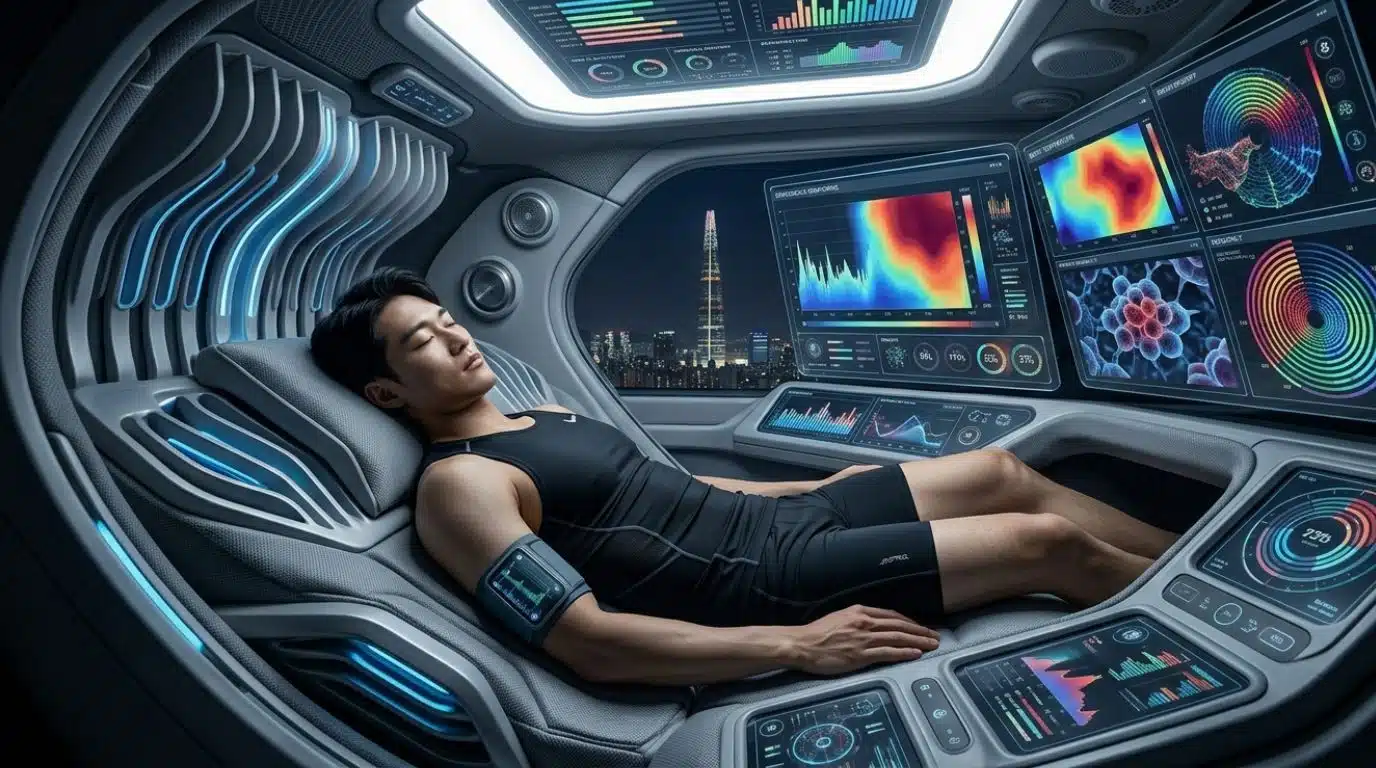
- Venture Brief: A certified “Innovative Growth Venture” focusing on heavy-duty, precision recovery frames. Mobe is a dedicated manufacturer of smart motion frames and medical-grade recovery beds. By using high-performance German actuator motors, their hardware allows for precise ergonomic positioning to improve blood flow and relieve spinal pressure. Their focus on the physical frame makes them a vital pillar of the wellness hardware ecosystem.
- Perfect Fit For: Post-surgical recovery, professional athletes, and those seeking zero-gravity sleep positions.
- What Sets It Apart: Direct domestic manufacturing with a focus on high-durability mechanical actuator systems.
- 2026 Outlook: Leading the shift toward “Medicalized Home” furniture as a lifestyle standard.
- Official Website: https://motionbed.net
6. HueLight
- HQ Location: Gwangmyeong-si, Gyeonggi-do
- Venture Brief: A R&D-centric SME supported by the South Korean Ministry of SMEs and Startups. HueLight engineers “Wave Motion” beds designed for rhythmic muscle stimulation. Unlike static beds, their hardware uses gentle wave movements to encourage lymphatic drainage and improve overall circulation. It is a key player in the therapeutic wellness sector, bridging the gap between a bed and a physical therapy device.
- Perfect Fit For: Physical therapy clinics, luxury spas, and wellness-focused home users.
- What Sets It Apart: The integration of rhythmic mechanical therapy directly into the sleep surface.
- 2026 Outlook: Expanding into the global sports recovery market for elite training facilities.
- Official Website: https://hue-light.com
III. Recovery-Focused Mattress & Sleep Products
7. Quick Sleep
- HQ Location: Seoul
- Venture Brief: A market-disrupting SME known for high-volume efficiency and ergonomic R&D. As a leading Seoul-based D2C brand, Quick Sleep has redefined the “Box Mattress” for the urban professional. They focus on multi-layered hybrid designs that prioritize pressure relief and spinal alignment at an accessible price point. Their success lies in engineering high-density foams that cater specifically to the physical fatigue of a modern lifestyle.
- Perfect Fit For: Overworked urban professionals looking for rapid muscle recovery on a budget.
- What Sets It Apart: A massive database of Korean body types used to optimize “Hybrid Support” structures.
- 2026 Outlook: Strengthening its position as the top choice for Gen Z and Millennial wellness consumers.
- Official Website: https://quicksleep.co.kr
8. Project Sleep
- HQ Location: Seoul
- Venture Brief: A socially conscious SME that grew out of a Seoul-city innovation project. Project Sleep specializes in passive thermal recovery through advanced material science. They utilize temperature-responsive fabrics and “Cool Toppers” to manage body heat without the need for active electronics. This SME matters because it offers a high-tech, non-powered solution for maintaining the body’s optimal recovery temperature.
- Perfect Fit For: Eco-conscious consumers seeking high-performance cooling without increasing their carbon footprint.
- What Sets It Apart: The use of phase-change materials (PCM) in affordable, consumer-ready sleep hardware.
- 2026 Outlook: Diversifying into high-performance apparel and functional textiles for the global market.
- Official Website: https://www.projectsleep.co.kr
9. LuxNine
- HQ Location: Gimpo-si, Gyeonggi-do
- Venture Brief: An established SME with a reputation for premium materials and orthopedic design. LuxNine is a premium SME focused on the “Modular Recovery” market. They engineer high-end latex and memory foam toppers designed to be added to existing beds to fix posture and spinal alignment issues. Their primary advantage lies in offering a high-quality hardware upgrade path for physical wellness.
- Perfect Fit For: Users looking to enhance their current sleep setup with medical-grade support surfaces.
- What Sets It Apart: A strict focus on the “Zone Support” system that provides different densities for different body parts.
- 2026 Outlook: Scaling through premium retail partnerships and hospitality contracts.
- Official Website: https://luxninemall.co.kr
IV. Alternative Sleep Wellness
10. Dr. Friend (World Home Doctor)
- HQ Location: Anyang-si, Gyeonggi-do (Global Office: Seoul)
- Venture Brief: A commercially successful SME specializing in alternative wellness hardware. Dr. Friend focuses on “Earthing” and bio-magnetic sleep systems. Their hardware is designed to ground the body and use magnetic fields to encourage relaxation and cellular recovery. While it sits in the alternative wellness segment, its commercial success highlights the South Korean consumer’s appetite for holistic physical recovery solutions. [Note: This entry resides within the alternative wellness segment where scientific validation remains limited compared to clinical smart-bed technology.]
- Perfect Fit For: Those interested in holistic health, grounding, and non-traditional recovery methods.
- What Sets It Apart: The integration of conductive silver fibers and bio-magnets into traditional bedding.
- 2026 Outlook: Navigating increased scientific scrutiny by investing in more transparent clinical trials.
- Official Website: https://worldhome.global
Beyond the Mattress: Why Seoul is Building a New Sleep Infrastructure
Tracking the trajectory of digital infrastructure reveals a profound shift in Seoul’s sleep market. While wellness is often viewed as a lifestyle aesthetic, comprising calming apps or static foam, analyzing these ten innovators reveals a pivot toward mechanical intervention. At Editorialge, our assessment of systems like ANSSil’s string weaves and BRLab’s contactless sensors suggests a fundamental change: consumers are no longer buying furniture; they are investing in nightly biological maintenance.
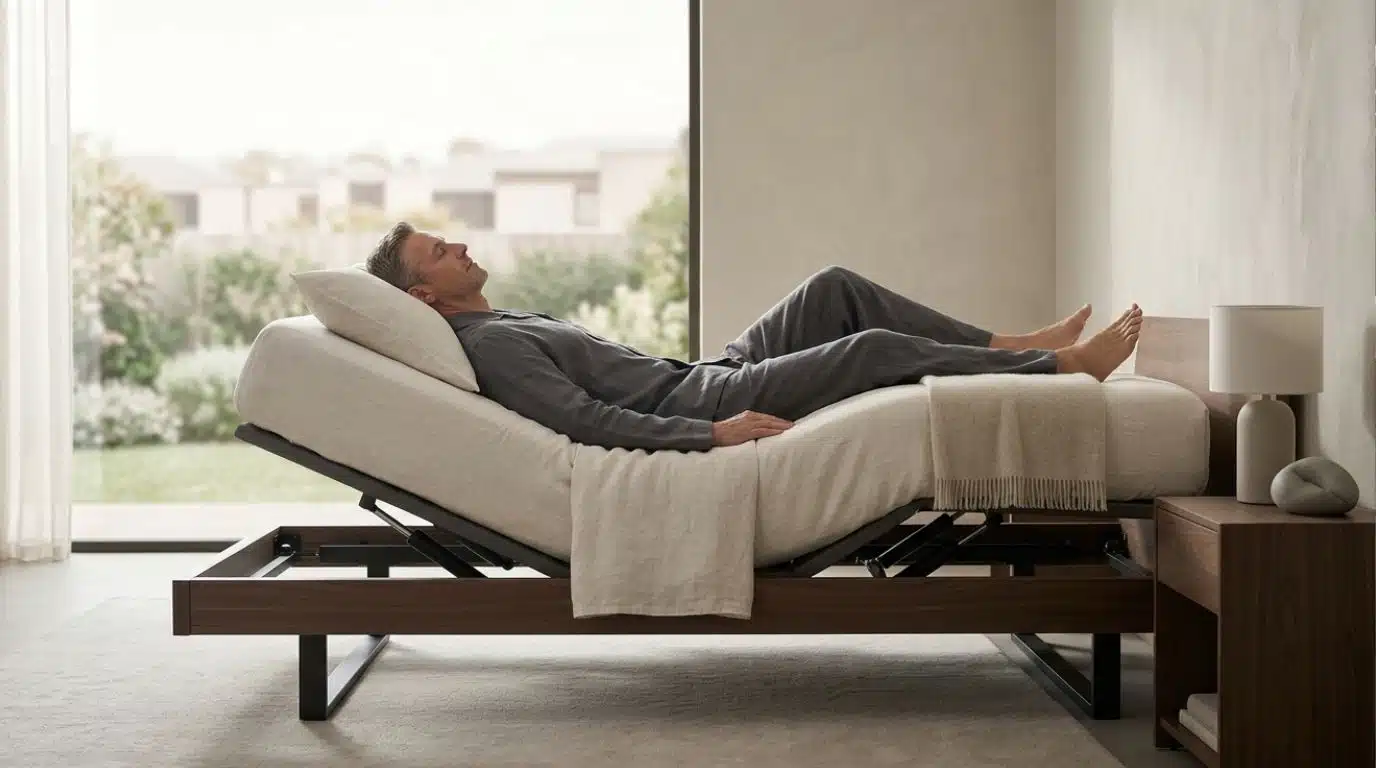
The high-performance urbanites driving this 3-trillion-won economy are treating sleep debt as a technical failure requiring a hardware patch. This represents the industrialization of physical recovery, where passive rest is replaced by engineered resilience. Recognizing this transition from “comfort” to “active infrastructure” is essential for evaluating personal health ecosystems in high-stress professional landscapes.
What the Market Is Telling Us About Sleep Tech
Analyzing these players reveals a clear shift in how the wellness market defines value. Choosing a sleep system is no longer about testing softness in a showroom. It is increasingly about evaluating the underlying technology, from sensing capabilities to mechanical adjustment systems.
- The Shift Beyond Static Mattresses: Value is moving beyond raw materials such as foam and springs toward enabling layers like sensors, actuators, and thermal systems. Companies such as ANSSil and BRLab signal a transition where the mattress is evolving into a connected component within a broader sleep environment.
- D2C as a Trust Layer: The growth of Quick Sleep and Project Sleep shows that direct-to-consumer is no longer just about convenience or pricing. It is becoming a channel for delivering engineered products to consumers who prioritize transparency, specifications, and performance over legacy branding.
- Wellness as a Premium Proposition: A convergence is emerging between medical-grade functionality and consumer design. Companies like Mobe and AIGEM are bringing clinical features into home settings, indicating that consumers are willing to invest more when recovery benefits are clearly defined.
- Hardware as a Competitive Advantage: In a software-saturated landscape, ownership of physical hardware, manufacturing, and proprietary systems creates a defensible edge. These SMEs are gaining traction by controlling their production and building differentiated physical products.
Sleep Tech Players: Quick Scan
Brand |
Tier |
Core Innovation |
Key Advantage |
| ANSSil | Smart Bed | String-Weave Tech | No springs; AIoT integrated |
| AIGEM | Healthcare | Auto-Posture Sensing | Medical-grade home recovery |
| BRLab | IoT | Contactless Biometrics | Invisible monitoring (No wearables) |
| Sambun-ui-il | Thermal | Circadian Temp Control | Active core cooling/heating |
| Mobe | Motion | Precision Actuators | Zero-G & ergonomic recovery |
| HueLight | Therapy | Wave Motion Tech | Rhythmic mechanical relaxation |
| Quick Sleep | D2C | Engineered Hybrid Foam | High performance; Urban price point |
| Project Sleep | Material | PCM Cooling Toppers | Passive thermal regulation |
| LuxNine | Modular | Orthopedic Toppers | Accessible postural upgrade |
| Dr. Friend | Alternative | Earthing & Bio-Magnets | Holistic grounding recovery |
What Comes Next for Founders, Buyers, and Investors
For Founders, the message is clear: the next frontier is physical bio-integration. If you are building in the wellness space, your software must control something physical. For SMB Buyers and distributors, the South Korean market is currently the world’s most advanced testing ground. Early adoption of these physical bio-integration technologies offers a distinct first-mover advantage in the evolving wellness market.
For Investors, the “Sleep Economy” is recession-proof. People may cut back on luxury travel, but they will never cut back on the hardware that fixes their chronic back pain or exhaustion. The smart money is moving away from tracking apps and toward the companies that actually manufacture sleep.
Frequently Asked Questions (FAQs) on South Korea Sleep Economy 2026
Is the South Korea sleep economy 2026 really that big?
Yes, while the broader regional sleep tech market is surpassing $11 billion, South Korea’s domestic sector alone is rapidly approaching a 3 trillion won ($2.2 billion USD) valuation. This explosive growth is fueled by a structural shift where South Koreans are moving away from “sleeping less” as a badge of honor toward treating “Health as an Asset.” With the OECD’s lowest sleep averages, the market has transitioned from simple bedding to a sophisticated industrial ecosystem.
Why are South Korean startups focusing so much on hardware over software?
Because South Korea possesses one of the world’s most advanced IoT and manufacturing infrastructures. While sleep-tracking apps are easily copied, physical hardware like air-cell mattresses and string-support systems offers a much higher competitive “moat.” For startups, owning the physical IP is the only way to survive in a market dominated by high-tech consumer expectations.
Does the South Korean government provide any insurance or support for sleep tech?
While most consumer mattresses are out-of-pocket, a major catalyst for the boom was the 2018 National Health Insurance expansion for polysomnography (PSG) and CPAP devices. This move clinicalized sleep health in the public eye, creating a massive pipeline of diagnosed users who then sought out “medical-grade” home hardware to supplement their clinical treatments.
How do I dispose of a smart mattress in South Korea given the electronic sensors?
Disposal is strictly regulated under the Act on Resource Circulation of Electrical and Electronic Equipment. Unlike traditional mattresses that are often treated as simple bulky waste, smart mattresses fall under Extended Producer Responsibility (EPR). Most premium brands (like Coway or ANSSil) now offer dedicated “take-back” programs or rental returns to ensure the electronic sensors and actuators are recycled according to e-waste standards.
Is there a risk of electromagnetic fields (EMF) from smart mattresses?
Public concern regarding EMF is exceptionally high in South Korea. Consequently, all smart mattresses must pass rigorous KC (Korea Certification) Mark testing, which includes electromagnetic compatibility (EMC) and safety. Most top-tier Korean brands use “low-EMF” or “EMF-shielding” technology specifically to satisfy the local consumer demand for “electrically clean” sleeping environments.
How does the “string technology” used by startups differ from traditional springs?
Innovation like ANSSil’s 3D String Support claims a lifespan of up to 100 years with zero sagging, a feat impossible for traditional metal springs. These strings are made from high-strength polyester yarns (similar to those used in industrial tires), making the mattress significantly lighter (under 20kg) and more durable against the structural fatigue that usually causes “valley” dips in standard mattresses.
Why is the rental model more popular than buying smart beds in South Korea?
The Rental-and-Care model (pioneered by companies like Coway and now adopted for the BEREX line) is popular because it includes lifetime maintenance. Since smart mattresses contain complex sensors and air pumps, Korean consumers prefer a monthly fee that covers regular sanitation, sensor calibration, and component replacement, rather than a high one-time purchase with the risk of technical obsolescence.
Can these products be integrated with existing Smart Home systems?
Yes. Almost all “Smart Sleep Systems” in this list are designed with open APIs. They are increasingly integrated not just with global hubs like Google Home, but with dominant local platforms like Naver Clova and Kakao Home, allowing the bed to automatically close curtains or dim lights the moment sensors detect the user has entered a deep sleep state.