

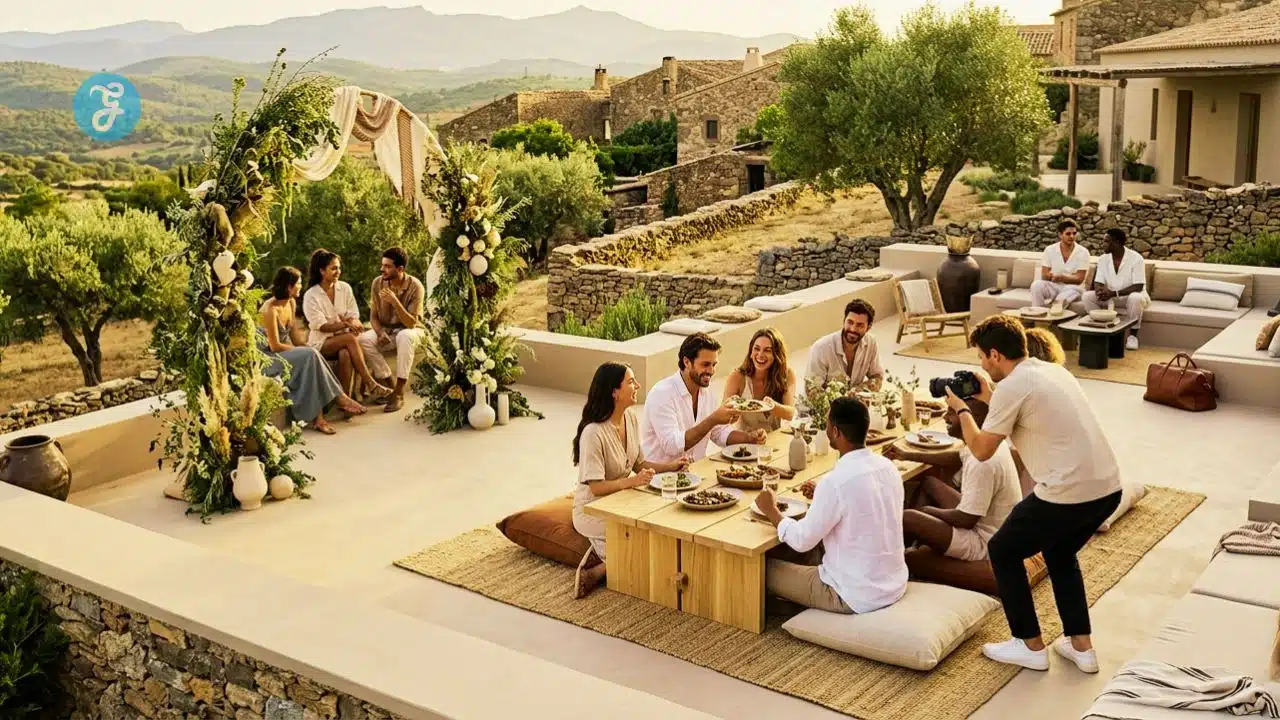
That thousand-person ballroom marathon is losing its grip. The scent of mass-produced marigolds and the blur of strangers are staples of the past, relics of a time when the guest of honor often felt like a prop in their own play. Instead, the defining hallmark of Gen Z Wedding Trends 2026 is deep-seated intimacy. Today, a boutique resort in Goa or a silent Kyoto shrine holds forty people. Every face is a true friend, and every word spoken actually matters. The loud spectacle is dying, and the lived experience has taken its place.
The “big fat wedding” is facing a definitive crossroads. For the newest generation of couples, the era of the obligation-driven guest list is officially over. They are swiping left on performative scale, choosing instead to build multi-day, curated gatherings that feel more like a high-end retreat than a stiff ceremony.
This shift is not about cutting costs; it is a fundamental rebalancing of priorities. Budgets once swallowed by substantial venues and catering for five hundred people are rapidly moving. That capital now flows into international flights, bespoke design, and quality time. Luxury is no longer defined by how many people watched you exchange vows, but by the quality of the people standing beside you.
By trading sheer volume for intimate travel, young couples are fundamentally transforming the wedding day from a public exhibition into a deeply personal adventure. They are choosing their tightest inner circle over a crowd of acquaintances, prioritizing shared memories over towering monuments. This is the destination disruption, and there is no going back.
The New Math of Matrimony
The traditional wedding spreadsheet is being torn up. Young couples are no longer measuring the success of their day by the length of the buffet line; instead, they are examining the math through an entirely different lens.This is not a reluctant compromise, but a deliberate repositioning toward a new standard of luxury.
The Great Data Divide
Recent industry numbers starkly back this movement. A joint study by Skyscanner and WeddingWire highlights a sharp generational split: nearly 49 percent of Gen Z couples are now actively choosing destination weddings. This is a significant jump from the 33 percent of Millennials who made the same choice just a few years prior. The preference is undeniable—the newest generation of adults wants to get away, and they are taking their wedding budgets with them.
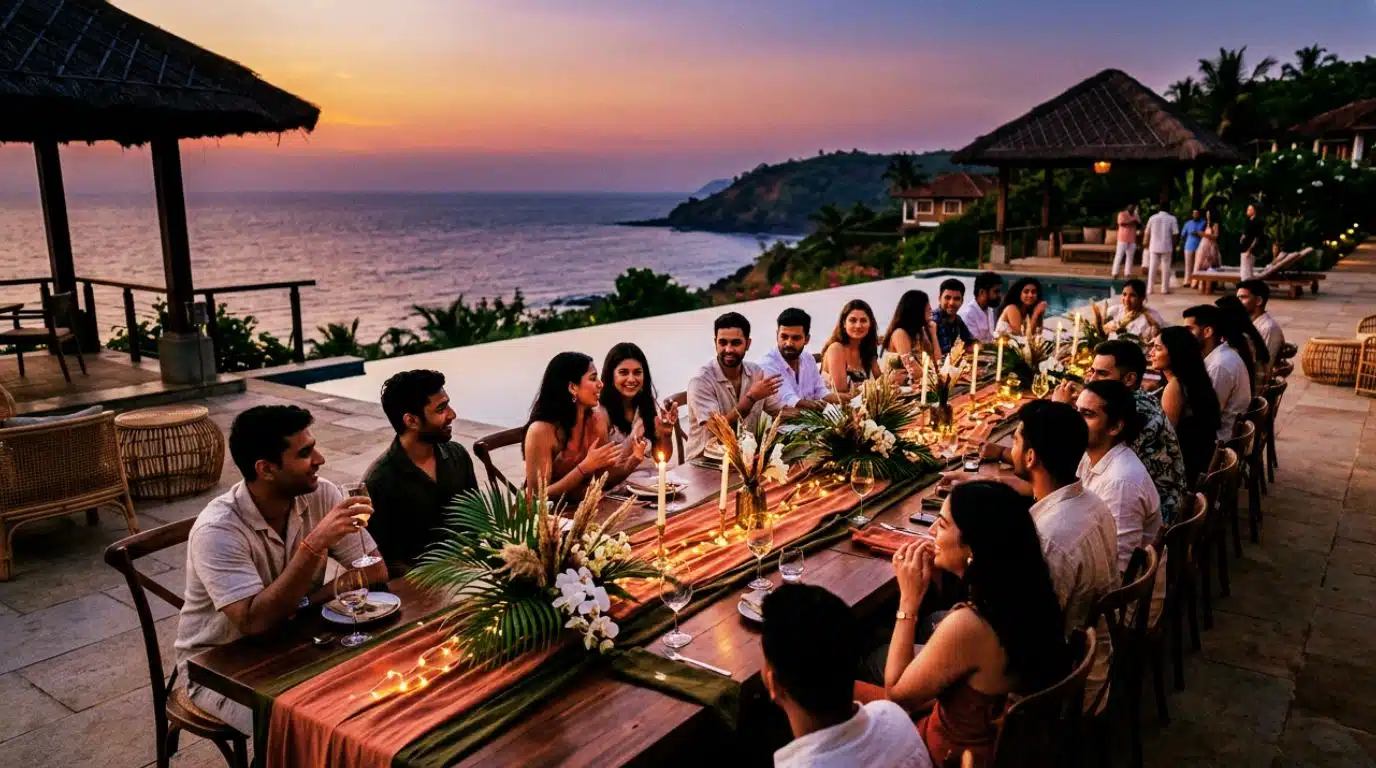
Market analysts at 37 Frames confirm this is not merely a passing, post-pandemic phase. The destination wedding sector is currently seeing a massive 30 percent year-over-year growth. Global travel is rapidly becoming the primary setting for modern vows, moving faster than the hospitality industry anticipated. It represents a fundamental, structural shift in how the modern world celebrates love.
The Paradox of the Consolidation Budget
There is a common cultural myth that Gen Z is simply being frugal or anti-establishment when it comes to marriage. The reality is quite the opposite. They are not necessarily spending less; they are spending differently. They have discovered a financial paradox: by consolidating their wealth, they can create a vastly higher impact.
Data from WedMeGood illustrates this perfectly, showing that bookings for massive, traditional banquet halls have seen a significant drop, a staggering shift for a domestic industry built entirely on scale and volume. However, the money itself has not vanished; it has simply been redirected. Instead of feeding five hundred acquaintances a single, unremarkable meal under fluorescent lights, couples are funding a premium, all-inclusive weekend for sixty of their closest friends.
The math is simple but undeniably powerful. A budget of forty thousand dollars goes much further when the guest list is aggressively slashed. It buys better wine, secures exclusive architectural views, and provides a level of bespoke hospitality that is logistically impossible at a mass scale.
Quality Over Quantity
Consequently, the per-guest expenditure has reached record highs. This proves that the modern couple values the depth of the shared experience far over the sheer number of witnesses. When you spend five hundred dollars per person instead of fifty, the entire energy of the event shifts from a standard, obligatory party to a curated retreat. The math clearly shows that Gen Z is willing to pay a heavy premium for intimacy, choosing to invest deeply in the people who actually show up for them every day. The result is a more meaningful, high-end celebration that leaves a lasting impression rather than a fleeting photo op.
The Designer Perspective: Presence Over Performance
Industry leaders are seeing this shift in real time as they move away from managing crowds toward managing moments. This expert insight highlights that the change is a conscious choice for quality over quantity.

Kaveri Vij & Akshay Chopra, Founders, Designer Events Inc: “The shift is not about scaling down; it is about refining meaning. Today’s couples are choosing presence over performance, curating weddings that feel deeply personal rather than socially expansive. Destination celebrations allow us to design not just an event, but an experience that lives beyond the wedding day. Intimacy, intention, and immersive experiences are the new markers of scale. The future of weddings is not bigger; it is more intentional and far more experiential.”
The Psychology of the Micro-Luxury Guest List
The emotional weight of the wedding day is fundamentally shifting from community obligation to individual fulfillment. Young couples are no longer willing to play the role of exhausted hosts for people they barely know, choosing instead to prioritize psychological comfort over social performance. This is not merely a logistical choice, but a deliberate, emotionally intelligent move toward intentionality.
The Death of the Obligation Invite
For decades, the traditional wedding guest list served as a ledger for social capital and familial debt. Parents frequently dictated attendance based on professional networking ties, distant bloodlines, and reciprocal community obligations. Gen Z is actively dismantling this practice. They are pushing back against the ingrained pressure to invite the neighbor from twenty years ago or the CEO of their father’s firm, shifting the core question of wedding planning from “who should be there?” to “who must be there?”
Setting this boundary requires immense bravery and often triggers difficult conversations with older generations who historically view massive weddings as the ultimate status symbol. However, by cutting the obligation invite, couples are reclaiming agency over their day. They are drawing a hard line in the sand, refusing to let their private milestone be transformed into a public relations event for their extended family tree.
Redefining Intimacy Through Distance
Choosing a remote destination inherently acts as a psychological and logistical filter, serving as a natural mechanism to separate the deeply invested inner circle from the casual acquaintance. While a local hometown wedding is effortlessly easy to attend, committing to a multi-day getaway requires a significant investment of time and effort from the guests.
This transition creates a remarkably unique emotional atmosphere. When every person in the room has traveled a great distance specifically to support the couple, the collective bond of the group tightens exponentially. The isolating anonymity of a crowded ballroom is instantly replaced by the warmth of a shared, immersive journey. In this context, intimacy stops being just a fleeting feeling and becomes a physical reality dictated by the deliberate scale of the room. The event transcends a grueling series of polite handshakes, evolving into a continuous series of deep, meaningful connections.
Authenticity Over Tradition
Traditional weddings often feel bound to a rigid script, a highly choreographed production with a specific, expected way to walk, talk, and celebrate. Gen Z increasingly views this deeply entrenched performative nature as hollow. Data from The Knot strongly supports this cultural shift, revealing that an overwhelming 80 percent of modern couples now demand a hyper-personal, customized event.
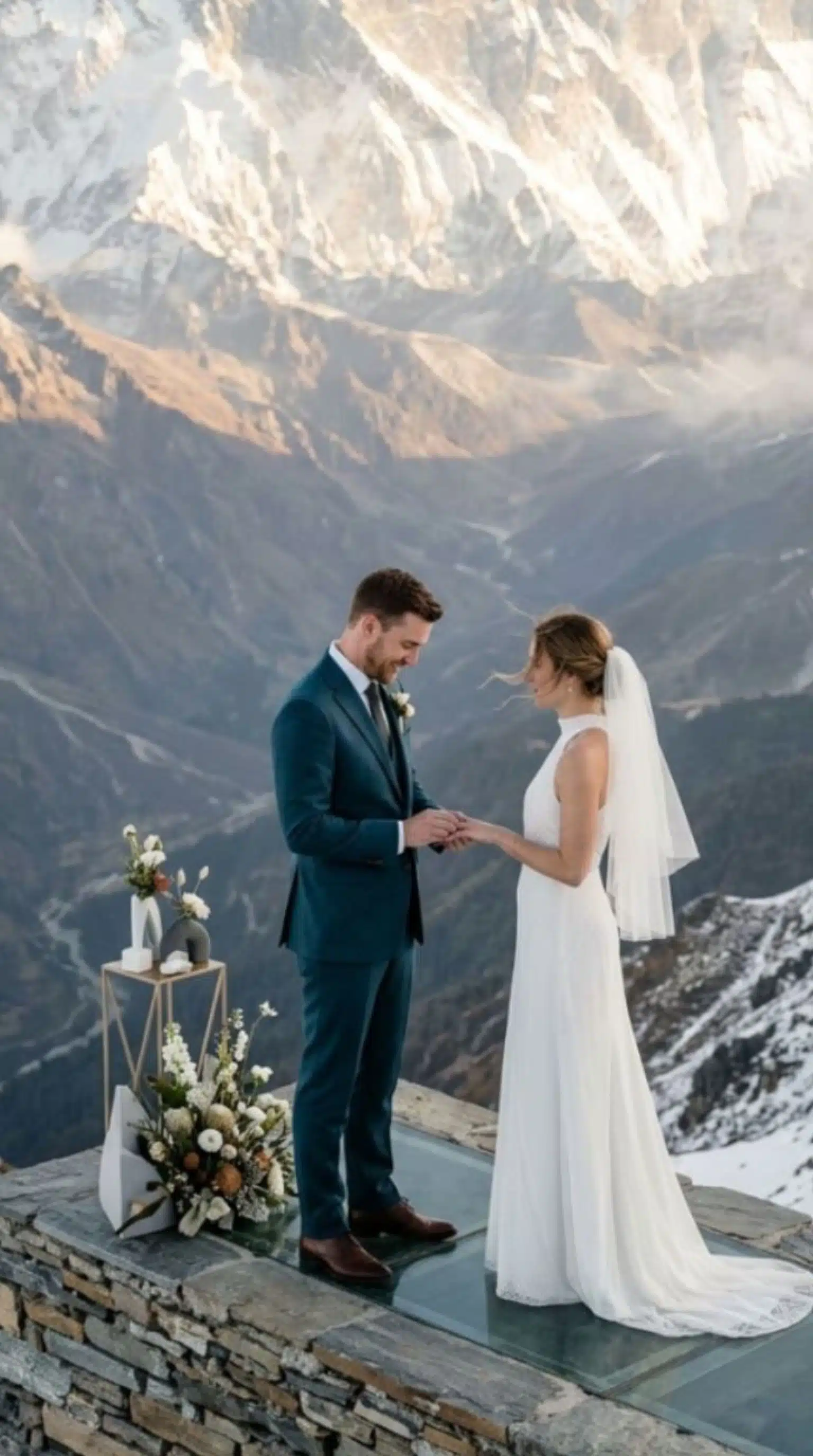
They recognize that a fiercely protected guest list is the only viable path to a genuinely authentic experience. It is mathematically impossible to have a real, vulnerable conversation with five hundred people, leaving the couple to offer nothing more than rehearsed smiles to a sea of strangers. A smaller, curated group allows the couple to actually exist in the moment, spending ten minutes reminiscing with a childhood friend instead of ten seconds posing for an obligatory photograph. This focus on the personal removes the stage and brings back the heart of the celebration. For Gen Z, being unapologetically “real” is the ultimate luxury; they demand a day that reflects their actual lives, establishing a new, emotionally resonant standard for modern matrimony.
Location as the Ultimate Love Language
Young couples are actively escaping the generic, windowless banquet hall. They are seeking out unconventional, visually stunning venues that speak directly to their personal aesthetics. The physical space is no longer treated as just a convenient container for a substantial crowd; it is now the visual centerpiece of the entire aesthetic experience. Instead of settling for identical hotel carpets and mass-produced chandeliers, modern couples are booking 400-year-old Japanese ryokans, remote European villas, and highly exclusive coastal boutique properties. These unique locations offer a naturally beautiful, built-in atmosphere, requiring far less artificial decoration while providing a strikingly memorable architectural setting.
The Dual-Purpose Celebration
This deliberate shift in geography fundamentally transforms the event into a dual-purpose celebration. These modern destination weddings are ingeniously designed to serve multiple roles simultaneously. They are a solemn ceremony, an intimate family reunion, and a highly curated group vacation rolled seamlessly into one cohesive itinerary. Guests are no longer just attending a static evening party; they are embarking on a shared, immersive retreat. This intentional structure creates a deeply engaging environment where two distinct families and friend groups can genuinely bond over several days, rather than forcing connections over a few rushed hours. The shared travel logistics and group excursions become a core part of the bonding experience, elevating the overall emotional resonance of the entire weekend.
Emerging Hotspots
Across the global map, both the Asia-Pacific region and historic European enclaves are experiencing an unprecedented influx of Gen Z wedding tourism. These regions are successfully capturing the younger market by offering exceptionally high service standards intertwined with rich, immersive cultural backdrops. Couples are eagerly planting their flags in highly specific, photogenic locales that promise absolute privacy and cultural authenticity. Here are fifteen verified destinations currently defining this new, micro-luxury era of matrimonial travel.
Kyoto, Japan: Ancient wooden shrines and historic ryokans offer profound serenity and timeless architectural elegance.
Gokarna, India: This coastal enclave provides an off-the-grid, highly private alternative to commercialized beach towns.
Sylhet, Bangladesh: Expansive, emerald tea gardens create a lush, organic backdrop for eco-conscious celebrations.
Bali, Indonesia: Jungle cliffside villas deliver world-class hospitality alongside dramatic, unforgettable tropical landscapes.
Hoi An, Vietnam: Lantern-lit historic streets bring a vibrant, deeply cultural atmosphere to the evening festivities.
Phuket, Thailand: Luxury boutique resorts seamlessly blend pristine white sands with high-end culinary experiences.
Palawan, Philippines: Crystal-clear lagoons offer absolute seclusion for water-bound, highly intimate micro-luxury ceremonies.
Jeju Island, South Korea: Volcanic landscapes and lush botanical gardens provide a surreal, naturally cinematic environment.
Chiang Mai, Thailand: Mountain retreats and elephant sanctuaries cater to couples seeking nature-integrated, mindful gatherings.
The Maldives: Private overwater bungalows define the absolute peak of exclusive, highly curated oceanic intimacy.
Tuscany, Italy: Centuries-old rustic vineyards promise a romantic, deeply historic European escape for small groups.
Amalfi Coast, Italy: Cliffside citrus groves provide a dramatic, sun-drenched Mediterranean aesthetic overlooking the sea.
Santorini, Greece: Iconic whitewashed terraces offer unparalleled sunset views for breathtaking, minimalist destination vows.
Algarve, Portugal: Sweeping golden cliffs and hidden sea caves ensure a dramatic, visually striking coastal event.
Lake Como, Italy: Majestic lakeside villas evoke a sense of timeless, cinematic European grandeur and sophistication.
Reallocating the Budget Toward Experience
The modern wedding ledger is getting a comprehensive makeover. Couples are stripping away the generic fluff that used to swallow thousands of dollars. This is not a reduction in overall cost, but a calculated move toward high-impact spending.
Where the Money Actually Goes
The days of the twenty-foot floral wall are rapidly fading. Gen Z increasingly views these massive, single-use displays as wasteful and static, moving those funds instead into high-end, highly personalized touches. This might manifest as a hand-painted menu for every individual guest or a bespoke welcome bag filled with premium local artisan goods.
Food is also seeing a massive, qualitative shift. The sprawling buffet featuring sixty lukewarm dishes is officially out. In its place, couples are opting for curated, multi-course tasting menus designed to act as genuine conversation starters. They are paying for quality seasonal ingredients and chef-led storytelling. By actively shrinking the guest list, they can finally afford a level of culinary excellence that was logistically impossible at scale. The budget is no longer about filling a room; it is entirely about filling a memory.
The Anatomy of the Multiday Itinerary
The wedding is no longer contained to just a few rushed hours on a Saturday night. It has evolved into a 72-hour immersive journey. This extended timeline allows the couple to actually slow down, successfully turning a notoriously stressful event into a relaxed, deeply enjoyable vacation for the entire group.
The weekend usually begins with a low-key welcome party, allowing guests from completely different eras of the couple’s life to meet and mingle before the main event. The second day might feature guided local cultural tours, group wellness sessions, or culinary excursions that give the celebration a distinct sense of place. The finale is often a carefully curated recovery brunch, providing a soft landing before everyone heads home. This intentional structure ensures that the couple actually gets to spend quality, uninterrupted time with their loved ones.
The Rise of Unconventional Entertainment
Standard wedding DJs and generic cover bands are no longer the default choice. Nearly half of modern couples are looking for something vastly more unique, seeking out entertainment that feels like a direct extension of their own personalities. This is entirely about creating a specific, memorable vibe that is impossible to replicate.
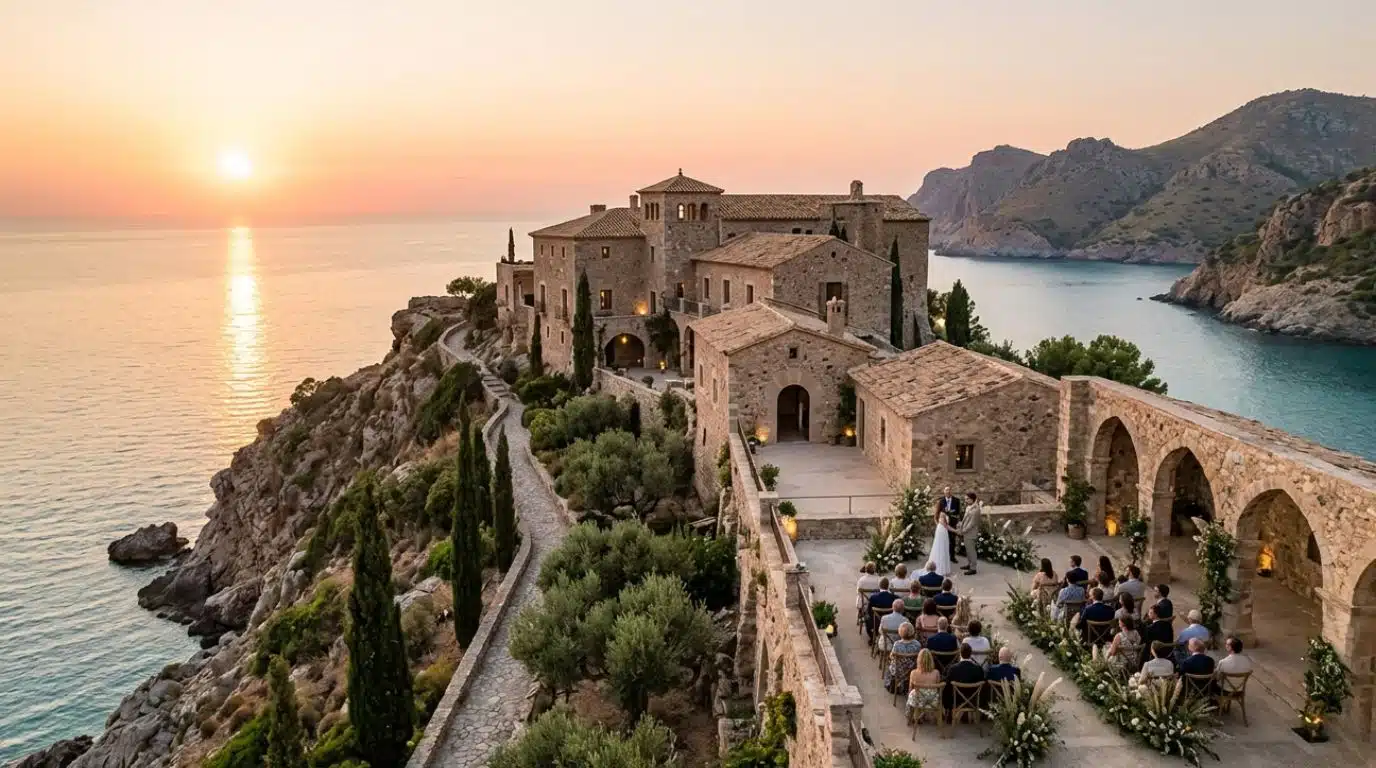
Many are hiring localized cultural performers to honor their destination’s heritage, while others are setting up interactive culinary stations where guests can learn to make a regional dish. You might see a live poet writing personalized verses for guests on a vintage typewriter or a silent disco taking place under the stars. These deliberate choices keep the energy high and the experience incredibly fresh, moving the wedding far away from a predictable, stale routine. The ultimate goal is to surprise and delight the inner circle at every turn, cementing a new standard of wedding luxury.
Marriages Made in Heaven, Curated on Earth: The Shift from Volume to Value
The traditional wedding industry is facing a sharp, undeniable reality check. Businesses built entirely on the sheer volume of the old ways are watching their foundations crack, realizing that planners and venues can no longer rely on the comfortable inertia of tradition. This is a total market reboot. To stay relevant, the industry must learn to speak the language of Gen Z wedding trends 2026, adapting to a world where being smaller is actually better.
The New Industry Standard
The wedding industry is undergoing a sweeping, necessary reckoning. Vendors who once thrived on massive guest counts must now pivot rapidly toward bespoke, highly personalized services. Planners are evolving into high-end travel concierges, and traditional studio photographers are becoming fly-on-the-wall documentary storytellers. The demand for cookie-cutter ballroom packages has effectively evaporated.
Venues must adapt to a landscape where aesthetic quality and travel appeal reign supreme. It is no longer enough to simply offer a large room and a standard sound system. The modern couple is looking for a collaborative partner in their adventure. They want seasoned professionals who understand the delicate nuance of a micro-luxe event. The definitive winners in this new economy will be the vendors who value the emotional depth of the moment over the physical width of the hall.
A Legacy of Memories Over Magnitude
The big fat wedding has been permanently disrupted. A generation that grew up heavily monitored in a digital world is fiercely hungry for something tangible, private, and real. They have looked closely at the massive spectacles of the past and decided to walk a completely different path, valuing a quiet morning coffee with a best friend far more than the glare of a stage light.
For Gen Z, the wedding day has been successfully reclaimed. It is no longer a public performance for the community or a heavy social obligation. It is a meticulously crafted, deeply intimate retreat for the chosen few. The era of the thousand-person crowd is definitively over, and the era of the shared, intimate journey has just begun. Love is still the center of the story, but now, the audience is simply the people who matter most.
Frequently Asked Questions (FAQs) on Gen Z Wedding Trends 2026
Are AI tools shaping Gen Z Wedding Trends 2026?
Yes, modern couples use AI purely for budget logistics, keeping the experience human.
Is sustainability in Gen Z Wedding Trends 2026?
Absolutely. Thrifting vintage attire and upcycling ceremony decor are major eco-friendly priorities.
Are bridal parties in Gen Z Wedding Trends 2026?
Yes. Despite intimate guest lists, couples still maintain large, dedicated wedding support squads.
2026






















