
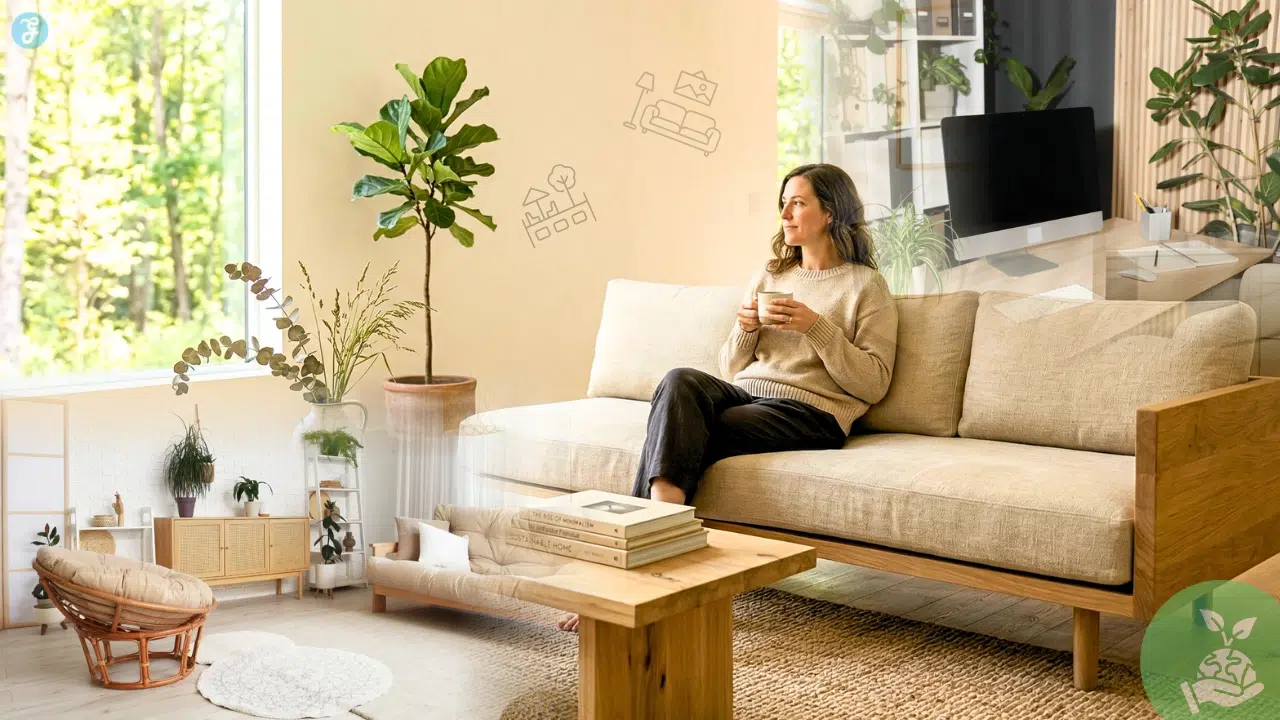
Clutter fills modern homes—overstuffed closets, crowded countertops, and unused gadgets. This excess creates daily stress and increases environmental harm through waste and pollution.
Trend-driven consumption, especially maximalist design, often leads to accumulation without purpose. The result is not just visual chaos, but a heavier ecological footprint.
Sustainable Minimalist Home Decor offers a smarter alternative. By focusing on simplicity, reducing excess, and choosing eco-friendly materials, it helps lower carbon emissions while improving overall wellbeing.
This guide explores the rise of minimalism in interior design, including core principles, the influence of Scandinavian styles, and practical ideas like using natural materials, prioritizing quality over quantity, and selecting multi-functional furniture—all for a cleaner, greener living space.
Understanding Minimalism in Interior Design
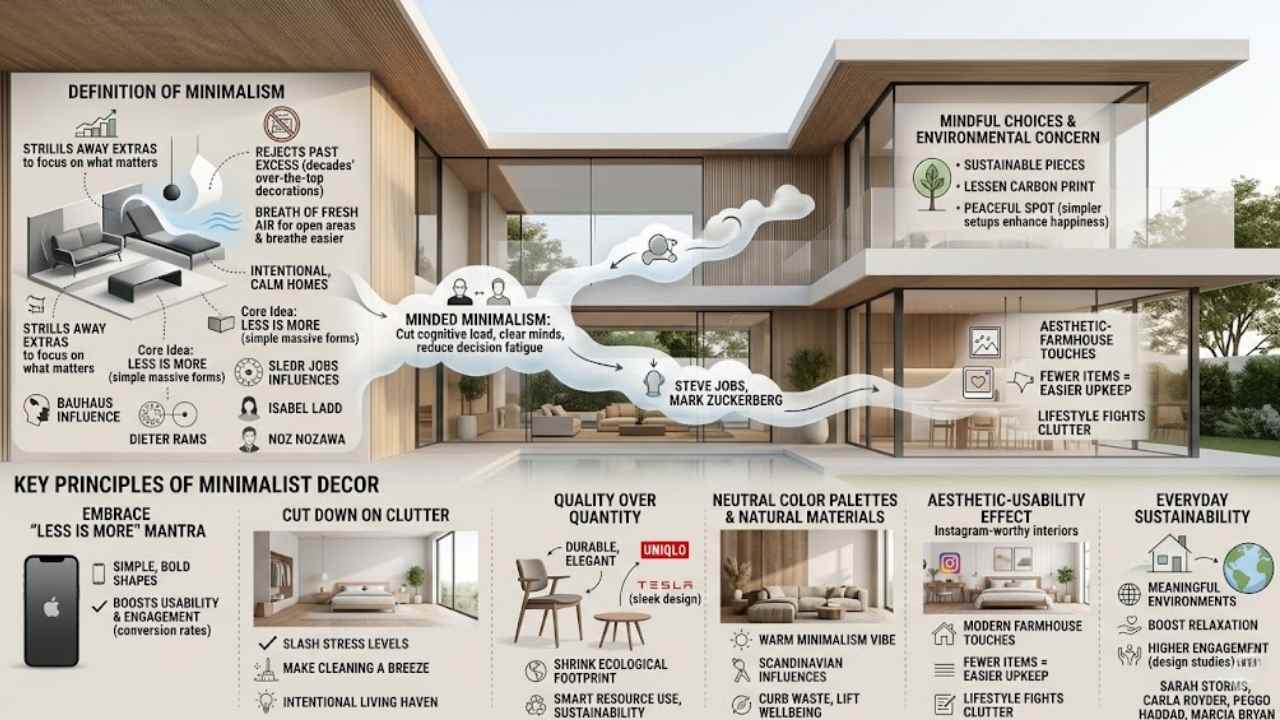
Ever feel overwhelmed by too much stuff in your living space? Minimalism strips away the extras, focusing on clean lines and open areas that let you breathe easier, much like the sleek designs from Bauhaus that inspired folks like Dieter Rams.
Definition of Minimalism
Minimalism in interior design strips away the extras to focus on what truly matters. It rejects the indulgent excess of past decades, like those over-the-top decorations that clutter spaces.
People embrace this style to build intentional, meaningful homes that feel calm and purposeful. Think of it as a breath of fresh air, where every item earns its spot. Interior designers like Isabel Ladd and Noz Nozawa champion this approach, highlighting aesthetic minimalism with clean lines and open areas.
The core idea? Less is more. That means simple, massive forms beat out complexity every time.
This movement has surged in popularity, drawing folks who want low-consumption lifestyles. Functional minimalism shines here, with brands like Muji and Ikea offering pieces that serve multiple roles.
Steve Jobs and Mark Zuckerberg lived by it, proving that few belongings can lead to clearer minds. In minimalist architecture, inspired by Bauhaus and Dieter Rams, you see neutral palettes and natural materials take center stage.
It all promotes mindful minimalism, cutting cognitive load and decision fatigue for better life satisfaction.
Key Principles of Minimalist Decor
Minimalist decor strips away the extras to highlight what truly matters in your space. This approach, rooted in the idea that less is more, helps you live with intention while easing your daily life.
- Embrace the “less is more” mantra as the heart of minimalist design, where you pick simple, bold shapes over fussy details, much like how an Apple iPhone cuts clutter for a clean look that boosts usability and even ramps up conversion rates in studies.
- Cut down on clutter to slash stress levels, since minimalist home decor clears out unneeded items, making your space a calm haven that promotes intentional living, and hey, it even makes cleaning a breeze by reducing stuff that needs attention.
- Go for quality over quantity in your picks, like choosing durable, multi-functional furniture from brands such as Uniqlo or Tesla-inspired sleek designs, which shrink your ecological footprint and support sustainability through smart resource use.
- Opt for neutral color palettes and natural materials to craft a warm minimalism vibe, drawing from Scandinavian influences that reject past decades’ over-the-top excess, and this aids the planet by curbing waste while lifting your wellbeing, though benefits can differ among groups like few belongings minimalism fans.
- Focus on mindful choices that echo environmental concern, as seen in tips from designers like Taniya Nayak or Megan Khalil, who push for sustainable pieces that lessen your carbon print and foster a peaceful spot, backed by finds in the Journal of Environmental Psychology showing simpler setups enhance happiness.
- Blend in aesthetic-usability effect principles to make your home both pretty and practical, think modern farmhouse touches or Instagram-worthy setups by folks like Sarah Storms or Carla Royder, where fewer items lead to easier upkeep and a lifestyle that fights clutter for better planet health.
- Promote everyday sustainability by ditching excess, inspired by experts such as Peggy Haddad or Marcia Bryan from Ellwood Interiors, since this resurged movement creates meaningful environments that cut waste, boost relaxation, and prove simpler interfaces in design studies yield higher engagement.
Environmental Benefits of Minimalist Decor
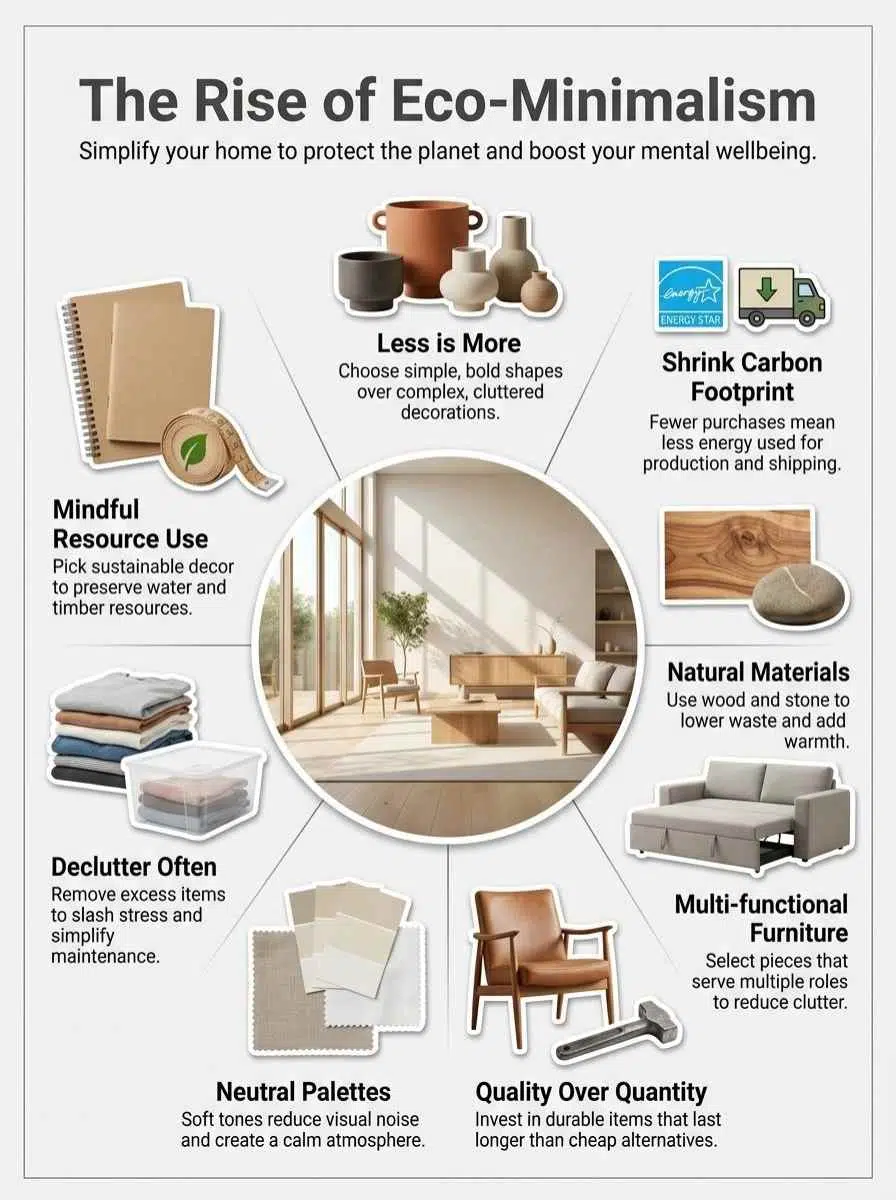
Your home as a calm oasis that also saves the Earth, with fewer items slashing that pesky carbon footprint from making and shipping tons of stuff. You cut waste by choosing sturdy oak tables over cheap plastic ones, and suddenly, your space feels lighter while resources like water and wood get used wisely, sparking curiosity about more green tricks ahead.
Reduced Carbon Footprint
Minimalism cuts your home’s carbon footprint by focusing on conscious choices in decor. You buy fewer items, so you use less energy in production and shipping. This approach rejects the excess of past decades, leading to a smaller ecological footprint.
Clutter for simple, massive forms that last longer; it feels like a breath of fresh air for the planet. Samantha Tosti, a key voice in home design & decor, often highlights how such intentional picks reduce environmental impact.
Think about your minimalist bedroom design: opt for quality pieces from brands like Panas, and you slash waste right away.
Designers push minimalism as a smart way to lower emissions through mindful resource use. You pick natural materials that don’t demand heavy manufacturing, shrinking that carbon trail.
A minimalist lifestyle boosts your wellbeing too, creating peaceful spaces without the stress of stuff. Hey, it’s like trading chaos for calm, all while helping Earth. Studies show simpler setups even ease home maintenance, saving time and resources in the long run.
Less is more for sustainability; minimalism lets us live lighter on the planet. – Samantha Tosti
Mindful Use of Resources
People choose minimalism to use resources wisely. This approach cuts down on waste, like buying fewer items that end up in landfills. Think of it as a smart shopper’s game plan, focusing on what truly matters.
Conscious choices in decor lead to a smaller ecological footprint. You pick durable pieces, such as wooden tables from sustainable sources, instead of cheap throwaways. Studies show this lifestyle boosts wellbeing too, by reducing clutter that drains your energy.
Folks embrace midimalism for its eco-friendly edge. They opt for natural fabrics, like cotton curtains, over synthetic ones that harm the planet. Intentional picks mean less energy spent on making and shipping stuff.
Your home stays simple, with multi-use items that serve double duty. This habit promotes sustainability in daily life, creating peaceful spaces without excess.
Less Waste and Clutter
Minimalism cuts down on waste by focusing on what you truly need. You ditch the extra stuff that piles up, like old gadgets or forgotten clothes. This approach echoes the “less is more” idea, which pushes for simple forms over messy complexity.
Think of it as clearing out your closet, you feel lighter right away. A minimalist lifestyle shrinks your ecological footprint, and it boosts your wellbeing too. Studies show this varies among groups, but many find real peace in it.
Clutter vanishes, stress drops, and your space turns calm. Maintenance gets easier with fewer items to dust or fix. People embrace this movement to live with intent, rejecting past excess.
You make conscious choices that help the planet. Natural materials replace cheap junk that ends up in landfills. Imagine your home as a serene haven, free from chaos. This shift promotes sustainability in daily life.
Intentional living sparks joy, like a breath of fresh air. Reduced clutter means a relaxing spot that eases your mind. Home care simplifies, leaving time for what matters. Minimalist designs prove more eco-friendly through smart picks.
They arose against over-the-top styles, favoring quality instead. Your wellbeing grows as you simplify.
Popular Minimalist Decor Trends
Ever wondered how a splash of beige can transform your living room into a calm oasis, folks? Dive right in with earthy woods and convertible sofas that pull double duty, saving space and sparking joy in your daily routine.
Neutral Color Palettes
Neutral color palettes anchor minimalist decor with soft tones like white, gray, and beige. They cut visual noise, creating calm rooms that feel open and airy. Picture a living room bathed in pale shades; it invites relaxation, much like a quiet walk in the woods.
This style rejects the flashy excess of past decades, embracing “less is more” for simple, bold forms instead. Folks choose these hues to build intentional spaces that boost well-being and ease stress from clutter.
Such palettes support the planet too, as they encourage mindful picks that slash waste and shrink your carbon footprint. Opt for paints from natural sources, and you promote sustainability in daily life.
Studies show simpler designs lift conversion rates, but in homes, they make upkeep a breeze with fewer items to tend. Scandinavian influences often mix in these colors, blending wood textures for multifunctional spots that last.
Adopters find greater peace, though benefits differ among groups chasing this meaningful path.
Natural Materials and Textures
People love natural materials in minimalist decor, like wood, stone, and cotton fabrics. These choices cut down on waste and clutter, just as minimalism promotes. You pick oak tables or linen curtains, and they bring textures that feel real and earthy.
This approach follows the “less is more” principle, with simple forms that reject excess. Studies show such designs boost well-being, and they make spaces peaceful for intentional living.
Running your hand over a smooth bamboo rug; it connects you to nature without the fuss.
Designers use these elements to lower your ecological footprint, much like the resurgence of minimalism against past indulgences. Go for wool throws or cork accents; they add warmth and reduce stress from clutter.
Home maintenance gets easier too, with fewer items to dust. Folks in Scandinavian styles often mix birch wood and jute, creating multi-functional spots that feel calm. This lifestyle choice supports sustainability, and it varies in benefits across groups, yet always aims for meaningful environments.
Multi-Functional Furniture
Multi-functional furniture fits right into minimalist decor, like a puzzle piece that solves space issues. Imagine a coffee table that flips open to store blankets, or a sofa that turns into a bed for guests.
These pieces follow the “less is more” principle, emphasizing simple forms over clutter. They cut down on waste by doing double duty, which shrinks your ecological footprint. You end up with fewer items, making home maintenance a breeze and reducing stress from all that extra stuff.
Folks love these trends because they promote intentional living, creating peaceful spots that boost well-being. Take Scandinavian influences, where a single bench serves as seating and storage.
This approach rejects the excess of past decades, drawing from a resurgence in minimalism. Different groups experience varying benefits, but in general, it leads to meaningful environments with mindful resource use.
Opt for quality items made from natural materials, and watch your space transform into a relaxing haven.
Scandinavian minimalism draws from Nordic roots, blending cozy hygge vibes with functional pieces like wooden stools and wool throws to create calm spaces that inspire folks everywhere to ditch the excess and embrace simple joy.
Craving tips on adding that Nordic flair to your pad? Check out the next sections for more!
People love Scandinavian minimalism for its clean, cozy vibe that roots back to Nordic countries like Sweden, Denmark, and Norway. This style popped up as a fresh answer to the over-the-top decor of earlier years, ditching extra frills for pure simplicity.
Think of it like a breath of fresh air in your home, where “less is more” rules the day, stressing big, basic shapes over fussy details. Folks flock to this movement to build spaces that feel on purpose and full of meaning, you know, like curating a life that truly fits.
Designers in this world pull from nature, using wood, wool, and linen to craft warm spots that hug you without the clutter. Imagine swapping your crowded living room for a spot where every chair or table pulls double duty, making life smoother and your mind calmer.
This approach has turned into a hit for anyone chasing that intentional spark, blending function with a nod to the planet’s health.
Scandinavian design brings a cozy, simple vibe to homes that many folks love. It ties right into minimalism by focusing on what truly matters, like comfort and nature.
- Bring in neutral color palettes from Scandinavian style to keep things calm and open; think soft whites, grays, and earth tones that echo the “less is more” principle, which emphasizes simple forms over complexity, and this reduces stress by cutting out clutter in your living space.
- Opt for natural materials like wood, wool, and linen to add warmth and texture; these choices support mindful use of resources, leading to a smaller ecological footprint, and they make home maintenance easier with fewer items needing attention.
- Pick multi-functional furniture, such as a sleek sofa bed or storage ottoman, inspired by Scandinavian functionality; this promotes sustainability through everyday choices, creates a relaxing environment for intentional living, and boosts well-being by eliminating unnecessary stuff.
- Embrace hygge, that Danish concept of coziness, by adding soft lighting and comfy throws; it fits the minimalist resurgence against past excess, rejecting ornamentation, and studies show simpler designs increase conversion rates, though well-being benefits vary across groups.
- Use open shelving and clean lines to let light flow freely, drawing from Nordic influences; this approach results in less waste, contributes to greater well-being, and has become popular among those seeking meaningful living environments.
- Incorporate plants and natural elements for a fresh feel, aligning with environmental benefits like reduced carbon footprint; imagine chatting with friends in a space that feels peaceful, and it promotes intentional living that eases daily stress.
Tips for Creating Minimalist Spaces
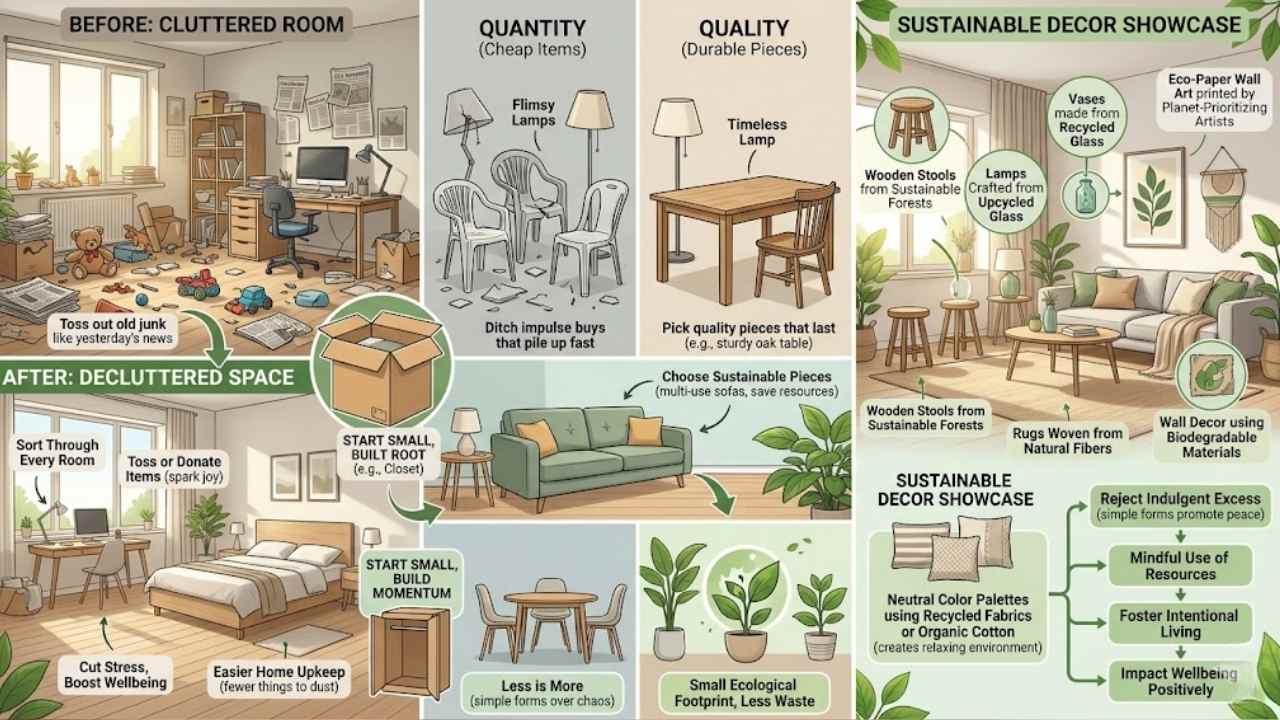
Your home as a calm oasis where you declutter by tossing out old junk like yesterday’s news, pick just a few top-notch items such as a sturdy oak table instead of piling up cheap stuff, and grab eco-friendly pieces like recycled glass vases to cut down on waste, all while boosting your mood and the planet’s health—curious for even more ways to make it happen? Keep scrolling!
Declutter and Simplify
Minimalism thrives when you clear out the extras. You create calm by focusing on essentials.
- Kick off your declutter journey by sorting through every room, and toss or donate items that no longer spark joy, much like shedding old skin for a fresh start; this cuts stress, as studies show eliminating clutter from living spaces eases your mind and boosts wellbeing, with benefits varying across groups who embrace this path.
- Pick quality pieces that last, ditching the impulse buys that pile up fast; embrace the “less is more” principle, which highlights simple forms over chaos, and watch how this choice shrinks your ecological footprint while making home upkeep a breeze with fewer things to dust or fix.
- Turn to natural materials like wood or linen for that intentional vibe, steering clear of trendy junk that ends up in landfills; this mindful shift, born from rejecting past decades’ over-the-top excess, promotes sustainability through everyday picks and crafts a peaceful spot for relaxed living.
- Imagine chatting with a friend over coffee in your streamlined den, free from distracting piles; by focusing on multi-functional items, you simplify routines, reduce waste, and align with minimalism’s resurgence as a go-to movement for meaningful environments that enhance conversion to calmer days.
- Grab a box and start small, maybe with your closet, to build momentum without overwhelm; this approach eases maintenance by trimming what needs attention and fosters intentional living, leading to greater wellbeing and a home that feels like a deep breath after a long day.
Focus on Quality Over Quantity
Pick items that last, folks. Go for that solid wood chair instead of cheap plastic ones that break fast. This choice cuts down on waste, and it fits the “less is more” idea at minimalism’s core.
People who embrace this see a smaller ecological footprint, plus greater wellbeing from spaces free of clutter. Imagine ditching ten flimsy lamps for one sturdy, timeless piece; it eases maintenance, reduces stress, and sparks joy in everyday living.
Quality beats quantity every time in minimalist decor. Folks reject excess from past decades, opting for simple forms that promote peace. Studies show simpler setups boost conversion rates, but in homes, they create relaxing spots for intentional living.
Choose sustainable pieces like multi-use sofas; they save resources and foster mindful habits. This approach, popular among those seeking meaning, varies in benefits across groups, yet it always supports the planet.
Choose Sustainable Decor Pieces
Sustainable decor pieces make your minimalist space eco-friendly and stylish. They align with the “less is more” principle that emphasizes simple forms over complexity.
- Opt for items made from natural materials like bamboo or reclaimed wood, which cut down on waste and clutter while promoting a smaller ecological footprint, just like how minimalism resurged as a response to past decades’ excess by rejecting unnecessary ornamentation.
- Select multi-functional furniture from brands that focus on quality over quantity, for instance, a coffee table that doubles as storage; this choice reduces your carbon footprint and makes home maintenance easier by limiting items that need care.
- Incorporate pieces with neutral color palettes using recycled fabrics or organic cotton, you know, the kind that creates a relaxing environment and boosts well-being, much like how minimalist lifestyles contribute to greater total happiness through intentional living.
- Go for decor that embodies Scandinavian minimalism’s influence, such as wooden stools from sustainable forests; studies show simpler designs increase conversion rates in interfaces, and hey, they do the same for turning houses into peaceful homes.
- Choose items that support mindful use of resources, like lamps crafted from upcycled glass, which help eliminate unnecessary clutter and reduce stress, echoing how minimalism has become popular among folks seeking meaningful environments.
- Pick sustainable rugs woven from natural fibers, ensuring they promote sustainability in everyday choices; after all, minimalist interiors foster intentional living that varies in benefits across subgroups, with some folks gaining more from the peaceful vibe.
- Seek out wall art printed on eco-paper from artists who prioritize the planet, this way you embrace minimalism as a lifestyle that impacts well-being positively, and it sure beats the indulgent excess of yesteryear.
- Grab vases or planters made from biodegradable materials, they tie into the core principle of less is more by using massive, simple forms that make spaces easier to maintain and less wasteful.
Minimalism as a Lifestyle Choice
Ditching the chaos of endless possessions, and suddenly feeling lighter, more at peace with yourself. This approach sparks joy in daily routines, cuts down on waste, and invites you to make eco-friendly picks that stick, like swapping fast fashion for timeless cotton shirts.
Impact on Well-Being
Minimalism boosts your general wellbeing, folks, by cutting down on clutter that weighs you down like an old backpack full of rocks. You feel less stress when you ditch those extra items, creating a peaceful space that lets you breathe easy and live with purpose.
Your home turns into a calm oasis, promoting intentional choices that spark joy every day. Studies show this lifestyle shrinks your ecological footprint too, leading to greater happiness for many who embrace it.
Benefits differ among groups, with some folks reaping more rewards from this popular movement than others. They seek meaningful environments, and minimalism delivers by making life simpler and more relaxing.
You focus on what truly matters, like a clear path through a foggy forest, reducing the chaos that daily grind brings. This approach fosters sustainability through smart, everyday picks that enhance your mental health.
Promoting Sustainability Through Everyday Choices
People choose minimalism to cut their ecological footprint. They make conscious picks in daily life, like buying fewer items. This habit rejects the excess from past decades. Folks skip unnecessary stuff, which slashes waste.
A smaller footprint boosts wellbeing too. Imagine ditching clutter for calm; it feels like a breath of fresh air, right? Studies show this lifestyle sparks more intentional living.
Many join the movement for meaningful spaces. They pick quality goods that last, not cheap throwaways.
Daily choices build sustainability. Opt for reusable bags at the store. Turn off lights to save energy. These steps echo minimalism’s core. Reject ornamentation; embrace simple forms.
Your home stays eco-friendly this way. Friends, it’s like planting seeds for a greener planet. The movement grows among seekers of purpose. Conscious acts reduce stress and promote peace.
Final Thoughts
You’ve seen how minimalism cuts down on waste, boosts your well-being, and helps the planet with smart choices like neutral palettes and multi-functional chairs. These ideas work simply, you can start by tossing out clutter today without much fuss.
What one item in your home could you let go of right now to feel that calm rush? Embracing this style shrinks your eco-footprint and sparks joy in daily life, imagine living lighter like a bird in flight.
Check out books on Scandinavian hygge for more tips, or join online forums to swap stories with fellow minimalists. Go ahead, make your space a peaceful haven that honors the Earth.
Frequently Asked Questions (FAQs) About Sustainable Minimalist Home Decor
1. What is minimalism in decor?
Minimalism in decor means choosing simple, clean lines for your home, like picking a plain wooden table instead of a fancy carved one. It cuts down on clutter, making spaces feel calm and open, kind of like a breath of fresh air after a long day.
2. How does minimalism help the planet?
By using fewer items, minimalism reduces waste and saves resources, think of it as giving Earth a high-five. You buy less stuff, so factories make less pollution.
3. Why is minimalism on the rise?
People are tired of stuff piling up, and they’re waking up to how overbuying hurts our world, like a wake-up call from Mother Nature herself. This trend pushes for decor that’s smart and green, helping folks live lighter. Plus, it’s easier on the wallet, who wouldn’t love that?
4. How can I start with planet-friendly minimalist decor?
Begin by decluttering one room, donating old lamps or rugs you don’t need. Pick items made from recycled wood or natural fabrics to keep things eco-wise.