
What is Gut Health and the Gut Microbiome?

Gut health means a balanced gut microbiome in your gi tract. Trillions of bacteria live there, like a bustling city full of workers keeping things running smooth. These microbes help with digestion, immune function, and even hormones.
Foods you eat shape these bacteria, with quick shifts from a single meal and lasting changes over time. Imagine your gut as a garden; the right seeds grow strong plants. Medical pros, like those at Mayo Clinic and Harvard Health Publishing, call gut health a big player in total wellness and joy.
Gut health specialists, such as Dr. Megan Rossi, the gut health doctor, agree it ties to mental health too.
Prebiotics and probiotics feed those good bacteria. Think onions, garlic, whole grains, yogurt, miso, and fermented foods as their favorite snacks. A mix of fiber, fruits, veggies, and these items sparks growth of helpful microbes.
Your gut microbiota thrives on this balance, fighting off bad bugs. Antibiotics can wipe out the crowd, so rebuild with smart eats. Experts from UT MD Anderson and University of Toronto stress this link to things like cognitive health and immune strength.
Keep that inner ecosystem happy, and you feel the perks everywhere.
Why Gut Health is Important
Your gut acts like a bustling city, full of trillions of bacteria that keep everything running smooth. Foods you eat shape these bacteria in big ways, with effects that hit quick or stick around for years.
Think of it as tending a garden; the right mix promotes health benefits that touch your whole body. Medical pros, like Dr. Megan Rossi and Partha Nandi M.D., point out how a strong gut ties to happiness and wellness.
Skip the standard American diet, loaded with ultra-processed foods, alcohol, and gluten that throw things off. Instead, load up on plant-based foods, berries, and cruciferous vegetables to fight issues like constipation and even lower risks for Alzheimer’s disease or Parkinson’s disease.
Clinical trials from places like Harvard University and the University of Bergen back this up. They show gut health links to stroke prevention and work at spots like the Lyda Hill Cancer Prevention Center or Children’s Cancer Hospital.
The Body Coach often says, “Heal your gut, save your brain,” and that rings true. A diverse microbiome fights off diseases and boosts your mood, like a shield against life’s curveballs.
Prebiotic foods, such as onions, garlic, and whole grains, feed those good bacteria and spark growth. Experts stress that gut health supports cancer prevention and general vitality.
Imagine your digestive tract as a command center; it influences everything from energy levels to brain function. Dietary changes, including a plant-based diet, deliver real health benefits by nurturing beneficial bacteria.
Fermented foods like yogurt and miso join the party, supporting a balanced system. Studies highlight how poor gut health raises risks for serious conditions, but smart choices flip the script.
Professionals at the School of Health Professions agree; they tie strong guts to better outcomes in clinical trials. You build resilience against everyday woes, turning small habits into big wins for your body.
Signs of an Unhealthy Gut
Gut health ties into your general wellness, as experts like Dr. Megan Rossi point out. Poor gut balance can show up in sneaky ways, even linking to risks like Alzheimer’s disease or Parkinson’s disease down the line.
- Bloating and gas hit hard when your gut microbiome lacks diverse bacteria, often from skimping on fiber-rich foods like whole grains or veggies, which normally feed those good bugs and keep things smooth.
- Constant fatigue sneaks in because an unhealthy gut struggles to absorb nutrients, and without enough sleep or stress management, it throws off your energy, making you feel like you’re running on empty.
- Upset stomach issues, like diarrhea or constipation, flare up if you overload on ultra-processed foods instead of hydrating well and choosing fermented picks such as yogurt or miso that support beneficial bacteria.
- Skin problems, think acne or rashes, pop up as your gut’s imbalance affects inflammation, especially if you eat out too often and skip polyphenol-rich foods that could calm things down.
- Mood swings or anxiety creep in since gut health links to brain function, and ignoring exercise or a balanced diet with fruits and onions can mess with those happy vibes medical pros say are key to happiness.
- Weight changes without reason signal trouble, as limited diverse foods and poor hydration disrupt metabolism, while regular activity and prebiotic garlic help get beneficial bacteria back on track.
- Frequent infections occur when antibiotics wipe out good gut flora, and without rebuilding through probiotic fermented foods, your immune system weakens, leaving you open to more bugs.
How to Improve Your Gut Health
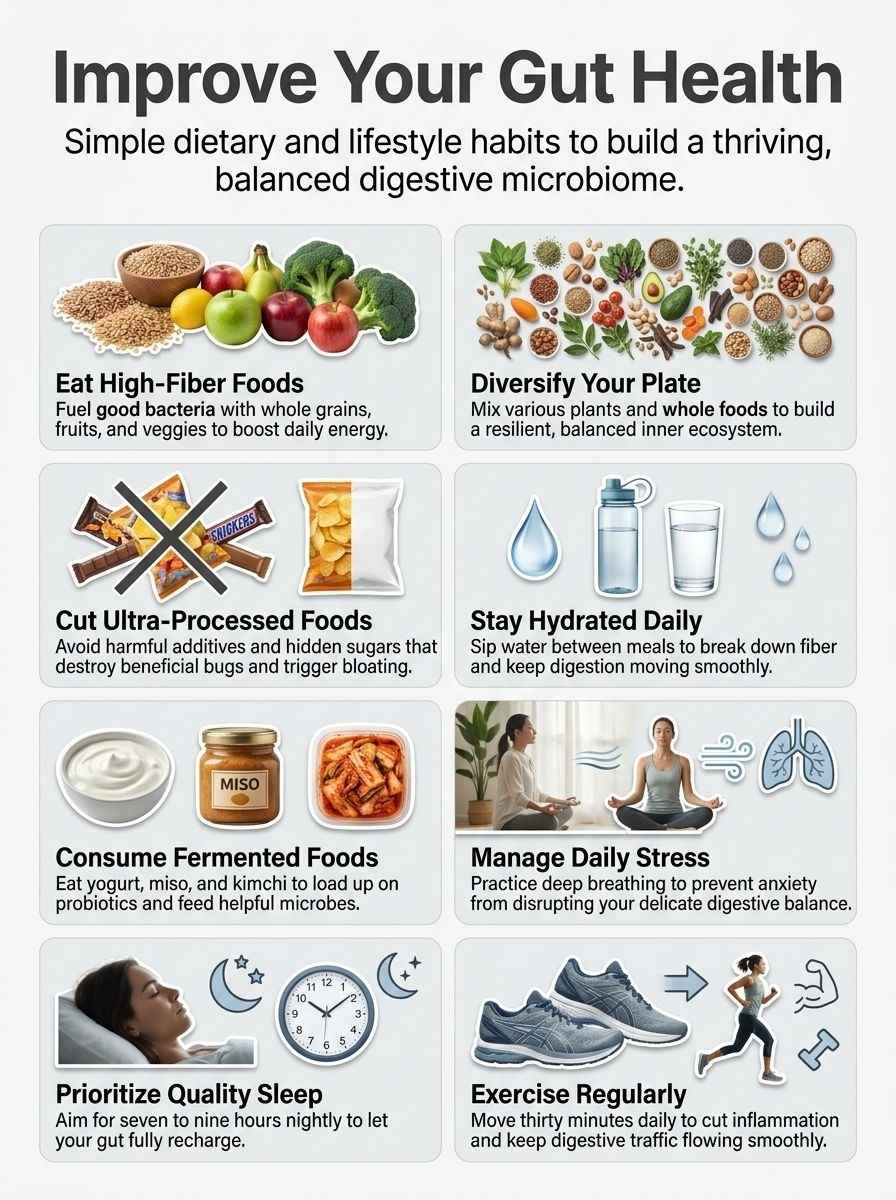
Your gut acts like a bustling city, full of microbes that need the right fuel to thrive, and experts like Dr. Megan Rossi suggest starting with whole grains and colorful veggies to keep things running smooth.
Imagine your meals as a party for good bacteria, where yogurt and kimchi join the fun, making your digestion feel like a well-oiled machine, so read on for more tips that fit your daily routine.
Eat a high-fiber diet
Boost your fiber intake to feed the good bacteria in your gut. Foods you eat shape those bacteria in your digestive tract, both now and over time. Think of fiber as fuel for your gut’s tiny workers; they thrive on it.
Grab whole grains, fruits, and veggies daily. Apples, berries, and broccoli pack a punch. This simple step stands as one of five easy ways to lift your gut health. A balanced diet with fiber, plus some fermented picks like yogurt, sparks growth of helpful bugs.
Dr. Megan Rossi calls this the smart path to a happy belly.
Increasing plant diversity in your diet is key to nurturing a diverse microbiome, says gut expert Dr. Megan Rossi.
Mix in onions and garlic too; they act like prebiotic stars. Your gut loves the variety. Cut back on processed junk, aim for home meals most days. Feel the difference in energy and mood.
Include a diverse range of foods
Eat a mix of foods to keep your gut happy. Foods you eat shape the bacteria in your digestive tract. This happens fast and lasts long. Think of your gut like a garden. Different plants need various soils to thrive.
Add whole grains, onions, and garlic to feed good bacteria. Dr. Megan Rossi, a gut health expert, points out how this diversity boosts your health.
Mix in fruits, vegetables, and fermented foods too. Yogurt and miso work well as probiotics. They help beneficial bacteria grow strong. A balanced diet like this supports your gut.
It leads to better general wellness. Imagine your meals as a party for microbes. Everyone gets invited, and the fun never stops.
Limit ultra-processed foods
Ultra-processed foods pack in additives, sugars, and fats that mess with your gut bacteria. They crowd out the good stuff, leading to short-term upsets like bloating and long-term issues in your digestive tract.
Cut back on them, and you give beneficial bacteria a chance to thrive. Dr. Megan Rossi, a gut health specialist, points out how these foods harm your microbiome balance. Think of your gut like a garden; junk food acts as weeds that choke out the flowers.
Aim to limit eating out to no more than once a week, as those meals often hide ultra-processed traps. Swap them for home-cooked options with fiber, fruits, vegetables, and fermented foods.
Your body notices the change fast. This shift promotes healthy bacteria growth, boosts your mood, and supports general wellness. Experts agree, gut health ties straight to happiness, so make this swap count.
Stay hydrated
Water plays a key role in your gut health. It helps move food through your digestive tract with ease. Think of it like oil in a machine, keeping everything smooth. Drink plenty of fluids each day to support those good bacteria.
Gut expert Dr. Megan Rossi stresses this simple step. She notes how hydration aids in fiber breakdown too.
Your body needs water to absorb nutrients well. Sip water between meals, not just with them. This habit prevents bloating and keeps your gut happy. Add slices of lemon for flavor, like a fun twist on plain old H2O.
Staying hydrated feels good, and your microbiome thanks you for it. Small sips add up to big wins for your belly.
Eat fermented foods
Fermented foods pack a punch for your gut, like yogurt, miso, and sauerkraut. They load up on probiotics, those good bacteria that keep your digestive tract happy. Dr. Megan Rossi, a top gut health expert, often points out how these foods feed beneficial bugs in your belly.
Imagine your gut as a bustling city; fermented picks help the friendly residents thrive, boosting health. Mix them into meals, say, a dollop of yogurt on fruit or miso in soup, and watch your microbiome flourish.
Pair fermented foods with prebiotics like onions, garlic, and whole grains for even better results. This combo promotes growth of helpful bacteria, as part of a balanced diet full of fiber, fruits, and veggies.
You feel the difference, with smoother digestion and more energy. It’s like giving your gut a daily high-five, simple yet effective for long-term wellness.
Consume foods rich in polyphenols
Polyphenols pack a punch for your gut, folks. These plant compounds feed the good bacteria in your digestive tract. Think berries, dark chocolate, green tea, and apples. They help those microbes thrive, much like fertilizer boosts a garden.
Dr. Megan Rossi, a gut health expert, points out how a balanced diet with fruits and veggies promotes beneficial bacteria growth. You support a healthy gut this way.
Add some red wine or nuts to your meals, in moderation of course. Such foods deliver polyphenols that aid digestion. Your gut microbiome loves the variety, leading to better general health.
Imagine your belly as a bustling city; polyphenols keep the helpful residents happy and active. Stick with whole foods to reap these benefits without the junk.
Practice mindful eating
Mindful eating means paying full attention to your food and how you eat it. This practice supports your gut by helping you make better choices that feed good bacteria.
- Slow down during meals to chew each bite well, which aids digestion and lets your body absorb nutrients from fiber-rich foods like whole grains, fruits, and veggies that promote beneficial bacteria growth, as foods you eat significantly impact the type of bacteria in your digestive tract with both short-term and long-term effects.
- Listen to your hunger cues, folks, so you avoid overeating processed junk that harms your gut microbiome; limit ultra-processed foods and eat out no more than once a week to improve gut health, just like Dr. Megan Rossi, a gut health specialist, advises in her work on general wellness.
- Savor flavors and textures, turning eating into a calm ritual that reduces stress, since managing stress plays an important role in supporting general gut health, and think of it as giving your gut a gentle hug instead of a rushed shove.
- Stay present without distractions like phones or TV, which helps you notice how fermented foods such as yogurt or miso feel in your system, feeding those helpful bacteria as prebiotic and probiotic foods like onions, garlic, and whole grains do the same job.
- Pair this habit with hydration, sipping water mindfully throughout the day, because staying hydrated is an essential practice for maintaining and improving gut health, and it keeps everything moving smoothly like a well-oiled machine.
- Combine mindful eating with enough sleep and activity, as getting sufficient sleep is a fundamental factor in supporting digestive health and general wellness, plus regular exercise is recommended as part of a comprehensive approach to maintaining gut health.
- Build a balanced plate with diverse items, including those rich in fiber, since increasing fiber intake is one of five simple ways to improve your gut health, and a balanced diet containing fiber, fruits, vegetables, and fermented foods promotes beneficial bacteria growth and supports a healthy gut.
- Reflect on how your choices boost happiness, drawing from insights by medical professionals and gut health specialists like Dr. Megan Rossi who highlight gut health as a potential key factor in general health and happiness.
Lifestyle Changes for Better Gut Health
Hey, you know that feeling when life throws curveballs and your stomach ties itself in knots? Well, dialing back stress with simple tricks like deep breathing or a quick walk can calm your gut right down, and pairing that with solid shut-eye—aim for seven to nine hours a night—lets your microbiome recharge like a phone on a full battery.
Throw in some movement, say dancing to your favorite tunes or chasing the dog around the yard, and you’re giving those good bacteria the boost they crave. Picture your gut as a bustling city; keep the traffic flowing smooth with these habits, and it’ll thank you with more energy and fewer tummy troubles.
Curious how probiotics fit into this puzzle? Keep scrolling for the scoop.
Manage stress effectively
Stress hits your gut hard, folks. It throws off the balance of good bacteria down there, leading to all sorts of discomfort. Dr. Megan Rossi, a top gut health specialist, points out how this ties into your general health and happiness.
You feel it in your mood, your energy, even your daily grind. Imagine stress as a sneaky thief, robbing your gut of its peace. Medical pros agree, managing it plays a key role in keeping things smooth.
Try deep breathing exercises to calm the storm. Walk in nature, or chat with a friend over coffee. These simple steps feed your beneficial bacteria and boost your wellness. Think of it like giving your gut a cozy blanket on a rough day.
You deserve that relief, and your body will thank you with better vibes.
Get enough quality sleep
Sleep hits your gut like a reset button. You need good rest to keep those gut bugs happy. Experts, like Dr. Megan Rossi, say gut health ties straight to your joy and well-being. Skimp on shut-eye, and your digestion suffers.
Aim for seven to nine hours each night. That simple step boosts your belly’s balance.
Picture your gut as a busy city that needs quiet nights to thrive. Quality sleep fuels the good bacteria down there. It supports your whole body’s health, from mood to energy. Cut back on screens before bed, folks.
Create a calm routine, and watch your gut thank you with better vibes.
Stay physically active
You know, regular exercise acts like a tune-up for your gut, keeping those beneficial bacteria happy and active. Experts, such as Dr. Megan Rossi, point out that gut health ties right into your total health and happiness.
Move your body daily, and you support a thriving microbiome. Take a brisk walk, hit the gym, or dance around your living room, it all counts. This habit boosts digestion, cuts inflammation, and even lifts your mood.
Imagine your gut as a bustling city; exercise keeps the traffic flowing smooth.
Aim for at least 30 minutes most days, mixing cardio with strength training for the best gut perks. Your body craves this movement to feed those good bugs. Dr. Megan Rossi often shares how simple activities make a big difference in gut balance.
Feel that energy surge? That’s your microbiome thanking you. Keep it fun, like joining a friend for a hike, and watch your gut health soar.
The Role of Probiotics and Prebiotics
Probiotics add live good bacteria to your gut, like the ones in yogurt and miso. Prebiotics feed those bacteria, found in onions, garlic, and whole grains. These foods help beneficial microbes thrive, much like fertilizer boosts a garden.
Dr. Megan Rossi, a gut health expert, points out that gut health acts as a key factor in your total health and happiness. Eat fermented foods daily; they promote growth of friendly bacteria.
A balanced diet full of fiber, fruits, vegetables, and these items supports a healthy gut, folks say it’s like giving your insides a high-five.
Think of your gut as a bustling city where good bacteria keep things running smooth. Add probiotics through yogurt or fermented picks, and prebiotics via onions or grains to fuel them.
This combo fights off bad bugs, boosts digestion. Dr. Megan Rossi stresses how such foods impact bacteria types in your tract, with effects that last. Mix in these elements, and you nurture a thriving microbiome, simple as that.
The Impact of Antibiotics on Gut Health
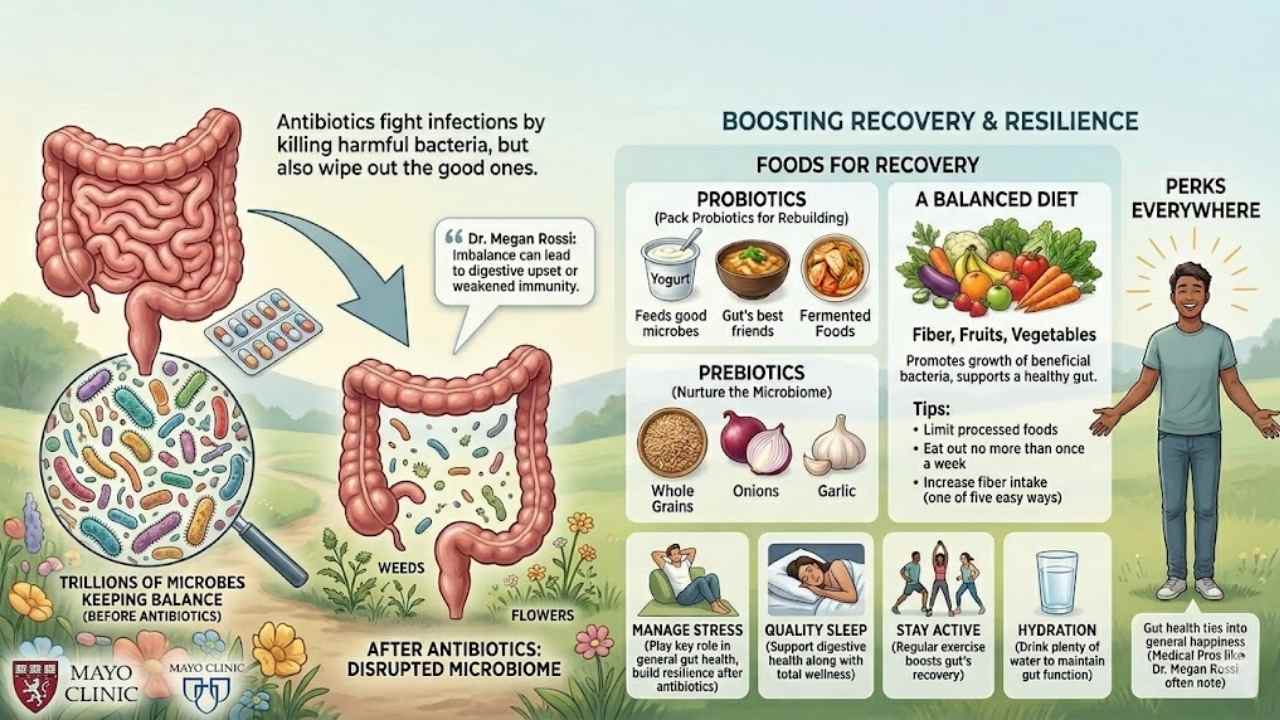
Antibiotics fight infections by killing harmful bacteria, but they also wipe out the good ones in your gut. This disruption throws off your gut microbiome, that bustling community of trillions of microbes keeping things in balance.
Imagine it like a garden after a storm; weeds might take over if you don’t replant the flowers. Dr. Megan Rossi, a top gut health specialist, points out how this imbalance can lead to issues like digestive upset or weakened immunity.
Foods you eat play a big role here, with short-term and long-term effects on the types of bacteria in your digestive tract. A balanced diet full of fiber, fruits, vegetables, and fermented foods promotes growth of those beneficial bacteria and supports a healthy gut.
Think of yogurt or miso as your gut’s best friends; they feed the good microbes and help them bounce back. Prebiotic foods like whole grains, onions, and garlic do the same, nurturing the microbiome back to strength.
Stress adds another layer to this challenge, since it plays a key role in general gut health. You manage it well, and your gut thanks you by staying more resilient after antibiotics.
Sleep matters too; get enough quality rest, and you support digestive health along with your total wellness. Exercise fits in here as well; stay active regularly, and you boost your gut’s recovery.
Limit processed foods to keep things on track, and aim to eat out no more than once a week. Hydration counts a lot; drink plenty of water to maintain gut function. Fermented foods step up as heroes, packing probiotics that rebuild what antibiotics knock down.
Gut health ties into your general happiness, as medical pros like Dr. Megan Rossi often note. Increase fiber intake, one of five easy ways to improve things, and watch your microbiome thrive again.
Myths About Gut Health
You’ve probably heard some tall tales about gut health, so let’s bust a few myths wide open with solid facts.
| Myth | Truth |
|---|---|
| Gut health plays no big role in your total wellness. | Gut health stands out as a key factor in total health and happiness, say medical professionals and gut health specialists. Think of it like the engine in your car, it drives everything forward. |
| Foods you eat make zero difference to bacteria in your digestive tract. | Foods you eat significantly impact the type of bacteria found in your digestive tract, with both short-term and long-term effects. Switch up your plate, and watch those gut bugs change for the better. |
| Increasing fiber intake won’t help your gut at all. | Increasing fiber intake ranks as one of five simple ways to improve your gut health. Grab some oats or beans, your gut will thank you. |
| Staying hydrated does nothing for your gut. | Staying hydrated counts as an essential practice for maintaining and improving gut health. Drink up, folks, keep that system flowing smooth. |
| Managing stress has no link to your gut. | Managing stress plays an important role in supporting total gut health. Take a deep breath, it’s like giving your gut a cozy hug. |
| Prebiotic and probiotic foods don’t feed good bacteria. | Prebiotic and probiotic foods such as whole grains, onions, garlic, fermented foods, miso, and yogurt feed beneficial bacteria in your gut. Load your fridge with kimchi or kefir, and let the good guys thrive. |
| A balanced diet skips fiber, fruits, vegetables, and fermented foods. | A balanced diet containing fiber, fruits, vegetables, and fermented foods promotes beneficial bacteria growth and supports a healthy gut. Mix in some apples, broccoli, and sauerkraut, your microbiome will party. |
| Eat tons of processed foods and dine out often for great gut health. | Limiting processed food consumption and eating out no more than once a week helps improve gut health. Skip the fast food joint, whip up a home salad instead, it’s a game changer. |
| Regular exercise harms your gut. | Regular exercise gets recommended as part of a comprehensive approach to maintaining gut health. Lace up those sneakers, go for a jog, your gut loves the motion. |
| Getting enough sleep ignores digestive health. | Getting sufficient sleep acts as a fundamental factor in supporting digestive health and total wellness. Hit the hay early, wake up with a happier belly. |
Final Thoughts
A high-fiber diet, fermented foods like yogurt and miso, and a variety of vegetables can significantly improve gut health by supporting a balanced microbiome. Simple daily habits—such as swapping processed snacks for whole foods and staying hydrated—make a noticeable difference.
Strong gut health helps reduce bloating, supports digestion, and even boosts mood and energy levels. For deeper insights on prebiotics and stress management, resources from gut health expert Dr. Megan Rossi are highly valuable.
Poor sleep can disrupt gut balance, but small lifestyle adjustments can quickly restore it. Start making these changes today to improve gut health and enjoy lasting energy and overall well-being.
Frequently Asked Questions (FAQs) About Improving Gut Health
1. Who is Dr. Megan Rossi, and why should I listen to her on gut health?
Dr. Megan Rossi is a top gut health expert, like a friendly guide in a confusing maze. She shares simple tips that make your belly feel better, drawing from her work as a dietitian. Think of her as your go-to pal for tummy troubles, always ready with science-backed advice.
2. What does Dr. Megan Rossi recommend for better gut health?
Eat more fiber-rich foods, she says, to keep things moving smoothly. Dr. Megan Rossi also pushes for probiotics, those good bacteria that act like tiny helpers in your gut.
3. How can I start improving my gut health using Dr. Megan Rossi’s guide?
Follow her step-by-step plan, starting with small changes like adding yogurt to your breakfast. Dr. Megan Rossi reminds us, hey, it’s okay if you slip up, just get back on track. She ties it all together with easy recipes that fit busy lives, making health feel like a fun adventure.
4. Why is Dr. Megan Rossi’s complete guide a game-changer for gut issues?
It covers everything from daily habits to spotting problems early. Dr. Megan Rossi packs it with real stories, like folks who turned their health around by listening to their gut, literally.