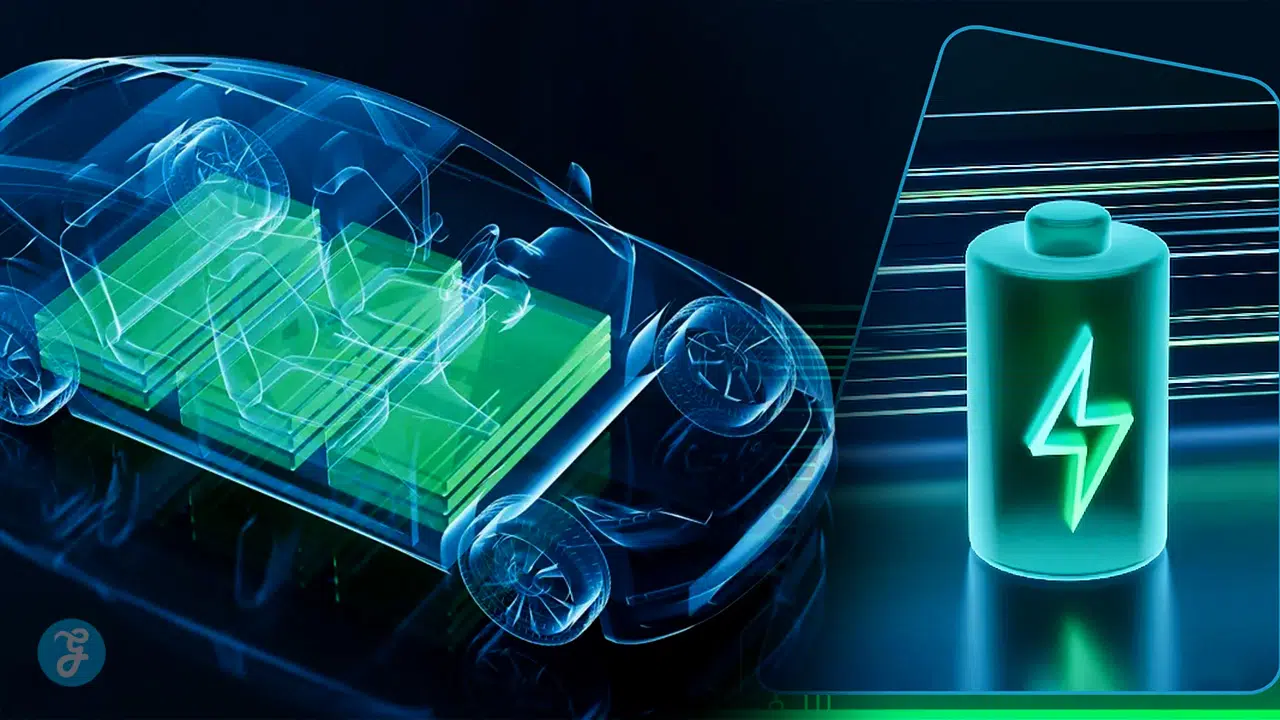
Range anxiety and long charging times remain major concerns for electric vehicle owners. Traditional lithium-ion batteries rely on flammable liquid electrolytes, increasing risks of overheating and safety issues.
Solid-state batteries offer a breakthrough for the solid-state batteries EV industry by replacing liquid electrolytes with solid materials. This advancement enables higher energy density, faster charging, and improved safety.
The solid-state batteries EV industry is set to extend driving ranges, reduce thermal runaway risks, and support lighter, more efficient electric vehicles. Despite challenges like high manufacturing costs, this technology is driving the shift toward a safer, more sustainable automotive future.
What Are Solid-State Batteries?
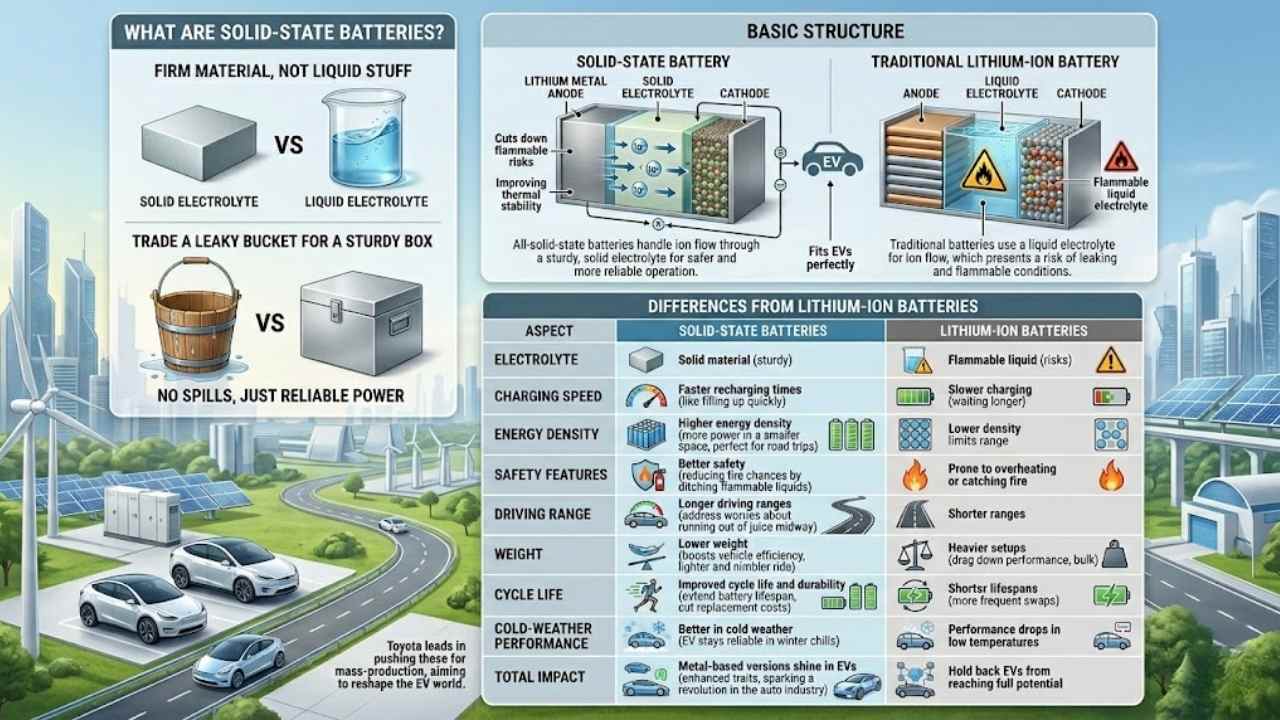
Solid-state batteries pack energy with a firm material, not the usual liquid stuff in standard power cells. They stand out from lithium-ion packs by using solid electrolytes, which cut risks and boost performance for electric cars.
Definition and basic structure
People often wonder about the core of solid-state batteries. These power sources swap out the liquid electrolyte in traditional lithium-ion batteries for a solid electrolyte material.
That simple change boosts energy storage in electric vehicles. Think of it like trading a leaky bucket for a sturdy box, no spills, just reliable power. Engineers build them with lithium metal anodes and cathodes sandwiching that solid layer.
This setup cuts down on flammable risks, improving thermal stability right from the start.
Experts craft all-solid-state batteries to handle ion flow without liquids. Ions zip through the solid electrolyte during charge and discharge. Electrons follow suit in the circuit.
This design fits EVs perfectly, offering a leap over li-ion battery limits. Picture your car’s battery as a marathon runner, enduring longer with better cycle life. Toyota leads in pushing these for mass-production, aiming to reshape the EV world.
Solid-state batteries represent a significant revolution in electric vehicle development that will reshape the automotive industry’s future.
Differences from lithium-ion batteries
Solid-state batteries stand out from the lithium-ion packs that power most electric vehicles today, and I’ll break down those key differences in a simple table for you.
| Aspect | Solid-State Batteries | Lithium-Ion Batteries |
|---|---|---|
| Electrolyte Type | They use a solid electrolyte material, which swaps out the liquid stuff for something sturdy. | These rely on flammable liquid electrolytes that can pose risks. |
| Charging Speed | You get faster recharging times, like filling up quicker at the station. | They charge slower, often leaving you waiting longer. |
| Energy Density | Higher energy density means more power packed into a smaller space, perfect for road trips. | Lower density limits how much energy fits, so ranges stay shorter. |
| Safety Features | Better safety comes from ditching those flammable liquids, reducing fire chances. | Flammable liquids make them prone to overheating or catching fire. |
| Driving Range | Longer driving ranges address your worries about running out of juice midway. | Shorter ranges keep EVs from going as far on a single charge. |
| Weight | Lower weight boosts vehicle efficiency, making your ride feel lighter and nimbler. | Heavier setups drag down performance and add extra bulk. |
| Cycle Life | Improved cycle life and durability extend battery lifespan, cutting replacement costs over time. | Shorter lifespans mean more frequent swaps, which hits your wallet harder. |
| Cold-Weather Performance | They handle cold weather better, so your EV stays reliable in winter chills. | Performance drops in low temperatures, limiting use in varied climates. |
| Total Impact | Metal-based versions shine in EVs with enhanced traits, sparking a revolution in the auto industry. | They hold back EVs from reaching full potential in speed, safety, and range. |
How Solid-State Batteries Work
Solid electrolytes replace liquid ones in these power packs, acting like a sturdy bridge that lets lithium ions zip between the anode and cathode without leaks or fires. Picture electrons flowing smoothly through this setup, boosting efficiency as ions conduct charge in a dense, stable dance that keeps your EV humming longer—want to geek out more on the tech?
Role of solid electrolytes
Solid electrolytes act as the heart of solid-state batteries. They swap out the liquid in lithium-ion batteries for a firm material. This change lets ions zip between parts without leaks or spills.
Picture a sturdy bridge, folks, carrying energy loads safely. Engineers at places like Toyota focus on these for electric vehicles. The setup cuts fire risks from flammable liquids.
These materials boost safety in all-solid-state batteries. Ions flow steady through the solid layer, dodging old battery pitfalls. Think of it as upgrading from a leaky boat to a solid ship.
This shift aids sustainability too, with better thermal stability for EVs. No more worries about overheating on long drives. Sciencedirect studies highlight how interfacial resistance drops, easing electron paths.
Ion and electron flow in solid-state systems
Solid-state batteries move ions through a firm electrolyte material, not a liquid like in lithium-ion batteries. This setup lets lithium ions travel from the anode to the cathode during discharge, creating power for electric vehicles.
Electrons zip along an outside circuit at the same time, lighting up your EV’s motor. Picture it like a busy highway, ions cruising inside while electrons race on the express lane.
Folks, this flow cuts down on heat buildup, making drives safer and smoother.
Solid-state batteries promise faster recharging times compared to traditional lithium-ion batteries currently used in electric vehicles. – Key insight from battery tech experts.
Metal-based solid-state batteries shine in portable uses, like powering EVs with top-notch traits. Ions hop between electrodes via the solid layer, dodging leaks that plague old-school designs.
Electrons follow suit, flowing externally to keep energy steady. Imagine dodging traffic jams; this system boosts energy density, packing more punch in less space. EVs gain from this, hitting longer ranges without the extra weight.
Key Advantages of Solid-State Batteries in EVs
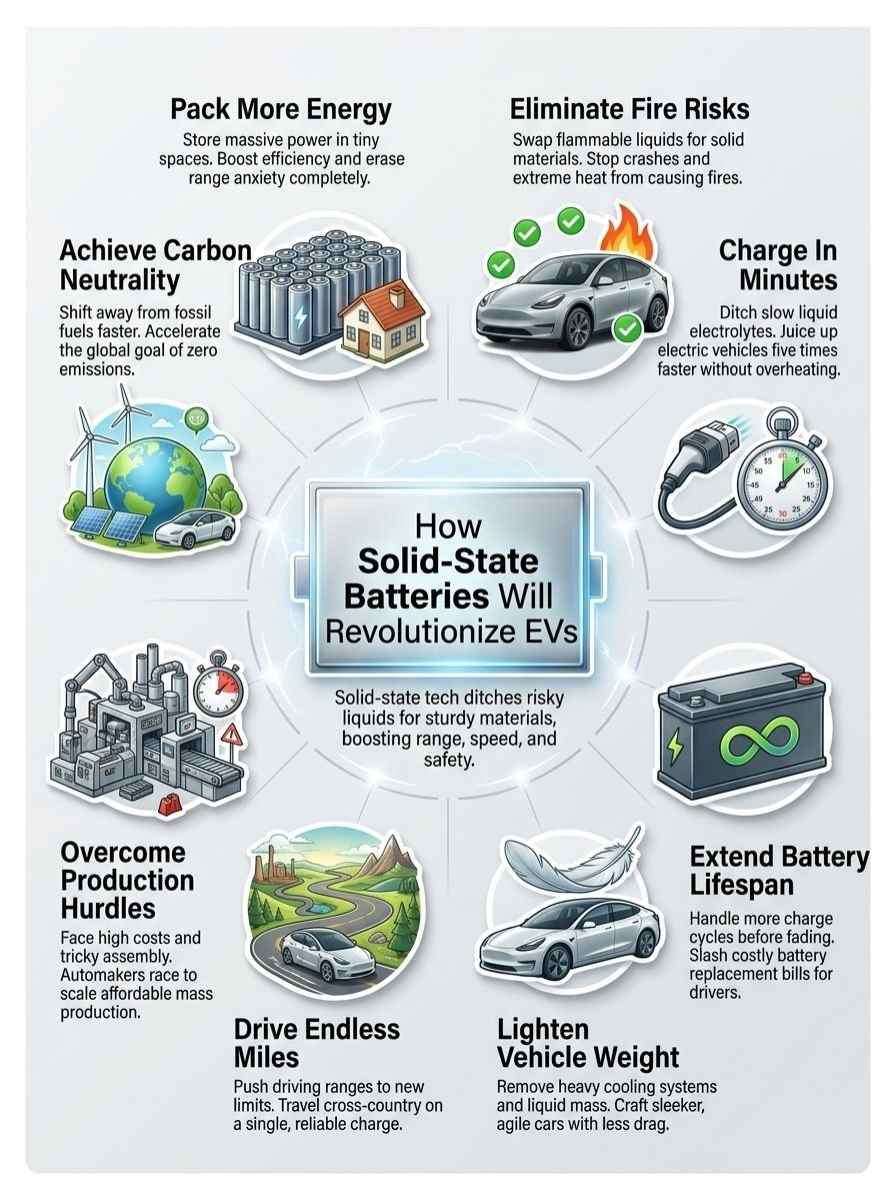
Imagine ditching those heavy lithium-ion packs for something sleeker that packs more punch, like upgrading from a clunky old suitcase to a slim backpack on a road trip. These batteries promise EVs that charge in minutes, last for miles without overheating, and cut down on those pesky repair bills, making your drive feel like a breeze.
Higher energy density
Solid-state batteries pack a punch with their higher energy density. They let electric vehicles store more energy in a smaller space, compared to lithium-ion batteries. Imagine, you cram more power into the same spot, like stuffing extra snacks into a tiny backpack.
EVs gain from this setup. Drivers enjoy longer ranges on a single charge, easing that nagging range anxiety. These batteries slash weight too, boosting total efficiency.
Consider how solid-state batteries outperform li-ion batteries in cold weather, keeping your EV humming in tough spots. They last longer with better cycle life, cutting down on those pricey replacements.
Toyota pushes this tech hard, aiming to reshape the EV industry. All-solid-state batteries drive us to carbon neutrality, revolutionizing powertrains for a greener ride. This shift feels like a game-changer, huh?
Improved safety and thermal stability
Think about those scary stories of batteries catching fire in electric vehicles. Solid-state batteries fix that problem big time. They ditch the flammable liquid electrolytes in traditional lithium-ion batteries.
Instead, they use solid materials that don’t ignite easily. This swap boosts safety for drivers and passengers alike. Picture cruising down the road without that nagging worry of a battery blaze.
These all-solid-state batteries stay stable even in extreme heat, cutting risks during crashes or overcharges.
Cold snaps hit EVs hard with old lithium-ion tech, but solid-state versions shine here too. They handle frigid temps better, keeping power steady when you need it most. Imagine starting your car on a snowy morning without the usual range drop.
This thermal edge means fewer headaches in diverse climates, from icy winters to scorching summers. Toyota and other innovators push this forward, aiming for greener rides that feel reliable year-round.
Faster charging capabilities
Solid-state batteries charge much faster than the lithium-ion batteries in today’s electric vehicles. Imagine pulling up to a station and juicing up your EV in minutes, not hours, like grabbing a quick coffee instead of waiting for a full meal.
They ditch the liquid electrolytes that slow things down, letting ions zip through solid materials with ease. This speed comes from their solid electrolytes, which handle high currents without the risks of overheating or leaks found in traditional lithium-ion setups.
Drivers love this feature because it cuts down wait times, making EVs more practical for long trips or busy days. Solid-state batteries promise recharging that’s up to five times quicker, based on tests from companies like Toyota.
You get back on the road fast, boosting that sense of freedom EVs aim for. Plus, this tech ties into better energy density, so your car stores more power without added bulk.
Longer lifespan
Electric vehicles rely on batteries that wear out over time. Imagine your EV’s power source lasting years longer than today’s models. These new batteries show improved cycle life and durability.
They extend the lifespan of EV batteries. This cuts down on replacement costs for owners. Drivers save money in the long run. Think of it like a marathon runner who keeps going without tiring.
The tech handles more charge cycles before fading. It boosts efficiency too.
Folks worry about battery swaps eating into budgets. With solid-state batteries, that concern fades. They deliver on promises of longevity. EVs gain from this edge over lithium-ion batteries.
Picture cruising farther without the hassle of frequent fixes. The shift reshapes the automotive scene. It pushes toward carbon neutrality goals. Toyota explores this in places like Cleveland Heights.
Greenlancer and others eye solar storage ties. All-solid-state designs lead the charge.
Challenges in Solid-State Battery Development
5. Challenges in Solid-State Battery Development: Solid-state batteries promise a bright future for electric vehicles, but makers face tough hurdles like complex production steps that demand precise control over solid electrolytes to avoid cracks, sky-high costs from rare materials such as lithium metal anodes, and the big push to scale up assembly lines for widespread use without losing quality—curious how the industry plans to jump these barriers? Stick around for the details.
Manufacturing complexities
Makers face tough hurdles in building solid-state batteries for electric vehicles. They swap out liquid electrolytes in lithium-ion batteries for solid ones, but this switch demands precise layers that stick together without cracks.
Think of it like baking a delicate cake where one wrong move ruins the whole thing. Firms like Toyota push hard on this tech, yet the process stays tricky and slow. Solid electrolytes need special handling to avoid defects, which spikes error rates in early runs.
Costs soar because raw materials for all-solid-state batteries remain pricey and hard to source at scale. Workers must use clean rooms and advanced tools to form thin, uniform films, adding layers of hassle.
Picture engineers juggling hot potatoes while keeping everything spotless. This slows down mass production for EVs, delaying wider use despite perks like higher energy density. Still, breakthroughs could ease these pains soon, paving the way for carbon neutral rides.
Cost of production
Solid-state batteries sound amazing, but their production costs can feel like a steep hill to climb for widespread EV adoption.
| Cost Challenge | Details |
|---|---|
| High material expenses | Solid electrolytes replace liquid ones, driving up prices for these new materials in batteries that promise higher energy density and longer driving ranges. |
| Complex assembly needs | Builders face tough tasks in creating solid-state systems, which boost safety by cutting out flammable liquids, yet they jack up total expenses. |
| Scale-up hurdles | Companies struggle to mass-produce these batteries, ones that offer faster charging and better cold-weather performance, making initial costs a big barrier. |
| Impact on EV prices | Buyers might pay more upfront for vehicles with solid-state tech, even though it leads to lower weight, improved cycle life, and reduced replacement costs over time. |
| Path to affordability | Innovators work on breakthroughs to drop costs, paving the way for this revolution in electric vehicle development that reshapes the auto industry. |
Scalability for mass adoption
Makers face big hurdles in scaling solid-state batteries for wide use in electric vehicles (EVs). Costs stay high right now, which slows down mass production. Think of it like trying to bake a fancy cake for everyone at a party, but the ingredients cost a fortune.
Companies like Toyota push hard to cut those prices, drawing from spots like Cleveland Heights where innovation sparks ideas. They aim to make all-solid-state batteries cheap enough for everyday drivers.
This shift could slash the environmental impact of EVs, helping reach carbonneutral goals faster.
Experts from places like Elsevier Ltd. highlight how tricky manufacturing gets when you ramp up. Solid electrolytes need precise handling to avoid flaws, unlike simpler lithium-ion (Li-ion) batteries.
Imagine juggling glass balls while running a marathon; one slip ruins the batch. Yet, metal-based designs show promise for portable uses in EVs, boosting energy density and safety.
Teams work on breakthroughs to produce them in huge numbers, tackling those scalability woes head-on. Drivers dream of affordable options that deliver longer ranges and quicker charges.
The Impact of Solid-State Batteries on EV Design
Picture electric cars shedding extra pounds, like athletes trimming down for peak performance, all because these batteries pack more punch in a smaller space. They slash the need for heavy cooling setups too, letting designers craft sleeker rides that zip across highways with ranges that stretch like a rubber band.
Lightweight vehicle structures
Solid-state batteries cut down on weight in electric vehicles, folks. They pack higher energy density than lithium-ion batteries, so cars store more power without bulky setups. This shift lets engineers design sleeker frames, like shedding extra pounds on a diet.
Imagine your EV zipping along with less drag, boosting efficiency and that fun zip in acceleration. Toyota explores this tech, aiming for lighter rides that feel agile on roads, even around places like Cleveland Heights.
These batteries ditch heavy liquid electrolytes for solid ones, trimming total mass. Drivers get extended ranges without lugging dead weight, addressing those nagging worries about running out of juice.
Safety jumps too, with no flammable liquids to fret over. Envision vehicles that handle cold snaps better, all while keeping things light and nimble. This change sparks a real revolution in how we build EVs, pushing for smarter, greener drives ahead.
Extended driving ranges
Electric vehicles with solid state batteries let you drive much farther on a single charge. These batteries pack higher energy density, so they store more power in less space than lithium-ion batteries.
Imagine you’re on a road trip, and your EV just keeps going without that nagging range anxiety. Solid state batteries cut down on weight too, which boosts efficiency and lets you zip along highways with ease.
They address what bugs most drivers about EVs today, like short trips between plugs.
Companies like Toyota push this tech forward, aiming to reshape how we hit the road in places from Cleveland Heights to coastlines everywhere. All-solid-state batteries mean your car holds energy better, thanks to solid electrolytes that ditch the old liquid stuff in lithium-ion (li-ion) batteries.
You get longer ranges that feel like a game-changer, almost like upgrading from a pony to a racehorse. This shift sparks a revolution in EV design, making drives feel endless and fun.
Reduced cooling requirements
Solid-state batteries cut down on cooling needs in electric vehicles. They swap out those risky liquid electrolytes in lithium-ion batteries for solid ones. This change boosts thermal stability, so cars stay cooler without bulky systems.
Imagine ditching a heavy backpack on a long hike; that’s how EVs feel lighter and more efficient. No more worries about fires from overheating, folks.
Designers love this shift. Vehicles shed weight from fewer cooling parts, like fans and liquids. Solid-state tech handles cold weather better too, keeping performance steady in tough spots.
Think of it as a reliable friend who doesn’t bail in a snowstorm. Toyota pushes these advances, eyeing spots like Cleveland Heights for testing. All-solid-state batteries promise smoother rides with less hassle.
Future Outlook for Solid-State Batteries in the EV Industry
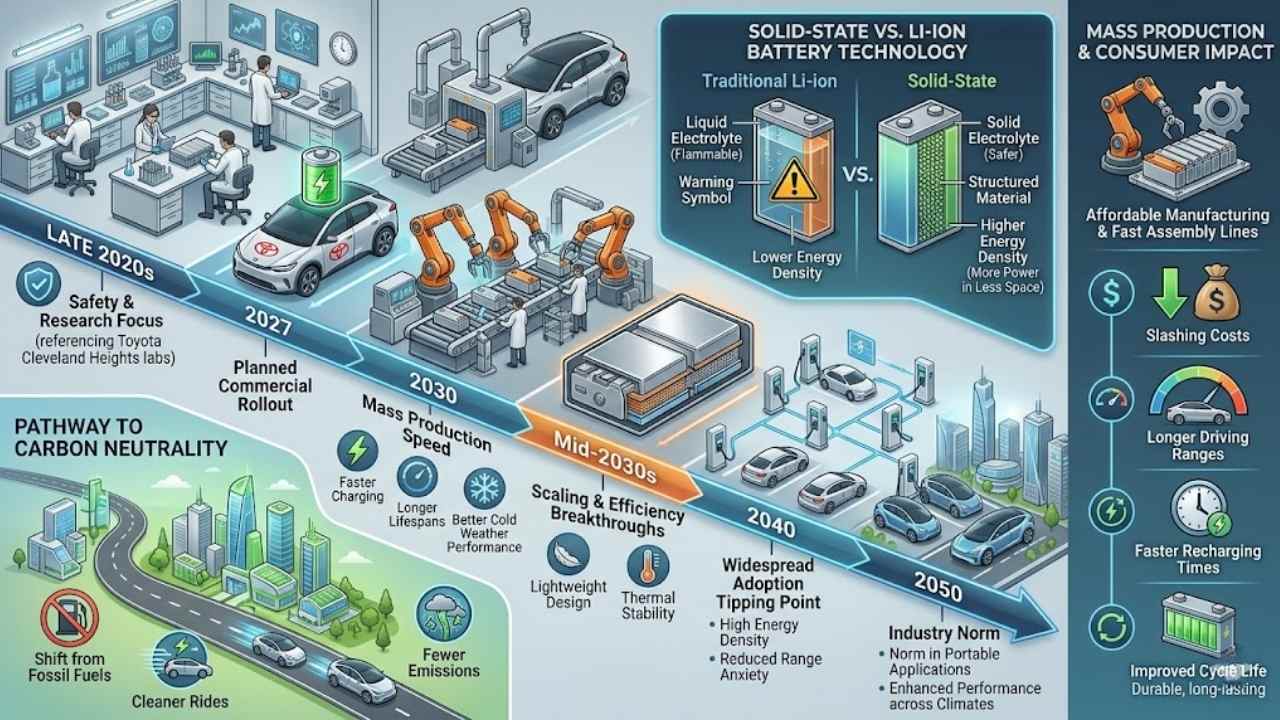
Picture car makers racing to roll out these power packs by the late 2020s, with companies like Toyota leading the charge in Cleveland Heights labs. Mass production jumps could drop prices, slash charging times, and help electric vehicles zoom past gas guzzlers on the road to zero emissions.
Timeline for commercialization
Solid-state batteries spark excitement in the EV world. Experts predict their arrival will shake up how we drive.
- Toyota leads the charge with plans to roll out solid-state batteries by 2027, building on their work in Cleveland Heights to swap out lithium-ion batteries for these safer, higher-energy options that ditch flammable liquids and boost driving ranges.
- By 2030, mass production could hit full speed, letting all-solid-state batteries deliver faster charging and longer lifespans, which means EVs handle cold weather better and cut down on replacement costs for folks like you.
- Expect breakthroughs in scaling up by the mid-2030s, where these batteries’ improved thermal stability and lightweight design reshape vehicle efficiency, turning the dream of carbon neutrality into a real road trip for the automotive industry.
- Automakers eye 2040 as the tipping point for widespread adoption, with solid-state batteries offering higher energy density in compact forms, revolutionizing EV development by addressing consumer worries like range anxiety and safety in a big way.
- Research firms forecast that by 2050, these metal-based wonders become the norm in portable EV applications, enhancing performance across diverse climates and slashing the weight that drags down traditional lithium-ion (Li-ion) batteries.
Potential for mass production breakthroughs
Scientists race to scale up solid state battery production, and big players like Toyota push the envelope. They aim to crack the code on affordable manufacturing. Imagine factories churning out these power packs at warp speed, like assembly lines for smartphones.
This breakthrough could slash costs, making EVs more accessible to everyday drivers. Metal-based designs shine here, offering that extra punch for portable uses. Folks worry about range anxiety, but longer driving ranges from these batteries ease those fears.
Engineers tackle hurdles in building all-solid-state battery lines, yet progress sparks excitement. They swap liquid electrolytes for solid ones, boosting safety by ditching flammable stuff in lithium-ion (li-ion) battery setups.
Picture vehicles zipping farther on a single charge, thanks to higher energy density. Faster recharging times mean less waiting at stations, a game-changer for road trips. Improved cycle life cuts down on replacements, saving money in the long run.
This tech revolutionizes EV development, reshaping how we hit the road toward carbon neutrality.
Role in achieving carbon neutrality
Solid-state batteries play a big part in cutting carbon emissions. They replace the liquid electrolyte in a lithium-ion battery with a solid one. This switch boosts energy density, so electric vehicles store more power in less space.
Drivers get longer ranges, like those promised by companies in Toyota Cleveland Heights. Imagine ditching gas guzzlers for EVs that go farther on a single charge, folks. That means fewer trips to the pump and less pollution in the air.
These batteries charge faster too, making EVs more practical for everyday use.
Better safety comes built-in, without flammable liquids that cause fires in old-school batteries. They last longer and handle cold weather well, so EVs work great in all climates. Think of it as a game-changer, a real spark for the shift away from fossil fuels.
Metal-based versions shine in portable setups like cars, pushing the industry toward cleaner rides. This tech drives us closer to zero emissions, reshaping how we move without the carbon hangover.
If you hit a page not found on battery myths, know this revolution cuts replacement costs and boosts efficiency.
Final Thoughts
We’ve covered how these batteries ditch liquid parts for solid ones, boosting safety and power in electric cars. They pack more energy, charge quicker, and last longer, making EVs a smarter choice for everyday drivers.
Picture ditching range anxiety, like trading a clunky old bike for a sleek speedster that never quits. Check out reports from firms like Toyota or Samsung for the latest prototypes and trials.
Jump in now; this tech sparks the road to zero emissions, and your next drive could change the planet.
Frequently Asked Questions (FAQs) on Solid-State Batteries in the EV Industry
1. What makes solid-state batteries different from the ones in electric cars today?
Solid-state batteries swap out liquid electrolytes for solid ones, boosting safety and energy density. Imagine ditching a leaky old jug for a sturdy sealed box; that’s the upgrade we’re talking about. This shift could make electric vehicles zoom farther on a single charge, turning range anxiety into a thing of the past.
2. How will solid-state batteries speed up charging for EV drivers?
They promise much faster charging times compared to current lithium-ion packs. You know that feeling when you’re stuck waiting for your phone to juice up? Well, with these, EVs might recharge in minutes, not hours, making road trips a breeze.
3. Can solid-state batteries make electric vehicles safer?
Yes, they’re less likely to catch fire since they don’t use flammable liquids.
4. What big changes will solid-state batteries bring to the EV industry?
Expect longer driving ranges and lighter cars, which could lower costs for buyers. Picture the industry like a sleepy town waking up to a gold rush; companies will race to adopt this tech. It might even push more folks to switch from gas guzzlers to eco-friendly rides, helping the planet one battery at a time.