You want to boost your skills, but picking the right online learning platform feels like finding a needle in a haystack. Maybe you’re eyeing career advancement, or just craving some practical skills in areas like project management or cybersecurity.
It’s tough, with so many options out there, and you don’t want to waste time or money on the wrong one.
Did you know Coursera offers university-backed credentials from places like Yale, Harvard, and Stanford, plus professional certificates from giants like Google, Microsoft, and AWS? This sets it apart in online education.
Break down Coursera, Udemy, and LinkedIn Learning side by side, covering course variety, pricing, learning experience, and more to help you choose the best fit for your goals, whether it’s upskilling through free courses, specialization courses, or learning paths.
Stick around, you’ll thank me later.
Coursera vs Udemy vs LinkedIn Learning: Platform Overview
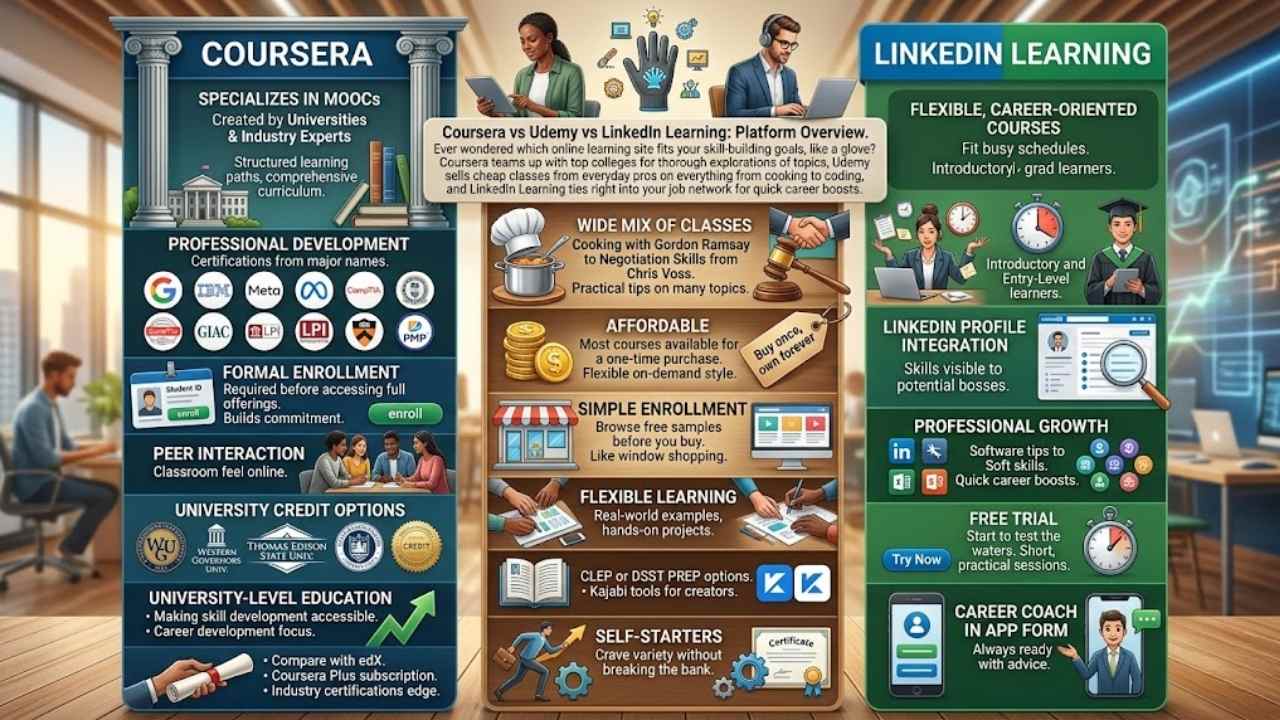
Ever wondered which online learning site fits your skill-building goals, like a glove? Coursera teams up with top colleges for thorough explorations of topics, Udemy sells cheap classes from everyday pros on everything from cooking to coding, and LinkedIn Learning ties right into your job network for quick career boosts.
What is Coursera?
Coursera stands out as a top online course platform for digital learning. It specializes in massive open online courses, or MOOCs, created by universities and industry experts. Think of it like a virtual campus where you explore structured learning paths with comprehensive curriculum.
Coursera offers professional development through certifications from big names like Google, IBM, Meta, CompTIA, GIAC, LPI, Princeton, and PMP. You need formal enrollment before accessing full course offerings, which builds commitment right from the start.
Many courses include peer interaction for that classroom feel, even online. Coursera partners with places like Western Governors University, Thomas Edison State University, and the University of Maine at Presque Isle for credit options.
Coursera brings university-level education to your fingertips, making skill development accessible for everyone, says a World Economic Forum report on professional education.
Folks often compare Coursera to edX, another major player in the market. Both focus on university-designed content that sets them apart from platforms like Udemy or Skillshare. Coursera shines for those seeking career development with its Coursera Plus subscription model.
You get unlimited access to courses, plus financial aid options for those who qualify. Course length varies, but the structured approach suits serious learners. EdX appeals to similar students, yet Coursera edges out with its industry certifications.
MasterClass and Skool offer different vibes, but Coursera delivers that academic punch.
What is Udemy?
Udemy stands out as a popular online course platform. It offers a wide mix of classes on many topics, from cooking with Gordon Ramsay to negotiation skills from Chris Voss. Users love its affordability, with most courses available for a one-time purchase.
You can browse free samples before you buy, which makes the enrollment process simple and risk-free. Think of it like window shopping at a store, you get to peek inside without committing right away.
This sets it apart from places that demand formal sign-up first. Instructors like Chris Croft share practical tips on project management, drawing in folks who want quick skills. Udemy fits into the big three platforms, alongside Coursera and edX, each with its own appeal for different learners.
People pick Udemy for its flexible, on-demand style. You learn at your own pace, no strict schedules here. Course quality varies, but many shine with real-world examples and hands-on projects.
Tools like Kajabi help creators build courses, adding to the diverse lineup. Even if you aim for CLEP or DSST exams, Udemy has prep options that feel straightforward. Church Hill Classics might frame your completion certificate later, but first, you earn it by finishing the class.
This platform suits self-starters who crave variety without breaking the bank.
What is LinkedIn Learning?
LinkedIn Learning stands out as a key player among online course platforms. It delivers flexible, career-oriented courses that fit busy schedules. People love how it ties right into your LinkedIn profile integration, making skills visible to potential bosses.
This setup suits introductory and entry-level learners best, like someone dipping toes into a new field. Imagine a fresh grad building a resume with quick lessons on leadership; that’s the vibe here.
Courses focus on professional growth, from software tips to soft skills. Plus, you can start with a free trial to test the waters.
Folks often pick it for that seamless blend with job hunting. It excels at short, practical sessions that boost careers fast. Entry-level users find it welcoming, with no steep learning curves.
Think of it as your career coach in app form, always ready with advice.
Course Variety and Content Quality
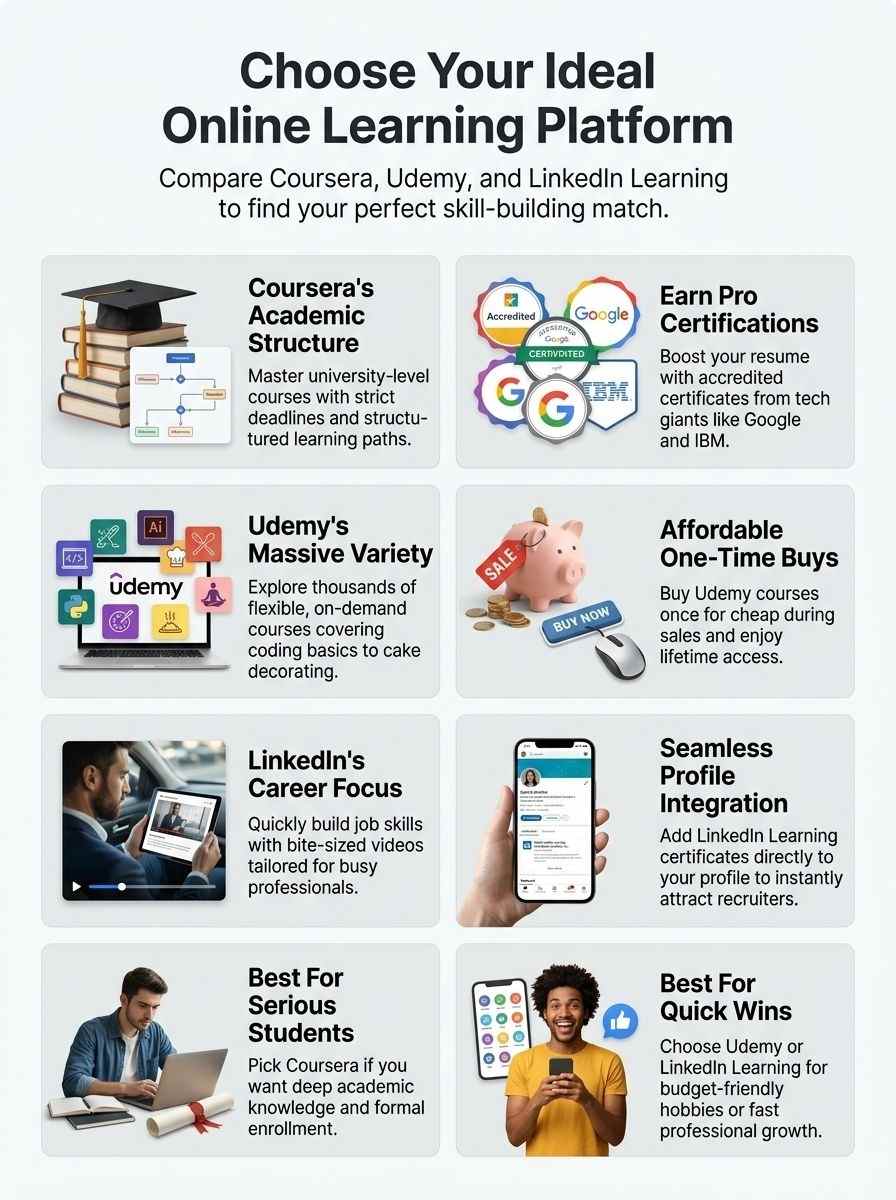
Coursera packs a punch with its thorough explorations of university-style classes, think real professors sharing knowledge on everything from data science to art history, all backed by solid credentials.
Udemy keeps things fun and cheap with a massive mix of topics like guitar lessons or coding bootcamps, while LinkedIn Learning sharpens your job skills with quick videos on leadership or software tools, making you stand out in the professional crowd.
Coursera’s university-level courses and certifications
You explore Coursera for top-notch, university-level courses that feel like a real classroom adventure. Experts from places like Yale and Stanford design these massive open online courses, known as MOOCs, packed with deep knowledge.
Imagine earning a certification from tech giants, say Google or IBM, that boosts your resume in a flash. These paths guide you step by step, building skills with a solid, structured curriculum that keeps you on track.
Coursera’s courses from universities opened doors I never imagined. – A real user testimonial
LinkedIn Learning suits beginners, but Coursera pairs well with edX for those craving expert-developed content from schools. Both platforms shine in that area, standing out from Udemy’s style.
You must enroll formally on Coursera to start, no quick previews like on Udemy, which adds a layer of commitment. Major players like Coursera, Udemy, and edX each draw unique students with their distinct vibes.
Udemy’s diverse range of topics and affordability
Udemy stands out with its huge mix of topics, from coding basics to guitar lessons and even cake decorating. Visualize this, you spot a course on digital marketing that grabs your eye, and boom, you jump right into free previews to test the waters before you buy.
Prices stay low, often under twenty bucks during sales, making it easy for budget-conscious folks like you to jump in without breaking the bank. Instructors from all walks of life share real-world skills, so you get practical tips that feel like chatting with a pro over coffee.
Folks love how Udemy contrasts with spots like Coursera, where you enroll first before peeking inside. Here, those free samples let you browse and decide fast, no strings attached.
It joins Coursera and edX as a top player in online learning, drawing students who crave flexible, affordable options that fit busy lives. Imagine snagging a photography class on a whim; that kind of variety keeps things fresh and fun for everyone.
LinkedIn Learning’s career-focused courses
LinkedIn Learning shines with courses that zero in on building your career skills. Imagine boosting your resume with lessons on leadership, software tools like Microsoft Excel, or even public speaking.
These offerings fit right into busy schedules, letting you learn at your own pace. Folks just starting out find them perfect, as they target entry-level needs with clear, practical tips.
You get flexible paths that tie straight to job growth, like networking strategies or project management basics.
Envision a course that feels like a chat with a mentor, guiding you through real-world scenarios. LinkedIn Learning excels here, dishing out career-oriented content that adapts to your goals.
Entry-level learners thrive on the simple breakdowns of concepts such as digital marketing or data analysis. With a nod to platforms like edX for in-depth explorations, this one keeps things light and actionable.
You wrap up feeling ready to tackle that next job interview, all without the heavy structure.
Learning Experience and Structure
Coursera grabs you with its structured academic style, like sitting in a college lecture hall full of deadlines, quizzes, and group chats that keep you on track, while Udemy hands over total flexibility through on-demand video lessons you can binge like your favorite show anytime life allows, and LinkedIn Learning zeros in on professional growth with skill-sharpening workshops that link straight to your job goals, almost like having a mentor whisper tips in your ear—curious how their prices compare, keep scrolling to find out.
Coursera’s structured academic approach
You enter Coursera’s environment, and it feels like stepping into a well-organized classroom. Professors from top universities craft these massive open online courses, or MOOCs, packed with expert insights.
Envision it, you’re on a clear path, like following a map through a dense forest. The platform demands formal enrollment first, no peeking like on Udemy. That setup builds commitment, right from the start.
Google and IBM jump in too, offering pro certifications that boost your resume. Folks love how it mirrors real college vibes, with quizzes and deadlines keeping you on track.
edX shares that focus on university-designed content, setting both apart from casual spots. Envision building skills step by step, no shortcuts. Structured learning paths guide you, like a coach plotting your workout routine.
Comprehensive curriculums cover topics deeply, from basics to advanced stuff. Entry-level learners might find it intense, but hey, that’s the charm for serious students. You enroll, and bam, the journey kicks off with purpose.
Udemy’s flexibility and on-demand learning
Udemy shines with its on-demand style, letting you jump in anytime life allows. Imagine, you’re juggling a job and family, yet you crave new skills without rigid schedules. This platform delivers just that freedom.
Users grab courses at their own pace, no deadlines breathing down your neck. Plus, Udemy lets you peek at free samples before you commit, a real game-changer compared to spots like Coursera that demand enrollment first.
Think of it as test-driving a car before buying; it cuts the risk and boosts your confidence.
Flexibility here means picking from a huge mix of topics, all ready when you are. Major platforms like Udemy, Coursera, and edX each draw different crowds with their special perks, and Udemy nails the casual learner vibe.
You start lessons on your phone during a commute, or binge-watch modules late at night. Instructors from all walks upload fresh content often, keeping things current and fun. This setup suits folks who hate structure but love quick wins, like snagging a coding tip over coffee.
LinkedIn Learning’s professional development focus
LinkedIn Learning shines for folks chasing career growth, you know? It delivers flexible, career-oriented courses that fit right into your busy life. Imagine, you’re a beginner eyeing that first job step, and these classes guide you with easy starts.
They suit introductory and entry-level learners best, like a friendly coach in your pocket. Start anytime, no strict schedules holding you back.
Professionals love how it ties skills to real jobs. Say you’re brushing up on networking or leadership, the content feels practical and quick to apply. It blends with your LinkedIn profile too, showing off what you’ve learned to potential bosses.
Folks often pick it for that pro edge, keeping things light and actionable.
Pricing and Subscription Models
Coursera hooks learners with Coursera Plus subscriptions for broad access, plus free audits on select classes. Udemy sells individual courses through one-time buys with deep discounts, while LinkedIn Learning bundles its monthly fees into Premium memberships for seamless career boosts.
Coursera’s subscription plans and free courses
You want options that fit your budget on this platform. Check out the subscription plans, like Coursera Plus, which gives unlimited access to thousands of courses for a monthly fee.
Many folks love how it opens doors to industry certifications from big names, such as Google and IBM. Free courses exist too, letting you audit massive open online courses, or MOOCs, designed by universities and experts.
Picture dipping your toes in without spending a dime, building skills at your own pace.
Enrollment kicks in formally before you dive deep, locking you into structured learning paths with comprehensive curriculums. This setup beats browsing previews on other sites, pushing you toward real commitment.
Imagine tackling a full program, like a professional certificate, all while keeping costs in check through those free audits. It feels like a smart path for serious learners, huh?
Udemy’s one-time purchase model
Udemy stands out with its one-time purchase model, folks. You buy a course once, and it’s yours forever. No recurring fees nag at your wallet. Imagine you’re scrolling through options, spot a skill you need, and snag it for a low price during sales.
Prices often drop to ten bucks or so, making learning feel like a steal. Instructors set their own rates, which keeps things fresh and varied.
This setup gives you freedom, unlike some platforms that lock content behind subscriptions. Udemy lets you peek at free samples before you commit, a smart move that builds trust. Say you’re eyeing a coding class; watch a few videos first to see if it clicks.
Experts from all fields create these courses, covering everything from guitar playing to business strategies. You own what you buy, so revisit lessons anytime, no strings attached.
LinkedIn Learning’s monthly subscription and integration with LinkedIn Premium
LinkedIn Learning charges a monthly fee, often around $30, but it ties right into LinkedIn Premium for extra perks. You get unlimited access to thousands of courses that boost your career skills, like a toolbox packed with gadgets for job hunting.
This setup lets you add completed courses straight to your LinkedIn profile, showing off your new know-how to bosses and networks. It suits beginners best, with flexible paths that fit your busy life, almost like picking snacks from a vending machine.
Picture juggling work and learning; LinkedIn Learning makes it easy with career-focused videos you watch anytime. The subscription includes tips from pros, helping entry-level folks climb the ladder.
Integration means your achievements pop up on your profile automatically, like magic badges that attract opportunities. Folks love this for quick skill ups without the hassle of big commitments.
Certifications and Career Impact
Imagine landing that dream job, all because your resume shines with a shiny badge from an online course. Coursera’s university-backed credentials, like Google Career Certificates or IBM Data Science Professional Certificates, pack a punch for job hunters, while Udemy hands out basic completion notes that feel more like a pat on the back, and LinkedIn Learning lets you flaunt skills right on your profile, turning connections into opportunities faster than you can say “networking ninja.
Coursera’s accredited certifications
Coursera shines with its accredited certifications that boost your career. These come from top players like Google and IBM. You gain skills through massive open online courses, or MOOCs, crafted by universities and experts.
Picture landing a job edge with a certificate that employers respect. It feels like unlocking a door to new opportunities, doesn’t it?
Opt for Coursera if you crave structured learning paths and deep curriculum. Certifications here prove your mastery in fields like tech and business. Folks often share stories of how these badges landed them promotions.
Google Career Certificates, for example, prepare you for roles in IT support. IBM offers paths in data science that feel like a guided adventure.
Udemy’s completion certificates
Udemy hands out completion certificates once you finish a course. These prove you mastered the material, and you can download them right away. Add them to your resume or portfolio for a quick boost.
Imagine, like earning a badge in a video game, it feels rewarding but stays simple. Folks often share them on social media to show off new skills.
Many users love how Udemy lets you browse free samples before buying in. This preview helps you pick the right fit. Your certificate then seals the deal on what you learned. It fits well for self-paced growth, especially if you skip formal vibes.
Think of it as a pat on the back from the platform itself.
LinkedIn Learning’s integration with LinkedIn profiles
LinkedIn Learning ties right into your LinkedIn profile, like a seamless bridge to showcase your skills. Finish a course, and you add that certificate straight to your profile with one click.
This boosts your visibility to recruiters, hey, it’s like wearing a badge of honor in the job market. Recruiters spot your new skills fast, which can open doors to better opportunities.
Plus, it fits entry-level learners well, offering flexible, career-focused paths that feel like chatting with a mentor over coffee.
You control what shows up, picking courses that match your goals. Imagine completing a quick intro to project management; it pops up on your profile, drawing in connections. This setup excels for professionals building networks, turning learning into real career moves.
Entry-level folks love it, as the courses bend to your schedule, almost like a personal coach cheering you on.
Who Should Choose Each Platform?
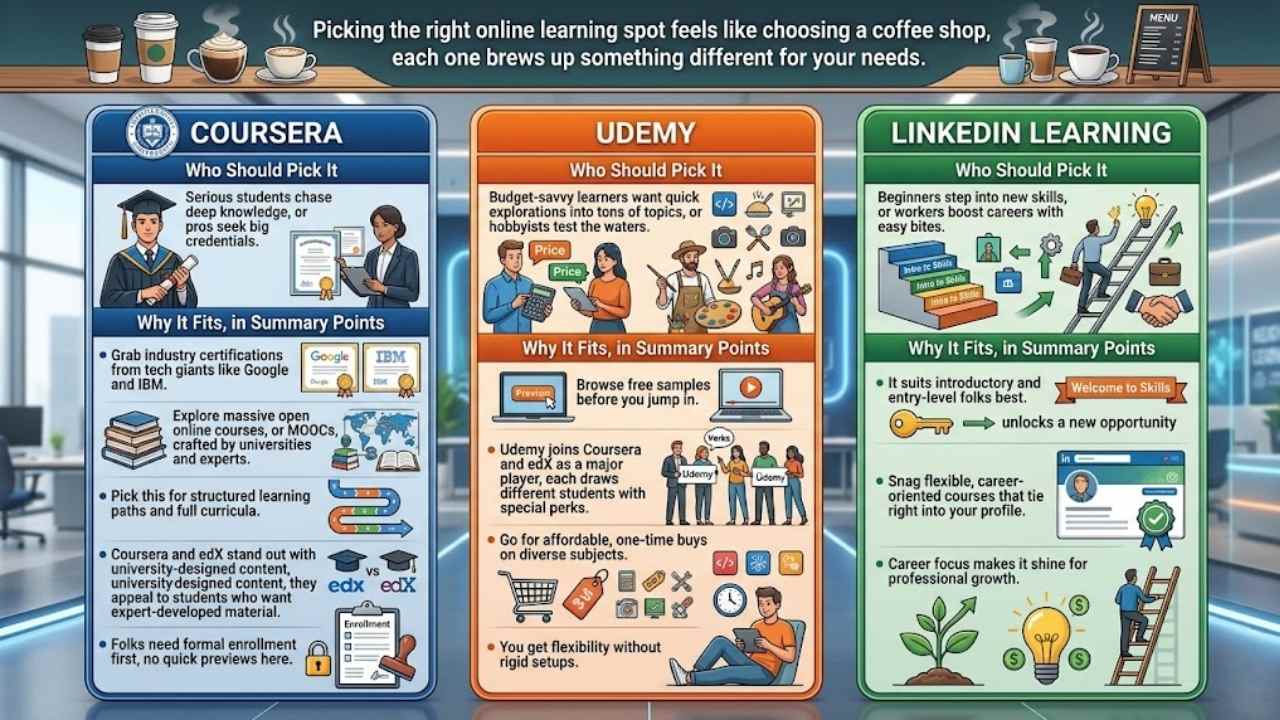
Picking the right online learning spot feels like choosing a coffee shop, each one brews up something different for your needs.
| Platform | Who Should Pick It | Why It Fits, in Summary Points |
|---|---|---|
| Coursera | Serious students chase deep knowledge, or pros seek big credentials. | – Grab industry certifications from tech giants like Google and IBM.
– Explore massive open online courses, or MOOCs, crafted by universities and experts. – Pick this for structured learning paths and full curricula. – Coursera and edX stand out with university-designed content, they appeal to students who want expert-developed material. – Folks need formal enrollment first, no quick previews here. |
| Udemy | Budget-savvy learners want quick explorations into tons of topics, or hobbyists test the waters. | – Browse free samples before you jump in.
– Udemy joins Coursera and edX as a major player, each draws different students with special perks. – Go for affordable, one-time buys on diverse subjects. – You get flexibility without rigid setups.
|
| LinkedIn Learning | Beginners step into new skills, or workers boost careers with easy bites. | – It suits introductory and entry-level folks best.
– Snag flexible, career-oriented courses that tie right into your profile. – Career focus makes it shine for professional growth.
|
Final Thoughts
Coursera shines with its structured, university-backed courses and pro certifications from giants like Google, while Udemy offers affordable, flexible picks on tons of topics with easy previews, and LinkedIn Learning ties right into career growth with quick, job-focused lessons.
You can jump into any of these platforms without much hassle, picking what fits your style, like grabbing a coffee to go or sitting down for a full meal. These choices boost your skills fast, opening doors to better jobs or hobbies that stick, imagine turning a quick course into your next big break.
Check out edX for more academic vibes if you crave extra options beyond these three. Go ahead, pick your path today, and watch how a little learning sparks huge changes in your world.
Frequently Asked Questions (FAQs) about Coursera vs Udemy vs LinkedIn Learning
1. What’s the big difference between Coursera, Udemy, and LinkedIn Learning, you ask?
Coursera shines with university-backed courses, like a trusted professor guiding you through tough topics. Udemy offers affordable, bite-sized lessons from everyday experts, think of it as your neighbor sharing handy skills over coffee. LinkedIn Learning ties right into your career network, helping you snag that promotion with quick, job-focused videos.
2. Which one wins for getting real certifications?
Coursera takes the crown here, partnering with top schools for credentials that boost your resume like a rocket.
3. How do the prices stack up on these learning platforms?
Udemy keeps things cheap with one-time buys, often on sale like a garage sale find. Coursera might hit your wallet harder with subscriptions or course fees, but hey, you get what you pay for in quality. LinkedIn Learning sneaks in free if you have Premium, making it a smart pick for budget-savvy pros chasing online courses.
4. Which platform has the widest range of topics?
Udemy boasts a massive library, from coding to cooking, like an endless buffet of skills. LinkedIn Learning focuses on business and tech, perfect if you’re climbing the corporate ladder, while Coursera dives deep into academic subjects with expert instructors.