Imagine you’re tired of long visa lines and travel limits that hold you back from exploring the world or chasing better job chances abroad. Many folks dream of more freedom, like easy access to Europe or the Middle East, but red tape and rules from places like the United States make it tough, right? It’s like being stuck in one lane on a highway when you want to zoom across multiple paths.
Did you know holding a second passport through dual citizenship can open doors to global mobility and business opportunities in countries such as Grenada or St. Lucia? This post breaks down the pros and cons, from expanded travel with a U.S. passport to handling double taxation via tax treaties.
We’ll guide you on paths like citizenship by investment or naturalization. Stick around for the full scoop.
What is Second Citizenship?
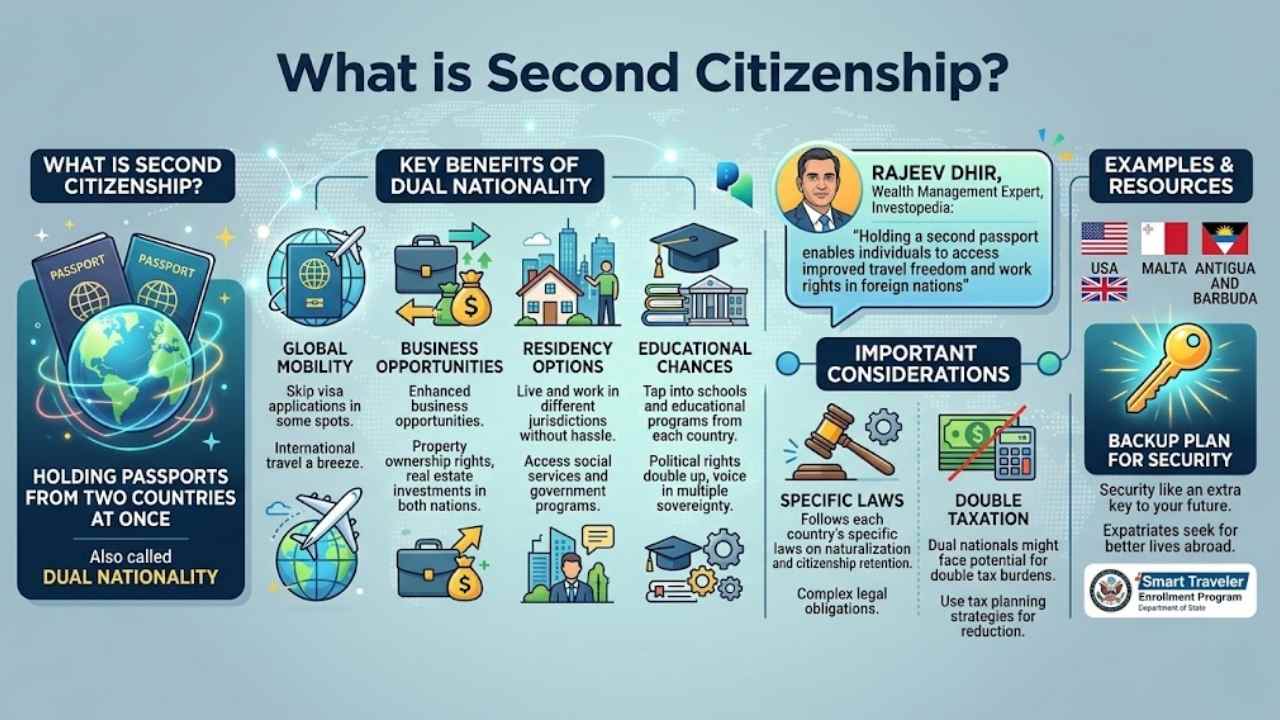
Second citizenship means you hold passports from two countries at once. People call this dual nationality, and it opens doors to big perks. Dual nationals enjoy increased global mobility, plus enhanced business opportunities across multiple countries.
You gain access to social services and government programs in both places. A second passport lets you skip visa applications in some spots, making international travel a breeze. Dual citizenship also expands residency options, so you can live and work in different jurisdictions without hassle.
Property ownership rights often come with it, allowing real estate investments in both nations. Educational chances grow too, as you tap into schools and programs from each country.
Holding a second passport enables individuals to access improved travel freedom and work rights in foreign nations, says wealth management expert Rajeev Dhir from Investopedia.
This setup follows each country’s specific laws on naturalization and citizenship retention. Dual nationals might face complex legal obligations or double taxation in some cases. Tax planning can help reduce that tax burden through smart strategies.
Countries like the USA, UK, Malta, and Antigua and Barbuda offer paths to this status. Think of it as having a backup plan for security, like an extra key to your future. Expatriates often seek this for better lives abroad, using tools like the Smart Traveler Enrollment Program from the Department of State.
Political rights and legal rights double up, giving you a voice in more than one sovereignty.
How to Obtain Second Citizenship
Imagine tracing your family tree, and boom, you qualify for citizenship by descent in places like Italy or Ireland. Or picture pouring money into a citizenship-by-investment deal, say in St.
Kitts and Nevis, to fast-track your new passport.
Birthright or Descent
Birthright citizenship kicks in if you get born in a country that grants it based on location, like the U.S. does for most kids born on its soil. You claim this right without extra steps, and it opens doors to second citizenship perks, such as expanded travel opportunities and access to social services.
Picture a family story where your grandparents hailed from Italy; that bloodline might qualify you for citizenship by descent, boosting your global mobility. U.S. citizens often explore this path through programs like those in Ireland or Poland, gaining dual nationals status.
Laws vary by nation, so second nationality status depends on the foreign country’s specific rules on retention. This method feels like hitting the jackpot with your family tree, offering residency options and business chances across borders.
Descent works through your parents or ancestors, not where you popped out. Many folks chase citizenship by descent to snag benefits like property ownership rights and educational opportunities in places like the UAE or Turkey.
Dual citizenship here means you tap into government programs in both spots, but watch for cons like dual taxation obligations. Think of it as inheriting a golden visa without the hefty investment; countries such as Dominica or St.
Kitts and Nevis recognize this tie. You gain political rights too, yet legal restrictions might pop up for military service or government work. Second citizenship via descent provides that extra layer of security, letting you live abroad with resources from American Citizens Services Abroad.
Naturalization
People gain second citizenship through naturalization by living in a new country for years. They follow that nation’s rules to become citizens. Laws vary by place, like in Egypt or Vanuatu.
You might need a green card first, as with U.S. visas. Folks pass tests on language and history. They swear an oath of allegiance to seal the deal. This path boosts travel freedom and work rights abroad.
Dual nationals tap into social services in both spots. Picture ditching long visa lines, zipping through airports with ease. Costs add up, though, with fees and time. Think of it as planting roots in fresh soil, watching opportunities grow.
Naturalization turns residents into full citizens, granting them rights like voting and protection under the law, says expert Vikki Velasquez.
Tax rules can snag you with dual obligations. Some face federal benefits and obligations that overlap. Military service might pop up as mandatory in places like St. Kitts and Nevis or St.
Lucia. Legal hitches arise from political restrictions. Business folks eye investment chances but watch for conflicts. Research helps dodge pitfalls in citizenship retention. Living abroad resources guide you through.
Sign up for STEP, the Smart Traveler Enrollment Program, for safety alerts. DHS Trusted Traveler Programs speed your journeys. Travel insurance covers health bumps overseas.
Investment Programs
Countries like St Kitts and Nevis and St Lucia offer citizenship through investment programs. You invest in real estate or donate to a fund, and you gain a second passport. This path skips long waits for naturalization.
Second citizenship provides dual nationals with increased global mobility and enhanced business opportunities across multiple countries. Holding a second passport enables individuals to access improved travel freedom and work rights in foreign nations.
Dual citizenship allows access to social services and government programs available to citizens in both countries. Two passports provide convenience and flexibility for international travel without requiring visa applications in certain countries.
Property ownership rights are often extended to dual citizens, allowing real estate investment in both countries of citizenship, you know, like buying a beach house abroad without hassle.
Second citizenship can offer tax planning advantages and potential solutions to reduce tax burdens through strategic planning. Dual nationals gain expanded residency options, enabling them to live and work in multiple jurisdictions simultaneously.
Second citizenship increases educational opportunities as individuals can access institutions and programs in both countries, imagine studying medicine and health overseas for free.
Dual citizenship may involve potential disadvantages including complex legal obligations and double taxation in certain circumstances. Second nationality status is determined by the foreign country’s specific laws and regulations governing naturalization and citizenship retention.
Watch out for travel advisories and worldwide caution due to terrorism or crises, and sign up for STEP – Smart Traveler Enrollment Program for crisis response and evacuations. Citizenship benefits might clash with mandatory military service in some places, so check that out.
Firms like NTL Trust help with these programs, but dual status can limit IAS jobs or government work.
Marriage
Marriage offers a path to second citizenship for many people. You marry a citizen of another country, and that opens doors. Laws vary by nation, but often, you gain residency first.
Then, after some time, you apply to become naturalized. Think of it like joining a new family, complete with rights and perks. Dual nationals enjoy expanded travel opportunities, plus access to social services in both places.
Property ownership becomes easier too, letting you invest in real estate abroad.
Spouses sometimes speed up the process with fewer requirements. Imagine skipping long waits, like cutting in line at a busy cafe. Yet, dual citizenship brings complex legal obligations.
You might face double taxation in certain spots. Research each country’s rules on naturalization and retention. This way, you avoid surprises down the road. Second citizenship through marriage boosts global mobility and business chances.
It even extends educational options for your kids.
Pros of Second Citizenship
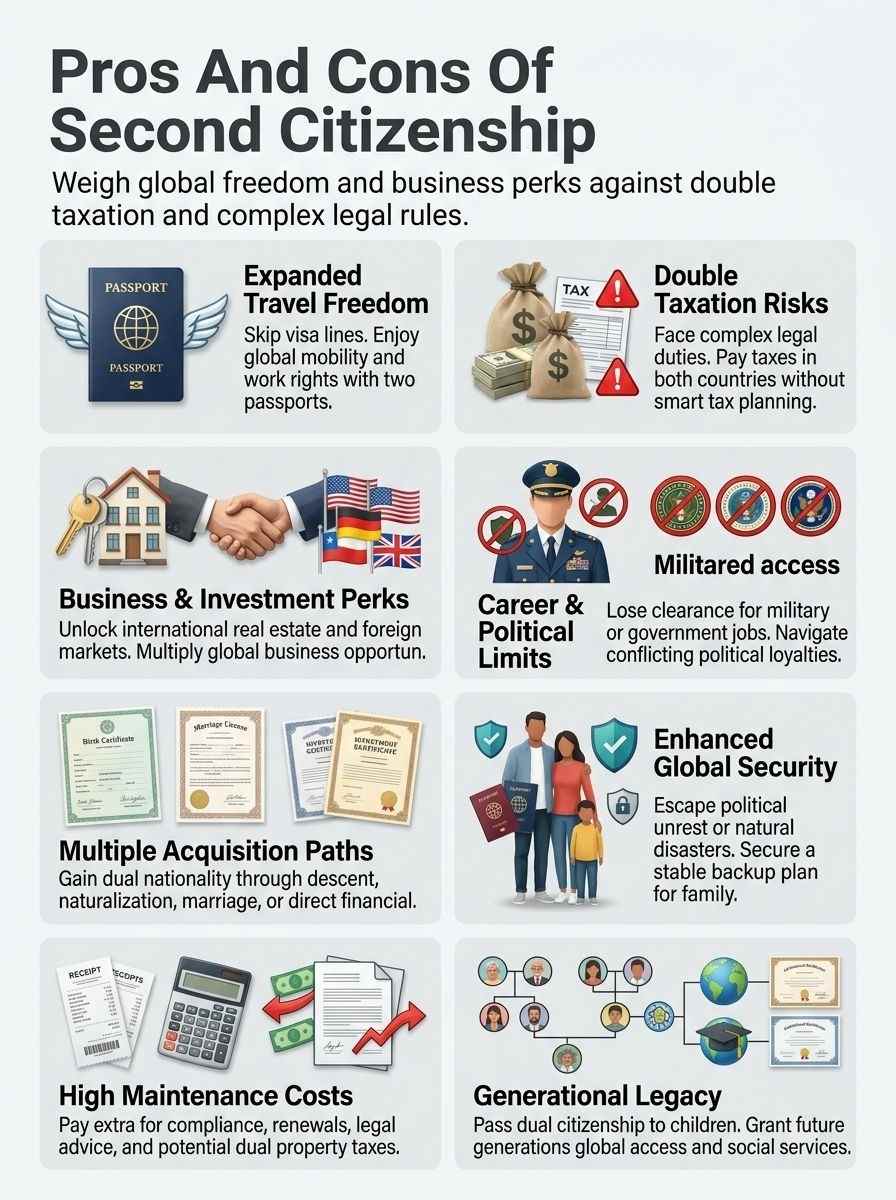
Imagine holding two passports, like having a spare key to the world’s front door, opening up visa-free trips to places you once dreamed about. You gain backup plans for jobs, schools, and safety nets across borders, turning “what if” worries into solid options that feel like a smart life hack.
Expanded Travel Opportunities
Second citizenship opens doors to expanded travel opportunities, like holding two passports for smooth trips. You gain convenience and flexibility for international travel, no visa hassles in some spots.
Dual nationals enjoy increased global mobility, hopping between countries with ease. Think of it as having a backup key to the world, letting you explore without roadblocks. This setup provides improved travel freedom and work rights in foreign nations, a real game-changer for adventurers.
Plus, second citizenship boosts residency options, so you can live and work in multiple places at once. It even grants access to social services and government programs in both countries, adding layers of support on the go.
Enhanced business opportunities across borders come along too, turning trips into smart ventures. Dual nationals tap into these perks, making life feel like a well-packed suitcase, ready for anything.
Access to Multiple Social and Economic Benefits
Dual citizenship opens doors to social services and government programs in both countries. You gain entry to healthcare, welfare, and support systems as a full citizen. This setup acts like a safety net, catching you no matter where life throws you.
Property ownership rights extend to dual citizens too. They let you invest in real estate across borders with ease. Think of it as planting roots in multiple gardens, growing your assets steadily.
Educational opportunities expand as well. Dual nationals tap into schools and programs in each nation. Kids benefit from diverse learning paths, setting them up for brighter futures.
Economic perks shine through with work rights in foreign nations. You live and earn in multiple spots without barriers. Business opportunities multiply across countries, fueling growth like a well-oiled machine.
Tax planning advantages come into play here. Strategic moves help reduce burdens and boost savings. Residency options grow too, offering flexibility to chase jobs or ventures wherever they pop up.
All this flows from laws governing naturalization and citizenship in the foreign country. Dual nationals navigate these with care to maximize gains.
Business and Investment Opportunities
Second citizenship opens doors to enhanced business opportunities across multiple countries. Imagine jetting off to seal a deal without visa hassles, that’s the reality for dual nationals.
They enjoy increased global mobility, which sparks fresh ventures in new markets. Holding a second passport grants work rights in foreign nations, so you can chase jobs or start companies abroad with ease.
Property ownership rights extend to dual citizens, letting them invest in real estate in both homelands. Think of it like having two keys to unlock prime lots, from city apartments to beachfront villas.
Dual nationals gain expanded residency options, too. This setup lets them live and work in various jurisdictions at once, like juggling homes in bustling hubs.
Tax planning advantages come with second citizenship, offering ways to cut burdens through smart strategies. You might dodge high rates by shifting assets, but hey, always check with pros to avoid pitfalls.
Expanded travel freedom ties into investment perks, as you hop borders to scout deals without red tape. Access to social services in both countries can support your business life, providing a safety net during expansions.
Educational opportunities in multiple nations build skills for global trade, sharpening your edge in competitive fields. Dual citizenship boosts convenience for international moves, making it simpler to network and grow your empire.
Just picture turning a quick trip into a lucrative partnership, all thanks to that extra passport in your pocket.
Political and Legal Rights in Multiple Countries
Dual citizenship opens doors to political rights in two nations, like voting in elections or running for office where laws allow it. You gain legal protections from both countries, which means stronger safeguards during tough times abroad.
Imagine facing a crisis in one place; your second passport acts as a safety net, pulling you toward better options. Dual nationals access government programs and social services available to citizens in both spots, boosting your support network.
Property ownership rights extend to you, letting real estate investments flow in multiple countries. Think of it as holding keys to two houses, each with its own set of rules and perks.
Expanded residency options let you live and work in various jurisdictions at once, adding flexibility to your life. Second nationality status follows the foreign country’s laws on naturalization and retention, so check those details first.
Holding a second passport grants work rights in foreign nations, easing job hunts across borders. You enjoy increased global mobility, with business opportunities spreading wide. Two passports mean convenience for travel, skipping visa hassles in some areas.
Educational chances grow as you tap into schools and programs from both countries. Dual citizenship offers tax planning edges, helping cut burdens with smart moves. Yet, it brings complex legal obligations and possible double taxation in spots.
Dual nationals face these twists, but the upsides often shine brighter for many folks.
Enhanced Security and Stability
Imagine, you face unrest in your home country, like political turmoil or natural disasters. Second citizenship steps in as your escape hatch. It grants increased global mobility, so you hop to a stable spot without hassle.
Think of it as a backup plan, folks, keeping you and your family safe. Dual nationals access social services and government programs in both places, easing the switch. Plus, expanded residency options let you live and work in multiple spots at once.
Costs can add up, but the peace of mind? Priceless. You gain travel freedom with two passports, dodging visa woes in tough times. Business opportunities expand too, helping you rebuild fast.
Property ownership rights open doors for real estate investments abroad, building a secure base. Educational chances grow as well, with access to schools in either nation. Dual citizenship offers that extra layer of stability, like a sturdy umbrella in a storm.
Cons of Second Citizenship
Sure, holding passports from two countries sounds like a dream, but it can hit your wallet hard with double income taxes, and you might face tough choices during elections or conflicts.
Imagine juggling loyalty oaths like a circus act gone wrong, where one wrong move could limit your job options in defense or spark family feuds over inheritance laws—curious yet?
Dual Taxation Obligations
Dual citizenship sounds great, but it often brings tax headaches. You might pay taxes in both countries on the same income. Governments see you as their citizen, so they want a piece of your earnings.
Double taxation hits hard if you earn money abroad. Fact is, dual nationals face complex legal obligations and double taxation in certain circumstances. Think of it like juggling two bosses who both demand overtime pay.
You could end up owing more than expected, especially without smart planning. Some folks use tax treaties to ease the burden, yet not all countries play nice with those agreements.
Second citizenship offers tax planning advantages, like ways to reduce burdens through strategic moves. Still, you deal with extra paperwork and rules from two nations. Imagine your wallet caught in a tug-of-war between tax offices.
Dual nationals gain expanded residency options, but that means tracking income rules in multiple spots. Property ownership rights extend to both countries, yet so do the tax bites on those assets.
People often consult experts to avoid pitfalls, dodging the stress of surprise bills. This setup demands vigilance, or you risk fines that sting.
Legal and Political Restrictions
Second citizenship brings some legal hurdles that can trip you up, like a hidden pothole on a smooth road. Countries set their own rules on naturalization and keeping that status, as fact sheets show.
You face complex obligations that demand careful steps to stay in line. Picture juggling two sets of laws, one from each nation, and dropping the ball means real trouble. Political restrictions pop up too, especially in jobs tied to security or public office.
Some places bar dual citizens from sensitive roles, fearing split loyalties. This setup stems from each country’s specific regulations on citizenship retention.
Folks with dual nationality often hit walls in military service or government posts, like a door slamming shut on opportunities. Laws in various nations dictate these limits to protect national interests.
You might lose out on voting rights in one country if the other frowns on it. Think of it as walking a tightrope between two worlds, where one wrong move sparks conflicts. Research shows these rules govern how you hold onto second nationality status.
Empathy kicks in here, since no one wants extra red tape snarling their plans.
Challenges in Military or Government Work
Dual citizenship throws a curveball into careers in the military or government jobs. Imagine you’re eyeing a spot in the armed forces, but your second passport raises red flags about loyalty.
Countries often bar dual nationals from sensitive roles to dodge conflicts of interest. Think about it, juggling two sets of laws feels like walking a tightrope. Fact is, second nationality status hinges on each country’s rules for naturalization and keeping citizenship.
You might face extra scrutiny, or flat-out bans, in high-security spots. Dual nationals deal with complex legal obligations that snag promotions or clearances. Hey, it’s like having two bosses who don’t always agree.
Folks with dual citizenship sometimes hit walls in public service gigs. Governments worry about divided allegiances, so they limit access to top posts. Imagine applying for a defense job, only to learn your extra passport blocks the door.
This stems from strict regulations on citizenship retention. Empathy here, it stings when your global ties clip your career wings. Yet, these hurdles protect national interests, even if they cramp your style.
Double taxation sneaks in too, adding financial headaches to the mix. Still, many manage this by picking paths that fit both worlds.
Higher Costs for Maintenance and Compliance
Second citizenship often brings extra bills that hit your wallet hard. You face dual taxation obligations, where both countries tax your income, creating a financial squeeze. For example, you’re juggling tax returns from two nations, and mistakes lead to hefty penalties.
Dual nationals deal with complex legal duties that demand lawyers or advisors, adding to the tab. These costs stack up for renewals, paperwork, and compliance checks. Some folks hire experts to handle tax treaties and avoid double dips on earnings.
This setup drains time and money, like a leaky faucet you can’t ignore.
People with two passports sometimes pay more for banking or investments across borders. Fees for maintaining status climb with currency changes or new rules. Imagine chatting with a friend who says, “I love my dual life, but those annual filings? They cost me a fortune.” Dual citizenship ties into higher expenses for things like property taxes in both places.
You might shell out for translations or notarizations on documents. These burdens grow if laws shift, forcing updates to stay compliant.
Potential Conflicts of Interest
Dual citizenship opens doors, but it also stirs up some tricky spots, like when loyalties clash. Imagine you hold passports from two nations at war; you might face tough choices on which side to support.
Laws in one country could ban you from certain jobs in the other, especially in government or the military. Dual nationals often deal with complex legal obligations that pull them in different directions.
Picture a business deal gone wrong across borders, and suddenly you’re caught in a web of conflicting rules. One fact stands out: second nationality status follows the foreign country’s specific laws and regulations on naturalization and citizenship retention.
This setup can create real headaches if you ignore those details.
Conflicts pop up in everyday life too, folks. You might vote in elections for both countries, but what if their policies oppose each other? Dual citizenship may involve potential disadvantages, including those complex legal obligations and double taxation in certain circumstances.
Think about family ties; passing citizenship to kids could spark issues if laws differ on inheritance or rights. Some people joke it’s like juggling two bosses who never agree. Nations have their own rules, and you must navigate them to avoid pitfalls.
Stay sharp on these points to keep things smooth.
Considerations Before Pursuing Second Citizenship
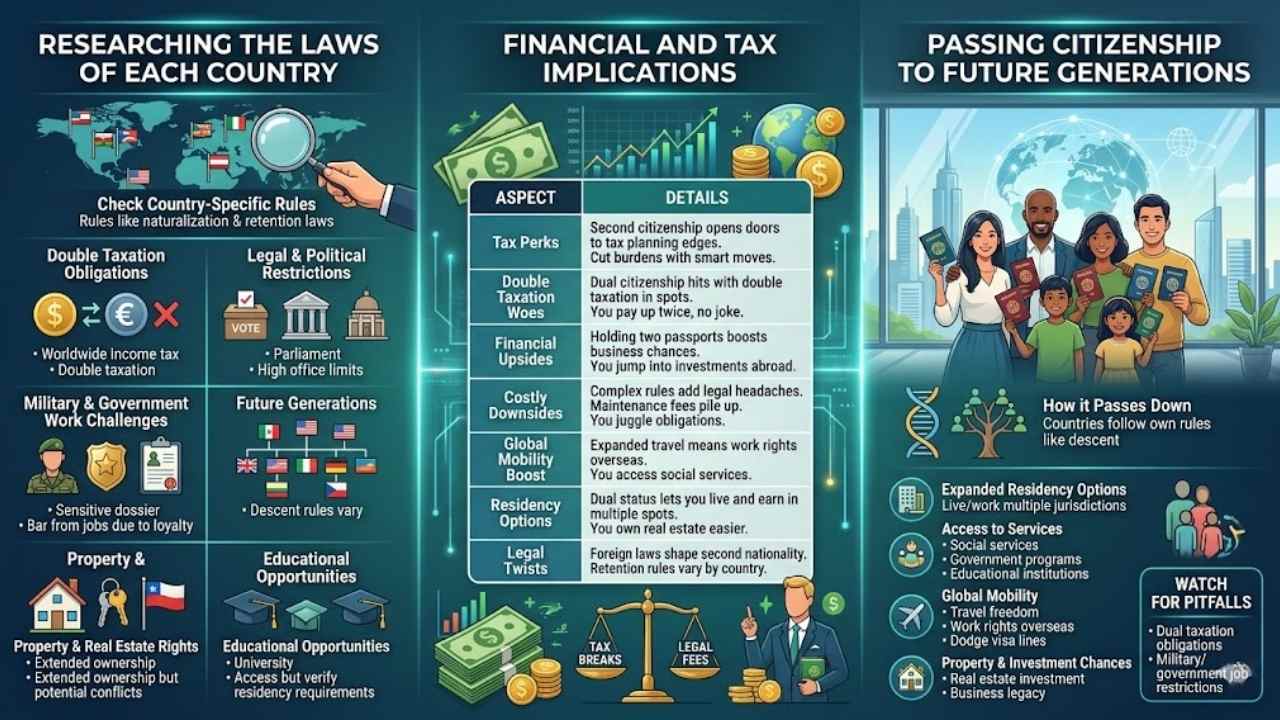
Think about digging into each country’s rules on dual nationality, like visa requirements or residency periods, before you jump in. Weigh the money side too, such as tax treaties and inheritance laws, so you avoid surprises down the road.
Researching the Laws of Each Country
Second citizenship sounds great, but laws differ wildly between countries. You need to dig into them to avoid nasty surprises.
- Check how each country defines second nationality status, as it’s set by the foreign country’s specific laws and regulations governing naturalization and citizenship retention, so you don’t lose one passport while chasing another.
- Look at dual taxation obligations, since dual nationals might face double taxation in certain circumstances, like owing taxes on worldwide income in both places, which could hit your wallet hard.
- Explore legal and political restrictions, because some nations limit dual citizens from holding high office or voting in both spots, imagine juggling two sets of rules like a circus act gone wrong.
- Review military or government work challenges, as holding two passports might bar you from sensitive jobs in one country due to loyalty concerns, talk about a loyalty test you didn’t sign up for.
- Investigate financial and tax implications, including potential tax planning advantages that let you reduce burdens through strategic moves, but watch out for complex legal obligations that could complicate your finances.
- Examine how citizenship passes to future generations, since birthright or descent rules vary, and you want your kids to inherit those expanded travel opportunities and access to social services without hiccups.
- Study residency and work rights, as dual citizenship allows expanded options to live and work in multiple jurisdictions, but some laws might restrict this based on your other nationality.
- Research property ownership rights, because dual citizens often get extended chances for real estate investment in both countries, yet certain regulations could block you if conflicts arise.
- Dig into educational opportunities, since second citizenship opens doors to institutions and programs in both nations, but confirm if laws require residency or other hoops to jump through.
- Assess enhanced security and stability perks, like having a backup plan during unrest, but verify if political rights in multiple countries create potential conflicts of interest under each set of laws.
Financial and Tax Implications
Money talks, and as you pursue second citizenship, so do the dollars and taxes. We’ll break it down in this table, folks, like chatting over coffee about your wallet’s wild ride.
| Aspect | Details |
|---|---|
| Tax Perks | Second citizenship opens doors to tax planning edges. You cut burdens with smart moves. Imagine dodging high rates, like a savvy investor flipping the script. Dual nationals tap into these wins across borders. |
| Double Taxation Woes | Dual citizenship hits with double taxation in spots. You pay up twice, no joke. Uncle Sam and another country both grab a slice. It stings the bank account, folks, yet tax treaties can ease the bite. |
| Financial Upsides | Holding two passports boosts business chances. You jump into investments abroad. Property rights expand; buy land in both spots. Think of it as your money growing legs and running free. |
| Costly Downsides | Complex rules add legal headaches. Maintenance fees pile up. You juggle obligations, like a circus act with cash. Dual nationals face these binds, based on each nation’s laws. |
| Global Mobility Boost | Expanded travel means work rights overseas. You access social services in both places. Education doors swing open wide. It’s like having a golden ticket for your finances and future. |
| Residency Options | Dual status lets you live and earn in multiple spots. You own real estate easier. Government programs become yours. Chat with a pal who did it; they say it’s a game changer for stability. |
| Legal Twists | Foreign laws shape your second nationality. Retention rules vary by country. You plan ahead to pass it on. Kids might inherit the perks, or the pitfalls, depending on setup. |
Passing Citizenship to Future Generations
Dual citizenship opens doors for your kids, folks. Imagine your children inheriting passports from both countries, like a family heirloom that unlocks the world. Countries follow their own rules on this, you see, with laws on naturalization and citizenship retention deciding if the status passes down.
Take the U.S., for example; it allows citizenship by descent if you meet certain residency requirements before the birth. Your offspring gain expanded residency options, letting them live and work in multiple spots without hassle.
They access social services and government programs in both nations, too. Picture a kid studying abroad, tapping into educational opportunities from two sides. It feels like giving them a head start, a safety net against life’s curveballs.
Second citizenship boosts their global mobility, just as it does for you, offering travel freedom and work rights overseas.
Think about the long game here, passing on property ownership rights so they invest in real estate across borders. Dual nationals enjoy business and investment chances that ripple to the next generation, creating a legacy of opportunities.
Yet, watch out for those dual taxation obligations that might hit the family wallet. Some places extend political and legal rights, but others impose restrictions, especially in military or government jobs.
Countries vary, with specific regulations governing if kids retain the status automatically or need steps like registration. Your children could dodge visa lines with two passports, zipping through travel like pros.
Enhanced security and stability become their inheritance, a buffer in uncertain times. Dual citizenship might even offer tax planning advantages, helping reduce burdens through smart moves that benefit everyone down the line.
Final Thoughts
Second citizenship opens doors to better travel, business chances, and safety nets across borders. You gain real perks like visa-free trips and education options, but watch out for tax hassles and legal snags.
Think about your goals, folks, is this move right for your life? It boosts your freedom and cuts risks in tough times, like a backup plan in your pocket. Check out citizenship programs from places like Portugal or Canada for more details.
Go chase that extra passport if it fits, it might just change your world for the better.
Frequently Asked Questions (FAQs) on Pros and Cons of Second Citizenship
1. What are the main pros of second citizenship?
Second citizenship opens doors to visa-free travel in many countries, like a golden ticket to explore the world without red tape. It can also boost your financial security through better banking options and tax perks, imagine dodging high taxes like a clever fox. Plus, it gives you a safety net during political unrest back home.
2. What cons come with dual nationality?
Dual nationality might hit you with double taxes, turning your wallet into a leaky bucket. You could face extra paperwork and legal hassles too.
3. How does second citizenship affect my family?
It often lets you pass citizenship to your kids, creating a legacy like planting a family tree that grows strong roots abroad. But watch out for cons like military service requirements in some places, which could complicate things for your loved ones.
4. Is getting a second passport worth the effort?
Yes, if you crave global mobility and backup plans, it’s like having an extra ace up your sleeve. Just weigh the costs, from application fees to potential citizenship revocation risks.