The local doctor’s office is no longer the final word in healing. For millions of people, medical tourism has become the only way to bypass a broken system. Domestic healthcare is hitting a wall. Families now face staggering insurance premiums and massive out of pocket expenses that defy logic. In many developed nations, excruciatingly long wait times for basic surgeries have turned treatable conditions into chronic pain. These failures are forcing a massive shift. Healthcare systems are no longer failing quietly. They are pushing patients to seek care elsewhere.
By participating in the borderless care economy, patients are finding a practical lifeline that values both their wellness and their wallet. This movement is not a small trend for the wealthy. It is reshaping the global medical tourism industry into a booming multibillion dollar market.
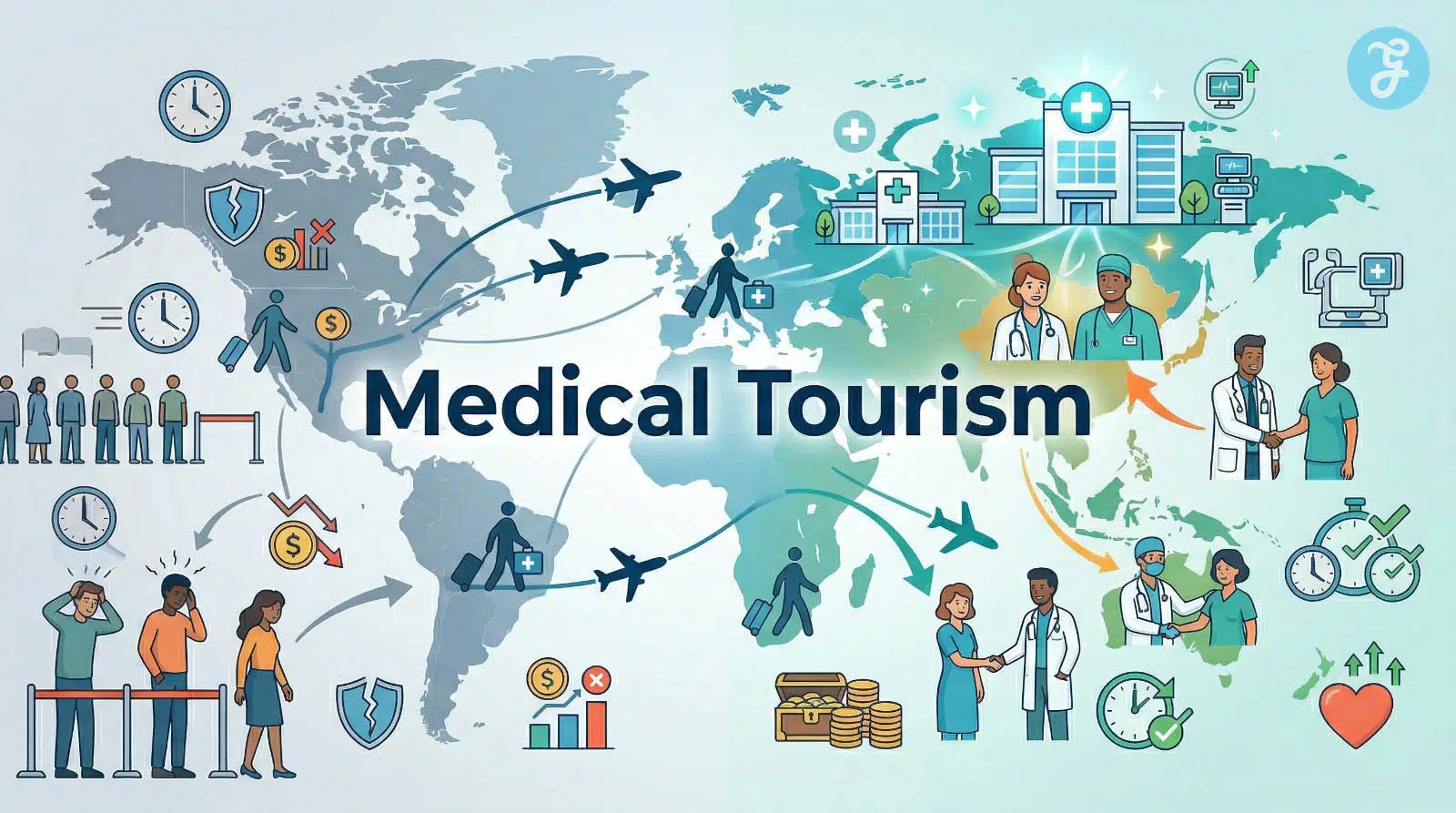
Recent market projections from Straits Research indicate the medical value travel sector is on track to hit 285 billion dollars by 2034. Boarding a flight for treatment is now a sensible alternative. This global boom addresses the most fractured parts of traditional healthcare in five ways. It offers a path to recovery that domestic markets can no longer guarantee.
Mapping the Global Corridors: Where Patients Go to Heal
The borderless care economy is not a random spread of clinics. It is a highly localized network of regional hubs. Each destination has carved out a specific niche of clinical excellence. Patients are moving across the map with purpose. They follow the data to find the best surgeons and the lowest costs. This geographical shift has created new centers of power in the global medical market.
Thailand: The Global Volume Leader
Thailand currently sits at the top of the pyramid, with its medical tourism revenue reaching 8.6 billion dollars in 2025 according to official tourism ministry data.
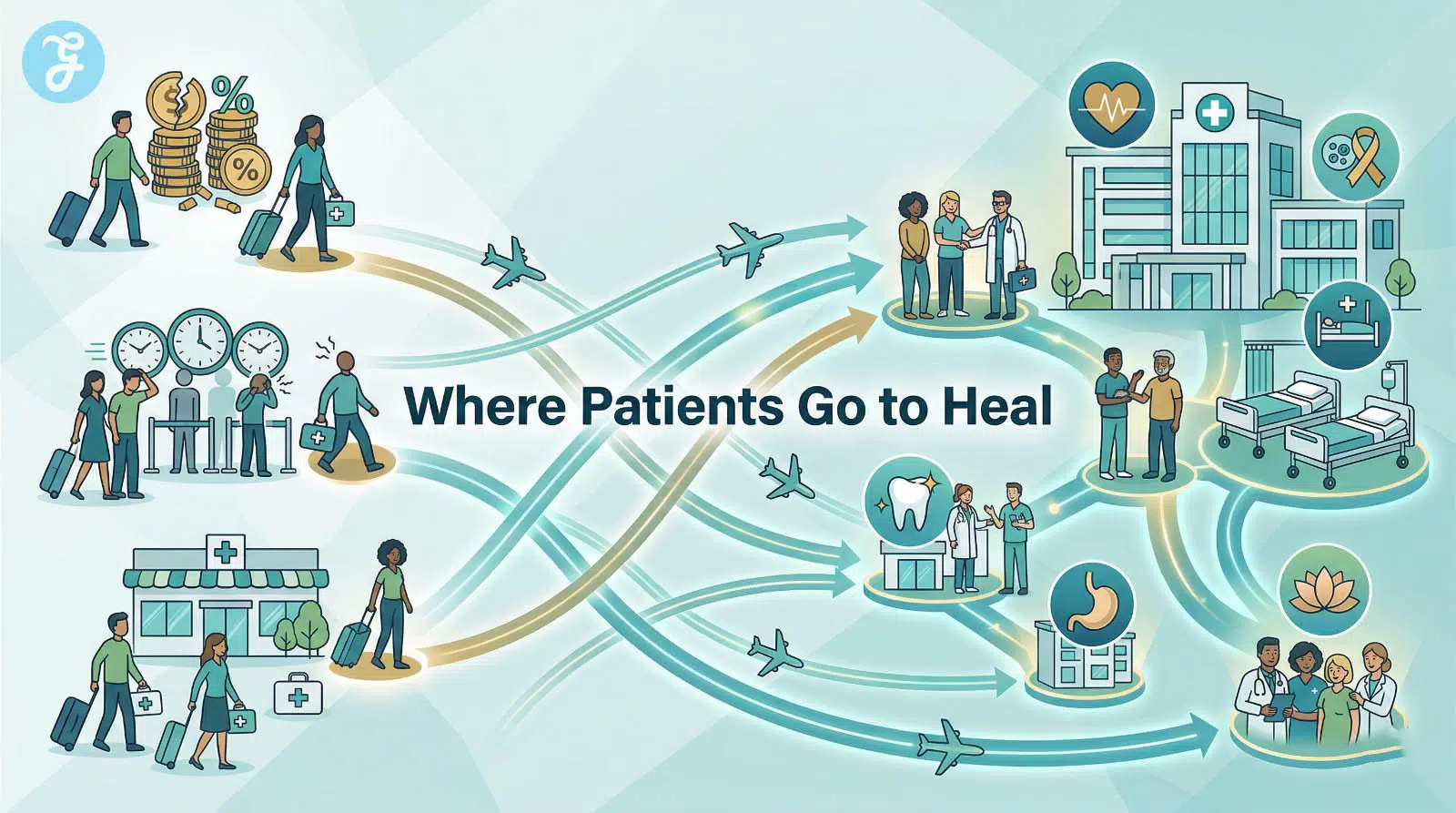
It welcomes over 2.5 million medical tourists every year for high-end clinical care. Patients arrive for a mix of complex orthopedic surgeries and preventive wellness programs. The country combines high-tech medical facilities with a deep culture of hospitality. It is the primary destination for those seeking a seamless transition from the operating room to recovery.
Mexico: The Dental and Bariatric Gateway
Mexico is the top choice for North Americans. Over 1.2 million United States citizens cross the southern border for care annually. Most are looking for specialized dental work or bariatric surgery. These patients see cost savings between 40 and 60 percent compared to prices in their home states. The proximity makes it a practical solution for those who cannot afford domestic rates.
India: The Hub for High Acuity Care
India has become a global powerhouse for complex procedures, with its medical tourism market surpassing 10.5 billion dollars in 2025 per Fortune Business Insights. It attracts roughly 1.5 million inbound patients seeking help with cardiology and oncology. The financial incentive is massive. Patients often save between 65 and 90 percent on life-saving heart surgeries. Indian hospitals provide world-class expertise at a fraction of the cost found in Western nations.
The New Map of Care
The traditional healthcare map has been permanently redrawn. Specific nations now capture massive patient flows based on their unique strengths. Geography is no longer a barrier to quality. People are simply going where the expertise is high and the wait times are low. This trend is redefining how the world views medical authority and access.
Shifting the Power Towards the Global Patient
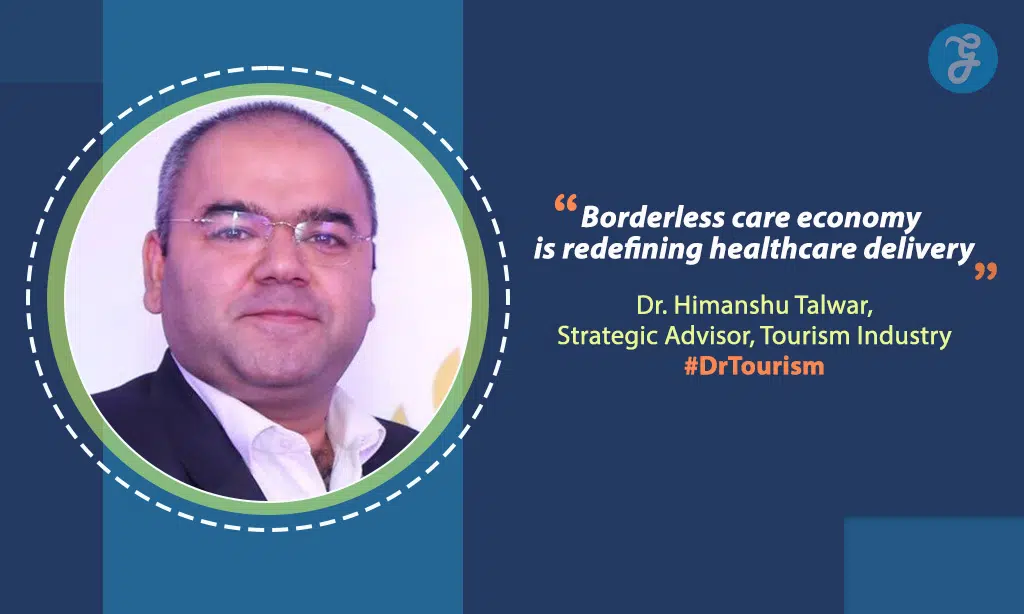
“The borderless care economy is redefining healthcare delivery, shifting power towards patients who now prioritize value, access, and trust across geographies,” says Dr. Himanshu Talwar, Strategic Consultant and Advisor, Tourism Industry, who is widely popular as #DrTourism. “Nations that combine clinical quality, transparent accreditation, and interoperable health data will lead. The real winners will be systems that move beyond episodic treatment to deliver continuous, cross border care experiences anchored in trust.”
Shattering the Cost Barrier Without Sacrificing Quality
High acuity medical treatments have become financially toxic in many developed nations. For the average family, a single major surgery can lead to a lifetime of debt. The borderless care economy offers a way to reclaim health without facing bankruptcy. By looking beyond their own borders, patients are finding that world-class care is often available at a fraction of the domestic price.
The Staggering Reality of Dental Care
Dental restoration is a prime example of the current price crisis. In the United States, a full mouth dental restoration can easily cost upwards of 35,000 dollars. In some high cost cities, that number climbs to 70,000 dollars. Specialized international hubs in Mexico or Turkey perform comparable procedures using similar techniques and materials for around 8,000 to 15,000 dollars. These clinics use the same premium implant brands like Straumann or Nobel Biocare. The only difference is the local cost of doing business.
Heart Surgery for a Fraction of the Cost
Cardiac care shows even more extreme disparities. A heart bypass surgery in a major American hospital often carries a price tag between 150,000 and 200,000 dollars as of 2026. In India, the same life-saving procedure is performed by world-class surgeons for approximately 5,000 to 10,000 dollars. This includes the hospital stay and post-operative care. The clinical outcomes and success rates in these top-tier Indian facilities are often equal to or better than those in the West.
Identical Standards with Different Economics
The secret to these savings is not lower quality. It is a matter of different labor economics. International hospitals operate with lower administrative overhead and lower malpractice insurance costs. They use globally approved devices and advanced robotic surgical tools found in leading hospitals worldwide. This allows them to offer identical material standards while removing the financial burden from the patient.
Reclaiming Health and Wealth
Choosing global care is a logical financial decision. It allows patients to invest in their recovery instead of just paying for hospital bureaucracy. By stripping away the inflated costs of domestic systems, the borderless care economy makes advanced medical care accessible again. It ensures that the ability to heal is no longer tied strictly to the size of a person’s bank account.
Eradicating Lethal Wait Times for Critical Care
In the world of medicine, time is the ultimate currency. Many universal healthcare models are currently buckling under the weight of massive patient backlogs. When a person is in pain or facing a growing tumor, waiting six months for a specialist is not just an inconvenience. It is a threat to their survival.
The High Cost of the Queue
Long wait times are a growing crisis in nations like Canada and the United Kingdom. For many patients, the wait for elective but life changing surgeries can exceed a year. This delay often leads to a decline in physical health and a surge in psychological anxiety. The borderless care economy offers an immediate exit from these stagnant queues. By traveling abroad, patients can often schedule a procedure within days of their first consultation.
Seeking Immediate Intervention in Asia and Latin America
The outbound flow of patients is particularly heavy for oncology, bariatric, and fertility treatments. Hospitals in regions like Asia and Latin America have streamlined their intake processes to handle international arrivals quickly. A patient needing a gastric bypass might wait two years in a domestic system but only two weeks in a specialized clinic in Mexico. In fertility care, the speed of access in places like Spain or Thailand can be the deciding factor in a successful pregnancy.
Fast Tracking for Better Survival Rates
Bypassing the local queue is a strategic move for long term health. Rapid intervention prevents minor medical issues from spiraling into permanent disabilities.
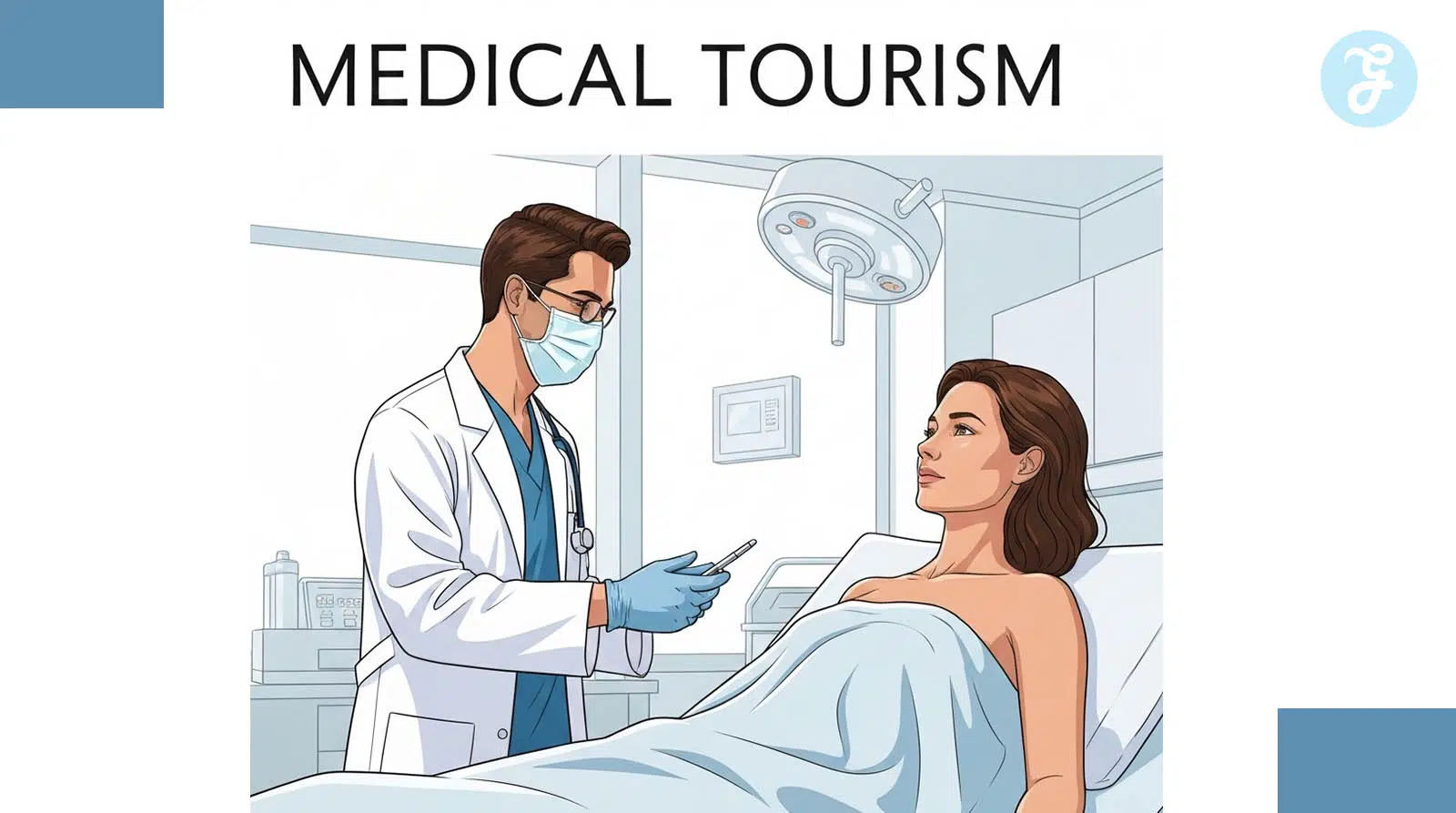
It also stops the emotional drain that comes with living in a state of medical limbo. When a patient can access a surgical suite immediately, their chances for a full and fast recovery improve significantly.
A New Standard for Medical Access
The ability to skip the line is redefining what it means to have access to care. It is no longer enough to have a hospital nearby if the doors are effectively locked by bureaucracy. The global medical market functions on demand, ensuring that the patient is the priority. This shift toward immediate care is saving lives and restoring peace of mind for families who simply cannot afford to wait any longer.
Elevating Global Standards Through Strict Accreditation
The outdated myth of unregulated and unsafe overseas clinics is finally being dismantled. For years, skeptics questioned the quality of care provided outside of Western borders. Today, the global medical tourism market is built on a foundation of rigorous trust frameworks. These systems ensure that a patient in Bangkok or Bangalore receives the same level of safety as someone in Boston or Berlin.
The Gold Seal of International Trust
Joint Commission International (JCI) has become the undisputed gold standard for global healthcare. Over 1,000 facilities across roughly 90 countries have now earned the JCI Gold Seal of Approval.
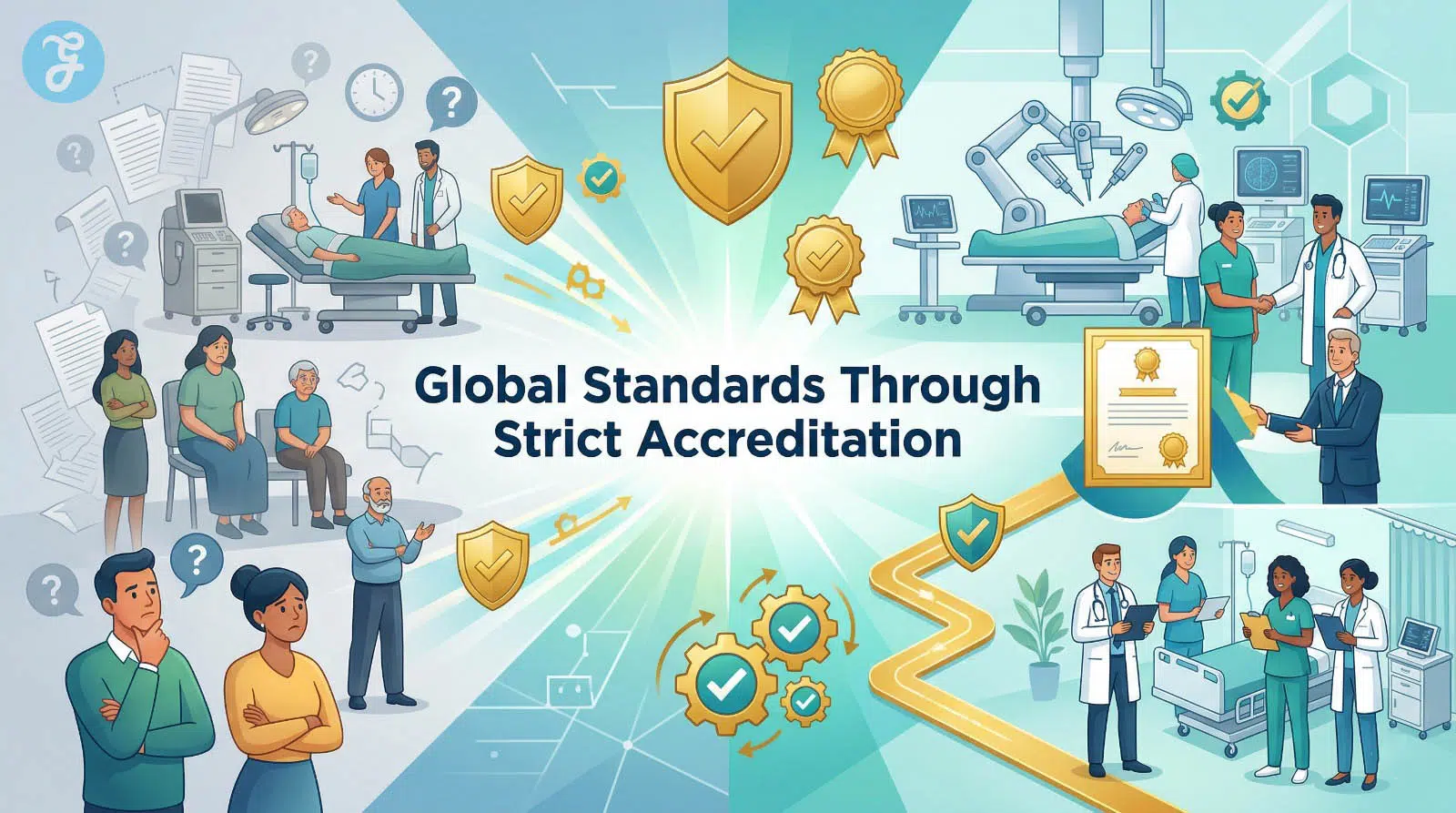
This is the same body that accredits the majority of American hospitals. To earn this seal, international clinics must voluntarily submit to a grueling audit. They are evaluated on over 1,200 separate points of data, ranging from surgical precision to medication safety.
Outperforming Domestic Benchmarks
To compete for patients from the United States and Europe, top-tier foreign hospitals are forced to be better than the local competition. Many JCI-accredited facilities in Asia and the Middle East maintain infection rates and clinical success metrics that frequently outperform domestic hospitals. For instance, specialized cardiac centers in India report success rates comparable to leading global benchmarks. These facilities invest heavily in the latest robotic surgical suites to maintain their elite status.
A Culture of Continuous Audit
Accreditation is not a one-time event. To keep their status, these hospitals must undergo a complete re-evaluation every three years. This culture of constant improvement is often more rigorous than what is found in aging domestic public health systems. It ensures that staff training and medical technologies are always at the cutting edge. This commitment to excellence has turned international clinics into models of modern medical efficiency.
Verification Before Departure
The rise of these frameworks allows patients to verify the quality of their care before they ever book a flight. Websites for organizations like the Global Healthcare Accreditation (GHA) provide transparent lists of certified facilities. This level of transparency has replaced fear with confidence. It proves that in the borderless care economy, the highest standards of medicine are no longer confined to a few wealthy nations.
Driving Innovation Through Cross Border Data Integration
The historical fear of fragmented medical records is finally being solved by aggressive technological innovation. For decades, the risk of a patient’s history getting lost between continents was a major barrier to global care. Today, a new digital backbone is ensuring that your medical data is as mobile as you are.
The Rise of Secure Digital Health Lockers
Cloud-based storage has evolved far beyond simple document uploads. In India, the Ayushman Bharat Digital Mission (ABDM) has enabled the creation of over 800 million ABHA IDs, building one of the world’s largest foundations for portable medical data. These consent-based digital health lockers allow patients to carry their verified medical history on a smartphone. With user approval, doctors can securely access past imaging, lab reports, and allergy records, enabling faster, more informed care across institutions and geographies.
AI-Driven Diagnostics and Precision Planning
Artificial intelligence is now a standard tool for pre-treatment planning in the borderless economy. Hospitals in South Korea and Thailand use AI algorithms to analyze MRI and CT scans before the patient even books a flight. This technology can detect medical patterns invisible to the human eye and significantly improve diagnostic speed, in some cases by up to 40 percent. It allows international teams to build a precise surgical plan while the patient is still in their home country.
High Definition Telemedicine for Continuous Care
The medical journey no longer begins or ends at the hospital doors. High definition telemedicine has turned the patient experience into a continuous loop. Pre-flight video consultations allow patients to build a direct rapport with their surgical team. After returning home, remote monitoring tools and wearable biosensors track vital signs in real time. This ensures that post-operative recovery is supervised by the original specialists, no matter the distance.
Seamless Integration for Patient Safety
Global clinics now use dedicated international patient departments to act as data hubs. These teams manage the flow of information between the foreign hospital and the patient’s local GP. They increasingly use encrypted and blockchain enabled systems to ensure that medical records remain secure and auditable. This level of digital coordination has turned the “borderless” concept into a functional, safe, and highly efficient reality.
Fusing Modern Medicine with Preventive Wellness
Traditional healthcare models often excel at managing acute symptoms but fail at supporting holistic recovery. For many patients, the hospital experience is a series of clinical events separated from the rest of their lives. The borderless care economy is changing this by merging high-tech surgery with proactive wellness. This shift recognizes that true healing requires more than just a successful operation.
The Explosion of the Wellness Segment
Wellness tourism is no longer a niche for spa enthusiasts. It is a massive market projected to reach 1.06 trillion dollars by the end of 2026. Within medical tourism, the wellness treatment segment is registering some of the fastest growth in the industry. Patients are increasingly looking for bundled care pathways that combine their medical procedures with long term rejuvenation. This trend is driven by a global desire for preventive health rather than just reactive crisis management.
Blending Surgery with Regenerative Therapy
Modern international hubs in countries like India and Thailand are leading the way in integrated care. These facilities offer a hybrid model where a patient might undergo a complex heart bypass and then transition immediately into an AYUSH based recovery program. These programs include customized dietary planning, targeted physical therapy, and traditional stress reduction techniques. By blending conventional medicine with regenerative therapies, these hubs address the physical and emotional needs of the patient simultaneously.
Faster Healing in Low Stress Environments
The environment where a patient recovers is just as important as the surgery itself. Studies show that patients in enhanced, low stress environments experience shorter hospital stays and lower pain scores. International medical hubs often resemble high end resorts more than sterile clinics. They provide natural light, quiet recovery suites, and culturally enriching surroundings. This evidence based design helps lower cortisol levels and boosts the body’s natural ability to heal.
Treating the Whole Person
The takeaway for the modern patient is clear. Recovery is more effective when it takes place in an environment designed to treat the whole person rather than just the disease. The borderless care economy offers access to facilities that prioritize the patient’s overall well being from the moment they arrive. This holistic approach ensures that patients return home not just treated, but truly restored.
Embracing the Borderless Future
The era of healthcare being defined by a single zip code is over. Medical value travel has transformed from a desperate last resort into a permanent fixture of the modern world. It is a rational response to a global marketplace where quality is high and borders are fluid. For millions of patients, the ability to choose a hospital halfway across the world is not just a preference. It is the only way to secure a healthy future without financial ruin.
The New Reality of Patient Power
Patients are no longer passive recipients of whatever care is closest. They are informed consumers who understand their own worth. They see the data on success rates in Seoul and the cost savings in San Jose.
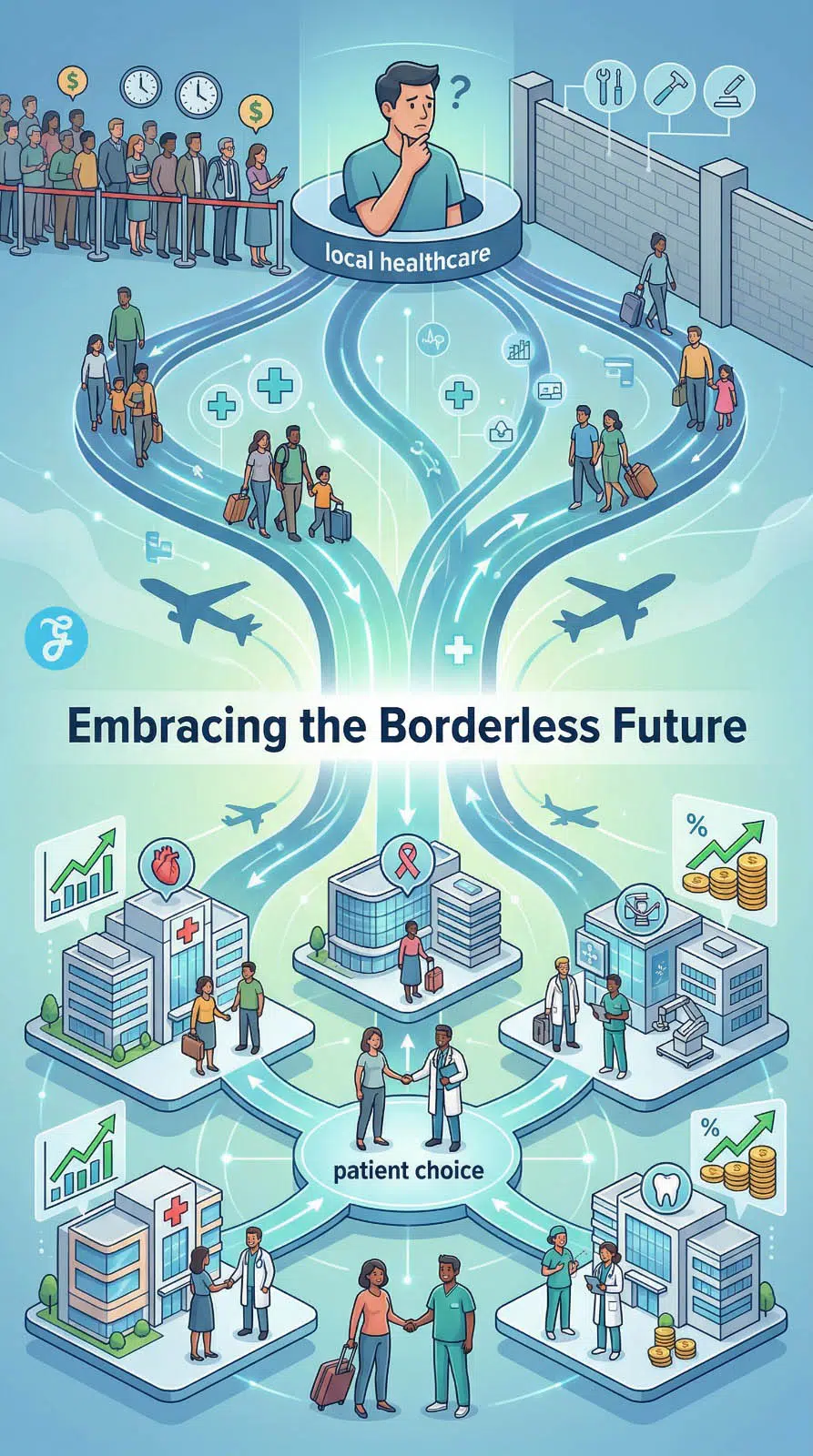
This shift in power is permanent. The global medical tourism market has proven that excellence is not the exclusive property of any single nation. As long as domestic costs remain inflated and wait times stay stagnant, the outbound flow of patients will only grow.
A Challenge to the Status Quo
Policymakers and major insurance providers can no longer ignore this massive migration. The current domestic models are struggling with deep inefficiencies that they seem unable to repair from within. It is time for these institutions to adapt to the reality of the 2020s. They must move beyond outdated protectionism and formally integrate global care pathways into standard coverage. If a surgery is safer and more affordable in a JCI-accredited facility abroad, insurance should cover it just as they would at home.
The Road Ahead
The borderless care economy is a win for the patient and a wake-up call for the industry. It rewards facilities that prioritize transparency, speed, and clinical results. This competitive pressure is the best tool we have for driving global healthcare standards higher. We are moving toward a world where the best doctor for your needs might live ten thousand miles away. Embracing that future is the only way to ensure that high quality medicine remains a human right rather than a luxury for the few. Ultimately, the borderless care economy is not just about moving bodies across maps; it is about the intersection of clinical excellence and sustainable living. We are witnessing a shift where the environment of recovery is as vital as the surgery itself, creating a new gold standard for global wellness.