Do you ever lie awake worrying that cutting your supply budget will ruin the quality of your products? It is a stressful balancing act. Every day, your US business spends money on materials and services to keep the lights on. You want to pay less. You need to keep things running smoothly. The good news is that you do not have to pick just one option. Companies waste up to 10 percent of their budgets on inefficient buying practices.
That is real cash sitting on the table. In this guide, I will show you exactly how to reduce procurement costs without sacrificing quality. Grab a cup of coffee, and let’s go through it together. I will show you everything you need to know.
Understanding Procurement Costs
Procurement costs cover everything your company spends when buying goods from suppliers. These expenses go way beyond the initial price tag. You must see the full financial picture to make smart decisions.
Definition of procurement costs
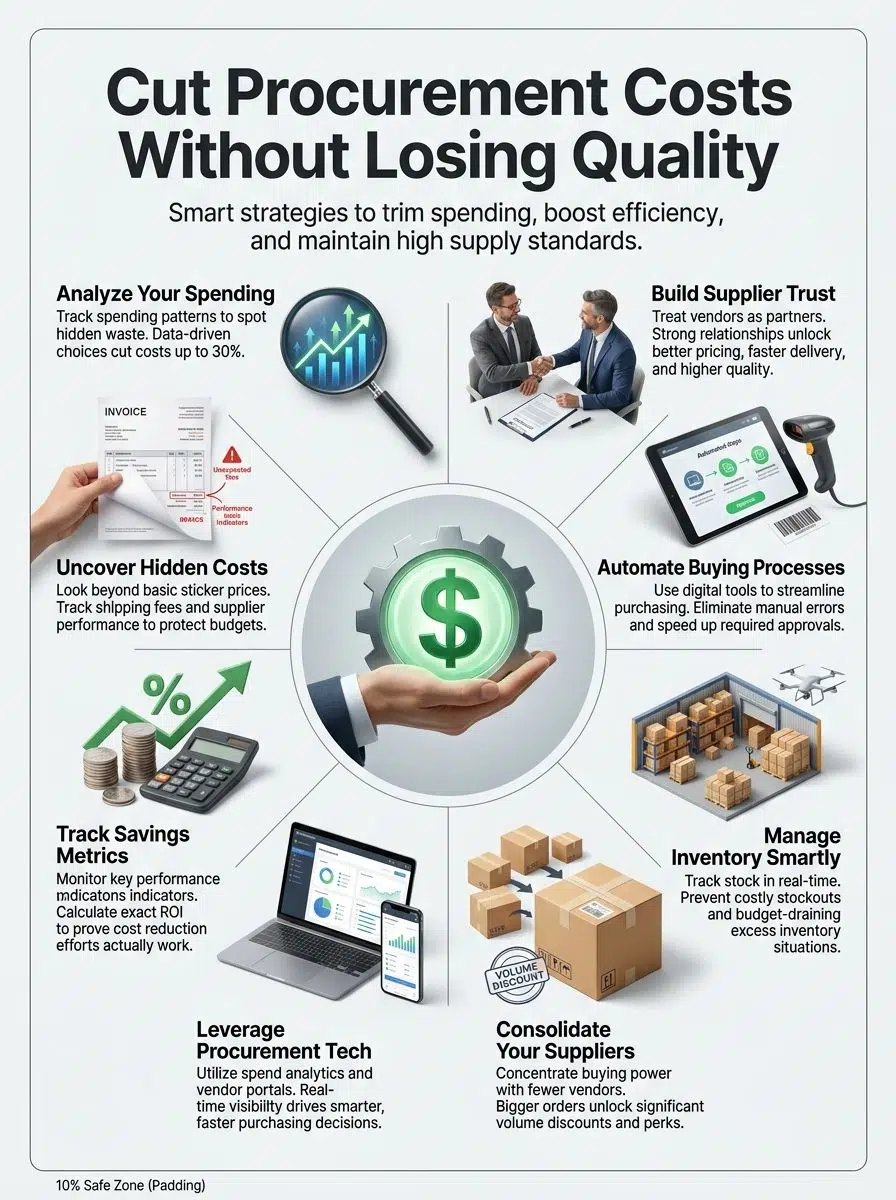
Procurement costs are the total expenses your company pays to acquire goods and services. These costs go far beyond the simple sticker price on an item.
They include everything from the moment you identify a need to the final delivery at your door. Shipping fees, inspection charges, and administrative work all factor into the total bill.
Your team invests hours in sourcing, negotiating, and managing these purchases. Hidden fees often sneak up on businesses that ignore their spending patterns.
Cost reduction becomes possible when you understand exactly where your money goes. A 2025 report from Deloitte found that 71 percent of Chief Procurement Officers in the US identify cost savings as their absolute top priority. Inflation and market shifts make this focus mandatory.
Key components of procurement costs
Now that you grasp the real definition, we need to break down the specific pieces of your total spending. Each component impacts your bottom line directly.
Understanding these categories helps you spot where cash leaks happen. For example, a 2025 Concord study revealed that poor contract management alone costs businesses globally around $2 trillion per year.
| Cost Component | Description | Why It Matters |
|---|---|---|
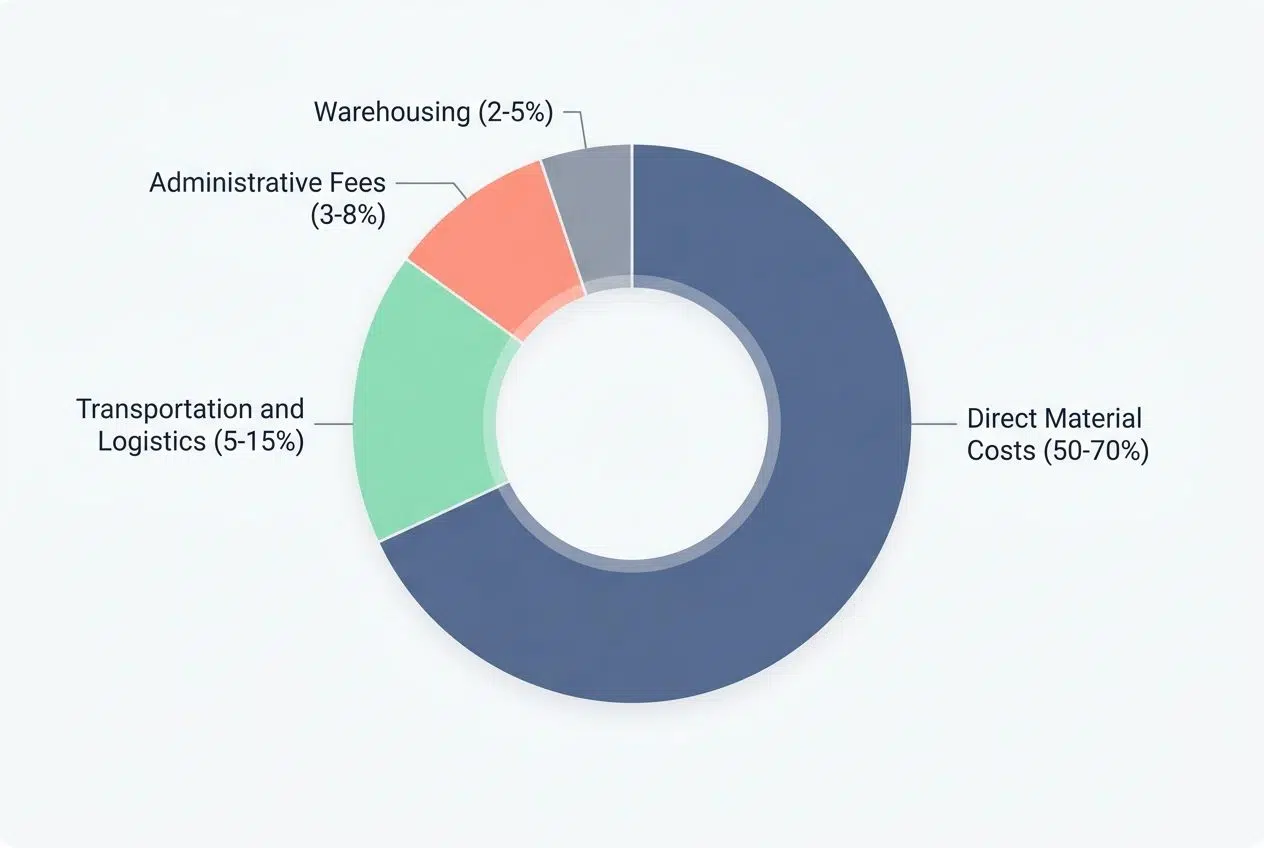
| Direct Material Costs | The actual price you pay for goods and raw materials from suppliers. This covers everything from inventory to production components. | Direct materials represent 50 to 70 percent of total spending. Getting this right makes a huge difference in your budget. |
| Transportation and Logistics | Shipping fees, freight charges, and delivery costs that get products from suppliers to your warehouse. | Transportation adds 5 to 15 percent to your total costs. Hidden surcharges can pile up fast if you are not watching. |
| Administrative and Processing Fees | Staff time, system costs, and paperwork are involved in order processing and vendor communication. | These indirect costs consume 3 to 8 percent of budgets. Many companies overlook them because they spread across departments. |
| Quality Control and Inspection | Testing and compliance checks that verify materials meet your standards before they enter your operations. | Catching defects early prevents expensive rework and customer issues. This investment pays for itself through waste reduction. |
| Supplier Management Costs | Expenses tied to vendor evaluations, contract negotiations, and ongoing communication with suppliers. | Strong relationships drive better pricing and reliability. Neglecting this area leads to higher costs down the line. |
| Storage and Warehousing | Facility costs, handling labor, and equipment are needed to store materials until they are needed. | Warehousing runs 2 to 5 percent of spending. Excess inventory here drains your cash flow. |
| Risk and Compliance Costs | Insurance, certifications, and contingency planning to protect against supply chain disruptions. | These safeguards prevent massive problems. Skipping them invites disaster when something goes wrong. |
The Importance of Managing Procurement Costs
Controlling procurement costs directly impacts your bottom line. It keeps your company competitive in tough US markets. Smart cost management frees up cash. You can reinvest that money in growth, innovation, or better employee benefits.
Impact on profitability
Procurement expenses hit your bottom line harder than most people realize. Every dollar you spend on supplies comes straight out of your profits.
Reduce those expenses, and you free up money that flows directly to your bank account. Smart cost reduction means higher profit margins without cutting corners.
Companies that master cost efficiency gain a real competitive edge. A 2025 analysis by McKinsey found that top-performing procurement functions achieve an EBITDA margin impact of five percentage points or more.
“The best procurement strategy cuts costs while keeping quality exceptionally high. It treats budget management as a strategic growth engine.”
Strategic sourcing helps you identify where money leaks out of your budget. Your cash flow improves quickly, giving you more flexibility to invest in growth opportunities.
Role in operational efficiency
Smooth operations depend entirely on smart spending choices. When you control procurement expenses, your team spends less time chasing invoices. Streamlined sourcing speeds up delivery and keeps projects on track. Better vendor management means fewer supply chain hiccups.
Consider the direct benefits of linking cost management to productivity:
- Fewer Delays: Your staff focuses on core tasks instead of fixing purchasing problems.
- Reduced Waste: Centralizing your buying power cuts confusion across departments.
- Automated Work: A 2025 Inbound Logistics report notes that 60 percent of procurement teams now use AI-driven tools to handle routine tasks.
- Clearer Focus: Spend analysis reveals exactly where cash goes, so you stop paying for unnecessary items.
Strategies to Reduce Procurement Costs Without Sacrificing Quality
You can slash your spending without cutting corners on the final product. Smart tactics let you pay less while getting more value. Here are the exact methods you can use to protect your budget.
Conduct regular spend analysis
Spend analysis forms the backbone of smart purchasing. Your company spends money across dozens of categories and vendors every single day. Most organizations completely lose track of where their cash actually goes. Conducting regular spend analysis means you dig into your purchasing data to spot patterns.
You will find waste hiding in plain sight. This process reveals which suppliers cost the most and where you can negotiate better rates.
A 2025 report from Sirion highlights a major issue. Maverick spending accounts for 10 to 15 percent of total procurement volume at organizations lacking centralized visibility.
Data-driven decisions replace guesswork with cold, hard facts. The 2025 State of Spend report by Sievo found that 38 percent of procurement leaders are now investing heavily in AI-driven spend analysis.
Optimize supplier relationships
Your suppliers are your partners. They are not just vendors you call when you need a quick restock. Strong supplier relationships cut expenses in ways that pure haggling never will. Talk with your suppliers about their challenges and their timelines.
A 2024 Focal Point study found that firms spend 15 to 27 percent of their revenue on external suppliers. Working closely with them prevents you from losing that negotiated value over time.
Here are three proven ways to optimize these relationships:
- Collaborative Innovation: Involve key suppliers early in product development to identify alternative materials.
- Joint Problem Solving: A 2025 SCM Talent Group case study showed that collaborating with suppliers reduced production costs by 15 percent.
- Quarterly Reviews: Schedule regular meetings to discuss performance metrics and market changes before they become expensive headaches.
Leverage competitive sourcing and strategic negotiations
Competitive sourcing and strategic negotiations form the foundation of smart expense reduction. These tactics help you squeeze better prices from suppliers.
Pre-Negotiation Tactics
- Request quotes from multiple suppliers to create real competition. This naturally drives prices down as vendors fight for your contract.
- Analyze each supplier’s pricing structure in detail. You will spot where hidden fees live and understand exactly what you pay for.
- Build relationships with suppliers before negotiations start. Mutual trust makes conversations easier and opens doors to better deals.
- Use US market data and industry benchmarks during talks. This gives you solid ground to stand on when discussing fair pricing.
Active Negotiation and Contracting
- Negotiate volume discounts by consolidating your purchases. This shows suppliers you bring serious volume and deserve special pricing.
- Lock in long-term contracts with favorable terms. Both sides gain stability while you secure lower rates for extended periods.
- Challenge suppliers to reduce expenses through process improvements on their end. They find efficiencies that benefit both parties.
- Explore alternative materials or components that work just as well but cost less. Sometimes switching products saves cash without sacrificing quality.
- Create transparency in your agreements about what drives price changes. Everyone understands where money goes and where cuts make sense.
Implement process automation and digital tools
Automation cuts through administrative waste rapidly. Digital tools transform your sourcing operations from manual chaos into streamlined efficiency.
Core Procurement Platforms
- Procurement software platforms eliminate manual data entry and reduce errors significantly. Your team spends less time on paperwork and more time on strategy.
- E-procurement platforms connect your organization directly to suppliers. Employees submit requests through a standardized system instead of using scattered spreadsheets.
- Spend analytics tools reveal where your money actually goes across departments. These tools crunch massive amounts of data to show spending trends.
- Supplier collaboration portals create a shared workspace where you and vendors communicate directly. Suppliers see real-time demand forecasts and adjust production accordingly.
Advanced Automation Tools
- Automation handles routine tasks like purchase requisitions and invoice processing. Processing times drop from days to hours.
- Digital contract management systems store all agreements in searchable databases. You never miss a renegotiation deadline or overlook favorable pricing terms.
- Integration between procurement systems and accounting software creates seamless financial workflows. Finance teams spot cost overruns instantly and alert procurement.
- Mobile procurement apps let employees request items from anywhere using their phones. Urgent needs get fulfilled without bypassing your cost controls.
Improve inventory management practices
Smart inventory management cuts waste and keeps quality high. Your procurement costs drop significantly when you track stock levels properly.
Recent data from Myos shows that inventory accuracy in US retail operations is only 63 percent. Fixing overstocking and understocking reduces total inventory costs by 10 percent.
Tracking and Organization
- Track your inventory in real time using digital systems. This prevents both stockouts and overstock situations that drain your budget.
- Categorize items using the ABC method. This sorts inventory based on value and lets you focus cost reduction efforts where they matter most.
- Conduct regular physical counts of your stock to catch discrepancies early. This ensures your records match reality and reveals issues quickly.
- Establish clear expiration date policies for perishable items. This eliminates the need to write off inventory that nobody wants anymore.
Optimization Techniques
- Set reorder points based on actual usage data. You order supplies just when you need them instead of months in advance.
- Implement first-in, first-out rotation practices so older items move out before newer ones. This reduces spoilage that wastes procurement dollars.
- Negotiate consignment arrangements with key suppliers. You only pay for goods after you use them, freeing up valuable cash.
- Reduce safety stock levels gradually by improving demand forecasting accuracy. You carry less inventory while still meeting customer needs.
- Use vendor-managed inventory programs where suppliers monitor your stock levels. This cuts administrative work and prevents emergency rush orders.
Consolidate suppliers for volume discounts
Consolidating suppliers for volume discounts represents an incredibly powerful tactic. Instead of spreading purchases across many vendors, you concentrate your buying power.
This approach transforms you from a small customer into a major priority account. You gain real leverage during supplier negotiation.
According to 2025 data from Sirion, organizations typically achieve 8 to 12 percent category savings through consolidation alone. They also see a 30 to 40 percent reduction in supplier management overhead.
The math here is straightforward. Bigger orders mean much better rates.
| Approach | Management Effort | Pricing Leverage |
|---|---|---|
| Fragmented Suppliers (Many vendors) | High administrative burden and duplicate workflows. | Low leverage resulting in standard retail pricing. |
| Consolidated Suppliers (Few strategic partners) | Low overhead with streamlined communication. | High leverage leading to deep volume discounts. |
Technology Solutions for Cost Management
Technology solutions completely change how companies manage spending. Smart software platforms give your team real-time visibility into where money goes. You can make faster, smarter purchasing decisions.
Procurement software and e-procurement platforms
Procurement software cuts through the noise of traditional buying methods. These digital tools give your team real-time visibility into spending patterns.
The global procurement software market is projected to reach $9.5 billion by 2028, according to Verified Market Research. Cloud platforms like SAP Ariba and Coupa are leading this massive shift.
E-procurement platforms streamline the entire purchasing journey. Your staff spends less time on paperwork and more time on strategic decisions. Automated workflows reduce manual errors and speed up approvals. You achieve lower procurement costs without sacrificing quality or control.
Spend analytics and reporting tools
Spend analytics tools give you clear visibility into where your money goes. They track your purchasing patterns across all departments and vendors. You see exactly which suppliers cost the most. You also spot which contracts need immediate renegotiation.
“By 2026, fifty percent of contract lifecycle management platforms will integrate AI-driven analytics. This integration directly improves forecast accuracy by up to 20 percent.”
Reporting tools transform raw spending data into actionable insights. Your finance team gets automated reports instead of spending hours in messy spreadsheets.
Supplier collaboration portals
Supplier collaboration portals break down walls between your company and your vendors. They create a shared digital space where both sides work together seamlessly.
A 2025 report by PLANERGY notes that digital supplier portals are now actively used across 35 percent of procurement platforms. These portals deliver several major advantages:
- Real-Time Tracking: Your team and suppliers can exchange documents and track orders instantly.
- Fewer Miscommunications: Shared forecasts help suppliers plan better, avoiding costly rush orders.
- Leveled Playing Field: Vendors access the same information you do, building mutual trust.
- Faster Issue Resolution: You catch quality metrics issues before they spiral into expensive problems.
Measuring and Tracking Procurement Cost Savings
You absolutely must track your savings with clear metrics. This is how you prove that your efforts actually work.

Key performance indicators (KPIs) for cost management
Tracking the right metrics separates successful companies from those that hemorrhage money. Regular tracking uncovers trends before they become full-blown crises.
| KPI | What It Measures | Why It Matters |
|---|---|---|
| Cost Per Unit | Average expense for each item purchased across all suppliers. | Reveals whether your spending per item climbs or drops over time. It helps spot pricing anomalies fast. |
| Supplier Cost Variance | Difference between budgeted supplier costs and actual spending. | Shows which suppliers stay within budget and which ones drift. It identifies renegotiation opportunities. |
| Procurement Cycle Time | Days required from requisition approval to final delivery. | Faster cycles reduce carrying costs and free up cash. Slow cycles drain working capital. |
| Supplier Quality Score | Composite rating based on defect rates and on-time delivery. | Tracks whether low-cost suppliers actually deliver quality. It prevents expensive rework and returns. |
| Spend Under Management | Percentage of total spending covered by negotiated contracts. | Higher percentages indicate better control. Unmanaged spending often hides waste. |
| Invoice Accuracy Rate | Percentage of invoices processed without errors or discrepancies. | Mistakes lead to overpayment. Accuracy protects margins and prevents audit headaches. |
| Supplier Consolidation Ratio | Number of active suppliers compared to total purchasing categories. | Working with fewer suppliers often yields volume discounts. Too many vendors fragment your leverage. |
| Cost Avoidance Achieved | Total savings from negotiations and competitive bidding. | Quantifies the real impact of procurement initiatives. It demonstrates value to leadership. |
| Inventory Turnover Rate | How many times does the inventory sell and get replaced during a period? | Higher turnover means less capital tied up in stock. Lower rates signal dead inventory. |
| Total Cost of Ownership (TCO) | Full expense, including price, delivery, and maintenance over the product’s lifetime. | Captures hidden costs that simple price comparisons miss. It prevents false economy decisions. |
Methods to calculate return on investment (ROI)
KPIs give you the baseline numbers you need. Now you can measure the actual money your strategies save by calculating your return on investment. ROI shows you exactly how much value your efforts generate compared to what you spent.
Calculating Savings and Costs
- Start with your total savings amount. Add up all the money you saved through your procurement strategies over a specific time period.
- Identify your total investment costs. This includes the automation software licenses, staff training hours, and any consulting fees.
- Include indirect savings in your calculations. Factor in reduced waste, faster payment processing, and improved supplier relationships.
- Subtract your total investment from your total savings. This gives you your net profit from procurement improvements.
Finalizing the ROI Formula
- Divide your net profit by your total investment amount. This calculates your basic decimal ROI figure.
- Multiply that decimal number by 100. This converts it into a clear percentage that shows your return on investment.
- Compare your ROI percentage against your company benchmark. You will see if your cost efficiency efforts exceeded expectations.
- Track your ROI alongside your KPIs. This builds a complete picture of how your cost reduction efforts actually perform.
Common Mistakes to Avoid in Procurement Cost Management
Many companies slip up by making avoidable errors. They miss hidden fees and ignore vendor performance metrics.
Hidden costs lurk in the shadows, waiting to sabotage your budget. Shipping fees, storage charges, and compliance requirements add up fast.
Your management strategy fails completely if you overlook these sneaky expenses. For example, poor cybersecurity in vendor contracts is a massive hidden risk.
The global average data breach cost reached $4.88 million recently, according to IBM’s 2024 data. If a weak supplier causes a breach, that becomes your hidden cost.
A thorough spend analysis reveals what you actually pay. Process standardization helps you catch these costs before they drain your wallet.
Overlooking supplier performance
Many companies focus so hard on cutting prices that they miss a critical truth. Poor supplier performance costs money in ways that do not show up on the surface.
A vendor who delivers late shipments forces you to rush orders at premium prices. Defective materials waste your production time and damage your reputation.
Failing to track these metrics is a common blind spot:
- Misaligned Priorities: A 2024 Focal Point study found that only 26 percent of procurement professionals consider maximizing supplier relationship value a top priority.
- Increased Rework: You end up spending more to fix problems than you would have spent to prevent them.
- Lost Opportunities: Skipping quarterly reviews means you miss out on proactive problem-solving.
Wrapping Up
Reducing procurement costs takes real work, but the financial payoff makes it entirely worth the effort. You have learned that cost reduction does not mean accepting lower quality. Strategic sourcing, smart supplier management, and process automation work together to lower your spending.
Spend analysis shows you exactly where your money goes. Contract optimization locks in much better rates for your business. Technology tools track everything and help you spot savings you might miss otherwise. Your journey toward efficiency starts with a single step. Pick one new tactic from this guide and test it in your operations.
Measure your results carefully, adjust your approach, and watch your margins grow. You now know exactly how to reduce procurement costs without sacrificing quality.
FAQs on How to Reduce Procurement Costs
1. How can I cut procurement costs without hurting quality?
Start by consolidating your vendors and comparing prices, as a 2026 Purvex Global report shows; relying on just a few preferred suppliers can cut costs by 5 to 15 percent through volume leverage. Ask your favorite sellers for bulk discounts, and always review your contracts to catch sneaky hidden fees before they drain your US budget.
2. What are some smart ways to find savings during purchasing?
Try grouping your US orders together for volume pricing, much like buying snacks in bulk at a warehouse club. Using AI-driven spend analytics tools like SAP Ariba can also help you spot waste instantly, which a recent Gartner technology report notes delivers average cost savings of over 11 percent.
3. Can switching vendors really save money while keeping quality high?
Yes, switching to a more efficient US vendor can work wonders for your budget as long as you request product samples first and build relationships with partners who care about your quality standards.
4. Is training my team worth the effort for saving money on purchases?
Absolutely, because a well-trained crew knows how to negotiate better contracts and catch costly purchasing mistakes early. A 2026 Sievo guide actually points out that training your team to challenge product specifications and spot uncompetitive pricing is a proven strategy for securing major savings. Teach them exactly what top-notch items look like so your business always gets the exact quality you paid for.