We all recognise the feeling. Friday evening arrives and you finally breathe. Yet Monday morning rolls around in an absolute flash. You spent your entire weekend scrolling through screens and managing household chores. The digital world kept you constantly connected. Your brain never actually switched off. You return to your desk feeling completely drained.
There is a highly effective way to reclaim your mental space. In Germany, taking a slow and intentional stroll is a deeply revered tradition. It serves as the ultimate antidote to modern burnout. Locals call this weekly ritual a Purposeful Walk Spaziergang. It is never just about commuting from one place to another. It is absolutely not a frantic race to log ten thousand steps on a fitness tracker.
Even far away in Singapore, Swastika embraces this tradition, embarking on her own Purposeful Walk Spaziergang each late evening once her daughter Debora returns home.
Instead, this habit is a deliberate practice in mindfulness. Come rain or shine, stepping outside helps people process complex thoughts. It allows them to deeply reconnect with the natural world. A proper outdoor stroll clears the heavy mental fog built up over a chaotic week.
Read on to discover the cultural philosophy behind this cherished tradition. You will learn the verified biological benefits this practice unlocks for your nervous system. Finally, we will outline simple ways to build this restorative habit into your own demanding schedule. Get ready to transform your weekend routine and reset your entire week.
Purposeful Walk Spaziergang: The Philosophy
The true beauty of this practice lies in its absolute simplicity. It requires no expensive equipment and no advanced training. You simply step out of your front door and let your curiosity lead the way.
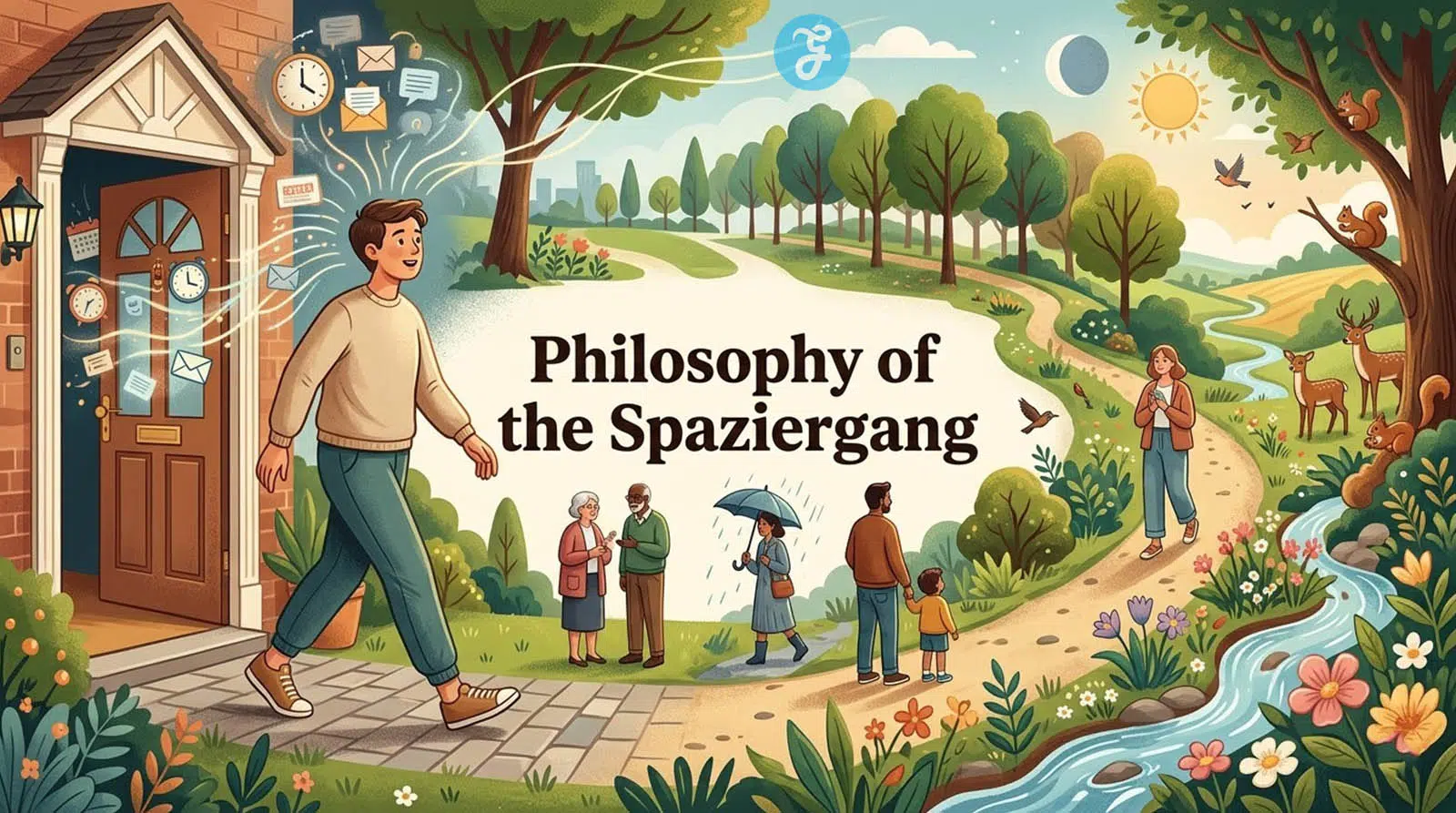
This intentional movement creates a bridge between your busy internal world and the steady rhythm of nature. It is the most accessible form of therapy available to everyone at any time.
Cultural Roots and the German Way of Walking
German culture draws a sharp line between sport and soul work. If you are climbing a mountain in the Alps, you are on a Wanderung. That is a hike meant for physical exertion and peak bagging. It involves gear, maps, and high heart rates. However, a Purposeful Walk Spaziergang serves an entirely different master. It is a slow and steady engagement with the world. Historically, the German middle class used these strolls to discuss art, politics, and philosophy. It was never about the sweat. It was about conversation and clarity. Even today, you will see families and couples out in the rain. They are not trying to get fit. They are simply taking part in a collective cultural reset.
The Power of Goal Free Movement
Most modern exercise is about data. We track our pace, our calories, and our progress. This mindful practice rejects these metrics completely. It occupies a unique middle ground in the world of movement. You are physically active, yet your mind is not occupied with a destination. There is no finish line. There is no leaderboard. This lack of pressure is exactly why it works. When you remove the stress of a goal, your brain stops scanning for threats or results. You begin to notice the texture of the bark on a tree or the specific shade of a grey sky. This state of flow allows your subconscious to solve problems while your body just moves.
Finding Peace in Waldeinsamkeit
A core part of this tradition involves a word that has no direct English equivalent. Waldeinsamkeit translates roughly to forest solitude. It describes the specific feeling of being alone in the woods and feeling at peace with the universe. It is not about being lonely. It is about being present. Seeking quiet moments among the trees allows you to process the heavy noise of the digital age. Research shows that being surrounded by green space reduces the urge to ruminate on negative thoughts. By stepping into the woods for a Spaziergang, you leave the frantic pace of the city behind. You find an internal stillness that lasts long after you return home.
The Science of the Stroll
Current research confirms what German culture has known for centuries. Regular movement in a natural setting creates a measurable shift in your brain chemistry. This transition from a state of high alert to one of calm observation is the foundation of mental health. It provides a sanctuary for your thoughts in an increasingly loud world. Your body thrives when it moves without the pressure of a deadline. Embracing this deliberate stroll is therefore a biological necessity for anyone living in the digital age.
The 5 Reasons Spaziergang Resets Your Week
- Restores Directed Attention: It shifts your brain from the “hard focus” of screens to “soft fascination,” allowing your cognitive batteries to recharge.
- Flushes Out Cortisol: Verified research shows that mindful movement in nature actively lowers stress hormones and calms the nervous system.
- Boosts Metabolic Health: The tradition of the digestion walk helps regulate blood sugar and prevents the lethargy often felt after heavy weekend meals.
- Unlocks Creative Problem Solving: The rhythmic cadence of walking acts as a mental metronome, helping you organise fragmented thoughts into clear ideas.
- Builds Mental Resilience: Choosing to walk in any weather proves to your subconscious that you can find peace and stability regardless of external conditions.
A Complete Neurological Reset
Contemporary life demands constant, sharp focus. We call this directed attention. Every notification and every email drains your mental battery. Eventually, your brain simply tires out. This is where a mindful stroll offers a genuine solution. Experts refer to this as Attention Restoration Theory.
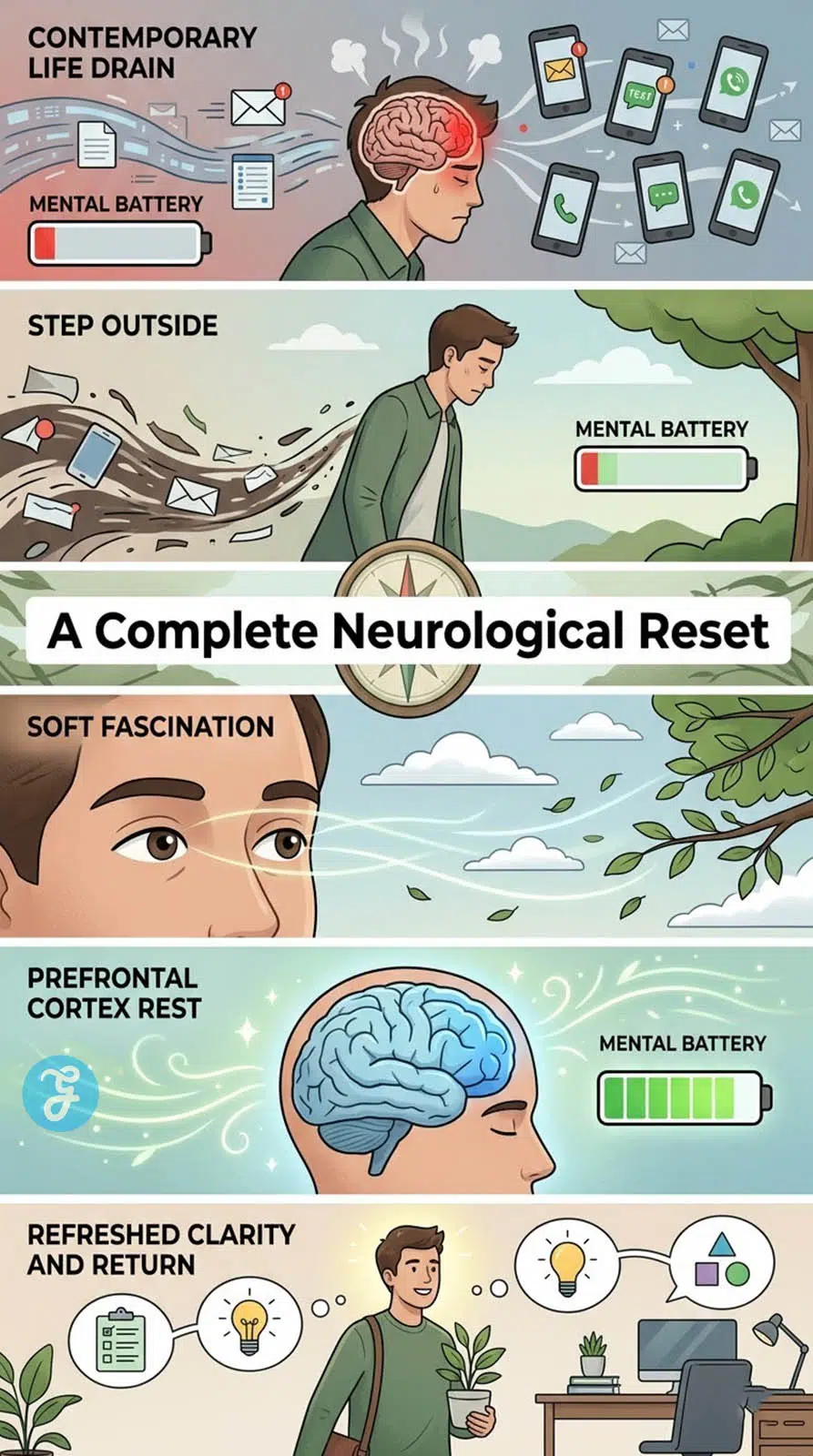
When you step outside, you engage in soft fascination. This means your eyes follow the movement of clouds or the sway of branches. These sights do not require hard work to process. This effortless observation allows your prefrontal cortex to rest. By giving your mind this space, you actually improve your concentration for the week ahead. You return to your home with a refreshed ability to think clearly.
Restoring Your Hormonal Balance
Stress lives in the body as much as the mind. When you are overworked, your system remains flooded with cortisol. This keeps you in a state of high alert. Continuing research from the Harvard T.H. Chan School of Public Health confirms that even fifteen to twenty minutes in a green space can trigger a total neurological reset. It actively lowers those stress hormone levels. This shift moves you away from the fight or flight response. Instead, it activates your parasympathetic nervous system. This is the rest and digest mode of the body. The Spaziergang acts as a natural tranquiliser. It slows your heart rate and allows your muscles to finally let go of tension. You are not just moving your legs. You are recalibrating your entire biological clock.
Physical Health Beyond the Treadmill
We often forget that movement should feel good. German tradition includes a specific habit known as the Verdauungsspaziergang. This is a gentle stroll taken specifically after a meal. It is not about burning off what you just ate. Instead, it is about steadying your blood sugar levels. Light movement helps your body process glucose more efficiently. It prevents the sudden energy crashes that often follow a large Sunday lunch. This type of walking improves gut motility without putting stress on your joints. It proves that you do not need a high intensity workout to see real health gains. This gentle outing supports your digestion and keeps your energy levels stable all evening.
The Cognitive Advantage of Rhythmic Movement
Movement is not just a physical act. It is a powerful driver of creative problem solving. When you engage in a Spaziergang, the purposeful walk, your brain enters a state of relaxed alertness. This is often when the best ideas arrive. While you are sitting at a desk, your mind is in a linear and often rigid state of thinking. Stepping outside breaks this pattern. The steady, repetitive rhythm of your footsteps acts like a metronome for your thoughts. It creates a mental cadence that helps you organise fragmented ideas into a coherent whole. This is why so many great writers and thinkers throughout history have relied on a daily stroll to unlock their best work.
Furthermore, this practice fosters a sense of spatial awareness that digital life often strips away. By navigating a physical path, you are retraining your brain to understand depth, distance, and scale. This sensory feedback is a verified way to reduce the symptoms of brain fog. You are not just observing nature. You are actively participating in it. This participation strengthens your mental resilience and gives you a much needed sense of agency over your environment. By the time you return to your doorstep, your perspective has shifted. You no longer see challenges as insurmountable obstacles. Instead, you see them as manageable parts of a larger, more balanced landscape.
Rain or Shine: Building an Unbreakable Habit
Consistency transforms a simple outing into a powerful mental tool. You must treat this time as a non-negotiable appointment with your own well being. By showing up for yourself every single week, you build a foundation of resilience that lasts.
There Is No Bad Weather
There is a famous phrase widely adopted in Germany that there is no such thing as bad weather, only unsuitable clothing. This practical outlook is the secret to a consistent outdoor habit. You should not wait for a perfect sunny day to step outside. Grey skies and light drizzle offer their own form of quiet beauty.
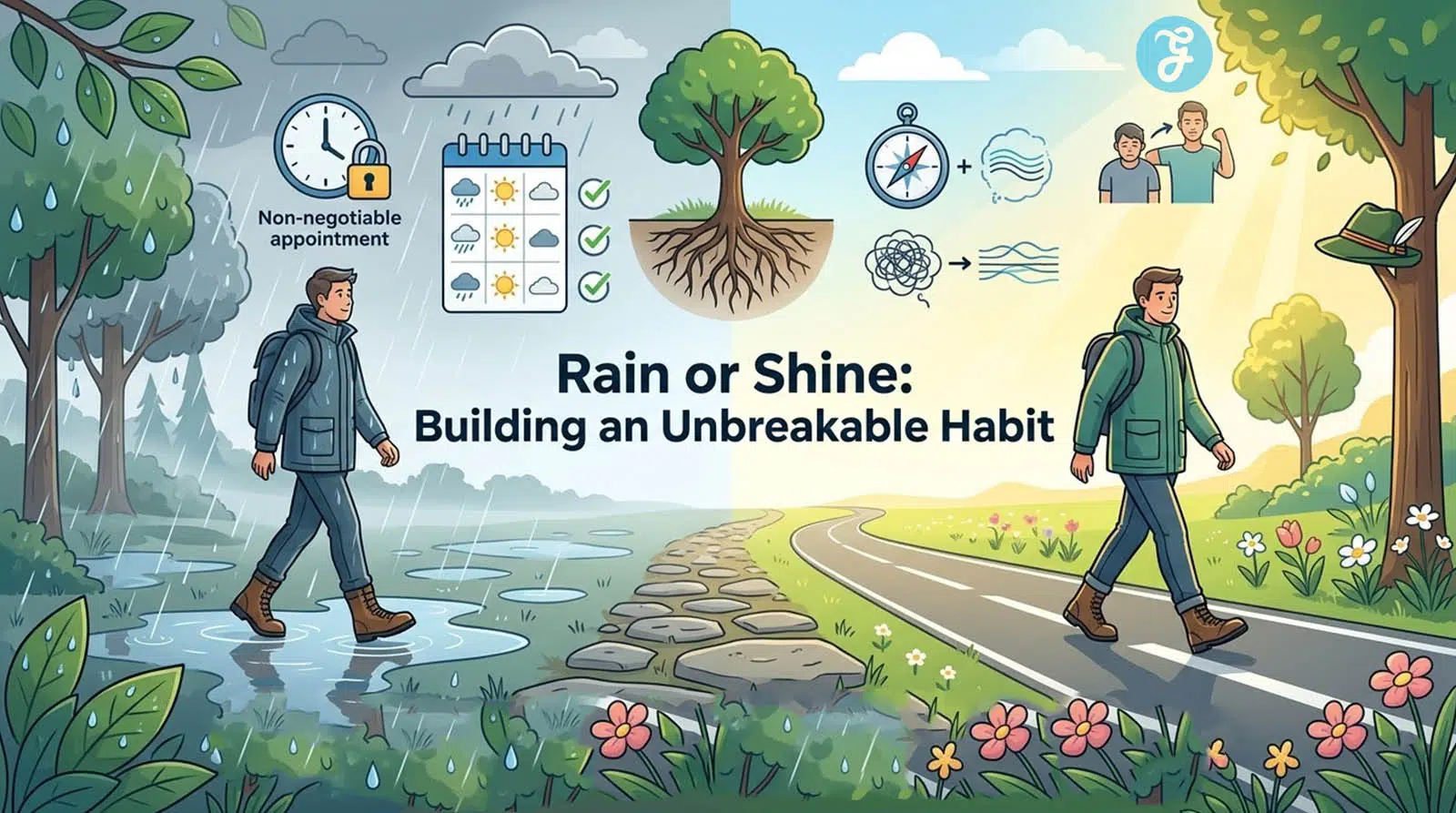
In fact, winter walks provide a unique sense of crisp mental clarity that you cannot find in the summer heat. Invest in a sturdy pair of boots and a reliable waterproof jacket. When you dress for the elements, you stop fighting nature and start embracing it. This mindset shift helps you realise that you can find peace in any environment.
Practicing Sensory Immersion
To elevate a basic stroll into a Purposeful Walk Spaziergang, you must engage all your senses. Leave your mobile phone at home or switch it to silent and tuck it away in a bag. The goal is to remove the digital tether that keeps your mind in the office. Instead, focus on the sounds around you like the crunch of gravel or the distant call of a bird. Notice the scent of damp earth after a rain shower. Observe how the light changes as the seasons shift from the bright greens of spring to the deep ambers of autumn. This level of presence pulls you out of your internal anxieties and roots you firmly in the present moment.
The Power of the Weekend Anchor
Scheduling your stroll for a specific time creates a reliable anchor for your week. Many people find that a Saturday morning outing works best to clear the stress of the previous five days. Others prefer a Sunday afternoon session to prepare their mind for Monday. By making this a recurring event, you create a psychological signal that work is over and rest has begun. It provides a sense of structure that prevents your weekend from feeling like a blur of chores. This ritual ensures you return to your responsibilities with a sense of perspective and a calm heart.
Integrating the Practice into a Hectic Week
You do not need to wait for the weekend to find your balance. Small windows of time during a busy Tuesday can be just as effective for your mental health. By weaving this habit into your daily life, you maintain a steady sense of calm.
The Power of Micro Walks
A shorter version of the habit can fit into even the most demanding schedules. Research indicates that just twenty minutes of movement in a green space significantly lowers stress levels. You can take a short Spaziergang during your lunch break or immediately after finishing your work for the day. This brief transition acts as a mental partition. It separates your professional responsibilities from your personal time. Even a quick stroll around the block helps to discharge the static of a long afternoon spent in front of a screen. Consistency in these small moments builds a long term buffer against burnout.
Finding Nature in the City
You do not need to live near a vast forest to enjoy the benefits of this tradition. Urban environments offer plenty of opportunities for an intentional stroll if you know where to look. Seek out tree lined streets or a local park where the noise of traffic fades into the background.
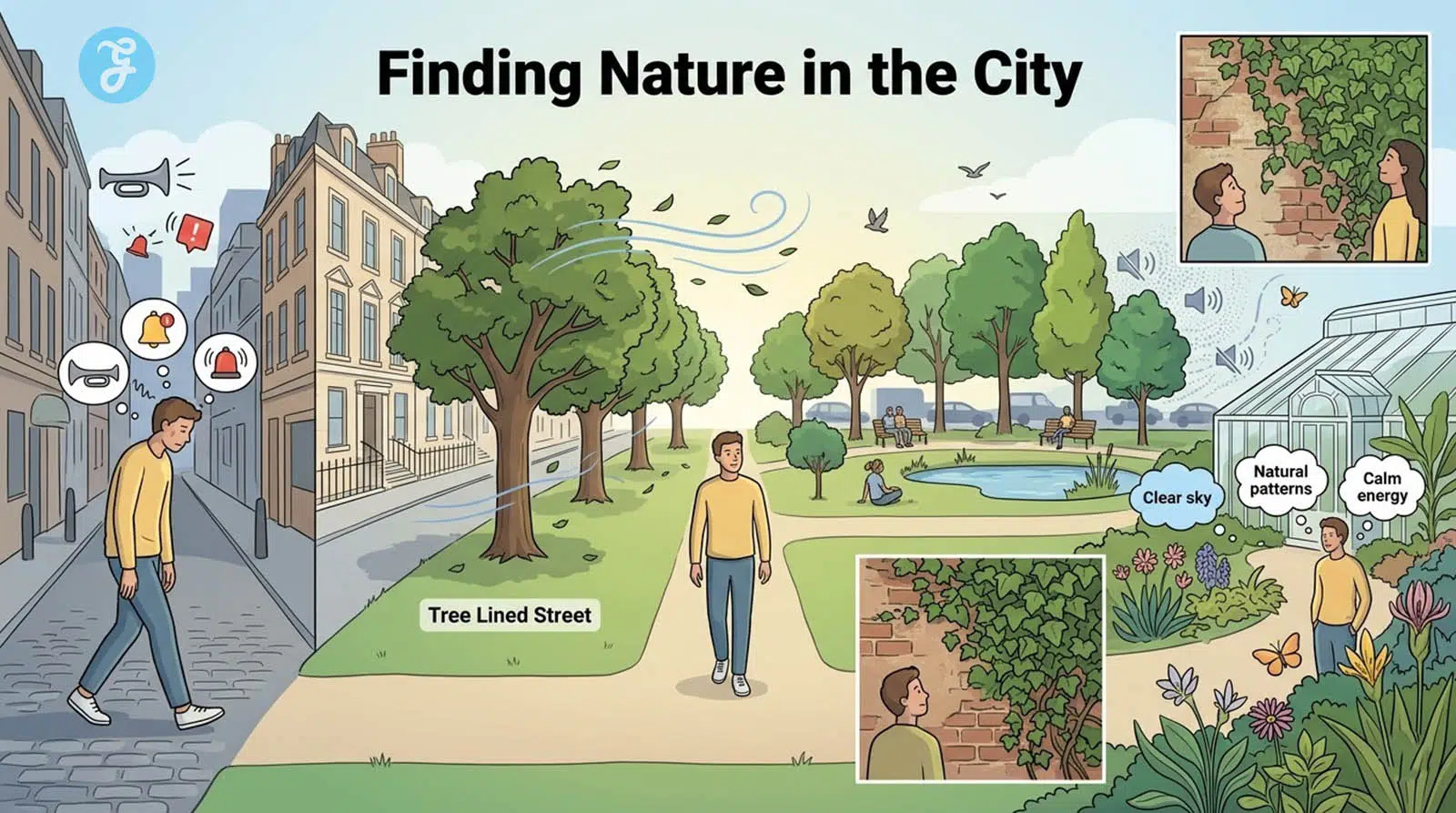
Many people find solace in botanical gardens or even the quiet corners of a historic cemetery. The key is to find a pocket of the city where nature still holds its ground. Observe the ivy growing on old brick walls or the way the wind moves through a single row of oaks. These small encounters with the natural world provide the same cognitive rest as a mountain trail.
Fostering Deep Social Connection
While walking alone offers a chance for deep reflection, sharing the experience can be equally rewarding. A mindful walk with a friend or a partner creates a space for genuine conversation. Without the distraction of phones or the background noise of a busy cafe, you can truly listen to one another. The steady rhythm of walking side by side often makes it easier to discuss complex topics or share personal stories. This shared ritual strengthens your bonds and provides a sense of community. It reminds you that even in a digital world, the most meaningful connections happen at a human pace.
Simple Steps to Start Your Own Ritual
Integrating this practice into your routine is about prioritising mental space over physical metrics. This habit acts as a scheduled decompression chamber for your brain, allowing the noise of a busy work life to fade into the background. By moving with intention, you shift your focus from a digital screen to the physical environment, which naturally resets your cognitive state. It is a simple yet powerful commitment to your own long term resilience.
- Commit to a Fixed Schedule: Set a specific time every weekend for your stroll to create a psychological boundary between your work week and your rest time.
- Remove Digital Distractions: Leave your mobile phone behind or keep it on silent to ensure your attention remains fully on your surroundings rather than your notifications.
- Prioritise Quality Environments: Seek out green spaces, parks, or tree lined streets where the presence of nature can trigger a restorative physiological response.
- Dress for the Elements: Follow the German philosophy of wearing suitable layers so that rain or cold weather does not become an excuse to skip your ritual.
- Engage Your Senses: Focus on the specific sounds, scents, and textures of the path to keep your mind rooted in the present moment rather than dwelling on the past or future.
The Path to Lasting Mental Clarity
The simple act of stepping outside with intention holds a transformative power that few other habits can match. By choosing to engage in a Purposeful Walk Spaziergang, you are reclaiming your time from the relentless grip of digital demands. You are giving your nervous system the quietude it needs to recover and thrive. This ancient tradition reminds us that our bodies and minds are deeply linked to the natural world. When we move at a human pace, we regain a sense of perspective that often gets lost in the rush of the working week.
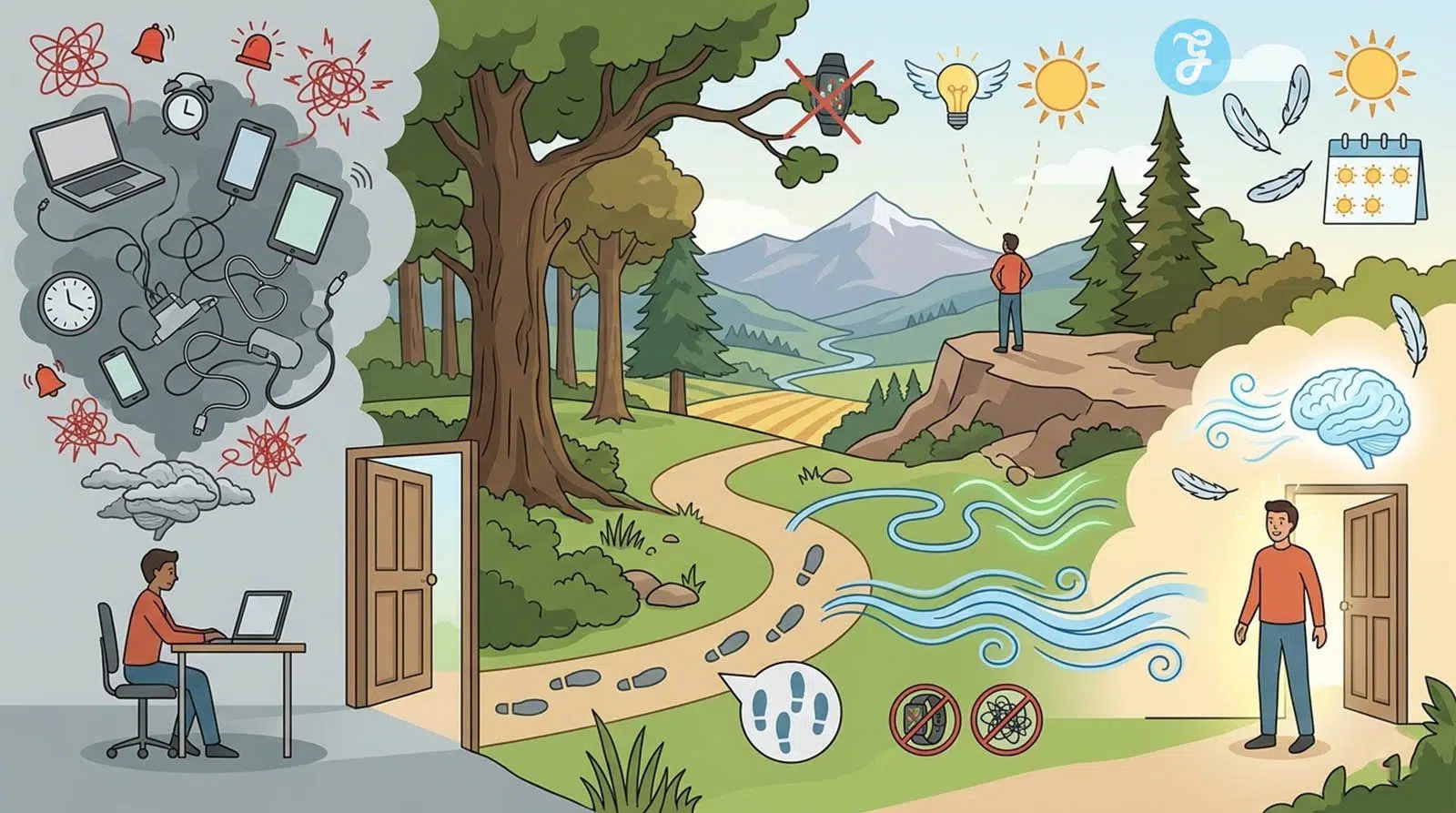
True productivity is never about constant activity. It requires periods of deliberate rest to sustain your creative energy and mental health. The most effective way to achieve this balance is surprisingly simple. You just need to step out of your front door and begin to walk. There is no need for a complex plan or a high tech tracker. The rhythmic movement of your own feet provides the perfect tempo for your thoughts to settle and your heart to find its natural beat.
Make a firm commitment to yourself for the coming days. Regardless of the weather forecast or the length of your to do list, schedule your first genuine stroll this weekend. Notice how the fresh air changes your mood and how the trees offer a sense of ancient stability. You will return to your home feeling lighter and more prepared for whatever the new week brings. The path to a calmer life is waiting for you just outside your threshold.