The healthcare industry is going through a massive technological shift right now. Generative artificial intelligence is stepping out of the tech labs and walking straight into hospital wards and clinics across the UK. The National Health Service is actively running pilot programs to see how these advanced tools can reduce burnout and improve patient outcomes. We are seeing incredible innovations that range from writing clinical notes to predicting patient admission rates. Let us look at the most impactful programs currently in motion.
How We Selected Our 15 Best NHS AI Use Cases
To bring you the most accurate and useful list possible we had to filter through dozens of pilot programs currently running in the UK.
We focused our criteria on three specific areas of impact. First we looked at how much administrative time the tool saves for doctors and nurses on a daily basis. Second we evaluated the direct impact on patient wait times and treatment accuracy. Finally we prioritized tools that are already deployed in active clinical trials rather than just theoretical concepts.
The Top 15 NHS generative AI testing Programs Transforming Care
It is fascinating to see how the National Health Service is applying this technology to solve real world problems. Here are the top fifteen ways generative AI is making a difference today.
1. Ambient Clinical Voice Transcription
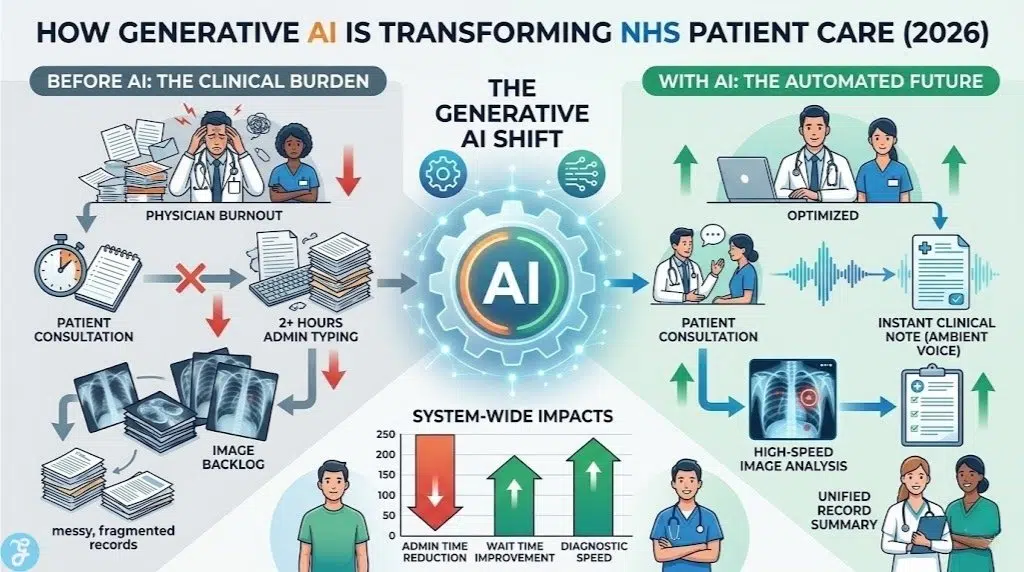
Doctors spend hours every day typing up patient notes after consultations. The NHS is testing ambient voice technology that listens to the doctor patient conversation and automatically generates a structured clinical note. This tool understands medical terminology and formats the document perfectly for electronic health records. It allows the physician to maintain eye contact with the patient instead of staring at a computer screen.
Best Feature/For:
-
General practitioners handling back to back appointments all day
Why We Chose It:
-
Eliminates up to two hours of administrative typing per shift
-
Captures nuances in patient conversations that might be forgotten
-
Operates securely to protect sensitive medical privacy
Things to consider:
-
Background noise in busy clinics can sometimes confuse the audio capture
Moving on from transcription we can look at how AI handles complex medical imagery.
2. Automated Radiology Image Analysis
Radiologists are under immense pressure to review hundreds of scans quickly and accurately. Generative models are being trained to highlight anomalies in X rays and MRI scans before the human doctor even looks at them. The system acts as a highly trained second pair of eyes that never gets tired. This helps prioritize urgent cases where a fast diagnosis is critical to survival.
Best Feature/For:
-
Emergency departments needing immediate scan interpretations
Why We Chose It:
-
Drastically reduces the backlog of pending scan reviews
-
Flags potential early stage issues that the human eye might miss
-
Learns continuously from newly uploaded diagnostic data
Things to consider:
-
Always requires final sign off from a certified human radiologist
Beyond images AI is incredibly useful for summarizing massive amounts of text.
3. Patient Record Summarization
When a patient arrives at an emergency room their medical history can be dozens of pages long. Generative AI tools are being tested to instantly read these massive files and generate a one page summary of critical conditions and allergies. This gives the attending doctor a rapid snapshot of the patient without digging through years of messy paperwork. It is a lifesaver when every single second counts.
Best Feature/For:
-
Emergency room triage and urgent care scenarios
Why We Chose It:
-
Extracts critical details like severe drug allergies instantly
-
Condenses years of medical history into a readable dashboard
-
Highlights recent hospital visits to provide better context
Things to consider:
-
Might accidentally omit older but relevant historical data points
Another huge bottleneck in hospitals is the discharge process.
4. Streamlined Discharge Summaries
Getting a patient out of the hospital requires a complex summary of their entire stay to be sent to their primary care doctor. NHS trusts are using AI to automatically draft these discharge letters by pulling data from daily ward notes and medication logs. This means patients can go home sooner because they are not waiting around for paperwork to be finalized. It also ensures the local doctor gets a highly accurate report of what happened.
Best Feature/For:
-
Busy inpatient wards trying to free up bed space
Why We Chose It:
-
Speeds up the patient release process by several hours
-
Ensures clear communication between the hospital and the local clinic
-
Reduces the administrative burden on ward nurses
Things to consider:
-
Doctors must carefully review the draft for any hallucinated medical details
Managing the physical space in a hospital is just as important as the paperwork.
5. Predictive Bed Management
Hospital crowding is a constant crisis that delays critical surgeries. AI models are being used to analyze admission trends and predict exactly how many beds will be needed over the next week. By looking at historical data and seasonal illness spikes the system can warn managers to open extra wards ahead of time. This proactive approach stops the chaotic bottlenecking that happens in winter months.
Best Feature/For:
-
Hospital capacity managers and logistics teams
Why We Chose It:
-
Prevents emergency room overcrowding before it actually happens
-
Optimizes the scheduling of elective surgeries
-
Uses complex data points to forecast accurate patient flow
Things to consider:
-
Unpredictable local emergencies can still overwhelm the forecasted model
Patient communication is another area seeing massive AI upgrades.
6. Primary Care Triage Chatbots
Getting an appointment with a general practitioner can be incredibly frustrating. The NHS is testing smart chatbots that ask patients detailed questions about their symptoms before they ever speak to a receptionist. The AI then suggests whether the patient needs an urgent in person visit or just a routine phone consultation. This ensures the sickest people get priority access to a doctor.
Best Feature/For:
-
Digital front doors for overloaded primary care practices
Why We Chose It:
-
Routes non urgent queries to pharmacies or self care resources
-
Standardizes the symptom collection process for everyone
-
Operates around the clock even when the clinic is closed
Things to consider:
-
Elderly patients might struggle to use a text based diagnostic interface
AI is also making leaps in highly specialized treatment planning.
7. Radiotherapy Treatment Planning
Planning the exact angles and doses for cancer radiation therapy usually takes specialists several days to calculate. Generative AI is now being tested to map out the contours of tumors and suggest optimal radiation distribution in minutes. This means cancer patients can start their critical treatments much sooner after diagnosis. The AI ensures the maximum dose hits the tumor while sparing healthy tissue nearby.
Best Feature/For:
-
Oncology departments dealing with high patient volumes
Why We Chose It:
-
Cuts the treatment planning phase from days down to hours
-
Highly precise mapping protects delicate nearby organs
-
Allows specialists to handle more cases per week
Things to consider:
-
Requires massive computing power to generate the 3D models
Connecting patients with specialists requires a lot of letter writing.
8. AI Assisted Referral Drafting
When a general practitioner needs to send a patient to a specialist they have to write a detailed referral letter justifying the request. AI tools can now draft these letters automatically based on the consultation notes and lab results. This ensures the referral includes all the specific criteria the specialist department demands. It cuts down on rejected referrals and gets patients on waiting lists faster.
Best Feature/For:
-
General practitioners referring out complex medical cases
Why We Chose It:
-
Matches the exact formatting required by specialized NHS trusts
-
Saves doctors from typing repetitive administrative text
-
Includes all relevant lab data automatically
Things to consider:
-
The doctor is still legally responsible for the contents of the drafted letter
Genetics is another field benefiting from generative models.
9. Genomic Data Pattern Recognition
Understanding a patients DNA can unlock personalized treatments for rare diseases. The NHS is utilizing AI to scan massive genomic datasets and identify mutations that cause specific illnesses. The generative models can then suggest potential drug therapies that match the patients unique genetic makeup. This is bringing true personalized medicine closer to everyday clinical reality.
Best Feature/For:
-
Clinical geneticists and rare disease researchers
Why We Chose It:
-
Identifies obscure genetic markers humans cannot process quickly
-
Suggests highly targeted treatments for better outcomes
-
Accelerates the diagnosis of incredibly rare conditions
Things to consider:
-
Still largely in the research phase rather than standard daily care
Keeping patients safe from medication errors is a top priority.
10. Medication Interaction Checking
Patients often take a complex cocktail of pills prescribed by different doctors over many years. Generative AI is being deployed to review these long medication lists and flag dangerous interactions or duplicate therapies. The system can suggest safer alternative drugs based on the latest pharmaceutical guidelines. This acts as a powerful safety net to prevent accidental poisonings or adverse reactions.
Best Feature/For:
-
Pharmacists and doctors managing elderly patients on multiple drugs
Why We Chose It:
-
Catches subtle chemical interactions across dozens of medications
-
Updates constantly with the newest drug safety warnings
-
Provides clear alternative prescribing options
Things to consider:
-
Must be deeply integrated with the central patient record to work well
Monitoring patients at home is the new frontier of care.
11. Remote Patient Monitoring Alerts
Many patients are sent home with wearable devices that track their heart rate and oxygen levels. AI systems ingest all this continuous data and generate text alerts for nurses only when a patients baseline shows dangerous deterioration. Instead of drowning in endless data graphs the medical team gets clear text summaries of who needs help right now. This makes virtual wards a safe and scalable reality.
Best Feature/For:
-
Virtual ward teams monitoring recovering patients at home
Why We Chose It:
-
Filters out normal data fluctuations to prevent alarm fatigue
-
Translates raw numerical data into readable clinical insights
-
Keeps hospital beds free by keeping stable patients safely at home
Things to consider:
-
Relies entirely on the patient keeping their monitoring devices charged
Even the operating room is seeing the benefits of AI analysis.
12. Surgical Video Analysis
Surgeons use cameras for many minimally invasive procedures but reviewing the footage for training is tedious. Generative AI can watch surgical videos and automatically clip the key moments and annotate the anatomical structures. This creates instant training manuals for junior doctors to study specific techniques. It also provides a clear record of the operation for quality control purposes.
Best Feature/For:
-
Surgical training programs and medical universities
Why We Chose It:
-
Turns raw video into a highly structured learning asset automatically
-
Highlights flawless techniques and potential error points
-
Greatly accelerates the learning curve for junior surgeons
Things to consider:
-
Requires strict data anonymization to protect patient privacy in the videos
Mental health services desperately need more resources.
13. Mental Health Sentiment Tracking
Therapists have massive caseloads and tracking patient progress over time is difficult. AI tools are being used to analyze text from patient journals or check in apps to track sentiment and emotional trends. The system generates a weekly summary for the therapist highlighting signs of severe depression or crisis. This allows mental health professionals to intervene before a situation becomes critical.
Best Feature/For:
-
Psychologists managing large outpatient populations
Why We Chose It:
-
Provides continuous monitoring between actual therapy sessions
-
Detects subtle shifts in language that indicate a mental health decline
-
Helps prioritize urgent appointments for patients in crisis
Things to consider:
-
Natural language processing can sometimes misinterpret sarcasm or complex emotions
Behind the scenes the supply chain keeps the hospital running.
14. Supply Chain Predictive Ordering
Hospitals use thousands of items daily from bandages to specialized surgical tools. Generative models analyze usage rates and upcoming surgery schedules to automatically draft purchase orders for the logistics team. This ensures the hospital never runs out of critical supplies during a busy weekend. It also stops the hospital from wasting money by over ordering perishable items.
Best Feature/For:
-
Hospital procurement teams and inventory managers
Why We Chose It:
-
Prevents disastrous supply shortages during critical operations
-
Reduces financial waste by optimizing inventory levels
-
Automates the tedious process of manual stock counting
Things to consider:
-
Sudden global supply chain shocks can still disrupt the AI purchasing plan
Finally patient feedback is crucial for improving services.
15. Patient Feedback Processing
Hospitals receive thousands of survey responses and complaint letters every month. Generative AI reads all of this unstructured text and provides management with a clear summary of the top issues on specific wards. Whether it is cold food or rude staff the AI highlights the exact problems that need immediate fixing. This turns a mountain of messy data into actionable operational intelligence.
Best Feature/For:
-
Hospital administration and patient experience officers
Why We Chose It:
-
Replaces the manual reading of thousands of survey forms
-
Groups complaints by specific departments for targeted action
-
Tracks whether patient satisfaction improves over time
Things to consider:
-
The AI cannot replace the empathy needed when responding to serious complaints
To fully grasp the landscape we need to look at how these tools compare side by side.
An Overview Of 15 NHS generative AI testing Trials
Seeing all these tools together helps clarify where the NHS is focusing its technological investments. We have broken down the main categories for easy reference.
Overview Comparison Table
Here is a quick reference guide comparing the different types of AI applications currently transforming the healthcare system.
| AI Application Category | Primary Benefit | Target User | Implementation Speed |
| Clinical Administration | Reduces typing and paperwork | Doctors and Nurses | Fast |
| Diagnostic Imaging | Speeds up scan reviews | Radiologists | Medium |
| Operational Logistics | Optimizes hospital resources | Admin and Management | Fast |
| Patient Triage | Routes patients to right care | Frontline Staff | Medium |
| Specialized Treatment | Creates targeted care plans | Specialists | Slow |
While all of these are important a few really stand out from the crowd.
Our Top 3 Picks and Why?
If we had to highlight the absolute most impactful AI trials happening in the NHS today these three take the top spots.
-
Ambient Clinical Voice Transcription: We picked this first because physician burnout is the biggest threat to the NHS and this tool directly eliminates hours of frustrating daily paperwork.
-
Automated Radiology Image Analysis: This takes the second spot because catching cancer or internal bleeding early is literally a matter of life and death and this tool acts as a perfect safety net.
-
Predictive Bed Management: We placed this third because emergency room bottlenecks affect everyone and using data to keep patient flow moving is a massive logistical win.
Now let us look at how you evaluate these complex systems.
Buyer’s Guide: How to Choose the Right NHS generative AI testing Solutions by Yourself?
If you are a clinical manager or an IT director looking to implement these tools you need a solid framework to evaluate them. Buying medical software is incredibly complicated.
Here is the core framework you should use to guide your software purchasing decisions:
-
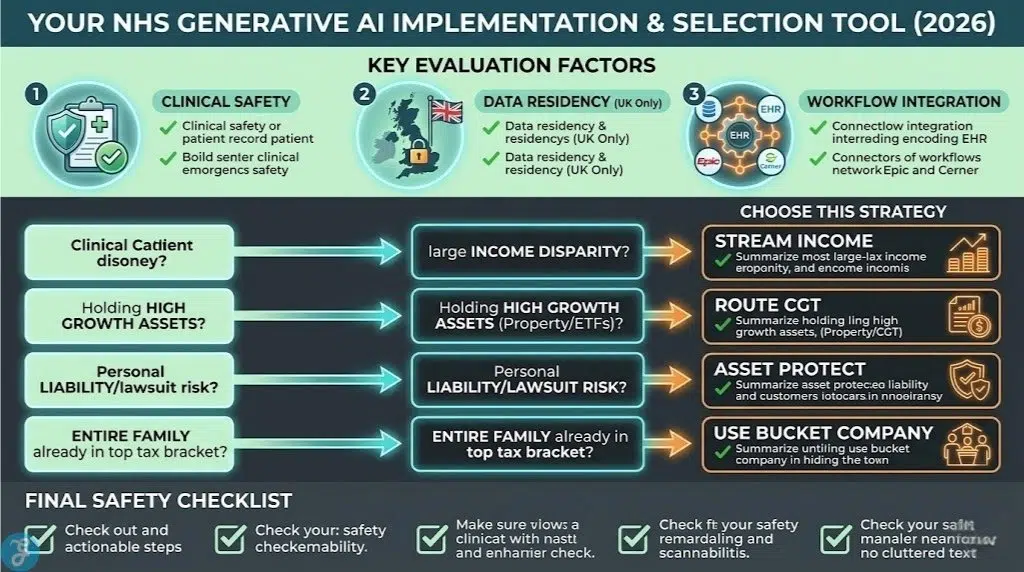
Clinical Safety: Ensure the AI has been rigorously tested against historical patient data to prove it does not hallucinate medical facts.
-
Data Residency: Check that the vendor stores all patient data strictly within the UK to comply with local privacy laws.
-
Workflow Integration: The tool must plug directly into existing systems like Epic or Cerner without requiring a separate login.
-
User Adoption: Evaluate if the tool actually saves time or if it just creates a new complex process for doctors to learn.
To make this practical we have built a quick matrix to help you match your problem to the right solution.
Below is a decision matrix to help you figure out which type of AI tool will solve your specific clinical bottleneck.
| Choose this strategy… | If your primary clinical situation is… |
| Choose Ambient Transcription if… | Your doctors are spending over an hour a day typing clinical notes. |
| Choose Diagnostic AI if… | Your hospital has a massive backlog of unread MRI or CT scans. |
| Choose Bed Management AI if… | You consistently face bottlenecks moving patients from the ER to wards. |
| Choose Triage Chatbots if… | Your clinic phone lines are overwhelmed every single morning. |
Before you sign any vendor contracts you need to run through a final safety check.
The Final Checklist:
-
Confirm the AI model complies with all current NHS data security standards.
-
Run a small pilot program on a single ward before rolling it out hospital wide.
-
Ensure you have a clear legal understanding of who is liable if the AI makes an error.
-
Train your clinical staff extensively on how to spot AI hallucinations.
-
Set up a monthly review meeting to measure if the tool is actually saving time.
The Future of Healthcare Automation
The integration of these advanced tools into the NHS is not about replacing doctors or nurses. It is about removing the endless administrative friction that stops them from actually treating people. By embracing these generative AI trials the UK healthcare system is taking a massive step toward a more efficient and human centric future. Staying informed about these changes is the best way to understand where patient care is heading next.