
Ever looked at a map and felt that magnetic pull to the bottom of the world? If you’re thinking about packing your bags for New Zealand, you aren’t just daydreaming—you’re planning a massive life change. You probably have a hundred questions racing through your mind right now. How much does a visa actually cost in 2026? Can I find a job that pays enough to cover the rent?
Here is the good news: I’ve been in your shoes, and it’s manageable if you have the right info. For example, did you know that healthcare is heavily subsidized once you’re a resident, but you still pay for GP visits?
Below is a detailed overview of the steps, expenses, and unexpected factors to consider. Take a moment and begin planning the move to Aotearoa with clarity and confidence.
Visa Options for Moving to New Zealand
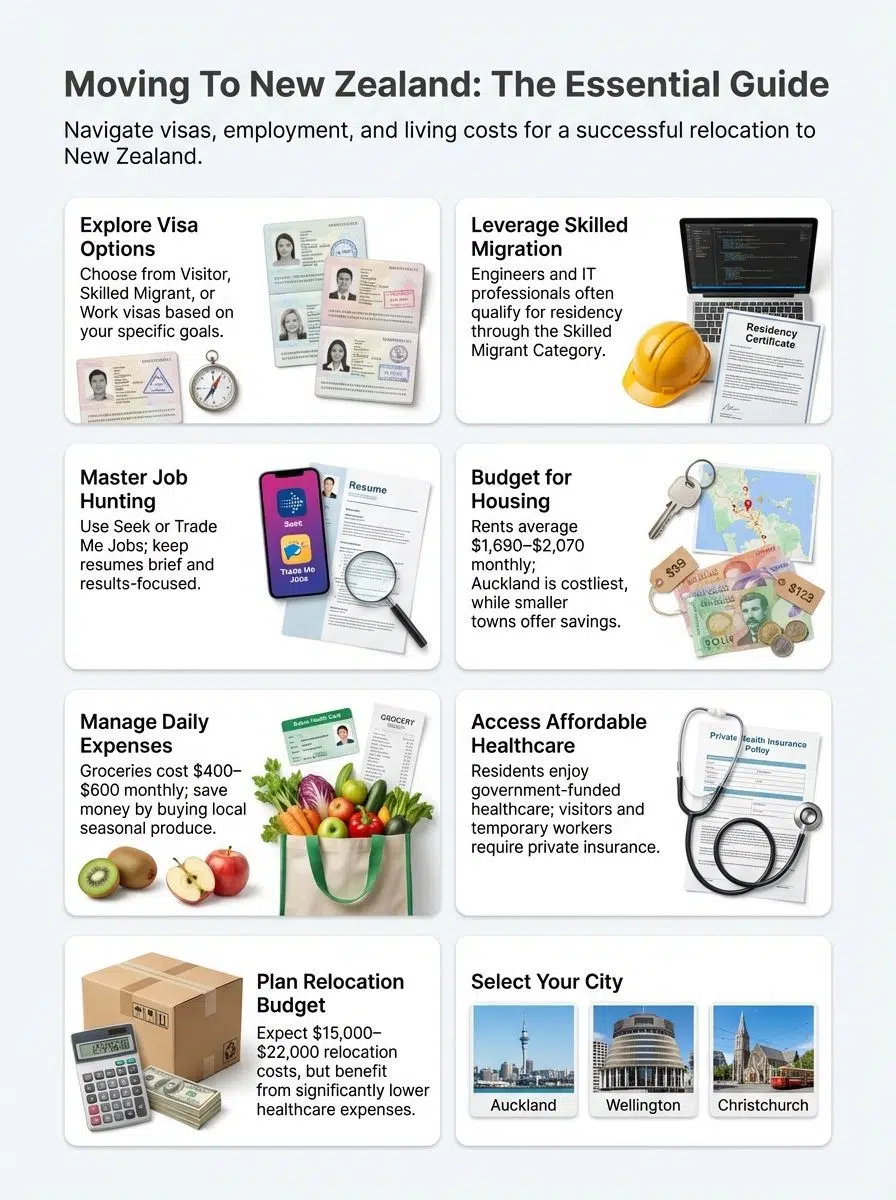
Your journey starts with the right paperwork. New Zealand’s immigration system has changed recently, so using outdated advice is a recipe for rejection.
Visitor Visas for Short-Term Stays
A visitor visa lets you explore the country for up to nine months. You can visit friends, interview for jobs (though you cannot work yet), or just admire the Southern Alps.
For U.S. citizens, the process is usually digital and fast. You will likely apply for an NZeTA (New Zealand Electronic Travel Authority).
Heads Up on Costs: As of late 2024, the government raised the fees significantly. The International Visitor Conservation and Tourism Levy (IVL) is now NZD 100. When you add the NZeTA fee (about NZD 52 via the app or NZD 58 online), you are looking at around NZD 150 just to enter the country.
Skilled Migrant Category Resident Visa
This is the “Golden Ticket” for many expats. In late 2023, Immigration New Zealand introduced a simplified 6-point system to replace the old, confusing points threshold.
You need to claim six points to be eligible. You can get these from:
- Professional Registration: Being a registered nurse, engineer, or teacher in NZ.
- Qualifications: A Bachelor’s degree or higher.
- High Income: Earning 1.5x to 3x the median wage.
You then “top up” your points with skilled work experience in New Zealand. If you have a PhD, for instance, you might get all six points instantly.
Work Visas: The Accredited Employer Work Visa (AEWV)
Most Americans don’t jump straight to residency; they start with the AEWV. This visa ties you to a specific employer who must be “accredited” to hire migrants.
Here is the critical number you need to know for 2026: NZD 35.00 per hour. Starting March 9, 2026, this is the new median wage threshold. If your job offer pays less than this, you likely won’t qualify for the standard 3-year visa term.
Investment Visas
If you have capital to deploy, the Active Investor Plus Visa is your pathway. It replaces the old investor categories that allowed passive investment in bonds.
Now, the government wants you to invest in Kiwi companies. You generally need to invest between NZD 5 million and NZD 15 million over four years, depending on how “active” your investment is. Direct investments into companies carry more weight (lower dollar requirement) than investing in managed funds.
Student Visas
Studying here is a smart way to get your foot in the door. If you enroll in a recognized course, you can work up to 20 hours per week during the semester and full-time during holidays.
This work right is crucial because it helps cover your weekly rent, which we will discuss in the cost section. Many students target schools in Auckland or Wellington, but don’t overlook the University of Otago in Dunedin for a true student-town vibe.
Family Visas
If your partner holds a work visa or residency, you might be eligible for a Partnership Work Visa. This is one of the most flexible options because it is an “open” work visa—you can work for any employer.
The catch? You must prove you are living together in a genuine relationship. A marriage certificate isn’t enough; you need shared bank accounts, lease agreements, and utility bills with both names on them.
Finding Employment in New Zealand
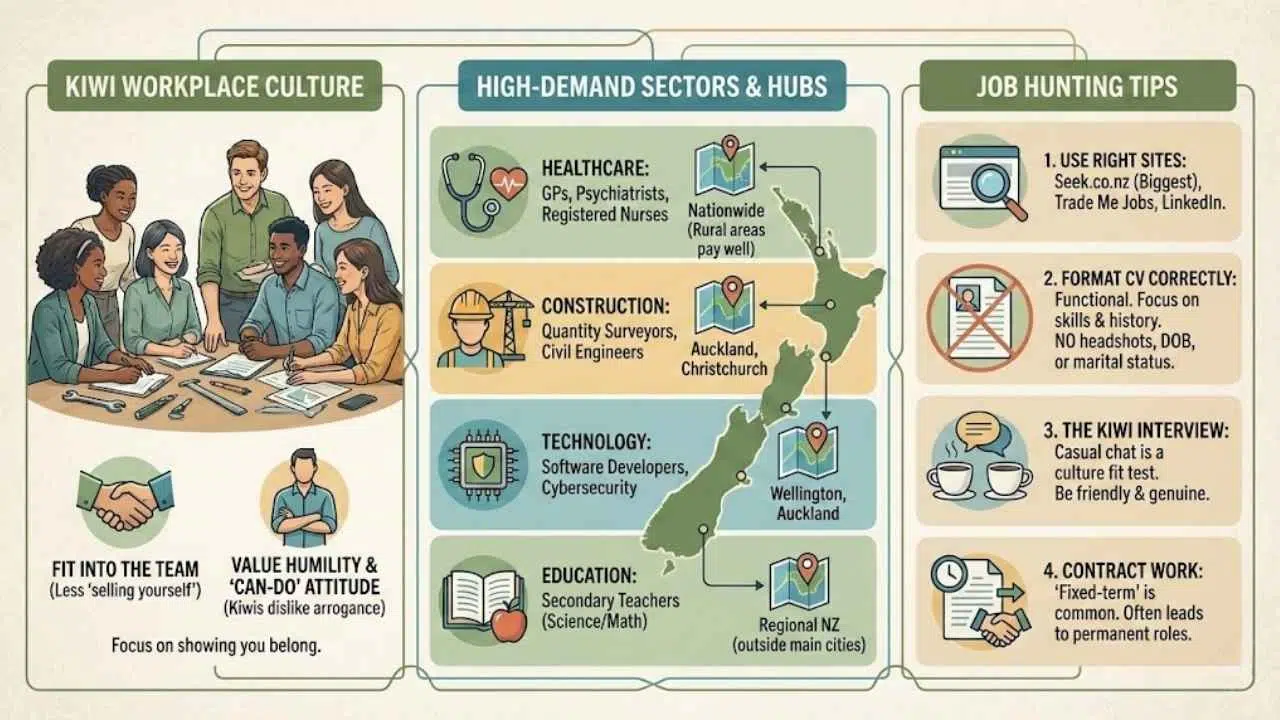
Finding a job here is less about “selling yourself” and more about showing you can fit into the team. Kiwis dislike arrogance; they value humility and a “can-do” attitude.
Job Opportunities for Skilled Professionals
There are distinct shortages in specific sectors. Construction, healthcare, and IT are consistently hungry for talent.
| Industry | High-Demand Roles | Key Hiring Hubs |
|---|---|---|
| Healthcare | GPs, Psychiatrists, Registered Nurses | Nationwide (Rural areas pay well) |
| Construction | Quantity Surveyors, Civil Engineers | Auckland, Christchurch |
| Technology | Software Developers, Cybersecurity | Wellington, Auckland |
| Education | Secondary Teachers (Science/Math) | Regional NZ (outside main cities) |
Tips for Job Hunting in New Zealand
The application process might feel different from the U.S. “high-pressure” style. Here is how to adapt:
- Use the Right Sites: Seek.co.nz is the biggest job board, followed by Trade Me Jobs. LinkedIn is growing but Seek is king.
- Format Your CV Correctly: Keep it “functional.” No headshots, no date of birth, and no marital status. Focus purely on your skills and work history.
- The “Kiwi” Interview: Interviews often start with a casual chat about your weekend. This isn’t filler; it’s a culture fit test. Be friendly.
- Contract Work: Don’t shy away from “fixed-term” contracts. They are very common and often lead to permanent roles once the employer knows and likes you.
Understanding the Cost of Living in New Zealand
You might have heard that New Zealand is expensive. I won’t sugarcoat it—it can be. But understanding where the money goes helps you budget.
Housing Costs: The “Weekly” Rent Shock
First, rent is advertised per week, not per month. This catches many Americans off guard. You will pay rent weekly or fortnightly.
As of early 2026, the rental market has softened slightly in major cities. In Auckland, the median rent is around NZD 650 per week (approx. USD 1,700/month). In Wellington, it has dropped to around NZD 595 per week.
Insider Tip: Always ask if the house meets the Healthy Homes Standards. New Zealand homes are notoriously cold and damp. This legal standard ensures the house has proper insulation, heating, and ventilation.
Food and Grocery Expenses
We have a “duopoly” in the supermarket sector, which keeps prices high. You have two main players: Woolworths (formerly Countdown) and Foodstuffs (Pak’nSave and New World).
To save money, shop at Pak’nSave (the big yellow sheds). A week of groceries for a single person will run about NZD 130-150. Fresh produce is seasonal; buying out-of-season veggies (like tomatoes in winter) will cost a fortune.
Transportation Costs
Petrol is a significant expense. In early 2026, the price hovers around NZD 2.65 per liter. That is roughly USD 6.00 per gallon. If you live in a city like Wellington, you might not need a car thanks to the train system. In Auckland, however, a car is almost essential due to the urban sprawl.
Healthcare and Insurance Expenses
This is the biggest difference from the US. New Zealand has a public health system, but it isn’t completely free for everyone all the time.
Once you are a resident (or on a work visa for 2 years+), you become “enrolled.” This means:
- Hospital care: Free. Emergency surgery or cancer treatment costs you nothing.
- GP Visits: Subsidized. You will pay about NZD 35-55 to see a doctor. Kids under 14 are usually free.
- ACC (Accident Compensation Corporation): This is unique to NZ. If you have an accident (trip, fall, car crash), ACC covers your medical costs and part of your lost income. You cannot sue for personal injury here.
Utilities and Internet Costs
Power bills spike in winter (July-August). Expect to pay NZD 200-300 per month for electricity if you are heating a drafty house. Internet is world-class. Most houses have Fibre (UFB). An unlimited gigabit connection costs about NZD 90-100 per month.
Comparing Cost of Living: New Zealand vs the U.S.
Let’s look at the numbers side-by-side. I’ve converted the New Zealand costs to USD to make the comparison clear for you.
| Category | New Zealand (USD Est.) | United States (USD Avg.) | The Reality Check |
|---|---|---|---|
| Rent (1-bed apt, city) | $1,600 – $1,800 / mo | $2,000 – $3,000 / mo | NZ is cheaper than NYC/SF, but similar to Denver or Seattle. |
| Groceries (Monthly) | $450 – $600 | $350 – $550 | Food is pricier in NZ. Imported goods (like US cereal) cost double. |
| Petrol / Gas | $6.00 / gallon | $3.50 / gallon | You will drive smaller, more fuel-efficient cars in NZ. |
| Doctor Visit | $30 (Enrolled) | $100 – $200 (Uninsured) | NZ wins on access, but you still pay a “co-pay” fee at the GP. |
| Internet | $55 / mo | $70 / mo | NZ internet is often faster and cheaper with no data caps. |
| Tipping | Not expected | 15% – 25% | Menu prices in NZ include tax and wages. You pay what you see. |
Top Cities to Consider Living In
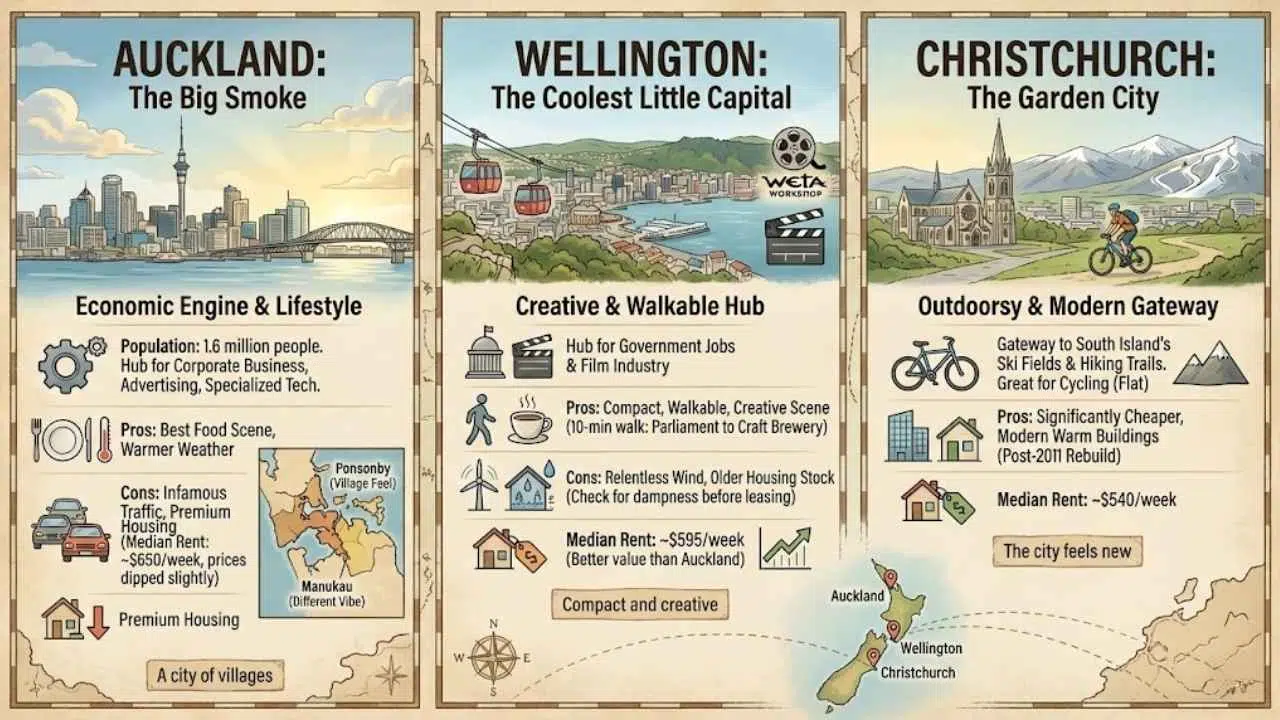
Where you land will dictate your lifestyle. Each city has a distinct personality.
Auckland: The Big Smoke
Home to 1.6 million people, this is the economic engine. If you work in corporate business, advertising, or specialized tech, you will likely end up here.
It has the best food scene and warmer weather, but the traffic is infamous. Expect to pay a premium for housing, though prices have dipped slightly to a median of $650/week. It’s a city of villages; living in Ponsonby feels totally different from living in Manukau.
Wellington: The Coolest Little Capital
Wellington is compact, walkable, and creative. You can walk from the Parliament buildings to a craft brewery in 10 minutes. It is the hub for government jobs and the film industry (thanks to Weta Workshop).
The downside? The wind. It is relentless. Also, housing stock is older here. You must check for dampness before signing a lease. Rents are currently averaging $595/week, offering better value than Auckland.
Christchurch: The Garden City
If you love the outdoors, Christchurch is your spot. It is flat (great for cycling) and is the gateway to the South Island’s ski fields and hiking trails.
It is significantly cheaper than the north. Rents sit around $540/week. The city feels new because much of it was rebuilt after the 2011 earthquakes, meaning you get modern, warm office buildings and homes.
Final Thoughts
Moving to New Zealand involves more than just booking a flight; it requires navigating visa rules, understanding the rental market, and preparing for a different cost of living. But once you settle in, the lifestyle offers a balance that is hard to find anywhere else.
Start by checking your eligibility for the new 6-point skilled visa or the Accredited Employer Work Visa. Remember to budget for the new visitor levy and weekly rent costs. Take it one step at a time. The paperwork is just the price of admission for waking up to those green hills and friendly “G’day” greetings every morning.