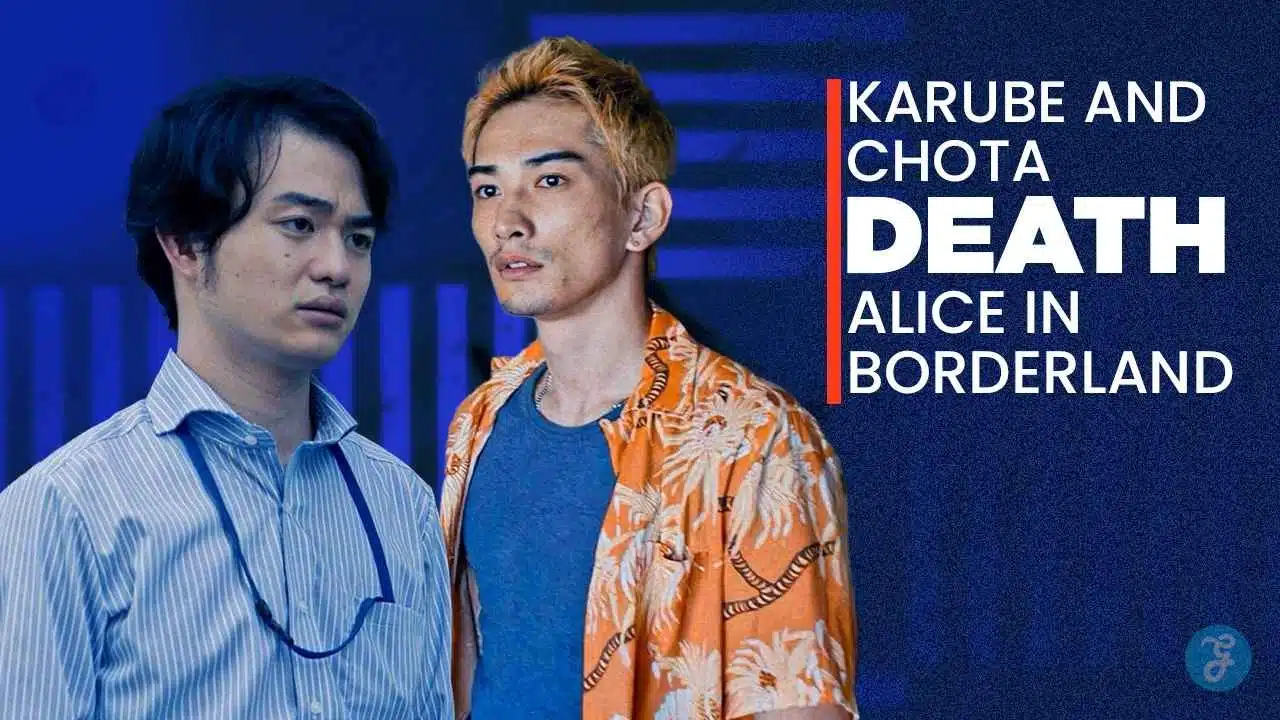
The screen went black, and for a moment, I just sat there in silence. If you’ve watched Alice in Borderland, you know exactly the moment I’m talking about. It’s the end of Episode 3, and the weight of what just happened to Karube and Chota feels heavier than the explosive collars locked around their necks. Before that brutal “Game Over,” Arisu was just a gamer drifting through life. But the deaths of his two best friends in the “Seven of Hearts” game didn’t just break him; they remade him.
In this guide, I’m going to dissect that pivotal moment. Let’s look at the specific rules that doomed them, the “insider” theories on how they could have survived, and how this tragedy turned a shy boy into a leader who fights for something bigger than himself.
Justice for Karube and Chota isn’t about changing the past. It’s about understanding why they had to leave so Arisu could finally arrive.
The Significance of Karube and Chota in Arisu’s Journey
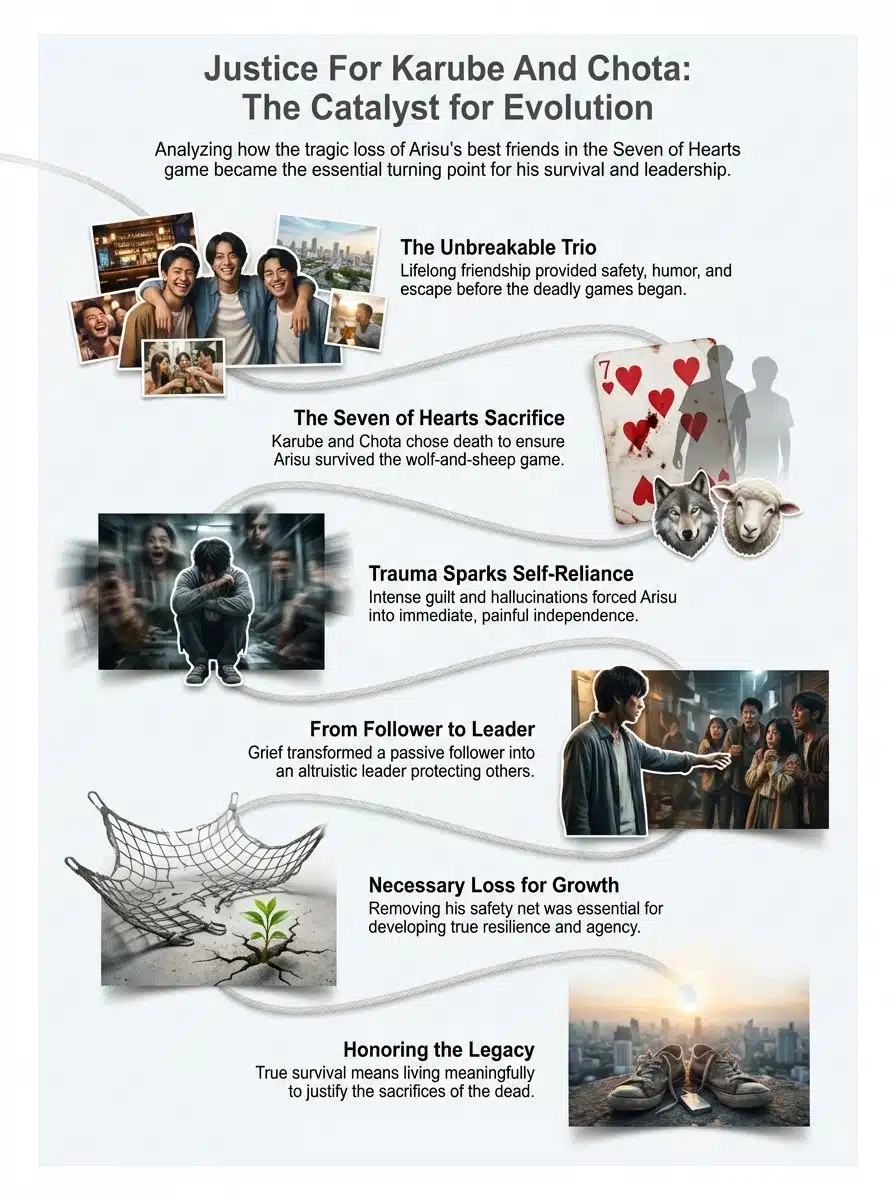
To understand the loss, you have to understand the bond. Karube and Chota were more than just drinking buddies; they were the external hard drive for Arisu’s self-worth. In a world that called Arisu lazy or useless, they called him a friend.
Their roles in Arisu’s life before the Borderlands
Karube, played by the intense Keita Machida, was the group’s protector. He was a bartender with a rough exterior but a solid moral compass. He was the one who pushed Arisu to stop hiding and face reality, even before the meteors hit.
Then you had Chota, portrayed by Yūki Morinaga. He was the heart. Despite his own struggles, a deeply religious background, and a soul-crushing corporate job, he brought warmth and humor to the trio. He was the glue that kept the group’s dynamic from becoming too serious or too volatile.
Their dynamic as a trio
The chemistry between these three wasn’t just good acting; it was the engine of the first three episodes. They balanced each other out perfectly:
- Arisu (The Brains): Apathetic but brilliant at puzzles.
- Karube (The Brawn): Physically capable and decisive under pressure.
- Chota (The Heart): The emotional anchor who reminded them of their humanity.
This balance is what made them feel invincible. When they first arrived in the empty streets of Tokyo on July 9, 2021 (according to the show’s timeline), they treated it like an adventure. But the Borderlands doesn’t care about friendship. It exploits it.
“We used to think we were invincible as long as we had each other.”
The Seven of Hearts Game: Rules of Betrayal
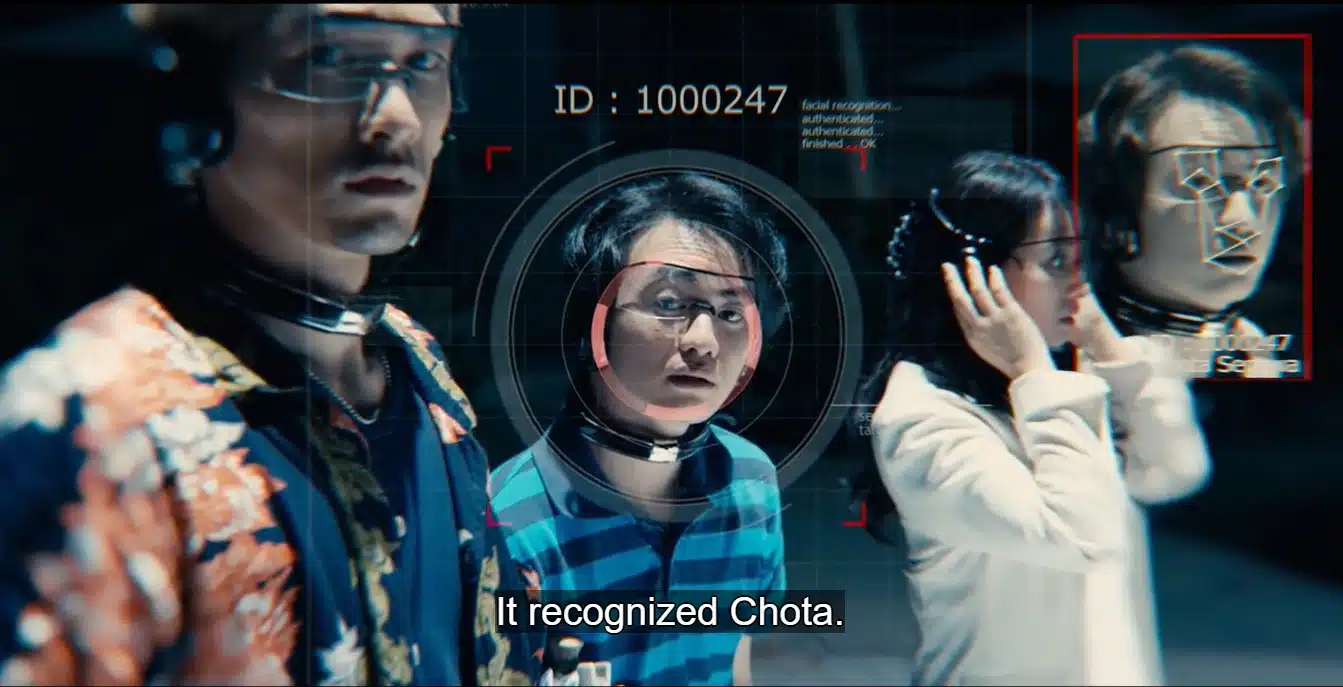
The Seven of Hearts game, set in the hauntingly beautiful Shinjuku Gyoen National Garden, is widely considered one of the most vicious setups in survival genre history. It wasn’t a test of skill; it was a test of cruelty.
Rules and stakes of the game
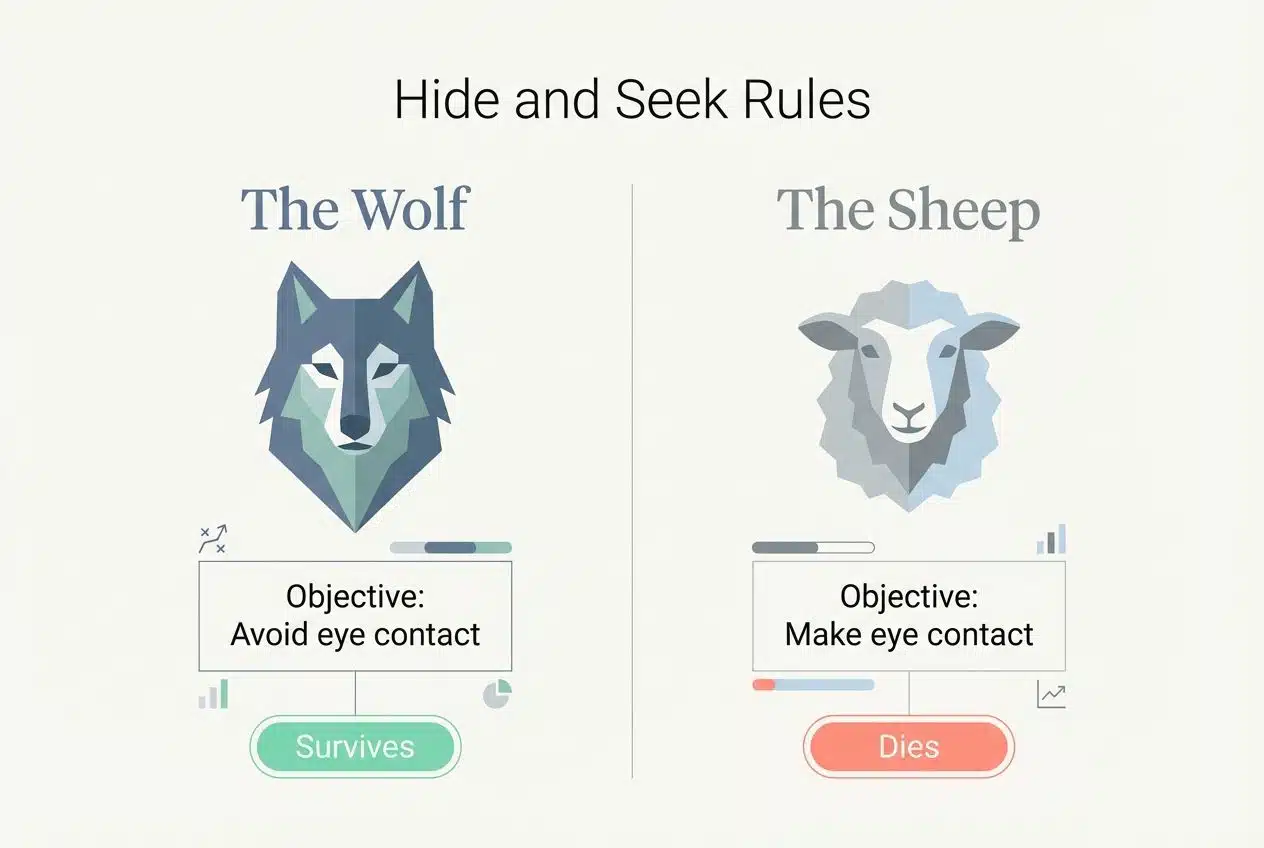
The game, titled “Hide and Seek,” flipped the playground rules on their head. Instead of one person hunting the others, one person, the “Wolf”, would survive, while the “Sheep” would die. The only way to switch roles was to lock eyes with the Wolf.
Here is the breakdown that made this game impossible to game:
| Role | Objective | Consequence at 0:00 |
|---|---|---|
| The Wolf | Avoid eye contact with others. | Survives (Visa extended). |
| The Sheep | Make eye contact with the Wolf. | Dies (Collar explodes). |
The tools provided were cruel taunts: high-tech headsets with eye-tracking sensors and heavy, bolted collars. There were no hidden keys. No secret exits. Just a 10-minute timer counting down to an inevitable loss.
Karube and Chota’s choices and sacrifices
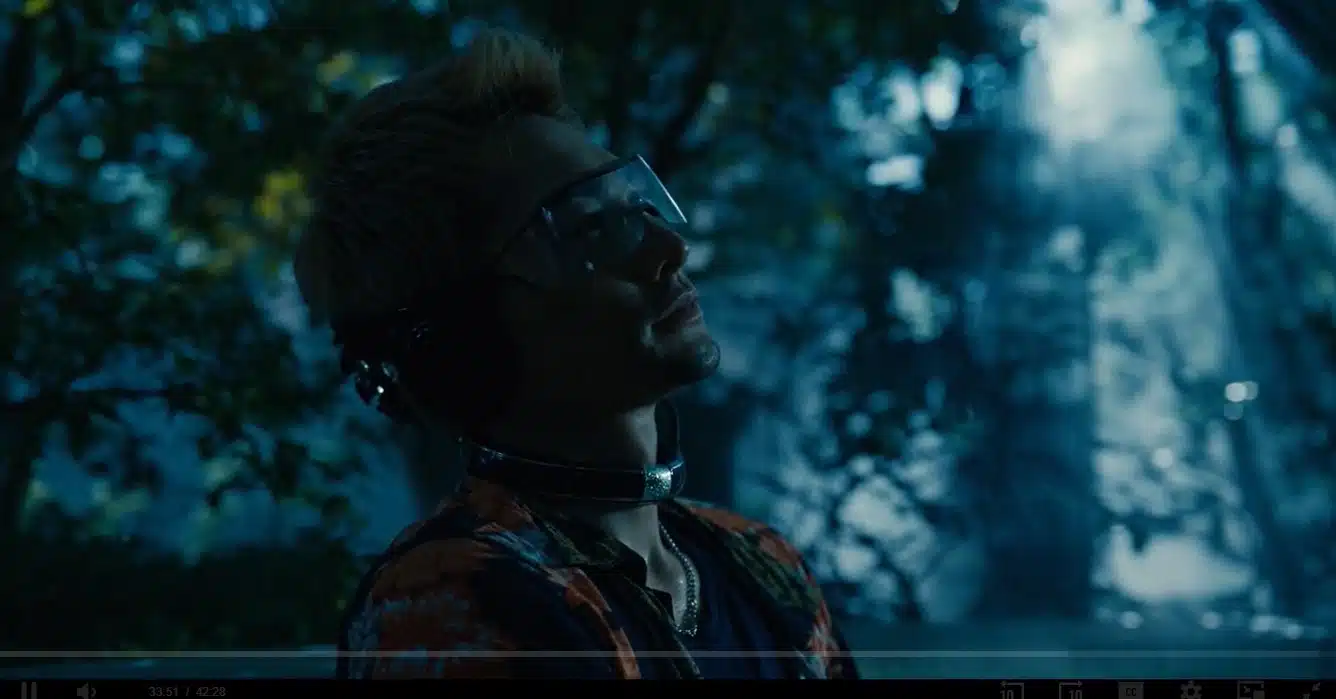
This is where the “Justice” part comes in. Karube and Chota didn’t die because they were weak. They died because they were strong.
Realizing that Arisu had the best chance of figuring out the Borderlands’ mystery, they stopped fighting for the Wolf role. Karube sat down to smoke a final cigarette. Chota, despite his terrifying fear of death, held back the fourth player, Shibuki, to ensure Arisu stayed the Wolf.
Their last words weren’t screams of anger. There were instructions. Karube told Arisu to “Live on for us,” passing the torch of survival to the one person who didn’t believe he deserved to hold it.
The Impact of Their Deaths on Arisu
Arisu didn’t just walk away from the Botanical Garden; he crawled away, broken. The trauma of that night became the lens through which he viewed every subsequent game.
Emotional toll on Arisu
In the episodes that followed, specifically Episode 4, we see Arisu paralyzed by grief. He lies on the asphalt, waiting for his visa to expire. The hallucinations of Karube and Chota aren’t just jump scares; they are manifestations of his survivor’s guilt.
He feels he is living on borrowed time. Every breath he takes feels like a theft from his best friends. This guilt nearly destroys him until Usagi pulls him back from the edge.
Shift in Arisu’s mindset and priorities
The transformation is sharp. Arisu stops playing to “survive” and starts playing to “solve.” He realizes that simply staying alive is an insult to Karube and Chota’s sacrifice. He needs to tear the system down.
This shift from passive participant to active rebel is the core of his arc. He begins to take risks he never would have taken before, not because he is brave, but because he fears wasting the life his friends bought for him more than he fears death itself.
Did Their Deaths Serve a Greater Purpose?
It’s a brutal question, but narratively, it’s the most important one. Does the story work if they live? Probably not.
Philosophical interpretation of their sacrifices
In storytelling, this is known as the “Mentor’s Death,” but twisted for a dark modern audience. Usually, an old wizard dies to let the hero grow. Here, the hero’s peers die.
This forces Arisu to internalize their strengths. He has to become decisive like Karube. He has to find compassion like Chota. He is no longer just Arisu; he is the vessel for the trio’s collective will to survive.
The role of their deaths in Arisu’s character growth
Without this loss, Arisu stays the “lazy gamer.” He stays the guy who waits for Karube to throw a punch or Chota to crack a joke. Their absence creates a vacuum that he is forced to fill.
It’s a painful lesson in leadership: sometimes you are the one left standing, and you have to move forward not because you want to, but because you owe it to the ones who fell.
Could Arisu Have Evolved Without Their Deaths?
Let’s play a “what if” game. If there had been a miracle solution, a loose wire, a software glitch, would Arisu still be the hero we see in Season 2?
Alternate scenarios and potential outcomes
If Karube had lived, he likely would have clashed with other alpha figures like Aguni or the Hatter at the Beach. His hot temper might have gotten the group killed in a political struggle rather than a game.
If Chota had lived, his injury would have continued to be a liability, potentially forcing Arisu into even more impossible choices later on. The “Seven of Hearts” was a bottleneck; it removed the safety net so Arisu could learn to fly.
The narrative necessity of their demise
In the manga written by Haro Aso, this moment is equally definitive. The story is about shedding your past self. Karube and Chota represented Arisu’s past life in Tokyo: the comfort, the stagnation, the lack of responsibility.
To face the “Kings” and “Queens” of the Borderlands, Arisu had to let go of that past. The tragedy is that he didn’t choose to let go; it was ripped away from him.
Themes of Sacrifice and Justice in Alice in Borderland
The concept of “justice” in the Borderlands is warped. It’s not about fairness; it’s about equivalence. A life for a life.
Exploring justice in the context of the Borderlands
The Seven of Hearts game asks a terrifying question: Is it just to survive at the expense of others? For the Game Masters, the answer is “yes.” It’s pure social Darwinism.
But Arisu rejects this. His form of justice becomes altruism. He tries to save everyone in future games (like the “Distance” game) specifically because he couldn’t save his friends. He fights the system’s definition of justice with his own.
Sacrifice as a recurring theme in the series
We see this echo later with characters like Kyuma (King of Clubs), who accepts his fate with grace. But Karube and Chota were the first. They set the standard.
Their sacrifice wasn’t a transaction; it was a gift. In a world designed to turn humans into monsters, they chose to remain human until the very end. That is the ultimate rebellion.
Fan Perspectives on Karube and Chota’s Deaths
Go to the r/AliceInBorderlandLive subreddit, and you will still find threads debating Episode 3 years after it aired. The wound is deep for the fandom.
Emotional responses from fans
Many viewers admit they almost stopped watching after this episode. The show killed off its most likable characters instantly. It was a Game of Thrones-level shock.
Fans created tribute art, “fix-it” fanfiction where they live, and lengthy video essays analyzing every frame of their final moments. It proved that you don’t need screen time to make an impact; you just need heart.
Debates on whether their deaths were justified
A popular “Insider Theory” that circulates is the “Wire Cutter Solution.” Fans argue that the tools provided at the entrance (pliers, wire cutters) could have been used to cut the internal wires of the collars without triggering them.
Another theory is the “Reflection Trick,” suggesting that if they all looked into a mirror or water, the eye sensors might glitch and assign “Wolf” status to everyone.
While the manga confirms there was no intended solution, these theories show how desperate fans are to find justice for Karube and Chota. We want to believe there was a way out, just like Arisu did.
Final Words
Did Karube and Chota have to die? For the story Haro Aso wanted to tell, yes. Their deaths were the crucible that burned away Arisu’s boyish apathy and forged a leader.
It feels unfair. It feels cruel. But in the Borderlands, survival isn’t a prize; it’s a burden. Arisu carries that burden, so their sacrifice wasn’t in vain. Every time he solves a puzzle, every time he saves a stranger, he is paying them back. And in that way, they never really left him.