Morgan Stanley forecasts Tesla could build a robotaxi fleet of up to 1 million vehicles by 2035, starting with about 1,000 in 2026, as Tesla expands driverless testing in Austin and investors watch safety, regulation, and scaling speed.
What Morgan Stanley is forecasting and why investors are focused on robotaxis?
Morgan Stanley’s latest robotaxi outlook sketches a fast-moving growth curve for Tesla’s autonomy business. In the forecast, Tesla begins with a small operational base and then scales aggressively over the next decade. The headline number drawing attention is a potential fleet of up to 1 million robotaxis by the end of 2035, with an early step of roughly 1,000 robotaxis in 2026.
This matters because a robotaxi network changes Tesla’s story from “selling cars” to “selling miles.” Instead of earning a one-time profit when a vehicle is delivered, Tesla would aim to earn recurring revenue every day a robotaxi is in service—similar to how airlines monetize planes or how ride-hailing apps monetize trips. Even modest utilization, multiplied across a large fleet, is why Wall Street models can produce very large long-term numbers.
At the same time, Morgan Stanley has also signaled that expectations are already elevated. The firm’s more cautious view on near-term upside reflects a common tension in Tesla coverage: autonomy could be transformative, but the stock price can move ahead of proof. That makes each technical milestone and regulatory headline especially important.
Below is a simplified view of the ramp implied by the forecast people are discussing:
| Year | Robotaxi fleet size (illustrative path) | What that stage usually requires |
| 2026 | ~1,000 | Limited cities, tight geofencing, strong remote support, heavy monitoring |
| 2030 | ~157,500 (often cited in models) | Multi-city operations, streamlined permitting, standardized fleet operations |
| 2035 | Up to ~1,000,000 | Industrial-scale manufacturing + mature autonomy + repeatable city launches |
The key point is not that every number will land exactly on schedule. The key point is what Morgan Stanley is signaling: Tesla’s autonomy effort is being valued as a future platform business, not only as a vehicle maker.
What Tesla has done so far in Austin and what “driverless” means in practice?
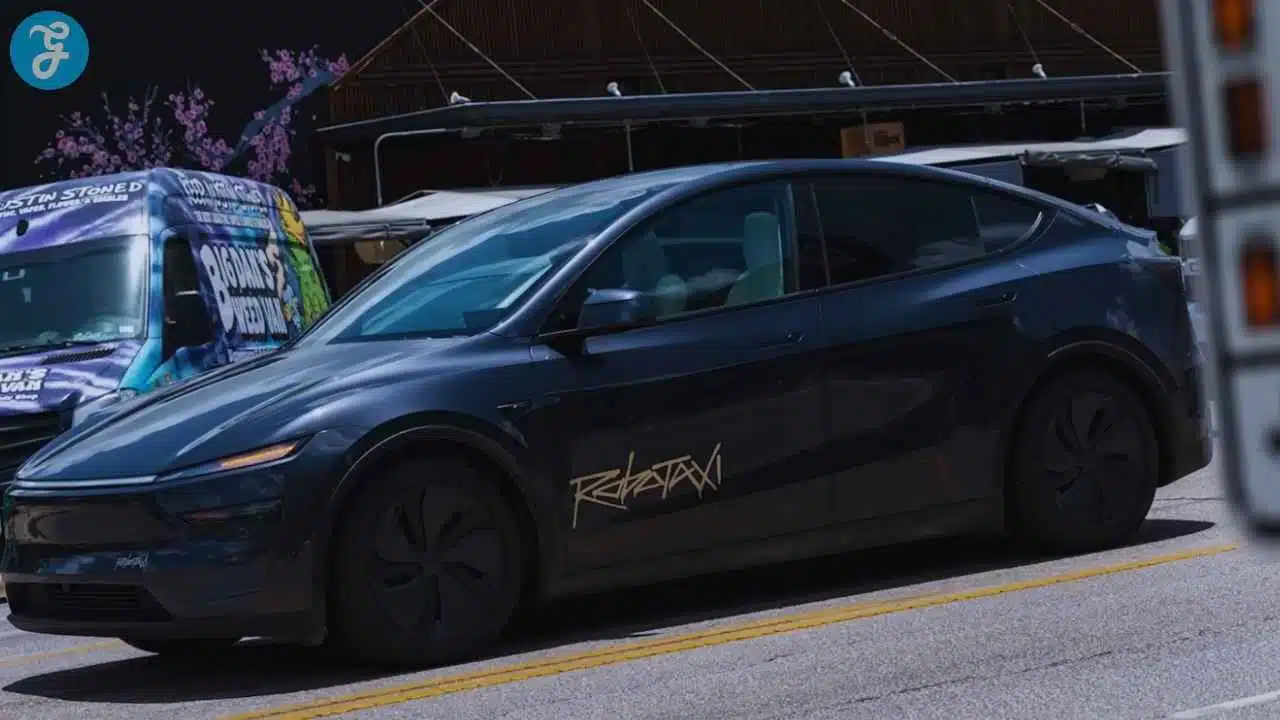
Tesla’s most watched robotaxi activity has centered on Austin, Texas, where the company has been testing and operating limited ride-hailing style pilots. Over time, Tesla’s messaging has aimed at moving from supervised operation (where a person can intervene) toward “unsupervised” operation (where the system drives without an in-car safety monitor).
In simple terms, “driverless testing” can mean different things depending on the setup:
- No driver in the driver’s seat does not always mean no human oversight at all. Many robotaxi systems rely on remote support teams who can assist when the car encounters a confusing situation.
- Geofencing is common. The vehicle may only operate in mapped areas where the system performs best.
- Operational rules matter as much as software. Companies often avoid certain road types, weather conditions, or complex intersections in early phases.
Tesla’s recent Austin progress has mattered because it signals a shift from a cautious pilot style toward a more ambitious autonomy posture. Reports and public observations in December 2025 indicated Tesla vehicles operating in Austin with no safety monitor in the front seats, which Tesla’s CEO later confirmed as part of testing. That shift, if sustained, is one of the clearest “step changes” Tesla has shown in public toward a driverless service.
Tesla has also discussed a purpose-built robotaxi vehicle—often referred to as the Cybercab—with timelines pointing toward 2026 for production start in company commentary and coverage. A dedicated vehicle could be important because robotaxi economics are highly sensitive to cost per mile. A vehicle designed for ride-hailing duty can be built for durability, easy cleaning, low repair cost, and high uptime.
Still, Tesla’s robotaxi program faces a core challenge: it has not published a standardized, widely accepted safety report that allows easy comparison across providers. That does not mean the system is unsafe; it means outsiders have limited ability to independently measure performance. For regulators and city partners, safety transparency tends to become more important as services scale.
Here is a practical milestone checklist that many observers use to judge whether a robotaxi program is moving from “tests” to “business”:
| Milestone | Why it matters | What could come next |
| Consistent driverless operation in a defined zone | Shows the system can complete trips without in-car intervention | Expanded zone, longer operating hours |
| Public-facing ride service with clear rules | Demonstrates real customer operations, not just demos | Higher trip volume, more vehicles |
| Documented safety approach (policies, response, incident handling) | Builds trust with regulators and cities | Faster approvals, more cities |
| Repeatable city launch playbook | Scaling depends on repeatability | Faster fleet growth and route expansion |
This is where the Morgan Stanley forecast intersects with reality: scaling to hundreds of thousands—or a million—robotaxis is less about a single breakthrough and more about repeatable operations.
Regulation, competition, and the biggest risks to a million-robotaxi path
A forecast like “up to 1 million robotaxis by 2035” is easiest to write in a spreadsheet and hardest to execute on public roads. The biggest risks typically fall into four buckets: regulation, safety validation, competition, and economics.
1) Regulation and marketing language are now directly tied to business risk
Tesla is facing regulatory pressure over how it markets driver-assistance features—especially terms like “Autopilot” and “Full Self-Driving.” In California, the state’s Department of Motor Vehicles has moved to delay enforcement of a suspension-related action while giving Tesla time to address concerns, but the dispute highlights the real-world stakes: large markets can impose penalties or restrictions if regulators believe consumers may misunderstand what the system can do.
Even if a company believes it is compliant, regulators often focus on how an average consumer interprets claims. For a robotaxi rollout, that matters because a public service depends on permits, operating rules, and ongoing political acceptance. Clear language and clear safety boundaries can become competitive advantages.
2) Competitors are already operating at scale in the U.S.
Tesla is not building robotaxis in a vacuum. Alphabet’s Waymo operates a paid driverless robotaxi service in multiple U.S. markets and is widely viewed as the current leader in commercial deployment. That competitive reality raises the bar for Tesla in two ways:
- Customers will compare ride quality and reliability, not just “autonomy hype.”
- Cities and regulators can point to existing operator standards when evaluating Tesla.
Competition can also shape pricing. If robotaxi providers compete for riders through low fares, the economics can tighten, and scaling becomes more dependent on low operating cost per mile and high vehicle utilization.
3) Safety is not only a technical standard—it is an operational system
Robotaxi safety is not just “the car drives well.” It includes:
- Clear escalation paths when the system is confused.
- Remote support and incident response.
- Maintenance standards and inspection cycles.
- Cybersecurity and system integrity.
- Rules for edge cases such as construction zones, emergency vehicles, and unusual road behavior.
As services scale, small failure rates become more visible because the absolute number of events grows with miles driven. A million robotaxis running daily would generate an enormous amount of real-world exposure. That is why, at large scale, operators often focus on reducing incidents per million miles and improving recovery speed when incidents occur.
4) The economics of robotaxis depend on utilization and uptime
A robotaxi is fundamentally a “miles machine.” Profit depends on:
- How many paid miles it can drive each day?
- How often it is down for charging, repairs, cleaning, or waiting for rides?
- How expensive it is to insure and maintain?
- What it costs to run remote operations teams?
- How quickly it depreciates and how long it stays in service?
If utilization is high, a robotaxi can earn far more over its lifetime than a privately owned car. If utilization is low, it can become an expensive underused asset. That is why forecasts often assume improving uptime and higher ride volume as the network grows.
To make the tradeoffs easier to see, here is a simple driver table:
| Driver | Improves robotaxi economics when… | Hurts robotaxi economics when… |
| Utilization (hours/day in service) | More trips per vehicle, more revenue per asset | Vehicles sit idle due to limited demand or restricted zones |
| Operating cost per mile | Lower energy, repairs, cleaning, ops support | High incident costs, expensive repairs, heavy staffing |
| Regulatory coverage | More cities allow expansion | Permits slow, restrictions increase, enforcement tightens |
| Vehicle cost and durability | Long life, low maintenance | Frequent repairs, short life, high depreciation |
| Public trust | People feel safe and adopt service | Incidents reduce adoption and trigger scrutiny |
Taken together, these risks explain why “robotaxis by 2035” is both plausible as a long-term industry direction and uncertain in its precise timing.
What to watch next and what could happen in 2026?
Morgan Stanley’s forecast is a long-range roadmap, but the near-term story will likely be decided by a few concrete signals over the next 6 to 18 months.
1. Watch how Tesla defines and expands its Austin operating domain.
If Tesla can increase the area where driverless vehicles operate, extend operating hours, and maintain consistent performance, it strengthens the argument that autonomy is moving from trial to repeatable service.
2. Watch whether Tesla publishes clearer safety and operations information.
As Tesla pushes into a commercial robotaxi posture, pressure tends to rise for measurable evidence: how the system performs, how incidents are handled, and how safety is verified. More transparency can speed approvals and improve public acceptance.
3. Watch the regulatory path in California and other key markets.
California is Tesla’s largest U.S. market and a major center of EV adoption. Regulatory disputes over naming and marketing may look separate from robotaxis, but they shape the policy environment Tesla will operate in as it expands autonomy.
4. Watch the vehicle strategy for robotaxi scale.
If Tesla’s dedicated robotaxi vehicle enters production on schedule and is built for high uptime, it can materially improve the economics of a fleet. If production timelines slip, scaling becomes harder because the network would rely longer on mixed vehicle types and less specialized hardware.
5. Watch competition’s expansion speed.
If incumbents expand to more cities and increase trip volume, Tesla may need to prove not only that it can drive without a person in the car, but also that it can run a reliable ride service at scale—day after day.
A million robotaxis by 2035 is not a promise. It is a statement about the size of the prize if Tesla can combine autonomy, manufacturing scale, and regulatory execution. The next milestones—driverless consistency, operational maturity, and city-by-city expansion—will determine whether the forecast becomes a realistic trajectory or remains an optimistic scenario.